Helen Whitmore stood on the back patio of the house she had built with her late husband and listened to her daughter-in-law erase her with one sentence. The photographer had just lifted his camera, asking everyone to move a little closer, when Jessica smiled in that sharp, polished way of hers and said, “This family photo would be perfect without you.” She did not whisper it. She said it clearly, right there in front of David, the photographer, the cousins, the neighbors, and every relative pretending not to hear.
For one second, Helen thought she must have misunderstood. The patio was full of people she had fed, housed, helped, and loved for years. White folding chairs were set near the trimmed hedges, a dessert table stood against the brick wall, and family photos from older gatherings waited to be displayed near the back door. It was supposed to be their annual family gathering, the kind of evening Helen had kept alive after her husband Richard died, because she believed traditions were how families remembered who they were.
Jessica stood beside David in a fitted designer floral dress, gold jewelry flashing at her wrist, her blonde hair smooth and perfect. She looked Helen up and down as if Helen were a stain on the scene. Then she extended one manicured hand toward the edge of the patio, not touching Helen, only dismissing her with the air of someone moving an unwanted chair out of a room. “Honestly,” she added, “the picture just looks cleaner if some people step out of it.”
The photographer lowered the camera slightly. His face tightened with discomfort, and he pretended to adjust the lens because he had no idea what else to do. Extended family members suddenly found the patio bricks fascinating. Someone coughed. Someone else looked toward the dessert table like cheesecake might save them from witnessing a public humiliation.
Helen looked at David.
Her son was thirty-eight now, tall enough, grown enough, old enough to defend the woman who had raised him. He wore a navy button-up shirt and khaki pants, his hair neatly combed, his face frozen in that familiar expression he wore whenever Jessica crossed a line. He looked ashamed, yes, but shame without action had become his specialty. He stared down at his shoes and said nothing.
“David,” Helen said quietly, “are you going to let her say that to me?”
David shifted his weight. His eyes lifted for half a second, then dropped again. “Mom,” he murmured, “let’s not make a scene.”
That was when the last little hope inside Helen went cold. Not dead exactly, but removed from service, like a light being switched off in a room no one used anymore. Jessica smiled wider because she knew silence when she saw it, and David’s silence was the only permission she ever needed. “See?” she said softly. “Even David knows the picture looks better when everyone understands their place.”
Helen felt the air settle around her with perfect clarity. She did not cry. She did not shout. She did not ask Jessica why she hated her so much, and she did not ask David why his courage disappeared every time his wife needed correcting. She simply smoothed the front of her pale blue blouse, looked at Jessica, and gave the gentlest smile she could manage.
“You’re right,” Helen said. “I’ll step out of the frame.”
Jessica looked pleased, but only for a moment.
Helen turned and walked into the house. Behind her, the photographer cleared his throat and the gathering resumed with uncomfortable effort. She could hear Jessica laughing too loudly, telling everyone to squeeze in, saying they should take advantage of the lovely evening light. David did not follow.
Inside, Helen walked down the hallway to her study and closed the door. The room smelled faintly of leather, old books, and the cedar polish Richard used to love. His framed photograph sat on her mahogany desk, his smile half amused, as if he had known for years that their son was softer than he looked and Jessica was sharper than she pretended. Helen sat down slowly and placed both hands on the desk.
She had spent years trying to buy peace with silence. When Jessica made a joke about Helen’s curtains, Helen smiled. When Jessica rolled her eyes at family recipes, Helen changed the subject. When Jessica complained that David’s childhood photos made the house feel “dated and emotionally cluttered,” Helen moved several of them to the hallway.
It had all seemed small at the time. Little adjustments. Little compromises. Little ways of proving she was not an intrusive mother-in-law. But silence, Helen now understood, had a language of its own, and Jessica had translated it as permission.
Helen opened the bottom drawer of her desk and pulled out a file labeled Whitmore Commercial Holdings. The label was neat because Helen had always believed neat paperwork prevented messy surprises. Three years earlier, when David wanted to launch his independent architectural consulting firm, he did not have the commercial credit, network, or client base to secure the kind of office space he wanted. Helen had owned a renovated brick building downtown through her small real estate company, so she gave him the prime ground-floor suite at half market rent.
She had also introduced him to clients. Old business friends, historical society members, developers, preservation advocates, and people who trusted Helen because she had spent decades being careful with her name. David’s first major contracts came not because the world discovered him on merit alone, but because his mother placed him in rooms where people already respected her. Jessica had loved the benefit of that arrangement.
She loved telling people David’s firm was “thriving downtown.” She loved hosting wine nights where she described the office as “perfectly positioned in the arts district.” She loved bragging that David was being considered for the old library preservation project. What she did not love was admitting that Helen’s discounted rent and reputation had been holding up the foundation.
Helen closed the file and looked through the study window toward the patio. The family photo was being taken without her. Jessica had gotten exactly the frame she wanted. Helen decided, very calmly, that it was time for Jessica to experience the rest of that wish.
The next morning, Helen woke before six. She made black coffee, drove to a quiet café near the river, and sat by the window while the town came alive. There was no wild anger in her, no shaking rage, no dramatic thirst for revenge. Only a steady decision that felt cleaner than anger ever could.
Jessica wanted Helen out of the picture. David had allowed it. So Helen would remove herself, not in a cruel way, not illegally, not spitefully, but completely. She would stop holding up the parts of their life they had learned to treat as invisible.
When she returned home, Helen opened the filing cabinet and pulled out David’s commercial lease. The agreement was clear. The fifty-percent discount had been an introductory concession, renewed annually at the landlord’s discretion. The lease also stated that upon renewal, rent could be adjusted to fair market value with sixty days’ written notice.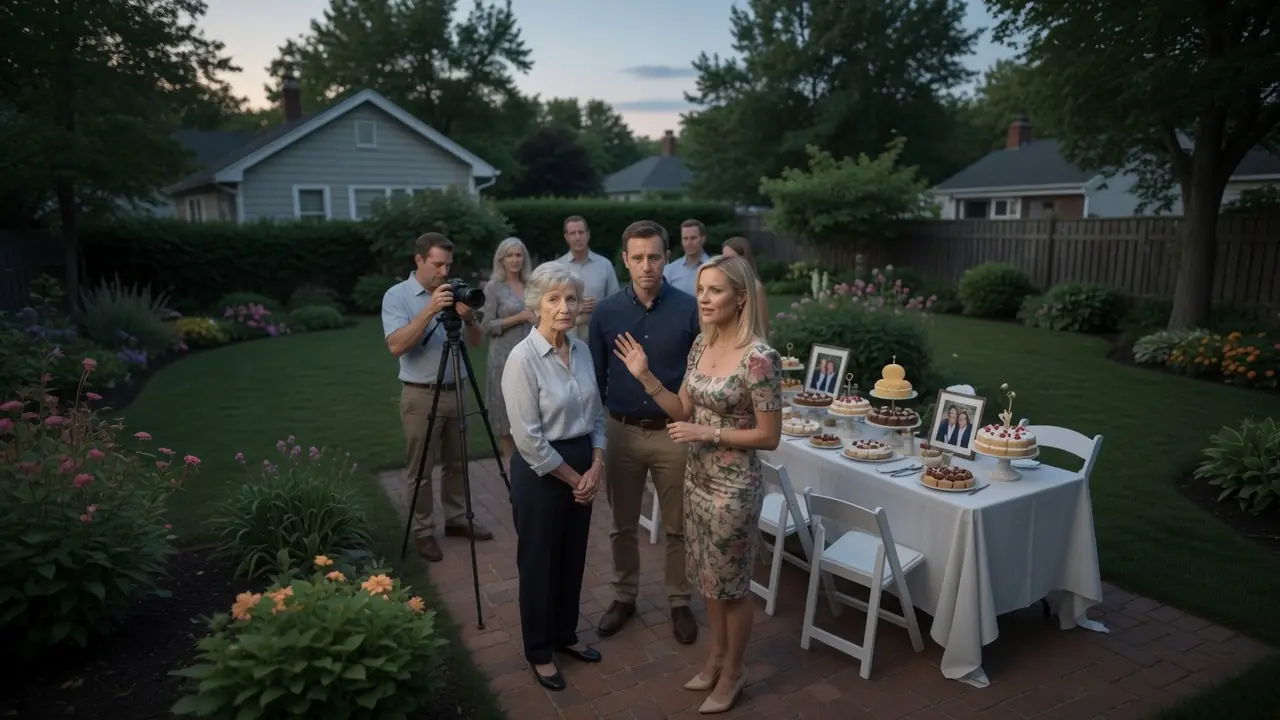
Helen looked at the calendar.
The renewal date was exactly sixty-two days away.
She called Thomas, her property manager, who had handled her small portfolio for over a decade. “Thomas,” she said, “I need you to draft renewal paperwork for the ground-floor suite downtown.”
“David’s suite?” he asked carefully.
“Yes.”
“All right. Same concession terms?”
“No,” Helen said. “Bring it to current fair market value for that district.”
There was a pause. “Helen, that is a substantial increase.”
“I know.”
“You are certain?”
“Business is business, Thomas. Send the official notice to his corporate address tomorrow.”
After that, Helen reviewed the agenda for the local historical society board meeting. She had served on the board for years, and the society was preparing to award a major contract for the preservation of the old city library. Helen had been the reason David’s firm was even in serious consideration. Everyone on the board trusted her judgment, and until the photo incident, she had planned to champion her son one more time.
That afternoon, when the chairman brought up the contract, he smiled at Helen. “We are ready to approve David’s firm if you are comfortable giving your final recommendation.”
Helen folded her hands. “Actually, I believe we should open the project to a public bidding process.”
The room went quiet.
She continued, calm and professional. “David is capable, but given my family relationship with him, I think it is best that I recuse myself from the selection committee. I want the society to choose the strongest proposal without any perception of nepotism or private influence.”
The chairman nodded slowly. Others followed. Nobody argued, because Helen was not attacking David. She was simply removing the thumb she had placed on the scale. If David’s firm truly deserved the project, it would win fairly.
Two days later, David showed up at her house unannounced. Helen was in the garden pruning roses when he stepped onto the patio holding a manila envelope. His tie was loosened, his face tired, and there was a crease between his eyebrows that made him look younger than he was. For a moment, Helen remembered him at eight years old, standing in the same yard, asking if roses felt pain when they were cut back.
“Mom,” David said. “Thomas sent over the lease renewal.”
Helen clipped a dead branch. “Yes.”
“The rent is doubling.”
“It is moving to fair market value.”
He took a step closer. “Is this a mistake?”
“No.”
David stared at her, genuinely stunned. He was used to her being his mother first and a landlord only in theory. “Mom, our margins are tight right now. We cannot absorb an extra three thousand dollars a month.”
“Then you have sixty days to find commercial space that fits your budget.”
His face changed. “Is this because of what Jessica said?”
Helen finally turned toward him. “Jessica expressed a desire for a family picture without me in it. I am respecting that wish.”
“Mom.”
“If I am not part of the family picture,” Helen said, “I should not be part of your business infrastructure. I am removing myself from your lives, starting with the financial concessions you have been living on.”
David’s grip tightened on the envelope. “She did not mean it like that.”
“Please do not insult my intelligence.”
He flushed. “She was stressed. She wanted the photos to look perfect for the holiday cards. You know how she gets.”
Helen removed her gardening gloves and placed them on the bench. “Yes, David. I know exactly how she gets. The problem is that you know too, and you keep asking me to treat her cruelty as weather.”
He looked away.
“Keeping the peace at the expense of your mother’s dignity is not peace,” Helen said. “It is cowardice.”
David flinched.
Helen did not soften the word. Some truths must be allowed to stand in the room without a cushion. “You allowed your wife to humiliate me in my own home, in front of a photographer and our relatives. Then you asked me not to make a scene. What you meant was that my pain was less inconvenient than your wife’s anger.”
David’s face reddened further, but he did not deny it.
“I am not angry with you,” Helen said, and surprisingly, it was true. “I am done subsidizing you. You are an adult, a husband, and a business owner. It is time for your household and your company to stand without me quietly holding the floor under your feet.”
David left without another word.
The first ripple came from the historical society. David’s firm submitted a proposal for the library preservation project, but it was rushed, overpriced, and much weaker than the one sent by a younger architectural firm from the next town. Without Helen’s recommendation cushioning the decision, the board chose the better bid. David lost a contract he had assumed was already his.
The second ripple came when the sixty-day lease window closed. David could not afford the new market rate. He looked for other downtown spaces, but the district had become expensive, and none of the cheaper locations offered the prestige Jessica had grown addicted to mentioning. He eventually moved the firm into a smaller office on the outskirts of town, above a dental clinic and beside a tax preparer.
The move was practical but humiliating for Jessica. Her social media posts about “the downtown studio” stopped. Her dinner-party comments about “David’s prime office” disappeared. Their lifestyle tightened quickly: no more weekend spa retreats, no more redecorating projects, no more casual trips to boutique hotels because Jessica “needed a change of energy.”
David had to let go of his receptionist and junior draftsman. He worked longer hours, answered his own phones, and did more of the basic drafting himself. Helen heard these things through mutual acquaintances, never because she went looking. She did not gloat.
True consequences did not need applause.
Jessica lasted six months before contacting her.
The text arrived on a Thursday afternoon while Helen was reviewing property reports. Hi Helen, we miss you. David has been working so hard and is very stressed. We would love to have you over for Sunday dinner if you are free. The message was polite, careful, and completely stripped of Jessica’s usual sharpness.
Helen read it twice.
She knew exactly what the invitation was. It was not love suddenly blooming in the space where contempt had lived. It was math. David’s firm was struggling, their household budget was strained, and Jessica had finally realized that the woman she wanted out of the picture had been holding up more of the picture than anyone admitted.
Helen replied that she would come.
She did not go because she wanted to restore the old arrangement. She went because she wanted to see whether any real understanding had taken root. Sometimes people apologize because they have changed. Sometimes they apologize because consequences have become expensive. Helen had learned to tell the difference.
On Sunday evening, she drove to David and Jessica’s townhouse. The expensive décor Jessica had once described as “curated” now looked slightly dusty. A vase of artificial branches sat on the console table, and the living room smelled faintly of reheated food instead of the catered meals Jessica used to serve when she wanted admiration. Jessica opened the door with a strained smile and offered to take Helen’s coat.
David hugged his mother tightly. It was the first genuine embrace he had given her in years. His shoulders felt thinner. His face looked older. Helen held him for a moment, then stepped back without pretending everything was repaired.
Dinner was simple. Roast chicken, rice, salad, store-bought rolls. Nobody mentioned the office, the lease, the library project, or the photo. Conversation stayed safely on weather, local road construction, and a neighbor’s new dog.
After dinner, David went to clear dishes, leaving Jessica and Helen at the table.
Jessica folded and unfolded her napkin. The arrogance that once surrounded her like perfume was gone, or at least hidden under exhaustion. She looked down before finally meeting Helen’s eyes. “Helen,” she began, “I want to apologize for what I said at the family gathering.”
Helen waited.
“It was rude,” Jessica said. “It was incredibly rude. I should not have said it. Things have been difficult, and I regret hurting you.”
It was a partial apology, carefully worded and only as deep as Jessica’s pride would allow. Helen accepted that, but she did not mistake it for transformation. “Thank you,” she said. “I appreciate the apology.”
Jessica looked relieved too quickly.
“But we should be clear,” Helen continued. “My decisions over the past six months were not made to punish you. They were made because you reminded me of a boundary I had forgotten to set.”
Jessica’s face tightened.
Helen folded her hands. “You wanted me out of the picture. So I stepped out. What surprised you was how much of the picture I had been supporting.”
Jessica’s eyes filled with frustrated tears. “We really need your help.”
There it was.
David appeared in the kitchen doorway but did not interrupt.
Jessica pressed on. “David is working himself to death. The business is barely breaking even. If he could move back into the downtown office under the old terms, even just for a year, it would save us.”
Helen looked at her calmly. “No.”
Jessica seemed to shrink. “Helen.”
“The downtown suite has a new tenant on a long-term lease. But more importantly, David needs this. He needs to build a firm that survives on its own merit. You both need to live within the resources you actually have.”
“We made mistakes.”
“Yes.”
“So you will just watch him struggle?”
“I will watch him grow,” Helen said. “There is a difference.”
Jessica’s disappointment hardened into something close to anger, but she did not argue. She understood that the old Helen was gone. The woman who smiled through insults and quietly opened doors had stepped out of the frame months ago.
When Helen left, David walked her to the car. The night was crisp, and the streetlights stretched long shadows across the pavement. He stood beside her driver’s door, hands in his pockets, looking ashamed but steadier than before.
“Thanks for coming,” he said.
“You are welcome.”
He swallowed. “I am sorry I did not stand up for you that day. I was weak. I let you down.”
Helen reached up and touched his cheek. “You did.”
He nodded, accepting the truth.
“But you are standing on your own feet now,” she said. “It is hard, but it is going to make you a better businessman and a better husband, if you let it.”
David’s eyes shone. “Do you still believe in me?”
Helen smiled sadly. “Of course I do. I just stopped carrying you.”
As she drove home, Helen thought about the photo on the patio. She wondered whether Jessica had kept it, framed it, mailed it on holiday cards, shown it off as the clean family image she wanted. Perhaps she had. Perhaps the picture really did look tidier without Helen standing there in her pale blue blouse.
But pictures lie easily.
They do not show who paid the discounted rent. They do not show who made the introduction that opened the first contract. They do not show whose reputation gave a struggling architect credibility before he earned enough of his own. They do not show the invisible foundation beneath the smiling faces.
Helen did not need to be in their picture to know what she had built.
Her value was not defined by Jessica’s approval, David’s silence, or the photographer’s frame. She returned to her quiet home, unlocked the door, and walked into a peace that finally belonged to her. The house felt larger now, not because anyone had left, but because Helen had stopped shrinking inside it.
Sometimes the most loving thing a mother can do is step aside.
Not to disappear.
Not to punish.
But to let grown children see the full picture of the life they built, without anyone else holding up the background.