The first thing my daughter said to me after twenty-two years was, “You had a law degree, a corner office, and two hundred forty thousand dollars a year, and you still couldn’t show up once.”
She did not raise her voice.
That made it worse.
We were sitting across from each other in a diner off Route 7 outside Asheville, with rain ticking against the windows and a waitress refilling coffee neither of us was drinking. My daughter’s hands rested flat on the table, steady and brown and strong, while mine trembled around a ceramic mug.
“I sent cards,” I said.
The moment the words left my mouth, I hated them.
Keisha looked at me the way people look at a car that refuses to start during an emergency. Not with surprise anymore. Not even with anger. Just with a tired, clear-eyed assessment of something that had already failed them when they needed it most.
“You sent cards,” she repeated.
“They came back.”
“You kept sending them to an address you knew I didn’t live at.”
“I didn’t know where else to send them.”
“You were an attorney.”
The waitress passed our booth and then quickly looked away.
Keisha leaned closer.
“You found witnesses who didn’t want to be found. You located assets hidden behind shell companies. You built a career proving that people could be reached when enough money and power were involved.”
Her voice did not shake.
“But your own daughter was too difficult to locate?”
I opened my mouth.
Nothing came out.
She pushed a business card across the table.
The laminate was smooth. The lettering was simple.
Keisha Monroe. Executive Director. Second Door Foster Services.
I traced the edge with my thumb.
“What is this?”
“A reason I stayed alive.”
Then she stood, picked up her black coffee, and walked out of the diner without looking back.
The bell above the door rang once.
I sat there for a long time, listening to the rain and the soft scrape of silverware against plates, wondering whether twenty-two years of regret had just been reduced to a business card and one sentence.
Then my phone rang.
It was my managing partner.
“Vanessa, where are you?”
“At a diner.”
“We have a problem.”
I closed my eyes.
For thirty years, those words had been enough to pull me from hospital rooms, birthday dinners, funerals, and once from the side of a highway after my car broke down. Problems at Harris, Brandt & Cowell were never small, and I had trained myself to answer them before they became disasters.
“What happened?”
“The county audit came in early.”
My fingers tightened around the phone.
“How early?”
“An hour ago. They’re asking about the foster services contracts.”
I looked through the window.
Keisha’s white Honda was still in the parking lot.
On the rear bumper was a blue magnet shaped like an open door.
“What contracts?”
There was a pause.
“The ones you signed off on.”
My breath stopped.
“I didn’t sign any foster contracts.”
“Yes, you did.”
“No.”
“Your name is on all of them.”
Outside, Keisha opened her car door.
Before getting in, she turned and looked directly through the rain-streaked window at me.
Then my managing partner said, “Vanessa, the nonprofit named in the audit is Second Door.”
Her name when I gave her up was Aaliyah.
I named her for a singer I loved, a woman who died in a plane crash the same year my daughter was born. At twenty-seven, I did not believe in signs. I believed in bar passage rates, billable hours, and the particular satisfaction of a closing argument delivered without a wasted word.
I believed the world rewarded precision and endurance.
I possessed both in quantities that frightened people who did not.
What I did not possess was a mother, a sister, a neighbor, or anything resembling a net.
My own mother died when I was nineteen. She cleaned hotel rooms outside Durham and kept cash folded inside an old coffee tin because she did not trust banks.
She raised me alone.
My father existed only as a first name on my birth certificate and a faded photograph she refused to discuss. When she died of a stroke during my sophomore year at Duke, I returned to class four days after the funeral because grief did not excuse missed exams.
People called me strong.
No one asked whether I had any other choice.
Aaliyah’s father, Marcus Reed, was a good man in the way some men are good generously, selectively, and only when it costs them nothing. He was handsome, funny, and still carrying the ambition of becoming a music producer even though he worked most nights as a bartender.
When I told him I was pregnant, he sat on the edge of my bed and stared at the floor.
“I’m not ready for this.”
I remember laughing because readiness seemed like an absurd requirement, as though the child had consulted our calendars and agreed to wait.
“You think I am?”
“You’re different.”
“What does that mean?”
“You always figure things out.”
That sentence became the permission he needed to leave.
For the first eight months of Aaliyah’s life, Marcus came and went. He bought diapers twice, took photographs when she was clean and smiling, and promised to watch her whenever I had a deposition.
He rarely arrived on time.
Sometimes he did not arrive at all.
One morning, I had to bring Aaliyah to the office because Marcus failed to show. I placed her carrier beneath my desk while I prepared for a hearing, praying no one would hear her.
At ten, my supervising partner walked in.
His name was Harold Cowell, and he had silver hair, cold blue eyes, and the ability to make a compliment sound like a warning.
He looked down at the carrier.
“What is this?”
“My daughter.”
“I know it’s a baby, Vanessa.”
“My childcare fell through.”
“This is not a daycare.”
“I understand.”
He glanced at his watch.
“You have court in twenty minutes.”
“I’ll arrange something.”
“You have fifteen.”
He walked away.
A legal assistant named Joyce watched Aaliyah until lunch. She already had three children, an aging father, and more work than she was paid to do, but she held my daughter against her shoulder and told me not to worry.
I worried anyway.
The firm occupied the seventeenth floor of a building on Tryon Street that smelled like carpet cleaner and ambition. I was the third Black woman hired in its forty-year history, a fact mentioned during my interview as though it were one of my accomplishments.
The hours had never been a secret.
What no one told you was that the hours were not the hardest part.
The hardest part was what you became inside them.
I became someone who left her daughter in a Pack ’n Play at five forty-five in the morning and returned after ten at night. Someone who pumped breast milk in the conference-room bathroom between depositions and then cross-examined a witness for four hours without allowing her hands to shake.
I learned to operate on three hours of sleep and called it competence.
I wore exhaustion like proof that I belonged.
For eight months, I lived that way.
Eight months of formula after nursing failed, daycare that cost more than my first apartment, and weekends spent writing briefs while Aaliyah slept in a swing beside me.
I told myself she was fine.
She was safe, fed, and warm.
Those were the basics.
Everything else was extra.
I repeated that lie until I could not anymore.
It happened on a Tuesday in February.
I arrived home at eleven-fifteen. The babysitter, a college student named Brianna, met me at the door with her coat already on.
“She cried for two hours,” she said.
“Did she eat?”
“A little.”
“Did you change her?”
“Yes.”
“Did she have a fever?”
“No. She just kept crying.”
Brianna left before I finished paying her.
Aaliyah sat in her swing in the living room, awake but silent, staring at the ceiling fan.
I dropped my briefcase.
“Baby?”
She did not turn.
I knelt beside the swing.
“Aaliyah.”
Her eyes moved toward me and then away.
She was fifteen months old.
She did not reach for me.
That was the thing.
She looked at me the same way she looked at the fan, the lamp, and the abstract shapes of a world she was sorting into categories she did not yet have words for.
Familiar.
Not familiar.
Safe.
Not safe.
I did not know which category I occupied.
That uncertainty was the most honest thing that had happened to me in years.
I sat on the floor and placed one hand against her foot.
“I’m trying,” I whispered.
She pulled her foot away.
Three weeks later, I walked into Mecklenburg County Family Court and signed temporary placement papers.
Temporary.
That word mattered to me.
It sounded reversible.
Clinical language has a way of cleaning blood from the floor without removing the stain.
I told myself I was not abandoning her. I was placing her somewhere stable while I found childcare, paid down debt, and established myself at the firm.
I would come back.
I would explain.
She might not forgive me, but at least she would have spent those years in a home that looked like childhood instead of an apartment where her mother entered after dark and left before sunrise.
The social worker was named Denise Walton.
She was in her forties, with reading glasses hanging from a red chain and a voice that made difficult truths sound manageable.
“Ms. Monroe, I need you to understand something.”
“Temporary placement.”
“It can become permanent.”
“I know.”
“If reunification requirements are not met.”
“I’ll meet them.”
“You’ll need parenting classes, regular visitation, stable childcare, and evidence that your schedule can support custody.”
“I can do that.”
Denise studied me.
“Your current hours are seventy to eighty a week.”
“I’m a first-year associate.”
“Children do not care what year you are.”
I stiffened.
“I understand what children require.”
“Do you?”
The question offended me enough that I almost stood and left.
Instead, I signed.
Aaliyah sat on Denise’s lap holding a plastic ring.
She did not cry when I walked away.
I did.
For the first month, I attended every supervised visit.
I brought clothes, toys, and books. Aaliyah did not recognize me at first, but slowly she allowed me to read to her.
During the fourth visit, she fell asleep against my chest.
I sat perfectly still for nearly an hour because I was afraid movement would break whatever fragile connection had returned.
Then a case exploded at the firm.
A hospital network was accused of concealing billing fraud, and Harold assigned me to the defense team. The case promised national exposure and partnership potential.
It also required travel.
I missed one visit.
Then two.
Denise called me.
“You need to make Aaliyah a priority.”
“She is.”
“Your behavior does not show that.”
“I’m building stability for her.”
“She needs presence.”
“I cannot provide presence without income.”
“Those are not the only choices.”
“They are for women like me.”
Denise grew quiet.
“What does that mean?”
“It means no one is waiting to catch me if I fail.”
“Aaliyah is the one falling.”
I hung up on her.
That week, Harold called me into his office.
“You have talent,” he said.
It was the first direct praise he had given me.
“Thank you.”
“But talent is common.”
I waited.
“Reliability is rare.”
“I am reliable.”
“You left early twice last month.”
“For court-ordered visitation.”
“I am aware.”
He leaned back.
“You need to decide what kind of life you want.”
The sentence entered me like a blade.
“What are you asking?”
“I’m not asking anything.”
“You are.”
“I’m telling you that no one reaches the top part-time.”
“I’m not part-time.”
“Then stop behaving like you have somewhere more important to be.”
I should have walked out.
I should have told him my daughter was more important than any client, partnership vote, or name on a glass door.
Instead, I nodded.
“I understand.”
Within six months, my visits became irregular.
Aaliyah was placed with a foster family in Gastonia. The first family had three children and a dog named Rusty.
I sent gifts.
They returned some because the foster parents said too many packages confused her.
The second placement came after the father lost his job.
Then a third.
Each move made reunification harder.
Each missed visit became evidence.
Marcus resurfaced once, claiming he wanted custody. He failed a drug test and disappeared again before the next hearing.
By the time Aaliyah turned three, the county petitioned to terminate my parental rights.
I hired an attorney.
He reviewed the file and sighed.
“You have not completed the visitation plan.”
“I was traveling for work.”
“You missed nine of fourteen visits.”
“I sent money.”
“The court did not order money.”
“I paid for clothes and medical expenses.”
“The issue is attachment.”
“I’m her mother.”
“Biologically.”
I stared at him.
“Be careful.”
“I’m trying to help you.”
“No, you’re trying to make losing sound inevitable.”
He closed the file.
“You can contest termination. But the county will argue that adoption gives her permanency.”
“I want her back.”
“Then tell me what changes tomorrow.”
I had no answer.
My schedule was worse than before.
I had just been assigned to a multistate case that could define my career.
Harold had begun inviting me to partner-track dinners.
The future I had fought for was opening.
My daughter was behind another door.
The hearing took place on a Tuesday in March 2004.
Aaliyah wore a yellow dress and sat beside a foster mother named Doreen Bell.
Miss Doreen.
I did not know then how important that name would become.
She was a broad-shouldered woman with gray threaded through her braids and a calm face that made me feel both judged and relieved.
Aaliyah leaned against her.
Not me.
The judge asked whether I understood the consequences.
“Yes.”
Whether anyone had threatened me.
“No.”
Whether I had consulted counsel.
“Yes.”
My attorney slid the papers toward me.
The pen felt heavy.
I signed.
The judge asked one final question.
“Ms. Monroe, are you certain this is in the child’s best interest?”
No mother should ever answer that question the way I did.
“Yes, Your Honor.”
Aaliyah did not cry.
I did.
Afterward, Miss Doreen approached me in the hallway.
She held my daughter’s small hand.
“I’m not adopting her,” she said.
I looked up.
“What?”
“I’m a long-term foster parent. The county is still looking for a permanent family.”
“Why are you telling me?”
“Because I think you believe signing means everything is settled.”
“It isn’t?”
“Children are not cases.”
Her voice was not cruel.
That made it harder.
“They carry every move.”
Aaliyah stared at me.
I crouched.
“Do you remember me?”
She moved behind Miss Doreen’s skirt.
I stood.
Miss Doreen reached into her purse and handed me a folded piece of paper.
It contained an address.
“What is this?”
“My home.”
“I’m not allowed contact.”
“I didn’t say come.”
“Then why give it to me?”
“So you know where she is until the county moves her again.”
I stared at the address.
“Why would you do that?”
“Because someday she may ask whether you knew where to look.”
Then she walked away.
I returned to work the next morning.
Harold praised my commitment.
Partnership came seven years later.
By then, I had represented pharmaceutical companies, hospital systems, banks, and executives who treated consequences like negotiable fees. I learned how to dismantle witnesses without raising my voice.
I became famous inside a small, powerful world.
Corner office.
Two hundred forty thousand a year.
A seat on the firm’s executive committee.
I bought a condominium in South End with windows facing the skyline.
I filled it with expensive furniture no one sat on.
I got a Labrador mix named Case.
He slept beside my bed and waited at the door every evening with more faith than I deserved. When he died in 2019, I mourned him more openly than I had mourned anything in years.
That realization frightened me.
I tried to find Aaliyah three times.
The first time was in 2007.
I hired a private investigator whose office sat above a dry cleaner in Concord. He found that she had moved from Gastonia after fourteen months because of a change in the foster family’s circumstances.
Her trail went quiet after that.
“The system,” he told me, “is difficult.”
“You find people who hide money in the Cayman Islands.”
“Children’s files are sealed.”
“There must be a way.”
“Not legally.”
I paid him anyway.
The second time was 2010.
A nonprofit explained that birth parents whose rights had been terminated could not contact minors without consent from legal guardians.
“She would have to reach adulthood,” the woman said.
“She is eleven.”
“Yes.”
“Seven more years?”
“At least.”
I sent birthday cards through the last known agency.
Most returned unopened.
The third time, I hired another lawyer.
There was a bitter comedy in it: a lawyer hiring a lawyer to navigate the legal aftermath of a legal decision she had made at a courthouse desk.
He told me what I already knew.
No claim.
No standing.
No right.
I made partner instead.
That became the pattern of my life.
Whenever regret became loud, I answered it with achievement.
A larger case.
A better office.
Another award.
A photograph in a legal magazine with a caption about resilience.
People applauded what I had built.
No one asked what I had used for bricks.
Then, in September of my fiftieth year, a letter arrived at my office.
Not my home.
My office.
That meant she had looked for me.
The handwriting was careful and deliberate, the kind formed by someone who had taught themselves what others learned with help.
The letter was eleven sentences long.
She said she knew who I was.
She said she did not want money, an apology, or an explanation.
She said she operated a nonprofit in Asheville serving foster children and young adults.
She said she had considered contacting me for years and decided against it.
Then she wrote that a therapist believed she might be carrying something she would benefit from setting down.
The final sentence read:
If you want to meet, I’ll be at the Lakeside Diner on Route 7 in Fletcher on the second Saturday in October at ten in the morning. You don’t have to come. I’ll only go once.
I went.
I arrived forty minutes early and sat in the parking lot inside my gray Audi.
Men in work jackets entered for breakfast. An older woman pushed a rolling cart. A teenage boy held the door for her and received no thanks.
Keisha arrived at five minutes to ten.
I recognized her immediately, which I had not expected.
She was taller than I imagined and wore a blue coat with her natural hair cropped close. She walked like someone who had learned that entering a room always gave people information, whether she intended it or not.
She did not see me.
She chose a booth near the window and read the menu completely.
I watched for three minutes before forcing myself out of the car.
In those three minutes, I understood that there is no preparation for approaching your child for the first time in her adult life.
Depositions had not prepared me.
Courtrooms had not prepared me.
Thirty years of arranging language into weapons had not given me a sentence strong enough to cross that diner.
I walked anyway.
Keisha looked up.
She did not smile.
“You came.”
“I came.”
She ordered black coffee.
I ordered the same.
Then she began speaking, not about me, but about Miss Doreen.
She described Sunday biscuits and school plays. She described a woman who attended every conference, every meeting, and every difficult conversation.
Miss Doreen never formally adopted her.
“She said adoption wasn’t the point,” Keisha told me. “Staying was.”
“Why didn’t she adopt you?”
“She tried.”
The words changed the room.
“What happened?”
“The county rejected her.”
“Why?”
Keisha looked out at the rain.
“Someone reported her.”
I felt a small tightening in my chest.
“For what?”
“Financial instability. Improper contact with a terminated birth parent. Possible interference with placement.”
My hand stopped around the mug.
“I never contacted her.”
“I know.”
“Then who reported her?”
“She never told me.”
“Did the county remove you?”
“Yes.”
“When?”
“Six months after the termination.”
I saw the yellow dress.
Miss Doreen’s folded address.
The calm warning in her voice.
“Where did they send you?”
“Another foster home.”
“Was it good?”
“No.”
The single word carried years.
Keisha told me she moved through seven placements before turning eighteen.
Some were indifferent.
Two were kind.
One was dangerous.
She did not describe everything. She did not owe me the details, but what she offered was enough.
A locked pantry.
A foster father who entered bedrooms without knocking.
A woman who took the children’s clothing allowance and returned donated clothes to stores for cash.
At thirteen, Keisha ran away.
Police found her sleeping behind a church.
Miss Doreen tried again to take her, but the county refused.
“She wrote letters,” Keisha said. “They gave me three out of maybe thirty.”
“Why only three?”
“The caseworker said too much contact made placement harder.”
I felt sick.
“Who was your caseworker?”
“Why?”
“I want the name.”
“You don’t get to turn this into a case.”
“I’m asking.”
“You’re doing what you always did.”
“What does that mean?”
“Looking for a problem you can solve so you don’t have to sit with the one you caused.”
The accuracy silenced me.
Then Keisha told me about Second Door.
Eighteen children in extended care.
A mentorship program for teenagers aging out.
A reception-room library where books did not have to be returned because the point was to show that something could belong to them unconditionally.
I listened.
When she finished, I asked, “What do you need?”
Her eyes narrowed.
“Why?”
“Because what you built should exist everywhere.”
“That’s not an answer.”
“I have money.”
“I said I didn’t want money to be the thing.”
“It won’t be.”
“What will?”
I looked at her.
“I don’t know yet.”
For the first time, her expression changed.
Not softer.
More careful.
She pulled a folder from her bag.
Inside were budget projections, a service-gap analysis, and an expiring lease on a building Second Door could not afford to keep.
There was also a list of forty-three children waiting for placement in their mentorship program.
“The lease is the first thing,” I said.
Keisha nodded.
“I know people at the county level. People who determine referrals and funding.”
“I know.”
Something in her tone unsettled me.
“What?”
“I know who you are.”
The sentence carried more weight than professional recognition.
It meant she had researched me.
My cases.
My clients.
Perhaps my reputation.
Perhaps more.
We spent two hours discussing insurance, grants, and the lease.
We did not discuss March 2004.
We did not discuss Marcus.
We did not discuss the returned birthday cards.
Some events cannot be altered by conversation. The only useful question is what you carry forward from them.
Outside the diner, Keisha paused beside her white Honda.
“I don’t need a mother.”
“I know.”
“I have things that worked instead.”
“I know that too.”
She opened the car door, then turned back.
“I named it Second Door because children get closed out of the first one.”
I waited.
“I wanted them to know another door could open.”
“That’s beautiful.”
“That door is for them.”
She looked directly at me.
“Not for you.”
“I know.”
Then she gave me the business card and said it was a reason to stay.
Minutes later, my partner called about the audit.
I left the diner and drove directly to Charlotte.
By the time I reached the office, the rain had turned violent.
Harris, Brandt & Cowell occupied three floors now. My name had appeared on the glass for nine years.
Harold Cowell was dead.
His son, Thomas, served as managing partner.
Thomas met me in a conference room with two compliance attorneys and the firm’s chief financial officer.
A stack of documents waited on the table.
“What exactly am I accused of signing?” I asked.
Thomas slid one page toward me.
My signature appeared beneath an authorization approving a legal-services subcontract with three foster-care vendors.
One was Second Door.
“That isn’t my signature.”
“It looks like it.”
“It is not.”
The compliance attorney adjusted her glasses.
“The electronic certificate belongs to your account.”
“My credentials were used.”
“By whom?”
“I don’t know.”
Thomas leaned forward.
“The county believes certain legal fees were routed through nonprofits and returned as consulting payments.”
“Returned to whom?”
He slid another document toward me.
A shell company named Morrow Advisory.
The registered agent was Marcus Reed.
My daughter’s father.
I stared at the name.
“What is Marcus doing here?”
“You tell us.”
“I haven’t spoken to him in twenty-one years.”
“The county may not believe that.”
“Why is Second Door involved?”
Thomas looked at the compliance attorney.
She answered.
“It appears Second Door received funds connected to the subcontract, then transferred them to another entity.”
“What entity?”
“Bell Community Holdings.”
Miss Doreen.
The room tilted.
“Doreen Bell is dead.”
Thomas’s expression changed.
“You know her?”
“She fostered my daughter.”
Silence.
The chief financial officer looked down at his notes.
“When did she die?”
“2021.”
“Bell Community Holdings was created in 2018.”
“By whom?”
“The registered documents list Doreen Bell.”
I stood.
“I need copies of everything.”
“You’re suspended pending review,” Thomas said.
I stared at him.
“You cannot be serious.”
“Your credentials approved payments tied to the biological father of a child you relinquished, the foster parent who raised that child, and a nonprofit now operated by the child.”
“My daughter.”
Thomas looked uncomfortable.
“Yes.”
“You think I built a fraud scheme through my own daughter?”
“I think we need to understand what happened.”
I gathered the documents.
“You’ll hear from my attorney.”
“You are an attorney.”
“Not for this.”
When I returned to the parking garage, someone was waiting beside my car.
Marcus.
He had aged badly.
His once-handsome face was swollen, his beard mostly gray, and his coat hung loose around his shoulders. Still, I recognized the way he leaned against things as though the world belonged to him.
“Vanessa.”
I stopped.
“How did you get in here?”
“Security remembers me.”
“No one here knows you.”
“Your assistant does.”
“What do you want?”
He glanced around.
“You spoke to Aaliyah.”
“She calls herself Keisha.”
“I know.”
“When did you last see her?”
He smiled faintly.
“Recently.”
My hand tightened around the file.
“What did you do?”
“Nothing she didn’t ask.”
“That means nothing.”
“You should talk to your daughter.”
“I did.”
“No. You sat in a diner while she told you what she wanted you to hear.”
My pulse increased.
“Did you steal my credentials?”
Marcus laughed.
“You still think everything is a deposition.”
“Answer me.”
“You gave up the right to demand answers a long time ago.”
I stepped closer.
“If you used her nonprofit to steal money—”
“You really don’t know.”
“Know what?”
He looked toward the elevator.
“That Miss Doreen didn’t die of COVID.”
I felt the ground shift beneath me.
“What?”
“She died from complications afterward. That part’s true.”
“Then what are you saying?”
“She was already sick.”
“With what?”
Marcus’s expression became almost tender.
“Fear.”
Before I could respond, the elevator opened.
Two security officers emerged.
Marcus pushed away from the car.
“Ask Keisha why she invited you now.”
Then he walked toward the stairwell.
I called Keisha from inside my car.
She did not answer.
I called again.
Voicemail.
I sent one message.
We need to talk about Second Door, Miss Doreen, and Marcus. The county is investigating financial transfers connected to all three.
Her reply arrived less than a minute later.
Do not contact my staff. Do not come to the building.
I typed back.
Did you know my credentials were used?
Three dots appeared.
Then disappeared.
No answer came.
That night, I opened every file Thomas had given me.
The transfers began in 2018.
Small payments at first.
Legal review fees.
Compliance assessments.
Grant administration.
Over four years, nearly three million dollars moved through six nonprofits.
Second Door received only a fraction.
Most went through larger foster-care contractors represented by Harris, Brandt & Cowell.
My signature appeared on twenty-seven authorizations.
Some were electronically certified on days I had been in court.
One was approved while I was in London.
Someone had access to my account for years.
I searched the personnel logs.
My former legal assistant, Joyce, had retired in 2017.
Her replacement was a woman named Natalie Price.
Natalie managed my passwords, calendar, and electronic filings.
She also volunteered with foster youth.
I called her.
The number was disconnected.
At two in the morning, I searched public records.
Natalie Price had changed her name three years earlier.
Her new name was Natalie Reed.
Marcus’s wife.
The betrayal should have shocked me.
Instead, it felt almost logical.
The people I had ignored had been rearranging my life while I was too busy to notice.
The next morning, federal agents arrived at the firm.
The audit had escalated.
One investigator was named Angela Ruiz. She was direct, patient, and unimpressed by my title.
“Did you authorize payments to Morrow Advisory?”
“No.”
“Did you know Marcus Reed operated the company?”
“No.”
“Did you know Natalie Price married him?”
“No.”
“You employed her for eight years.”
“Yes.”
“And never knew?”
“She did not discuss her personal life.”
Agent Ruiz studied me.
“Did you ask?”
The question landed harder than it should have.
“No.”
“Did she have access to your electronic signature?”
“Yes.”
“Could she approve payments?”
“Not legally.”
“That was not the question.”
“Yes.”
“Why would she target you?”
“I don’t know.”
“Did she know about your daughter?”
I looked through the glass wall toward my empty office.
“Everyone eventually knew.”
“Explain.”
“Years ago, a sealed court document appeared anonymously in an internal dispute.”
“What dispute?”
“Partnership selection.”
“Who benefited?”
“Several people.”
“Did anyone use it against you?”
“Indirectly.”
Agent Ruiz leaned back.
“You built a successful career after surrendering your child. Some people may consider that relevant to motive.”
“Whose motive?”
“Yours.”
I felt heat rise in my face.
“I did not steal from foster children.”
“You defended companies accused of worse.”
“I defended clients.”
“For money.”
“That is the profession.”
“Perhaps.”
She closed her notebook.
“We’ll speak again.”
By afternoon, the story reached the press.
Prominent Charlotte Attorney Linked to Foster-Care Fraud Investigation.
My photograph appeared beside a headline describing me as the biological mother of a nonprofit director.
Keisha’s photograph appeared too.
She called at six.
“Did you give them my name?”
“No.”
“My staff is surrounded by reporters.”
“I’m sorry.”
“Stop saying that.”
“I didn’t create this investigation.”
“You created the connection.”
“How?”
“By signing me away.”
The cruelty was deliberate.
It was also true in ways neither of us understood yet.
“Did you know about the transfers?” I asked.
“I knew Second Door received grant funds.”
“From Bell Community Holdings?”
“Yes.”
“Who controlled it after Miss Doreen died?”
“I did.”
My breath caught.
“Why is Marcus the agent for the consulting company receiving payments?”
“He told me he could help secure funding.”
“When did he return?”
“After Miss Doreen became sick.”
“Why did you trust him?”
“I didn’t.”
“Then why?”
“Because he had information.”
“What information?”
Keisha became silent.
“Aaliyah.”
“Don’t call me that.”
“Keisha, please.”
Her breathing changed.
“He said he knew who reported Miss Doreen.”
I stood.
“Who?”
“You.”
The word cut through the phone.
“That is not true.”
“He had documents.”
“What documents?”
“A complaint filed using your name.”
“I never filed anything.”
“It contained information only you and Miss Doreen knew.”
“The address.”
“Yes.”
I remembered the folded paper in the courthouse hallway.
I kept it inside my purse for years.
Then inside a locked drawer at work.
Natalie had access.
“Someone found it in my office.”
“You expect me to believe that?”
“Yes.”
“You expect me to believe every terrible thing attached to your name was done by someone else?”
“No.”
The answer surprised us both.
“I abandoned you,” I said. “I missed visits. I signed the papers. Those things are mine.”
Keisha said nothing.
“But I did not report Miss Doreen.”
“Marcus said you wanted to make sure I was adopted by someone wealthier.”
“He lied.”
“He had the complaint.”
“He may have created it.”
“Why?”
“To control you.”
“That sounds convenient.”
“Did he ask for money?”
“He asked to manage the grants.”
“There.”
“He said the county blacklisted Miss Doreen because of you.”
“And you wanted proof.”
“I wanted the truth.”
“So you let him into your organization.”
“I watched him.”
“You did not watch closely enough.”
She laughed bitterly.
“You don’t get to lecture me about attention.”
Then she hung up.
Two days later, Second Door’s bank accounts were frozen.
Without access to funds, eighteen children faced removal from extended-care placements.
Keisha held a press conference outside the building.
I watched from my condominium.
She stood behind a row of microphones wearing the same blue coat from the diner.
“Second Door has never knowingly participated in financial misconduct,” she said. “Every dollar we received supported children and young adults.”
A reporter asked whether I had funded the organization.
“No.”
“Did your biological mother arrange legal contracts?”
“No.”
“Why did you contact her weeks before the audit?”
Keisha paused.
“Personal reasons.”
“Did you threaten to expose her?”
“No.”
“Did she offer money?”
“No.”
“Do you believe Vanessa Monroe committed fraud?”
The pause lasted too long.
“I believe powerful people often assume good intentions excuse damage.”
That answer became the headline.
My attorney advised silence.
I ignored him.
I drove to Asheville.
Keisha had told me not to come.
For most of my life, I obeyed boundaries only when they protected me.
This time, I broke one because children were about to lose their homes.
Second Door occupied a converted elementary school near the river. A mural of brightly colored doors covered one wall.
Reporters crowded the entrance.
I entered through a side gate.
Inside, volunteers packed boxes.
A teenage girl sat on the floor crying while a staff member explained that her mentor placement might be suspended.
Keisha saw me.
Her face hardened.
“I told you not to come.”
“I can unfreeze emergency funds.”
“How?”
“My personal account.”
“No.”
“Children need housing.”
“I will not let you buy your way into this.”
“This is not about us.”
“It is always about us.”
A staff member approached.
“Keisha, county transport is here for Devon.”
She closed her eyes.
A boy of seventeen stood near the reception desk holding a trash bag.
Everything he owned appeared to be inside it.
“Where are they taking him?” I asked.
“No one knows yet,” Keisha said.
The boy looked at her.
“You said I could stay until graduation.”
“I know.”
“You promised.”
“I know.”
He began to cry without sound.
Something inside me tore open.
I had seen that look before.
A child understanding that adults’ promises were conditional.
“Put his things down,” I said.
Keisha turned.
“What?”
I faced the county worker entering the lobby.
“I am counsel for Second Door.”
“You were suspended,” Keisha said.
“I am still licensed.”
“You do not represent us.”
“Then retain me.”
“No.”
The county worker held a clipboard.
“We have an emergency reassignment order.”
I took it.
The order cited financial instability.
“Who signed this?”
“Judge Hanley.”
“I know him.”
“That changes nothing.”
“It changes whether you leave before I file an emergency injunction.”
The worker frowned.
“You cannot do that here.”
“I can do it electronically in six minutes.”
Keisha stared at me.
“This is not a courtroom.”
“No. It is a hallway where another child is being moved because adults failed to plan.”
I opened my laptop.
“I know that hallway.”
For the next twelve hours, I worked inside Second Door’s conference room.
I filed emergency motions, contacted former colleagues, and challenged the county’s authority to remove children without individualized safety findings.
Keisha did not forgive me.
She did bring coffee.
At midnight, Judge Hanley issued a temporary stay.
Devon slept on a couch near reception, still clutching the trash bag.
The other placements remained intact for seventy-two hours.
“That’s not enough,” Keisha said.
“No.”
“What happens after?”
“We find the fraud.”
“We?”
“Yes.”
“I did not invite you into my life.”
“You invited me to a diner.”
“One meeting.”
“You put a folder in front of me.”
“Because I needed legal resources.”
“You needed someone who could open doors.”
Her eyes flashed.
“I needed accountability.”
“You may get both.”
We worked through the night.
Keisha showed me Miss Doreen’s records.
She had kept everything.
Letters.
Court notices.
Placement reports.
Copies of complaints filed against her.
One complaint carried my typed name and a signature that resembled mine.
The date was six months after termination.
The return address was Harris, Brandt & Cowell.
I examined the signature.
“It’s a scan.”
“What?”
“This signature was lifted from another document.”
“How can you tell?”
“The pressure is identical across the lines. Ink signatures vary.”
Keisha leaned closer.
“From what document?”
“I don’t know.”
We searched old firm files.
At three in the morning, I found it.
My signature had been copied from a healthcare authorization form I signed the week before giving up custody.
The form allowed my firm’s insurance provider to access Aaliyah’s medical records.
Harold Cowell had countersigned it.
“Why would your boss report Miss Doreen?” Keisha asked.
I thought about the Tuesday when Harold told me to choose what kind of life I wanted.
I thought about partnership.
Reliability.
The demand that I stop behaving as though I had somewhere more important to be.
“He wanted to remove the possibility that I would reclaim you.”
Keisha stared at me.
“That makes no sense.”
“It does if he considered motherhood a threat to my availability.”
“You had already surrendered your rights.”
“But Miss Doreen gave me her address.”
“He knew?”
“The paper was in my office.”
“Harold was dead before the transfers started.”
“Yes.”
“So how does this connect to Marcus?”
I looked at the complaint.
“Through Natalie.”
Natalie had worked for Harold before becoming my assistant.
She could have accessed archived files.
But she was only twenty-two when the complaint was filed.
An entry-level records clerk.
Why would she help Harold separate me from my daughter?
The answer came from an old personnel photograph.
Natalie’s maiden name was Bell.
Miss Doreen’s daughter.
Keisha stared at the image.
“Miss Doreen never had a daughter.”
“She had a son in Raleigh.”
“That’s what she told me.”
“Perhaps Natalie was not her biological child.”
The next morning, we located Natalie in a rehabilitation center outside Hickory.
She had entered treatment three weeks earlier.
That explained the disconnected number.
She agreed to speak only after Keisha said Miss Doreen’s name.
Natalie sat across from us in a small visitation room, thinner than I remembered, her hands covered with healing scratches.
She looked at me.
“You finally noticed.”
“What did you do?”
“Too much.”
“Did you steal my credentials?”
“Yes.”
“Why?”
“To move money.”
“For Marcus?”
“At first.”
“And later?”
“For Second Door.”
Keisha stiffened.
“You told me the grants were legitimate.”
“They should have been.”
“That is not an answer.”
Natalie began crying.
“My mother spent her life taking in children the county discarded. She paid for food with credit cards and fixed broken windows herself because reimbursements arrived months late.”
“Miss Doreen was your mother?” Keisha asked.
“My foster mother.”
Natalie wiped her face.
“She took me in when I was sixteen. I called her Mom after I aged out.”
“Why didn’t she tell me?”
“She thought you would feel replaced.”
Keisha laughed once, brokenly.
“She spent her whole life trying not to make foster children feel replaceable.”
Natalie nodded.
“When Vanessa gave her the address—”
“I did not give it to her,” I said.
“She found it in your office.”
“How?”
“I stole it.”
The room went still.
“I was a records clerk,” Natalie continued. “Harold had me search your office because he suspected you were preparing to leave the firm.”
“Leave?”
“He thought you might choose your daughter.”
I almost laughed.
I had never been that brave.
“He found Miss Doreen’s address,” Natalie said. “He drafted the complaint and used your signature.”
“Why involve you?”
“He said if I cooperated, he would pay my tuition.”
“Did you know who Miss Doreen was?”
“Not then.”
Natalie’s voice broke.
“I met her years later when I volunteered at a youth shelter. I recognized the address from the complaint.”
She looked at Keisha.
“By then you had already been moved.”
“Did you tell her?”
“Yes.”
“What did she do?”
“She forgave me.”
Keisha closed her eyes.
“Of course she did.”
Natalie began volunteering with Miss Doreen. Over time, she learned about Keisha’s placements, Marcus’s absence, and my career.
When Miss Doreen became ill, Natalie promised to help fund Second Door.
She used my credentials to redirect fees from inflated foster-service contracts into Bell Community Holdings.
“Why use Marcus?” I asked.
“He found me first.”
“How?”
“He was looking for Keisha.”
“Why?”
“He saw an article about Second Door and recognized her.”
Keisha looked sick.
“He said he wanted a relationship.”
“He wanted money,” Natalie replied. “He discovered what I was doing and threatened to expose me.”
“So you paid him.”
“Yes.”
“Then he used the complaint to manipulate Keisha.”
Natalie nodded.
“He told her you filed it.”
“Why?”
“To turn her against you before you could meet.”
Keisha looked at the floor.
“He kept saying you would try to control the organization.”
“He was projecting,” I said.
She looked up sharply.
“I know.”
The words contained humiliation.
I recognized it.
The shame of realizing a person had used your oldest wound as a handle.
“How much did Marcus take?” I asked.
“About nine hundred thousand.”
Keisha turned pale.
“That money belonged to children.”
“Yes.”
“And you let him?”
“I thought I could replace it before anyone knew.”
“With what?”
Natalie looked at me.
“Your firm.”
The full scheme emerged slowly.
Harris, Brandt & Cowell had overbilled county contractors for years. Natalie discovered the practice while processing invoices.
She diverted part of the illegal excess to Second Door, convincing herself she was returning stolen money to the people harmed by the system.
Then Marcus demanded a share.
When Natalie’s addiction worsened, she lost control.
“What drugs?” I asked.
She glared at me.
“Does it matter?”
“It matters to understanding the records.”
Keisha touched my arm.
“Not everything is evidence.”
I pulled my hand away instinctively.
The hurt in her face was immediate.
“I’m sorry,” I said.
This time, the apology did not make her angry.
It simply landed between us, small and insufficient.
Natalie agreed to cooperate with federal investigators.
Before we left, she called Keisha back.
“Miss Doreen left something for you.”
“What?”
“A recording.”
“Where?”
“With Marcus.”
Keisha went rigid.
“Why would he have it?”
“He took it from her house after the funeral.”
“What was on it?”
“I don’t know. She said it was the truth about Vanessa.”
Marcus disappeared before agents could arrest him.
His apartment was empty.
His accounts had been drained.
A neighbor reported seeing him load boxes into a rented van the previous night.
The recording was gone.
So was nine hundred thousand dollars.
The investigation expanded.
Thomas Brandt resigned after evidence showed he knew about inflated contracts. Two county officials were arrested.
The firm placed me on permanent leave, though my own role shifted from suspect to witness.
That distinction did not restore my name.
Headlines rarely apologize.
Second Door remained open under court supervision.
I paid the lease through a blind emergency fund administered by another nonprofit. Keisha knew the money came from me.
She accepted it only because children would have been displaced.
We saw each other daily for three weeks.
We spoke about budgets, placements, and the investigation.
We did not speak about becoming mother and daughter.
Sometimes I watched her interact with children.
She never touched them without asking.
Never promised what she could not guarantee.
Never said everything would be okay.
Instead, she said, “I’ll be here at four,” and then arrived at three-fifty.
That was what consistency looked like.
Not grand gestures.
Accurate time.
One afternoon, a twelve-year-old girl named Maya refused to leave the bathroom after receiving news that her foster placement had ended.
Staff tried to coax her out.
Keisha sat on the floor outside the door.
“I’m not coming out,” Maya said.
“Okay.”
“They always move me.”
“I know.”
“You said this one was good.”
“I thought it was.”
“You lied.”
“I was wrong.”
Silence.
Keisha remained there for two hours.
She canceled three meetings and ate crackers from a vending machine without leaving the hallway.
Eventually, Maya opened the door.
Not because Keisha solved the placement.
Because she stayed.
I stood at the far end of the hall and understood what Miss Doreen had given my daughter.
Not rescue.
Reliability.
I had mistaken those things for the same.
The search for Marcus lasted twelve days.
He contacted me on the thirteenth.
“You want the recording?”
His voice sounded strained.
“Where are you?”
“Answer the question.”
“Yes.”
“One million dollars.”
“You stole nine hundred thousand.”
“Then consider this interest.”
“I will not pay you.”
“Keisha will want to hear what Miss Doreen said.”
“Why?”
“Because it changes everything.”
“You’ve lied about everything else.”
“Not this.”
He sent a ten-second audio clip.
Miss Doreen’s voice filled my phone.
“If Vanessa ever comes back, Keisha needs to know why she left.”
The recording cut off.
My knees weakened.
Marcus called again.
“One million.”
“I need proof you have the full recording.”
“Bring the money.”
“Where?”
He named an abandoned textile warehouse outside Statesville.
“Come alone.”
I informed Agent Ruiz.
She told me not to go.
I went anyway.
Not alone.
Agents followed at a distance, though Marcus had anticipated that. He called while I waited inside the dark warehouse.
“You brought police.”
“I brought money.”
“You brought both.”
A light appeared on the catwalk above me.
Marcus stood near the railing holding a small recorder.
“You always did think you were smarter than everyone,” he said.
“Come down.”
“No.”
“Why are you doing this?”
“Because I spent my life watching you win.”
“You left.”
“You made leaving easy.”
“You abandoned your daughter.”
“So did you.”
The words echoed through the warehouse.
“I came back,” he said.
“For money.”
“At first.”
“And after?”
He looked toward the dark entrance.
“She hated me.”
“She had reason.”
“She wanted answers.”
“So you gave her lies.”
“I gave her what she already believed.”
“That is still lying.”
Marcus laughed.
“You taught me that truth is whatever survives cross-examination.”
“No. I taught myself that.”
His expression hardened.
“You had everything.”
“I had work.”
“You had power.”
“I had an office.”
“You had the life you chose.”
“And you had freedom.”
“I had nothing.”
“You chose that too.”
He raised the recorder.
“This says otherwise.”
“What is on it?”
“Miss Doreen believed you were trying to get Aaliyah back.”
“I was not.”
“She thought Harold threatened you.”
“What?”
“She said he told you he would destroy your career if you challenged the termination.”
My breath stopped.
That conversation had happened.
I had buried it so deeply that hearing it named felt like being struck.
One week before the hearing, Harold called me into his office.
He knew I was considering contesting termination.
“If you become involved in a public custody dispute,” he said, “clients will question your stability.”
“My stability?”
“Your judgment.”
“I am trying to keep my child.”
“You surrendered her voluntarily.”
“Temporarily.”
“There is no temporary reputation.”
I stood.
“Are you threatening me?”
“I am explaining consequences.”
“If I take leave—”
“You will lose your position.”
“Legally, you cannot—”
“Legally, the firm can restructure.”
He leaned forward.
“You are talented, Vanessa. Do not throw away your future for a situation you have already failed to manage.”
I left his office.
I signed the papers the following week.
I never told anyone.
Not my lawyer.
Not Denise.
Not Miss Doreen.
I had spent twenty-two years insisting I chose my career over my daughter.
The truth was uglier.
I had been threatened.
And I surrendered.
Marcus watched my face.
“You remember.”
“That does not excuse me.”
“No.”
“Give me the recording.”
“Bring the money.”
“You don’t want money.”
“What do I want?”
“For Keisha to know you mattered.”
He flinched.
“You want her to believe you came back for her.”
“I did.”
“Then give her the truth.”
“She won’t listen to me.”
“Because you used her.”
“I’m her father.”
“No. You are the man who arrived when her success became visible.”
His face twisted.
“You think you’re better?”
“No.”
For the first time in my life, I said it without defense.
“I think we both failed her.”
The warehouse doors burst open.
Federal agents entered.
Marcus ran along the catwalk.
I shouted his name.
He looked back, missed a step, and fell against the railing.
The metal gave way.
For one suspended second, he hung above the concrete floor.
Then the recorder slipped from his hand.
I moved before thinking.
I grabbed his wrist through the lower bars.
His weight pulled me against the railing.
“Help!” I screamed.
Marcus looked up at me.
“Let go.”
“No.”
“You hate me.”
“Yes.”
He laughed through panic.
“Finally honest.”
Agents reached us.
Together, they pulled him back over the edge.
The recorder shattered on the floor below.
For a moment, I believed the truth had disappeared with it.
Then Agent Ruiz found a memory card inside the casing.
The recording lasted forty-seven minutes.
Miss Doreen made it three months before she died.
Keisha listened first.
She sat alone in Second Door’s library wearing headphones.
I waited outside for nearly an hour.
When she emerged, her eyes were swollen.
“You knew Harold threatened me,” I said.
“No.”
“What did she say?”
Keisha held out the headphones.
“Listen.”
Miss Doreen’s voice was weaker than I remembered, but steady.
She spoke about the courthouse hallway.
The address.
The complaint.
The day Aaliyah was removed from her home.
Then she described a visit years later.
I had visited her.
I did not remember until she said the date.
October 2006.
Two years after termination.
I had driven to Gastonia and sat outside her house for three hours.
Eventually, Miss Doreen came out.
I asked whether Aaliyah still lived there.
She said no.
I asked where the county had sent her.
She did not know.
Then I gave Miss Doreen five thousand dollars.
“For what?” she asked.
“Anything Aaliyah needs.”
“I cannot take this.”
“Please.”
“She needs you.”
“I have no legal right.”
“That is not what I said.”
I left the money.
Miss Doreen used it to hire an attorney and fight for placement.
She lost.
But she spent the remaining funds tracking Keisha’s moves and sending letters.
“She came looking,” Miss Doreen said on the recording. “Not enough. Not soon enough. But she came.”
Then her voice changed.
“There is something Keisha must understand. Vanessa did not leave because she felt nothing. She left because ambition had become the only place she believed she could not be abandoned.”
I removed the headphones.
Keisha stood near the window.
“I don’t remember that visit,” I whispered.
“You remembered enough to go.”
“Why did she never tell you?”
“She thought I needed to stop waiting for you.”
“That was right.”
“Maybe.”
I looked at her.
“I chose the firm.”
“You were threatened.”
“I still chose it.”
“You were alone.”
“So were you.”
Neither of us spoke.
Then Keisha asked the question I had feared for twenty-two years.
“Did you love me?”
“Yes.”
“Then why wasn’t love enough?”
Because love is not always strong enough to defeat fear.
Because women who survive by becoming useful often mistake usefulness for safety.
Because I believed I could return after building a life no one could take from me, not understanding that children grow while adults postpone courage.
But she deserved an answer without arguments.
“I loved you badly,” I said.
Her face crumpled.
Not completely.
Just enough for me to see the child beneath the woman.
“I needed you to love me where I could feel it.”
“I know.”
“No, you know now.”
“Yes.”
She turned away.
“I don’t forgive you.”
“I understand.”
“I may never.”
“I understand that too.”
“I don’t want you calling yourself my mother.”
“All right.”
She looked back.
“But I need legal help.”
The words stunned me.
“With what?”
“Second Door.”
“The investigation?”
“The expansion.”
I stared at her.
“You still want to expand?”
“There are forty-three children on the waiting list.”
“And the accounts?”
“Unfrozen next month.”
“Your board?”
“Terrified.”
“They should be.”
She almost smiled.
“Can you help?”
“Yes.”
“You will follow my rules.”
“Yes.”
“You don’t speak for me.”
“I won’t.”
“You don’t announce donations.”
“I understand.”
“You don’t use this work to earn forgiveness.”
The sentence cut deepest.
“I won’t.”
She held out a folder.
I took it.
That was our second beginning.
Not a reconciliation.
Not forgiveness.
Work.
For the next year, I served as unpaid counsel to Second Door.
I resigned from Harris, Brandt & Cowell before the firm collapsed under federal indictments. Thomas pleaded guilty to conspiracy and billing fraud.
Harold’s name came off the building.
Mine did too.
I opened a small legal practice in Asheville specializing in foster-care advocacy and nonprofit compliance.
My first office had two rooms, secondhand furniture, and a printer that jammed every day.
I earned less in my first year than I once billed in a month.
For the first time, work did not feel like escape.
Keisha and I spent hundreds of hours together.
Most conversations remained professional.
Sometimes she called at midnight because a placement had failed.
Sometimes I attended court.
Once, I sat beside a nineteen-year-old named Devon while he signed his first apartment lease.
He still carried belongings in trash bags.
I bought him luggage.
Keisha made me return it.
“Ask what he wants,” she said.
I asked.
He wanted a toolbox.
I bought the toolbox.
That was the difference between generosity and attention.
Money answers the question the giver imagines.
Presence waits to hear the real one.
Keisha did not invite me to holidays.
She did invite me to Second Door’s fifth-anniversary dinner.
I sat in the back.
During her speech, she thanked Miss Doreen, the staff, mentors, and young adults who trusted them.
She did not mention me.
I was proud of her for that.
Afterward, she found me near the coatroom.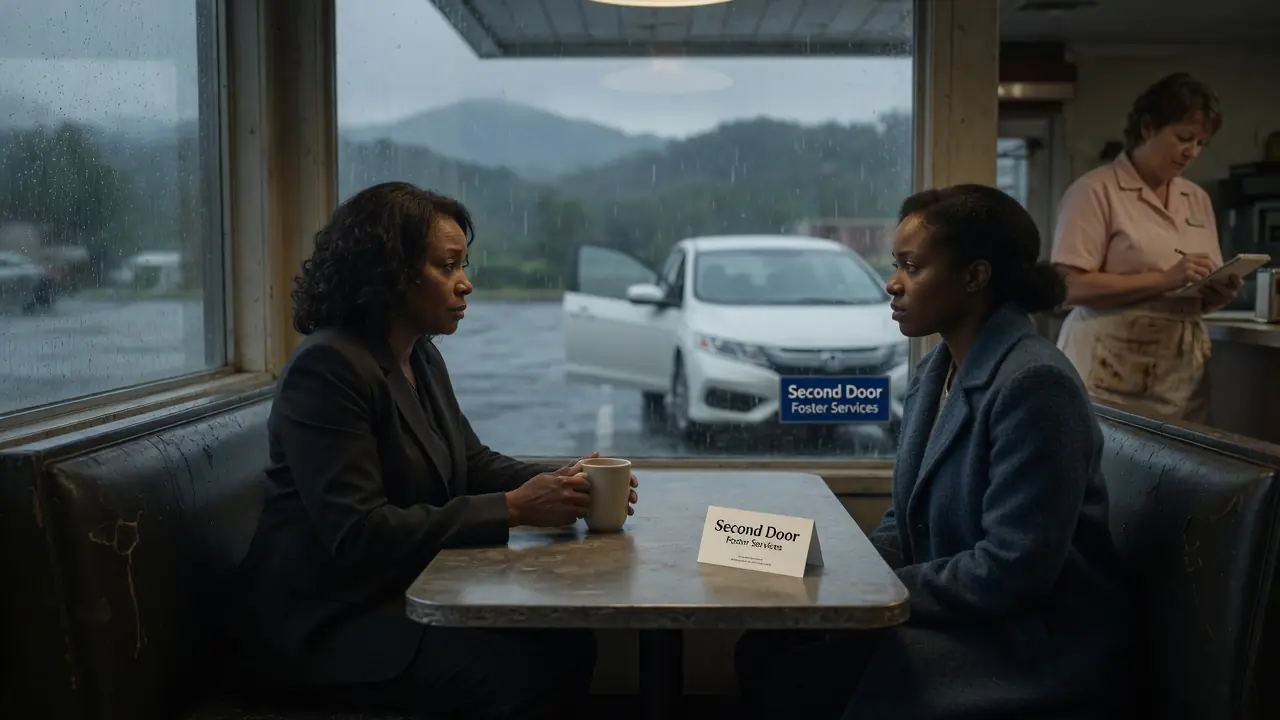
“You’re leaving?”
“I didn’t want to intrude.”
“You already sat through a two-hour fundraiser.”
“I’ve survived longer depositions.”
She looked at me.
“Come by tomorrow.”
“For what?”
“I’m making biscuits.”
“Miss Doreen’s recipe?”
“Yes.”
I tried not to react too strongly.
“What time?”
“Ten.”
“I’ll be there.”
“Ten means ten.”
“I know.”
I arrived at nine-fifty.
The kitchen at Second Door smelled like butter and flour. Keisha stood behind the counter wearing an apron covered in handprints from children.
I washed my hands.
“What should I do?”
“Fold the dough.”
“I don’t know how.”
“She said the secret was not rushing.”
“That could be difficult for me.”
“I know.”
She demonstrated.
I copied her.
My first batch was hard enough to break a window.
The second was better.
We ate the third with blackberry jam.
For several months, that was the shape of our relationship.
Appointments.
Documents.
Biscuits.
Then Marcus’s sentencing arrived.
Keisha asked me to attend.
He pleaded guilty to fraud, extortion, and witness intimidation.
Before sentencing, he requested permission to speak.
He turned toward Keisha.
“I told myself I came back because you were my daughter,” he said. “But I came because your life proved you survived me, and I wanted part of the proof.”
Keisha did not react.
“I used your anger at Vanessa because I knew you had room for only one parent to hate at a time.”
My stomach tightened.
“I am sorry.”
Keisha looked at the judge.
“May I respond?”
The judge allowed it.
She stood.
“You keep calling yourself my father because biology is the only claim you have.”
Marcus lowered his eyes.
“Miss Doreen was my parent. She stayed. You arrived when there was something to take.”
Her voice remained steady.
“I hope prison gives you enough quiet to become someone who can tell the difference.”
Marcus received nine years.
Outside court, reporters surrounded us.
One asked whether Keisha had reconciled with her biological mother.
She looked at me.
“No,” she said.
The answer hurt.
It was also honest.
Then she added, “We are building something.”
That was enough.
Two years after our first meeting, Second Door opened a second location in Charlotte.
The building had once belonged to Harris, Brandt & Cowell.
Federal receivers sold it after the firm’s collapse.
Keisha purchased it with grant funding and settlement money recovered from the county.
The seventeenth floor, where I had once hidden a baby beneath my desk, became transitional housing for young mothers aging out of foster care.
The old executive conference room became a daycare.
My corner office became a playroom.
The first time I walked inside, I had to sit down.
A toddler pushed a wooden train across the carpet where my desk once stood.
His mother, a nineteen-year-old named Lacey, studied for a nursing exam beside the window.
Keisha stood in the doorway.
“You okay?”
“Yes.”
“You’re crying.”
“I know.”
She entered and sat beside me.
“I almost sold this floor to another nonprofit.”
“Why didn’t you?”
“Because this seemed more useful.”
“You knew this was my office.”
“Yes.”
“Is this revenge?”
“No.”
She watched the toddler roll the train toward the wall.
“It’s correction.”
I smiled through tears.
“That sounds like something a lawyer would say.”
“Unfortunately, I know one.”
Our relationship changed slowly after that.
Not because I paid for buildings.
Not because I won cases.
Because I showed up.
When Keisha had minor surgery, I drove her home and slept in a chair near the sofa.
She woke at three in the morning and found me there.
“You can go home.”
“I know.”
“You have court.”
“I moved it.”
She stared at me.
“You moved court?”
“Yes.”
“For me?”
“Yes.”
She looked away.
“Do not make a big thing out of it.”
“I won’t.”
The following Christmas, she invited me to dinner.
There were twelve people.
Former foster youth.
Staff members.
Two children.
Miss Doreen’s son from Raleigh, whom Keisha had finally contacted.
No one introduced me as her mother.
I was Vanessa.
I brought pie.
It burned.
We ate it anyway.
After dinner, Keisha handed me a small box.
Inside was one of the birthday cards I had sent.
The envelope had been opened but never delivered.
“How did you get this?”
“Miss Doreen kept it.”
I removed the card.
It showed a cartoon giraffe holding balloons.
Inside, I had written:
Happy sixth birthday, Aaliyah. I think of you every day. Love, Mom.
My throat closed.
“She saved them?” I asked.
“Twenty-two.”
“All of them?”
“Most.”
“Did you read them?”
“Yes.”
“When?”
“After she died.”
I pressed the card against my palm.
“Why give me this one?”
“Because six was the year I stopped asking when you were coming.”
I closed my eyes.
“Keisha—”
“I’m not telling you to hurt you.”
“I know.”
“I’m telling you because I don’t want our relationship built on protecting you from the cost.”
“You shouldn’t.”
She sat across from me.
“I believed for years that you never tried.”
“I barely did.”
“You tried badly.”
“Yes.”
“That matters differently than not trying at all.”
I looked at her.
“Is that forgiveness?”
“No.”
I nodded.
“Okay.”
She smiled faintly.
“Maybe stop asking.”
“I didn’t ask.”
“You did with your face.”
A year later, she called me at seven on a Sunday morning.
“I’m outside.”
I opened my front door.
Keisha stood on the porch holding a little girl’s hand.
The child was about four, with two braids and a pink backpack.
“This is Nia,” Keisha said.
Nia stared at me.
“Hello.”
She hid behind Keisha.
“What’s happening?” I asked.
“Her placement disrupted last night.”
“Where is the emergency home?”
“Full.”
“Can Second Door keep her?”
“Not overnight. Licensing.”
I looked at the child.
“Why are you here?”
Keisha took a breath.
“I’m asking if she can stay with you for one day.”
My heart began pounding.
“With me?”
“You completed the respite certification.”
“For legal understanding.”
“You passed.”
“I have no practical experience.”
“Neither do half the approved homes.”
“That isn’t reassuring.”
Keisha crouched beside Nia.
“This is Vanessa. She has a dog bed but no dog.”
Nia peeked at me.
“Why?”
“The dog died,” I said.
“Did she cry?”
“Yes.”
Nia considered that.
“Can I see the bed?”
I stepped aside.
Keisha remained for twenty minutes.
Then she left.
Nia stood in my living room holding her backpack.
For one terrifying second, I was twenty-seven again, looking at a child who did not know whether I was safe.
“What do you need?” I asked.
“Pancakes.”
“I don’t know how to make pancakes.”
She frowned.
“You old.”
“I am.”
“You should know.”
“That seems fair.”
We ruined the first batch.
The second stuck to the pan.
The third was edible.
Nia stayed two days.
Then four.
An approved foster home became available.
When the social worker arrived, Nia refused to let go of my coat.
“I don’t want another house.”
I looked at Keisha.
She stood near the door, watching.
I knelt.
“The people you’re going with are named Laura and Ben.”
“Do they make pancakes?”
“Probably better than me.”
“I want yours.”
My chest broke open.
“I’ll see you Saturday.”
“No.”
“Yes.”
“People say that.”
“I know.”
“Then they don’t.”
I looked at Keisha.
She gave no rescue.
No answer.
This promise had to belong to me.
“I will be there Saturday at ten.”
Nia stared at me.
“Ten means ten.”
“Yes.”
I arrived at nine-fifty.
For the next year, I visited every Saturday.
Nia was eventually adopted by Laura and Ben.
They allowed me to remain in her life.
She called me Miss Vanessa.
That was enough.
The experience changed something in Keisha too.
One afternoon, while we watched Nia ride a bicycle, she said, “You’re good with her.”
“I’m terrified constantly.”
“That might be why.”
I laughed.
“She deserves better pancakes.”
“She likes the bad ones.”
“They are improving.”
“No, they aren’t.”
We sat on a bench.
After a while, Keisha said, “I used to imagine meeting you.”
“What happened in the imagination?”
“Different things.”
“Was I cruel?”
“Sometimes.”
“Did I beg?”
“Usually.”
“Did you forgive me?”
“Never.”
I looked at her.
“And now?”
She watched Nia pedal in circles.
“Now I don’t imagine it anymore.”
I waited.
“You’re real.”
That was the closest thing to acceptance she had offered.
I did not reach for more.
Years passed.
Second Door expanded to four cities.
Keisha became nationally known for her advocacy. She testified before Congress about children aging out of care.
I watched from the audience.
When a senator asked why she had dedicated her life to the work, she said, “Because a reliable door should not be a rare thing.”
She never mentioned me.
She did mention Miss Doreen.
After the hearing, we ate at a small restaurant near the Capitol.
Keisha ordered black coffee after dinner.
I smiled.
“What?”
“Marcus drank it that way.”
Her face changed.
“I know.”
“You remember?”
“Some details stay.”
I nodded.
“Do you regret naming Second Door?”
“No.”
“Even after telling me it wasn’t for me?”
She looked at me.
“It wasn’t.”
“I know.”
“But that doesn’t mean you cannot help hold it open.”
My eyes filled.
Keisha sighed.
“You cry more now.”
“I used to schedule it.”
“That sounds miserable.”
“It was efficient.”
She laughed.
The sound surprised both of us.
On my sixty-second birthday, Keisha gave me a key.
It belonged to a small office inside Second Door’s Charlotte building.
The door bore a brass plaque.
VANESSA MONROE LEGAL ADVOCACY CENTER.
I stared at it.
“I said no public donations.”
“It isn’t about donations.”
“Then why my name?”
“Because people should know who does the work.”
“I don’t deserve this.”
“No.”
The answer was immediate.
I looked at her.
She continued.
“Deserving is not the point.”
“What is?”
“What you do after you understand what you did before.”
I held the key.
“Thank you.”
“Your office hours begin Monday.”
“Office hours?”
“Four days a week.”
“I’m sixty-two.”
“You had seventy-hour weeks at twenty-seven.”
“That nearly destroyed us.”
“Then try thirty.”
I smiled.
“Is this employment?”
“It is accountability.”
The center represented birth parents navigating reunification, foster youth challenging unsafe placements, and young adults seeking sealed records.
We never promised families they would be restored.
Some should not be.
We promised only that they would be heard before someone closed the door.
One case involved a young mother named Tasha.
She worked two jobs and missed visits because bus routes failed. The county called her inconsistent.
I saw myself in her.
That frightened me.
“Do not turn her into you,” Keisha warned.
“I’m not.”
“You are arguing from guilt.”
“I’m arguing from evidence.”
“Good. Keep doing that.”
We won Tasha six additional months.
She completed reunification.
The day she carried her son out of court, I stood in the hallway and cried.
Keisha remained beside me.
“You think that could have been us,” she said.
“Yes.”
“It might not have been.”
“I know.”
“You might still have chosen work.”
“I know.”
She looked at me.
“Good.”
She had become the person who refused to let regret invent a prettier past.
I needed that.
When I was sixty-five, I suffered a heart attack in my office.
It happened quietly.
A pressure beneath my ribs.
Sweat.
A sudden certainty that something was wrong.
I called 911, then Keisha.
She arrived before the ambulance left.
At the hospital, the doctor said the blockage required surgery.
Keisha sat beside the bed, filling out forms.
“Emergency contact?” the nurse asked.
Keisha paused.
I waited.
“She can list me,” she said.
The nurse looked between us.
“Relationship?”
Another pause.
Keisha answered, “Family.”
Not daughter.
Not mother.
Family.
I turned my face toward the window so she would not see me cry.
The surgery went well.
During recovery, Keisha brought biscuits.
They were terrible.
“You rushed the folding,” I said.
“Be grateful.”
“I am.”
She sat beside the bed.
After a while, she reached into her bag and removed a folded document.
“What is that?”
“Advanced directive.”
“Mine?”
“Yours.”
“You brought legal documents to a hospital?”
“You trained me badly.”
I read it.
She had listed herself as my healthcare proxy.
My hands began shaking.
“You don’t have to do this.”
“I know.”
“Are you sure?”
“No.”
I looked at her.
“Then why?”
“Because being afraid of a promise is not the same as being unable to make one.”
I signed.
She signed as witness.
At seventy, I retired from full-time legal work.
I still came to Second Door twice a week.
Keisha was forty-six.
Gray had begun to appear near her temples.
She remained taller than I was and more controlled than I had ever managed to become.
One rainy October morning, we returned to Lakeside Diner.
The same waitress was no longer there.
The booths had been reupholstered.
The bell above the door rang differently.
We sat near the window.
Keisha ordered black coffee.
I ordered tea.
“You changed,” she said.
“My cardiologist insisted.”
“I meant the booth.”
I looked around.
“We sat over there.”
“I know.”
For a while, we watched rain slide down the glass.
Then Keisha placed a business card on the table.
It was identical to the first one except for the title.
Keisha Monroe. Founder and President Emeritus. Second Door Foster Services.
“You’re stepping down?”
“Next year.”
“What will you do?”
“Teach. Write. Sleep.”
“You hate sleeping.”
“I have not tried it properly.”
I smiled.
She looked at me.
“Do you remember what I told you the first time?”
“That Second Door wasn’t for me.”
“Before that.”
“A reason to stay.”
“Yes.”
I waited.
“She looked at me the way people who have survived something look at the person who made them survive it.”
I closed my eyes.
“I remember.”
“I thought I meant Miss Doreen.”
“Didn’t you?”
“Partly.”
She turned the card over.
On the back, she had written one sentence.
You stayed long enough to become someone I could choose.
My vision blurred.
“Keisha.”
“I still don’t forgive everything.”
“I know.”
“Some things cannot be forgiven into disappearing.”
“I know.”
“But I don’t need them to disappear anymore.”
She took a sip of coffee.
“I need you to hear something without turning it into a speech.”
“I’ll try.”
She looked directly at me.
“You are my mother.”
The diner continued around us.
Plates clinked.
A child laughed near the counter.
Rain struck the windows.
For more than forty years, I had imagined that word returning to me.
In every version, I said something worthy of it.
I apologized.
I promised.
I explained.
But the truth was that no sentence could carry what that moment required.
So I reached across the table and placed my hand near hers.
I did not touch her.
I waited.
Keisha looked down.
Then she turned her palm upward.
I placed my hand inside it.
Her fingers closed around mine.
“I’m sorry,” I whispered.
“I know.”
“I love you.”
“I know that too.”
The answer did not absolve me.
It did something more difficult.
It allowed love to exist beside the damage.
We sat there until the rain slowed.
When we left, I paid the check.
Outside, the parking lot gleamed beneath a pale sky. Keisha’s car was parked beside mine, neither of us quite ready to get in.
“I don’t need a mother,” she said.
The sentence no longer sounded like rejection.
“I know.”
“I built a life without one.”
“I know that too.”
“But I have room for you.”
I looked at her.
“How much room?”
She smiled.
“Do not negotiate.”
“I’m a retired lawyer. It’s a condition.”
“Sunday dinner.”
“What time?”
“Six.”
“I’ll be there at five-fifty.”
“Bring pie.”
“I still burn pie.”
“Buy one.”
“That feels dishonest.”
“It feels edible.”
She opened her car door.
Before getting inside, she looked back at me.
“Mom?”
The word stopped my breath.
“Yes?”
“Do not be late.”
“I won’t.”
She drove away.
I remained in the parking lot, watching her car disappear onto Route 7.
The first door had closed in a courthouse when I was twenty-seven.
I had closed it myself.
No explanation could change that.
No career, donation, or act of service could give my daughter back the childhood she survived without me.
But Miss Doreen had been right about people.
The ones worth keeping are sometimes the ones who show up after they have every reason not to.
Keisha showed up at the diner.
She gave me one chance.
I did not earn another through money or arguments.
I earned it minute by minute, visit by visit, Saturday by Saturday, by learning that love is not what you feel while absent.
Love is the time you keep.
The promises you do not make lightly.
The doors you remain beside when the person behind them is not ready to open them.
I chose my career over my daughter when she was three.
That sentence will always be true.
But it is not the only true sentence left in my life.
At seventy, I drove home, bought a pie from the bakery near my house, and set an alarm for Sunday afternoon even though I knew I would not need it.
On Sunday, I arrived ten minutes early.
Keisha opened the door before I could knock.
Behind her, the house was filled with voices from former foster youth, staff members, children, and people who had built a family not from biology alone but from the repeated decision to remain.
She looked at the bakery box.
“You bought it.”
“You told me to.”
“That’s new.”
“I’m learning.”
She stepped aside.
For one second, I stood on the threshold.
Then my daughter opened the door wider.
And this time, I walked through.