The night Sophia Bennett lost her job, she was holding an elderly woman's empty soup bowl in one hand and the last eighty-three dollars in her checking account in the other. The manager of the Royal Garden restaurant stood beneath a chandelier worth more than Sophia earned in a year, ordering her to remove her apron while a room full of wealthy diners pretended not to stare. At the table beside the window, the old woman clutched a battered brown purse and whispered that she had never meant to cause trouble. Sophia looked at the frightened face across from her and realized she would make the same choice again, even knowing what it would cost.
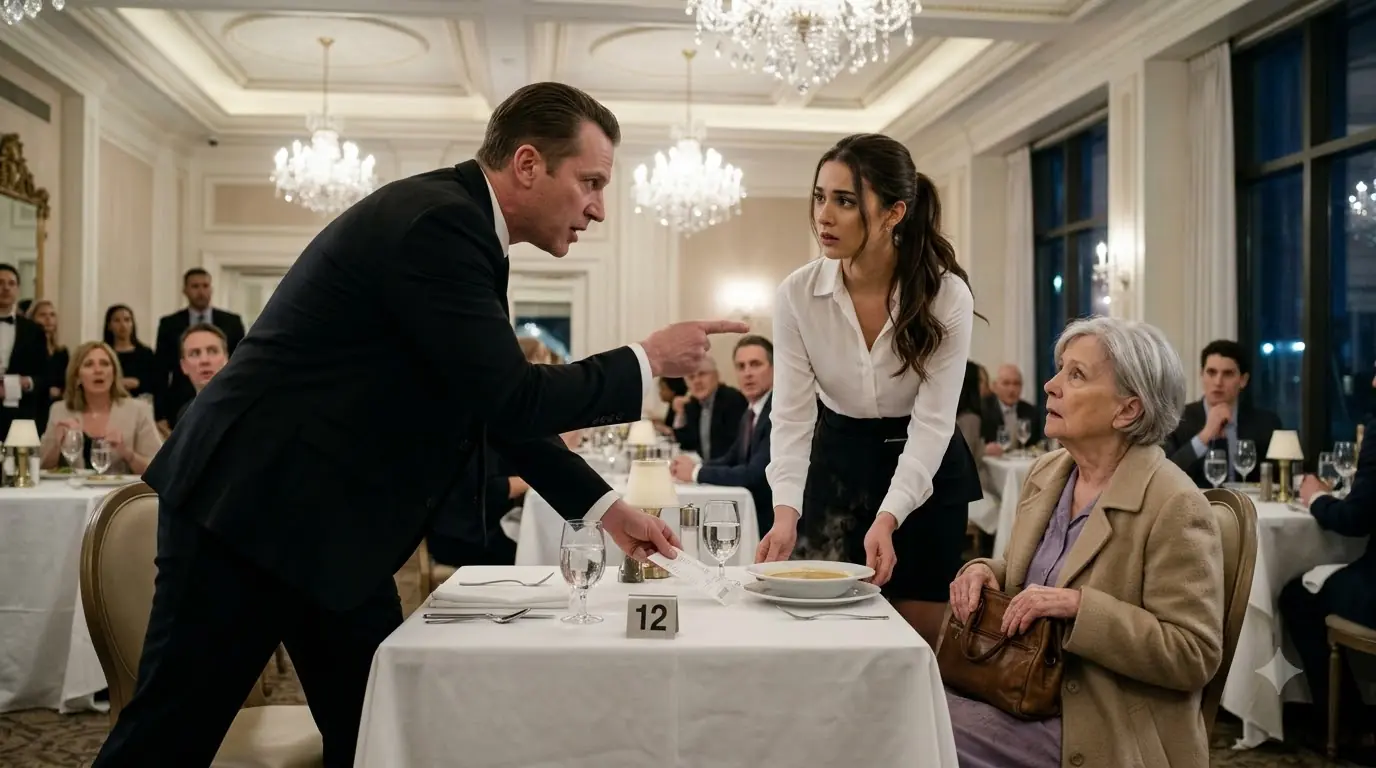
It was the coldest November evening Chicago had seen in years. Rain had turned to sleet along Michigan Avenue, and the wind drove icy needles beneath the collars of people hurrying past the restaurant's gold-lettered windows. Inside, Royal Garden glowed with white tablecloths, polished silver, and the soft music of a pianist near the marble staircase. Sophia had worked there for almost four years, long enough to recognize that the room's beauty depended on people nobody bothered to notice.
She was twenty-seven, with dark chestnut hair pinned into a practical knot and tired blue eyes that still managed to brighten whenever a guest smiled. Her mother, Linda, had been recovering from a stroke for eleven months, and Sophia paid most of the rent on their small apartment in Bridgeport. Her younger brother, Owen, was finishing a nursing program and worked weekends at a grocery store. Between medical bills, tuition, and an aging furnace that had failed twice, every shift at Royal Garden mattered.
Sophia had once loved the place. Her father had taken her there for hot chocolate on her sixteenth birthday, saving for weeks so they could sit in the elegant dining room and feel, for one evening, like people who belonged anywhere. The restaurant's founder had greeted them personally and sent out a little chocolate cake without charge. Her father had died three years later, but Sophia remembered that kindness more clearly than the chandeliers or the dessert.
The founder was Eleanor Hayes, a name engraved on a brass plaque near the entrance. Staff knew she owned the restaurant through a family holding company, though almost nobody had seen her in years. Her husband had died, her daughter lived abroad, and the regional operations director handled the business. Day-to-day authority belonged to Daniel Brooks, a sharply dressed manager whose obsession with wealthy clientele had gradually changed the atmosphere.
Daniel was forty-two and handsome in a severe, practiced way, with silver at his temples and a voice that grew sweeter whenever a customer wore an expensive watch. He knew the preferences of local executives and the names of prominent attorneys. He also knew how to humiliate a dishwasher without raising his voice. Employees called him Mr. Brooks in public and avoided saying his name at all when he was nearby.
That evening he had already scolded a busboy for carrying glasses through the wrong doorway and docked a server's shift after a guest complained about lukewarm coffee. Sophia kept her head down, delivered plates, and checked her phone only once to see a message from Owen. Their mother had taken her medication and was resting, but the landlord wanted an answer about the overdue heating repair by Monday. Sophia slipped the phone away before Daniel could see it.