Desperation makes a 12-year-old do dangerous things like fencing a dead Hell's Angel's motorcycle. Leonel was drowning in the stench of his mother's sickness and a mountain of past-due bills. He had no aspirations of being a hero. He just wanted her racking coughs to stop. Pushing a piece of outlaw history down a cracked driveway to trade chrome for a handful of pills felt like a rescue mission.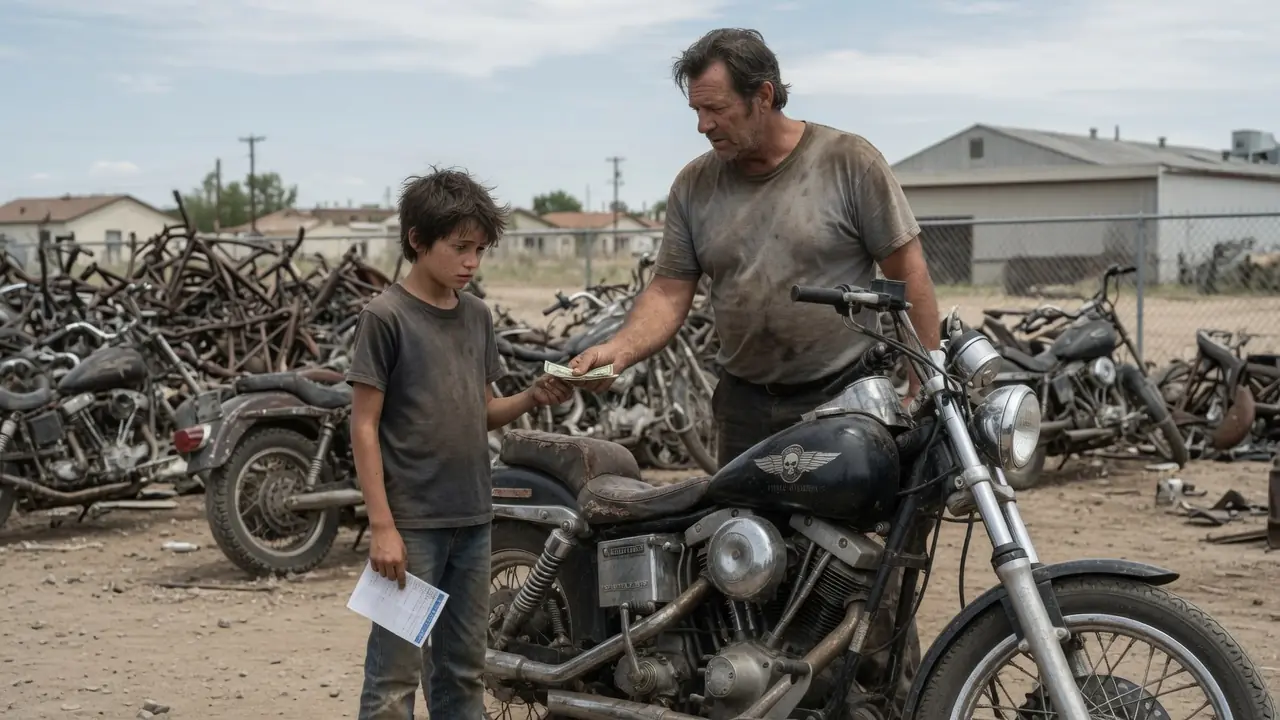
He had no idea hell was about to ride right up his street. The house smelled of isopropyl alcohol and stale chicken broth. It was a dense, heavy odor that clung to the cheap polyester curtains and settled into the fibers of the worn carpet. In the living room, the oxygen concentrator hummed and clicked, a relentless mechanical rhythm that dictated the tempo of their lives. Hiss thump.
Hiss thump. Leonel sat at the edge of the linoleum kitchen table, staring at a pile of crumpled dollar bills and a handful of dull silver coins. $23.40. Down the hall, the coughing started again. It wasn't a dry throat clearing sound. It was wet, deep, and tearing.
The sound of lungs trying to turn themselves inside out. Leonel flinched, his shoulders hiking up toward his ears. He pressed the heels of his hands into his eye sockets until bursts of dull color exploded in the darkness. The coughing fit lasted two agonizing minutes before tapering off into a weak, rattling weeze. His mother's prescription for the nebulizer ampules was $74.
The pharmacy two blocks over had stopped letting them run a tab 3 weeks ago. The pharmacist, a tired man with grease smudged glasses, had looked over the counter at Leonel with pity that quickly hardened into bureaucratic indifference. I can't, kid. I fronted you too much already. Corporates on my ass.
Leonel didn't feel brave. He felt nauseous. His stomach was a tight, cramped knot of anxiety and lack of sleep. He scraped the coins into his pocket. The metallic clink sounded pathetic in the quiet kitchen.
He stood up, his sneakers sticking slightly to the unmopped floor, and walked to the back door. The doorknob was loose, rattling in its housing as he turned it and stepped out into the attached garage. The air in the garage was different. It didn't smell like sickness. It smelled like the past. old motor oil, dry-rotted rubber, and the distinct sharp scent of metallic dust.
The single bare bulb overhead flickered when he pulled the chain, casting long, warped shadows against the unfinished drywall. In the center of the concrete floor sat the Harley-Davidson. It was a 1978 Shovelhead. It wasn't shiny or polished like the bikes parked outside upscale bars on Sunday afternoons. It was matte charcoal, chipped, and scarred from decades of hard miles.
The chrome was pitted, the leather seat was cracked, the foam underneath brittle and yellowing. On the oil tank, barely visible beneath a layer of dust, was a fading decal. A winged skull. Leonel's father had been dead for 4 years. A semi-truck had crossed the center line on a rainy stretch of highway up north.
It was an ordinary, stupid death for a man who had lived his life loud and violently. He had left behind a closet full of heavy leather, a box of polaroids featuring massive bearded men in matching cuts, and this machine. Leonel stared at the bike. He didn't feel reverence. He didn't look at the motorcycle and see his father's legacy.
He saw $74. He saw heat for the winter. He saw quiet nights where his mother didn't sound like she was drowning in her own chest. He hated the bike. He hated the space it took up.
The constant reminder of a ghost that offered no child support and paid no bills. Leonel stepped closer, running a finger along the cold, dusty steel of the handlebars. It left a clean, oily streak on his skin. He grabbed the left grip, his small hand barely wrapping around the thick rubber. He strained, trying to pull the bike upright off its kickstand.
It didn't budge. The thing weighed over 600 pounds. It was a dead, massive chunk of iron. "Come on," Leonel muttered, his voice cracking. He planted his worn Converse sneakers against the concrete, bent his knees, and shoved his right hip against the seat.
He gritted his teeth, a low grunt escaping his throat as he pushed with everything he had in his 70 lb frame. The suspension groaned. Slowly, the heavy frame tipped upward. The kickstand scraped against the concrete with a loud, teeth-setting screech. Leonel's arms shook violently, the muscles in his forearms burning.
He barely managed to kick the heavy metal stand up with his heel before the bike threatened to tip the other way. He caught it, leaning his entire body weight against the gas tank, his breath coming in ragged gasps, his knee throbbed where he had jammed it against the primary cover. He was sweating now, a cold, clammy sweat that made his t-shirt cling to his spine. He didn't have a plan. He just knew that four blocks away on the edge of the industrial park, there was a salvage yard and used parts shop run by a guy named Cobb.
Cobb bought anything, and Cobb didn't ask questions. Leonel grabbed the handlebars, his knuckles pale. He began to push. The tires were slightly underinflated, making the bike feel like it was rolling through wet cement. Every crack in the driveway, every pebble sent a jarring shock up through the forks and into Leonel's shoulders.
He didn't look back at the house. He just focused on the cracked asphalt beneath his feet, the sound of the heavy chain slacking and tightening, the rhythmic squeak of a dry wheel bearing. He was going to sell his dead father's ghost. And he didn't care. The midday sun beat down on the suburban street, cooking the asphalt and sending waves of distortion rising from the asphalt.
It was only four blocks, but it felt like 10 mi. By the second block, Leonel was crying. They weren't tears of sorrow or grief. They were hot, angry tears of sheer physical frustration. The bike was actively fighting him.
Nobody stopped. Nobody wanted to get involved. Leonel's hands were blistered. The rubber grips, hardened by years of sitting in a hot garage, were tearing at the soft skin of his palms. He tasted copper in his mouth.
He had bitten his lip somewhere along the first block without realizing it. As he turned the corner onto Elm Street, the front tire caught the lip of a storm drain. The handlebars snapped violently to the right, jerking Leonel's arms out of their sockets. The weight of the Shovelhead shifted past the point of no return. Leonel cried out, scrambling backward as the 600-pound machine crashed down onto its right side.
The sound was awful. A heavy, resonant crunch of metal on concrete. The right foot peg bent inward. The brake lever snapped clean off, a piece of silver tumbling into the gutter. Leonel stood there, chest heaving, staring at the downed bike.
The smell of raw gasoline immediately hit the air, leaking from the carburetor overflow. It pooled on the hot street, shimmering with a rainbow slick. Get up, Leonel hissed, his voice raw. He kicked the heavy leather seat. Get up, you piece of.
He dropped to his knees, ignoring the sharp sting of gravel tearing into his jeans. He grabbed the handlebars from the ground, planting his feet against the tires, and pulled. It was like trying to uproot an oak tree. He strained until his vision went spotty, the veins in his neck bulging. Slowly, agonizingly, the bike righted itself.
He locked his elbows, his entire body trembling, and shoved the kickstand down with his foot. He leaned against the tank, his cheek pressed against the hot, dusty metal, gasping for air. The scent of spilled gas and his own sweat was suffocating. He didn't have time to rest. If he stopped moving, he wouldn't start again.
He forced himself up, grabbed the bars, and pushed. The salvage yard sat behind a tall chainlink fence topped with rusted barbed wire. The sign above the gate read, "Cobb's Auto and Cycle in peeling red paint. The yard was a graveyard of rusted chassis, stacked tires, and scavenged engine blocks. " Leonel pushed the bike through the open gate, the gravel crunching loudly beneath the heavy tires. Cobb was sitting in a broken office chair outside the main garage door, a greasy rag in his hand, and a half-smoked cigar clamped between yellowed teeth.
He was a large man, his stomach stretching a stained gray t-shirt. When he heard the crunch of gravel, he looked up. His eyes, initially dull with afternoon boredom, snapped into sharp focus. He didn't look at Leonel. He looked at the bike.
Cobb stood up slowly, tossing the rag onto a nearby oil drum. He walked over, his heavy boots crunching loudly. He circled the bike, his eyes tracing the lines of the engine, the custom exhaust pipes, the fading winged skull decal on the tank. Where'd you get this, kid? Cobb's voice was like gravel in a blender.
It's mine. Leonel lied, his voice wavering. He tried to sound tough, but he sounded exactly like a terrified 12-year-old. It was my dad's. Cobb stopped near the engine, squatting down to look at the primary case.
He reached out and touched the bent foot peg. Your dad, huh, Frank? Leonel's stomach dropped. He hadn't expected Cobb to know the name. He nodded tightly.
Cobb stood up, taking the cigar out of his mouth and spitting a fleck of tobacco onto the dirt. He looked down at Leonel, his expression a mix of greed and distinct unease. Frank rode with the angels, the local charter. You know that, right? He's dead, Leonel said flatly.
I need to sell it. Cobb rubbed his jaw. His eyes darted toward the street as if expecting a convoy of dark leather to suddenly appear. Kid, you don't sell a bike like this. This ain't just a motorcycle.
This is club property. Even if Frank is in the ground, the patch on that tank means something. I need money. Leonel insisted, his voice rising, panic bleeding through. My mom is sick.
I need money for her medicine. Just buy it. You buy junk all the time. Cobb looked from the desperate kid to the Shovelhead. It was a beautiful piece of machinery beneath the dust and the newly bent peg.
He could strip it down, file the serial numbers, part it out, and make three, maybe four grand easily. Greed began to win out over caution. It's damaged, Cobb said, kicking the bent peg. Brake levers snapped. Gas is leaking. needs a total rebuild.
It's scrap, really. Leonel knew he was being played. He didn't care. How much? Cobb took a slow drag of his cigar.
400. Even Leonel, who knew nothing about motorcycles, knew that was a robbery. The leather saddlebags alone were probably worth half that. But $400 was medicine. It was groceries.
It was survival. 500. Leonel said, his voice hard. Cobb smiled, a greasy, predatory grin. Cash.
And you never tell anyone you brought this here. You walk away and you forget this bike existed. Understood? Yes, Leonel said. Cobb walked into his cluttered, dim office and returned a minute later with a stack of bills.
They were old, dirty 20s and 50s. He shoved them into Leonel's blistered hand. The money felt greasy. It smelled of motor oil and stale smoke. Leonel didn't count it.
He shoved the wad into his front pocket, turned his back on his father's motorcycle, and walked out of the yard. He felt a heavy hollow void in his chest. It wasn't guilt over the bike. It was the sudden, terrifying realization of what he had done. He had sold a piece of a world he didn't understand. a violent, loyal world that did not forget.
But as his hand brushed against the thick wad of bills in his pocket, the hollowness receded. He broke into a run toward the pharmacy. The bell above the pharmacy door jingled brightly, a sound that felt entirely out of place with the dull thudding in Leonel's head. The air conditioning inside hit him like a physical blow, instantly chilling the sweat on his neck and arms. The same tired pharmacist was behind the counter, staring at a computer screen.
When he saw Leonel approach, his shoulders slumped slightly. Kid, I told you. Leonel pulled a $50 bill from his pocket and slapped it onto the glass counter. It left a faint, greasy smudge. I need the ampules, Leonel said, his voice breathless, his lungs burning from the run. the albuterol and ipratropium for Sarah.
The pharmacist looked at the 50, then up at Leonel. He took in the kid's torn jeans, the bloody scrape on his knee, his grease stained, blistered hands. Suspicion clouded the man's eyes. He didn't reach for the money immediately. Where'd you get this, Leonel?
I sold some stuff. Leonel snapped, the adrenaline making him combative. Are you going to give me the medicine or not? The pharmacist sighed, a long tired sound, and picked up the bill. He held it up to the light for a brief second before turning to the shelves behind him.
Give me a minute. When Leonel walked back out into the afternoon heat, the plastic bag swinging from his hand, he felt a momentary rush of triumph. He had done it. He had solved the problem. The coughing would stop.
The house would be quiet. He walked faster, his worn sneakers hitting the pavement in a steady rhythm. The sky was beginning to darken with the colors of late afternoon, the heat baking the suburban streets into a stifling stillness. When he reached his house, it looked exactly the same. The paint was still peeling around the window frames.
The lawn was still overgrown and patchy, but the silence inside was terrifying. Leonel opened the front door, his heart lodging in his throat. The oxygen machine was still humming, but there was no coughing, no movement. "Mom," he called out, his voice cracking. He rushed down the narrow hallway, the plastic bag crinkling loudly.
He pushed open the door to her bedroom. Sarah was sitting up in bed, propped against a stack of yellowing pillows. She looked terrible. Her skin was a translucent gray, and dark purple hollows sank beneath her eyes. Her breathing was shallow and fast, her chest rising and falling in sharp, jagged jerks.
She was staring blankly at the wall, a damp washcloth clutched in her thin, trembling hands. "Mom," Leonel said, stepping into the room. "I got it. I got the medicine. " He pulled the medicine boxes out of the bag and set them on the bedside table next to a glass of tepid water and a plastic basin. Sarah turned her head slowly, and her eyes moved from the boxes to Leonel's face, then down to his ruined hands and bloody knee.
The relief Leonel expected to see wasn't there. Instead, a deep, primal fear began to pool in her sunken eyes. Leonel, she whispered, her voice rough like dry leaves dragging across concrete. How? I fixed it, Leonel said quickly, backing up a step.
We're good now. I have money for next month, too. Sarah shifted, groaning as the effort stole her breath. She reached out and grabbed his wrist. Her grip was surprisingly strong, her fingernails digging into his skin.
Where did you get the money? Leonel couldn't meet her eyes. He stared at the worn carpet. Cobb's yard. I sold some junk.
We don't have junk. She rasped, a wet rattle in her chest, interrupting her words. She coughed twice, a painful tearing sound before forcing herself to swallow. Leonel, what did you sell? He didn't answer.
The silence in the room stretched out, thick and suffocating. Sarah let go of his wrist. She closed her eyes, her head falling back against the pillows. A single tear leaked out, cutting a clean track through the pale sweat on her cheek. "Oh, God! " she whispered.
"The garage. You sold his bike. It wasn't doing anything. " Leonel shouted, his voice shrill, defensive anger flaring up to mask his sudden terror. It was just sitting there. You were choking, Mom.
You were choking. And he wasn't here to help us. He's never here, so I used it. It's just metal. It's not just metal, Leonel.
Sarah cried out, her voice breaking into a violent fit of coughing. She doubled over, clutching her chest, her face turning an alarming shade of red. Leonel scrambled to open one of the ampules, his greasy hands fumbling with the plastic twist top. He poured the liquid into the nebulizer cup and shoved the mask toward her face. She took it, pressing it over her nose and mouth, inhaling the mist in ragged, desperate gasps.
The machine hissed and sputtered. Leonel stood back, his chest heaving. He felt sick. When the coughing subsided, Sarah pulled the mask away, her hands shaking violently. She looked at him, and for the first time in his life, Leonel saw genuine, unadulterated terror in his mother's eyes.
It wasn't fear of her sickness. It was fear of something external, something violent. Frank was a prospect for 3 years, she whispered, her voice muffled by the remaining mist in the air. He earned his patch in blood. Leonel, that bike, the club helped him build it.
The engine case has the charter insignia engraved on the primary. It belongs to them as much as it belonged to him. It was his, Leonel stubbornly insisted, though his stomach was free falling. He left it to us. They don't see it that way, she said, closing her eyes.
If someone bought that bike, if someone bought a patched member's bike from a kid, they aren't going to just let it go. Cobb knows better. He's going to strip it fast before anyone finds out. Then no one will know, Leonel said, his voice small. Sarah shook her head slowly.
In this town, secrets don't exist. Not when it comes to the angels. Leonel backed out of the room, his mind racing. He went into the kitchen and stood by the sink, turning on the cold water. He thrust his hands under the stream, watching the dark grease and dried blood swirl down the drain.
He rubbed roughly at the dirt on his palms, ignoring the sharp sting of his blisters. He had just wanted to stop the coughing. He turned off the tap. The house was quiet again, save for the mechanical hiss of the nebulizer in the other room. Then he felt it.
It wasn't a sound at first. It was a vibration, a low subsonic tremor that started in the floorboards and crept up through the soles of his sneakers. The dirty water in the bottom of the sink rippled slightly. Leonel frowned. He walked back into the living room and looked toward the front window.
The tremor grew into a hum, a deep guttural thrumming that seemed to vibrate against the glass panes of the window. Leonel walked to the window and pulled back the edge of the polyester curtain. The suburban street was empty, baking in the late afternoon sun, but the air felt heavy, charged with a strange, pulsing energy. The hum deepened into a growl. It was coming from the west, from the direction of the highway.
In the bedroom, Sarah called out. Her voice was thin, laced with absolute panic. Leonel, Leonel, locked the door. He didn't move. He stood frozen at the window, the fabric of the curtain clutched tightly in his greasy, blistered hand.
The growl fractured, splitting into distinct, overlapping roars. It was the sound of heavy V-twin engines, unbaffled exhausts spitting fire and fury. It wasn't one motorcycle. It wasn't 10. It was a wall of sound.
A mechanical thunderhead rolling over the neat suburban lawns and cracked sidewalks. The roar swelled, drowning out the hum of the oxygen machine, vibrating the cheap pictures hanging on the living room walls. The floor beneath Leonel's feet began to genuinely shake. He had sold a piece of their history for $500 and a plastic bag of medicine. Now the history was coming back.
And it sounded furious. The noise didn't just fill the street. It swallowed it whole. It was a concussive physical force. The cheap single-pane window in the living room vibrated so violently that the glass blurred.
On the mantle, a framed photograph of a younger, healthier Sarah vibrated to the edge of the wood and plummeted. the glass shattering against the brick hearth with a sharp crack that was instantly devoured by the roar outside. Leonel stood paralyzed in the center of the living room, his lungs refusing to expand. The heavy, greasy wad of money in his pocket felt like a brick of lead, dragging him towards the floor. Through the sheer curtains, the afternoon sun caught flashes of blinding silver and matte charcoal. They were pouring into the cul-de-sac like a dark liquid metal tide.
The heat radiating off the air-cooled engine blocks distorted the air, making the entire street look like a mirage. Dozens of men clad in heavy denim and worn leather moved with terrifying synchronized precision. They didn't park like normal people. They took over the pavement, the sidewalks, the manicured strips of crabgrass. Then the engines began to die.
It wasn't all at once. It was a staggered cascading wave of silence. Crack-pop, sputter, silence. One by one, the ignition switches were flicked off. The transition from deafening thunder to absolute stillness was jarring.
It left a high-pitched ringing in Leonel's ears. The silence that followed was worse than the noise. Now there were only the subtle intimate sounds of the machinery and the men, the metallic ticking of cooling exhaust pipes, the heavy rhythmic crunch of leather boots hitting the asphalt, the sharp flick of a Zippo lighter, a thick, pungent odor began to seep through the gaps in the front door's weatherstripping. It was the smell of unburned hydrocarbons, hot motor oil, stale sweat, and highway dirt. It completely overpowered the smell of the isopropyl alcohol in the house.
Leonel. Sarah's voice was a frantic wet whisper from the bedroom. She sounded like a cornered animal. Leonel snapped out of his trance. The fear in his stomach turned into a cold, desperate adrenaline.
He ran into the narrow hallway and pulled open the utility closet. His hands scrambled past winter coats and an old vacuum cleaner until his fingers closed around the taped grip of a Louisville slugger. His dad had left it there years ago. The wood felt heavy, dense, and entirely inadequate. Heavy footsteps climbed the three wooden stairs to the concrete porch.
The wood groaned under the weight. Thud, thud, thud. The knock wasn't frantic. It was slow, deliberate, and resonant, struck with knuckles hardened by decades of bad choices. Leonel gripped the bat with both hands, his palms, slick with cold sweat and grease, slipped slightly on the athletic tape.
He swallowed hard, tasting bile at the back of his throat. He walked to the door, his sneakers making no sound on the linoleum. He didn't look through the peephole. He reached out with a trembling left hand, turned the deadbolt, and pulled the door open. The man standing on the porch blocked out the sun.
He was at least 6'4, his shoulders broad enough to fill the door frame. He wore a heavy leather vest over a faded dark t-shirt. The leather was scarred and worn at the edges. On his right breast, a rectangular patch read, "Sergeant at arms. " His beard was a thick, unruly mix of iron gray and dark, framing a face that looked like it had been carved out of a canyon wall. A deep pale scar cut through the hair of his left eyebrow.
He didn't look angry. His dark eyes were flat, devoid of any readable emotion. That lack of expression was the most terrifying thing Leonel had ever seen. Behind the giant, the front yard was a sea of patches. The winged death's head stared back at Leonel from 30 different leather vests.
They were smoking, leaning against their bikes, watching the house in total silence. The giant looked down, his eyes tracked from Leonel's pale, sweat streaked face down to the baseball bat clutched in his trembling hands. "You going to hit me with that, kid? " His voice was a deep gravelly rumble that vibrated in Leonel's chest. Leonel's jaw locked. He wanted to scream, to tell them to leave, but his vocal cords were paralyzed.
He managed a tiny jerky shake of his head. "Good," the man said. He didn't wait for an invitation. He stepped forward. Leonel stumbled backward, nearly tripping over the edge of the hallway runner.
He lowered the bat, pressing his back against the wall to let the man pass. The giant walked into the house, bringing the oppressive smell of the highway with him. He stopped in the living room, taking in the stained carpet, the peeling wallpaper, the shattered glass on the hearth. He looked at the humming oxygen concentrator, his heavy brow furrowing slightly. Sarah, the man called out.
He didn't shout, but his voice carried easily down the hall. A moment later, a weak, rattling voice answered, "In here, Cole. " Cole walked down the hallway. He moved with a heavy rolling gait, the chains on his heavy leather boots clinking softly against the linoleum. Leonel followed a few steps behind, trailing the bat by his side like a useless, forgotten appendage. When Cole reached the bedroom door, he stopped.
He stood in the threshold, his massive frame completely filling the space. Sarah was sitting up. She had pushed the nebulizer mask away, her thin hands clutching the edge of the cheap floral comforter. Her skin was ghastly gray, but her eyes were sharp, locked onto the giant in the doorway. She didn't look terrified anymore.
She looked resigned. She looked like a woman who had known this ghost was coming eventually. "You look like hell, Sarah," Cole said. It wasn't an insult. It was a flat statement of fact.
"My lungs are rotting, Cole. " She replied, her voice breaking on a wet cough. She pounded her chest weakly with a closed fist until she caught her breath. "What do you want? Frank is gone. Frank is gone. " Cole agreed, leaning a massive shoulder against the door frame.
He crossed his arms. The leather of his cut creaked loudly in the quiet room, but his bike was still here until about 2 hours ago. Sarah closed her eyes, her head dropping back against the pillows. He's 12, Cole. He didn't know.
He knows enough to push a 600-lb Shovelhead four blocks in 90° heat, Cole said softly. His dark eyes shifted to Leonel, who was hovering in the hallway. And he knows enough to take it to a scrap rat like Cobb. Leonel flinched as if he'd been slapped. "Where is the bike? " Sarah asked, her voice tight.
"It's back in your garage," Cole said. He uncrossed his arms and reached into the deep pocket of his denim jeans. He pulled out a heavy, greasy shop rag and tossed it onto the foot of Sarah's bed. The rag unrolled slightly, revealing a piece of snapped pitted chrome. It was the brake lever Leonel had broken when the bike fell on Elm Street.
We take a memorial ride for Frank every June," Cole said, his voice dropping an octave, losing its conversational tone. I sent two prospects to pull the bike out, get it running, clean it up. They found an empty garage, so we went looking. Cole stepped fully into the room. The floorboards groaned in protest.
We found it at Cobb's. Cobb had a grinder out. He was about 3 minutes away from shaving the VIN off the frame and hacking the primary case to pieces. The temperature in the room seemed to drop ten degrees. Leonel remembered the greedy predatory look on Cobb's face.
He remembered the greasy wad of bills. "Is Cobb? " Sarah started, her voice faltering. Cobb had a bad accident in his yard. Cole said, his face a stone mask. "Tripped, fell onto a breaker bar, broke his jaw in three places, shattered his collarbone.
The medics were pulling up just as we were riding out. Leonel felt his knees go weak. He slumped against the hallway wall, sliding down until he was sitting on the floor, the baseball bat rolling out of his grip. He had done that. He had pushed the bike down the street, and a man's face had been smashed in because of it.
The $500 in his pocket suddenly felt as if it were burning through his denim jeans, searing his skin. "It's club property, Sarah," Cole said, his tone devoid of sympathy. Frank bled for that patch. The engine case was engraved by the founding president of this charter. You don't sell it.
You don't give it away. And you sure as hell don't let a scrap rat tear it down for parts. We couldn't breathe. Cole. Sarah suddenly screamed.
The outburst tore at her chest, sending her into a violent, horrific coughing fit. She doubled over, gasping, her face turning a deep, bruised purple. Cole didn't move to help her. He stood there watching the brutal reality of her sickness with cold detachment. He waited until the coughing subsided until Sarah was left panting, a thin line of saliva hanging from her lips.
"If you needed money," Cole said quietly, "You should have called the clubhouse. I don't want your money. " Sarah spat, her eyes wet with angry tears. I don't want club money. I want it out. When Frank died, that was supposed to be the end of it.
You don't get to decide when it ends, Cole said. He turned his massive head and looked down the hallway at Leonel. Get in here, boy. Leonel couldn't move. His legs felt like they were packed with wet sand.
He stared at Cole's heavy boots. I said, "Get in here. " The command wasn't loud, but it carried a terrifying absolute authority. Leonel forced himself up. His legs shook so violently he had to keep a hand on the wall to balance himself. He walked into the bedroom, stopping a few feet away from the giant.
He smelled the stale tobacco and the ozone scent of hot engine metal rolling off the man. Cole looked down at him. Empty your pockets. Leonel's breath hitched in his throat. His hands, raw and blistered from the handlebars, shook as he reached into his front pocket.
He pulled out the thick, crumpled wad of 20s and 50s Cobb had given him. He held it out, his arm trembling. Cole didn't take it immediately. He looked at the money, then at Leonel's destroyed hands. The knuckles were scraped raw, the skin across his palms torn and weeping clear fluid.
You pushed it the whole way, Cole noted. It wasn't a compliment. Yes, sir. Leonel whispered. The word sir slipped out automatically, a desperate instinct for survival.
Cole slowly reached out and took the cash from Leonel's hand. His fingers were thick, wrapped in silver rings that looked like brass knuckles. He looked at the wad of bills, then stuffed it into his own vest pocket. That was blood money, kid. Cole said, his dark eyes locking onto Leonel's.
You think you were saving your mom? You were putting a target on her back. If we hadn't found it first, if Cobb had sold those parts to a rival charter, they would have come here, and they wouldn't have knocked. Leonel felt a tear spill over his lower lid, cutting a hot track down his dirty cheek. He didn't wipe it away.
He was too afraid to move. Frank was a hard man, Cole continued, his voice dropping low, vibrating in the small room. He was a violent man, but he never broke an oath. The bike is the oath. It stays in the garage.
It rusts into the concrete if it has to, but it doesn't leave. I understand, Leonel choked out. No, you don't, Cole said flatly. But you will. Cole turned away from Leonel and reached into the inside pocket of his heavy leather cut.
He pulled out a thick thick envelope. It was bulging, held closed by a single piece of masking tape. He tossed it onto the bed right next to the broken brake lever. It landed with a heavy muffled thud. Sarah stared at the envelope as if it were a rattlesnake.
"I told you, Cole. We don't want it. It's not a request, Sarah. Cole said. Frank paid his dues.
He took a three-to-five-year stretch in Chino for the club before he even got his full patch. The club takes care of its widows. You use it for the medicine. You use it for the mortgage. I don't give a, but you take it.
Cole turned back to Leonel. He reached out, his massive gloved hand clamping down on Leonel's shoulder. The grip was impossibly strong, the heavy leather grinding against Leonel's collarbone. Leonel winced, bracing for the bone to snap. You're the man of the house now, Cole said, his face inches from Leonel's.
The smell of tobacco and strong coffee was suffocating. So act like it. You don't sell our ghosts. You don't disrespect the patch. You ever pull a stunt like this again, you won't have a garage to keep the bike in.
Understand? Yes, Leonel gasped, his shoulder throbbing under the pressure. Cole held the grip for three agonizing seconds longer, letting the sheer physical threat sink into the boy's bones. Then he let go. He didn't say goodbye.
He simply turned his back on them, walking out of the bedroom and down the narrow hallway. The front door opened and shut with a heavy slam, rattling the frame. Leonel stood frozen, rubbing his aching shoulder. He listened to the heavy boots walk across the porch and down the stairs. Outside, a single voice barked a command.
Instantly, a chaotic symphony of mechanical violence erupted. 30 heavy V-twin engines roared to life, shattering the quiet of the suburban afternoon. The house shook again, the floorboards vibrating beneath Leonel's feet. The thunder rose to a deafening crescendo, a wall of pure noise that felt like physical pressure against the eardrums. Then slowly the pitch shifted as gears were kicked into first.
The roar began to move, rolling out of the culde-sac, stretching down the street and fading towards the highway. It took 5 minutes for the sound to completely disappear, leaving behind a ringing silence that felt heavy and suffocating. Leonel slowly turned to look at his mother. Sarah was still staring at the thick envelope on the bed. She looked smaller than she had an hour ago, hollowed out by the sheer force of what had just occupied her home.
She reached out with a trembling hand and peeled back the masking tape. Inside were stacks of $100 bills, crisp, clean, and bound in tight rubber bands. It was more money than Leonel had ever seen in his life. It was enough for the medicine, the nebulizer ampules, the mortgage, the groceries. It was enough to survive for a year.
But as Leonel looked at the money, he didn't feel relief. He looked at the broken piece of chrome sitting next to the cash. He remembered the sound of the engines, the terrifying flatness of Cole's eyes, the bloody image of a man named Cobb, lying in a scrapyard with a shattered face. The house smelled of sickness again, but beneath it, clinging to the curtains and the carpet, was the lingering scent of exhaust fumes and highway dirt. Leonel had paid for his mother's breath, but as he stared at the club's money sitting on the floral comforter, he realized with a sickening certainty that the real cost hadn't even begun to be collected.
They had bought the medicine, but the club had bought them. The stack of $100 bills sat on the kitchen counter for 3 days. It rested next to the ceramic fruit bowl, a heavy brick-like intrusion in their domestic space. It smelled of mint ink, old leather, and stale tobacco. Every time Leonel walked past it, the scent hit the back of his throat like a threat.
By the fourth day, the pharmacy called. The pharmacist's voice was clipped and professional, lacking the tired pity from before. The tab was due, and the new prescriptions were ready, but corporate was locking the account. Sarah didn't get out of bed to hand Leonel the money.
She simply looked at the kitchen doorway. her eyes dull. "Take two of the bills," she said, her voice stronger than it had been in weeks, a cruel benefit of the resting period the club's violent intervention had afforded her. "Pay him! Bring the change back. Don't buy anything else. " Leonel peeled two crisp hundreds from the stack.
They snapped loudly in the quiet kitchen. He walked to the pharmacy, paid the man with the grease smudged glasses, and took the paper bags. The pharmacist looked at the change, $84, and then at Leonel. He didn't ask where the money came from. The bruised silence in the town had already spread.
People knew Cobb was in the ICU with his jaw wired shut. People knew a convoy of patched riders had idled on Elm Street. Suburbs are built on whispered gossip, and Leonel was now radioactive. When Leonel returned home, the house was cool. Sarah had turned the window unit on.
The hum of the air conditioner masked the clicking of the oxygen concentrator. It felt like a normal house. It felt like a lie. Leonel went into the garage. He didn't turn on the overhead light.
The afternoon sun bled through the single grimy window pane, casting a pale, dusty beam across the concrete floor. The Harley-Davidson was sitting exactly where it had always sat. Leonel stopped 3 ft away from it. He stared at the right side of the handlebars. The jagged, broken stump of the brake lever was gone.
In its place, a polished, pristine piece of chrome jutted out, flawlessly installed. The bent foot peg had been heated and hammered back into perfect alignment. The spilled gas had been scrubbed from the engine block, leaving the fins of the V-twin completely clean. Someone had been in the garage. The realization turned Leonel's blood into ice water.
He hadn't heard the heavy wooden door open. He hadn't heard the grinding of tools or the squeak of work boots on concrete. While he and his mother slept, separated from the garage by a thin sheet of drywall, ghosts in heavy denim had come in, done their work, and slipped back out into the night. They didn't just own the bike, they owned the space it occupied. Leonel walked to the metal shelving unit against the back wall.
His father's old tools were rusting in red metal bins. He found a half empty bottle of chrome polish, the chemical smell sharp and toxic. As he popped the plastic cap, he grabbed a torn, stained undershirt from a rag bucket. He knelt beside the Shovelhead. He poured a dime-sized drop of the pale chalky liquid onto the rag and pressed it against the primary cover.
He started to rub. It wasn't an act of love. It wasn't reverence for the dead man who had built the machine. It was sheer primal terror. Cole had said it clearly.
You don't disrespect the patch. Keep it clean. Leonel rubbed the metal until his shoulder joints burned. He scrubbed away the oxidized pitting, the stubborn grease spots, the layer of suburban dust that had settled over the charcoal paint. The chemical tang of the polish burned his nostrils, making his eyes water.
But he didn't stop. The garage was stiflingly hot, the air dead and stagnant. Sweat dripped off his nose, landing on the cold concrete. He cleaned the spokes of the front wheel one by one. He ran the cloth over the heavy braided fuel lines.
He polished the winged skull on the gas tank until the decal looked like it was floating beneath the clear coat. He spent 3 hours on his knees, destroying his fingernails, filling the raw, healing blisters on his palms with toxic grit. When he finally stood up, his back cracked loudly. The bike gleamed in the fading light. It looked lethal.
It looked like a weapon sitting in a concrete bunker, waiting to be deployed. Leonel dropped the blackened rag into the bucket. He wiped his sweating forehead with the back of his forearm, smearing a streak of dark grease across his brow. He stared at his reflection in the polished chrome of the exhaust pipe. His face was distorted, stretched out and warped by the curve of the metal.
He didn't look like a boy who had saved his mother. He looked like a prospect. The heat of June arrived with a suffocating wet hostility. The crabgrass in the front yard turned a brittle, sickly yellow. The asphalt on the street baked until it was soft enough to hold the imprint of a heavy boot.
The money in the envelope had dwindled, but it was still thick enough to keep the bill collectors away. Sarah's color had returned. The deep tearing coughs had softened into a manageable, dry hack. She walked around the house, watered the dying ferns on the back porch, and cooked actual meals. But there was a fragility to her movements, a hypervigilance.
She spent hours staring out the front window, tracing the line of the cracked driveway with her eyes. She was waiting. On the second Saturday of the month, the waiting ended. It began just as it had before, a subsonic vibration that rattled the cheap china in the kitchen cabinets. But this time, it wasn't a sudden angry swarm.
It was a slow, deliberate march. Leonel was sitting on the front porch steps. a melting cherry popsicle was dripping sticky red syrup over his knuckles. He didn't run inside. He didn't grab the baseball bat. He just watched the horizon where the street met the county highway.
The heat haze distorted the incoming shapes, turning them into wavering, dark monoliths. Then the sound hit the culde-sac. It was 20 bikes. They rode to a breast, holding a flawless tight formation. The heavy, unbaffled exhausts hammered against the humid air, creating a wall of concussive pressure.
Neighbors on the street didn't come out to watch. Front doors shut. Blinds were snapped shut. The neighborhood held its breath as the outlaw tide rolled in. Cole was at the front.
He wasn't wearing a helmet, just a pair of dark wraparound sunglasses that hid his eyes. His massive scarred arms easily managed the heavy raked front end of his custom chopper. He pulled up to the curb directly in front of Leonel's house and cut the engine. The 19 riders behind him followed suit in a staggered, rippling wave of dying thunder. The quiet that followed was heavy with the smell of hot oil and melting shoe rubber.
Cole swung his heavy boot over the leather saddle. He walked up the cracked driveway, his chains clinking. He didn't look at the house. He looked down at Leonel, who was still sitting on the steps, the popsicle stick now a piece of sticky red wood in his hand. Garage, Cole said.
It wasn't a request. Leonel stood up. His legs felt steadier than they had a month ago. The terror was still there, a cold lump in his gut. But the panic had burned out, replaced by a dull, fatalistic acceptance.
He walked to the garage, Cole's massive shadow swallowing him. Two other men broke from the pack and followed. One was young, maybe 22, wearing a bottom rocker patch that simply said, "Prospect. " He had a ratty blonde beard and nervous, eager eyes. The other was an older man with a face like a dried apple and a spiderweb tattooed across his throat. Leonel grabbed the handle of the heavy wooden garage door and heaved it upward.
The springs groaned, screaming in protest as the door rolled along its tracks. The afternoon light flooded the space, hitting the Shovelhead. It was immaculate. The chrome blinded them for a second. There wasn't a speck of dust on the charcoal paint.
The leather seat had been conditioned. Cole stopped at the threshold. He pulled off his sunglasses, his dark, flat eyes taking in the machine. A slow, almost imperceptible nod tilted his massive head. He looked down at Leonel's hands, noting the dirt permanently ground into the cuticles, the calluses forming over the healed blisters.
"You kept it clean," Cole rumbled. "Yes," Leonel said quietly. Cole turned to the younger man. "Dutch, roll it out. " The prospect stepped forward eagerly. He grabbed the handlebars, his boots finding traction on the concrete, and pushed the heavy machine backward down the driveway.
The suspension squeaked softly, a stark contrast to the aggressive lines of the bike. Dutch stopped the bike at the bottom of the driveway, right at the edge of the street. He kicked the heavy stand down and stepped back, wiping his hands on his denim jeans. "Fuel it," Cole ordered the older man with the neck tattoo. The man walked to his own saddle bag, pulled out a battered red metal jerry can, and walked over.
He unscrewed the gas cap on the Shovelhead, and poured a gallon of premium fuel into the tank. The sharp, intoxicating smell of raw gasoline immediately overpowered the humid summer air. Cole looked at Leonel. Get over here. Leonel walked down the driveway.
He stood next to Cole, dwarfed by the giant and the 20 heavy machines lining the curb. The patched men were silent, smoking, watching the ritual. Today is Frank's run, Cole said, his voice carrying easily over the quiet street. He rode with us for seven years. He bled for the patch.
He took a bullet in the thigh in San Bernardino, and he did time in Chino without opening his mouth. We don't forget our dead. Cole turned his gaze to Leonel. It was a heavy physical weight, and we don't let their machines rot. Cole nodded at Dutch.
Dutch swung his leg over the Shovelhead. He turned the petcock valve to let the fuel flow into the carburetor. He twisted the throttle twice, priming the engine. He pulled the choke. Then he stood up on the kickstart pedal.
The prospect dropped his entire body weight onto the heavy steel lever. The engine groaned, the pistons fighting the heavy compression, but it didn't catch. Dutch cursed softly, reset the pedal, and kicked again. Chuff. Nothing.
Give it more throttle, idiot. The older man barked. Dutch twisted the grip, stood up high, and brought his boot down with brutal force. The Shovelhead roared violently to life. It wasn't a smooth, modern hum.
It was a chaotic, earthshaking mechanical thunder. The exhaust pipe spat a visible puff of blue smoke that smelled of rich fuel and burning carbon. The ground physically shook. The sound bounced off the vinyl siding of the houses, trapping the noise in the cul-de-sac and amplifying it. Dutch revved the engine.
Crack, crack, rumble. Flames licked out of the straight pipes. It sounded like a heavy machine gun firing in an enclosed room. Leonel flinched, his hands instinctively coming up to cover his ears. Cole grabbed his wrists and pulled them down.
The grip was immovable. Listen to it. Cole shouted over the deafening roar, his face inches from Leonel's ear. That's his ghost. That's what you tried to sell to a scrap rat.
Leonel kept his hands down. The noise battered his eardrums, rattling his teeth in his skull. The vibration traveled up through the asphalt into his sneakers and vibrated in his chest cavity. It was terrifying, overwhelming, and strangely hypnotic. Cole stepped back.
He raised his right hand and spun his index finger in the air. The 19 other engines fired up simultaneously. The cul-de-sac turned into a cauldron of mechanical violence, smoke, and heat. Dutch kicked the Shovelhead into gear. With a heavy clunk, the transmission engaged.
He let out the clutch and rolled the heavy dark bike into the center of the pack. Cole swung a leg over his own chopper. He looked down at Leonel one last time. There was no warmth in his eyes, no paternal affection. It was a look of cold ownership.
Keep the garage empty. Cole yelled over the thunder. We bring it back at dusk. With a twist of his wrist, Cole launched forward. The pack followed.
They rolled out of the neighborhood in a tight, deafening formation, the Shovelhead locked safely in the center of the chrome tide. Leonel stood on the curb, his ears ringing with a high-pitched whine. He watched them disappear down the county highway, leaving behind a thick cloud of exhaust and the heavy, undeniable silence of the suburbs. He looked back at the house. Sarah was standing in the living room window, partially hidden by the curtain.
Her face was pale, her hand resting flat against the glass. She looked like a prisoner watching the warden walk the yard. The sun began to set, painting the suburban sky in bruised shades of purple and burnt orange. The heat broke slightly, giving way to a damp, heavy evening air. Leonel sat on a turned over milk crate in the center of the empty garage.
The space felt hollow. The oil stains on the concrete were a road map of where the machine belonged. He didn't turn on the light. He just sat in the growing dark, listening to the crickets start their rhythmic chirping in the dying grass outside. He didn't feel relief that the bike was gone.
He felt an anxious gnawing void. At 8:15 p.m., the rumble returned. It was quieter this time, just a single engine. Leonel stood up and walked to the edge of the driveway. The Shovelhead rolled down the street, its single dull yellow headlight cutting through the dusk.
It wasn't Dutch riding it this time. It was Cole. The giant pulled the heavy machine into the driveway, the tires crunching softly on the loose gravel near the curb. He rode it straight into the dark garage, the exhaust echoing loudly off the bare drywall. He hit the kill switch.
The deafening noise died instantly, replaced by the sharp metallic ticking of the air-cooled engine block, rapidly contracting as it began to shed its massive heat. Cole kicked the stand down and stood up. The garage smelled intensely of cooked oil, hot metal, and highway wind. He unclipped a brass ring from his belt loop. A single small metal key dangled from it.
He tossed it through the dark. Leonel caught it against his chest. The metal was still warm from Cole's pocket. He rode hard today. Cole said quietly, his voice a low gravel drag in the dark.
Ran perfect. Not a single miss in the carb. Frank built a good motor. Leonel clutched the key in his dirty hand. Its jagged teeth bit into his palm.
Are you taking it back to the clubhouse? Cole let out a short dry sound that might have been a laugh if it had any humor in it. He walked toward the exit, his heavy boots echoing. He stopped at the threshold, silhouetted against the street lights that were just beginning to flicker on outside. The club has a dozen bikes.
Cole said, looking over his massive shoulder. We don't need a 78, Shovelhead. It belongs here. This is its house. It's Frank's ghost, kid.
You don't get to evict it just because you don't like looking at it. Cole turned and began walking down the driveway. A block away, a heavy truck idled, waiting to pick him up. Cole, Leonel called out. His voice cracked, sounding small and reedy in the cooling air.
The giant stopped, but he didn't turn around. What happens when I turn 18? Leonel asked. The silence stretched for a long moment. Only the ticking of the hot engine filled the gap.
"Then you get a motorcycle license," Cole said flatly. He didn't wait for a response. He kept walking, dissolving into the suburban shadows. Leonel stood alone in the dark garage. He looked down at the silver key in his hand.
Then he looked at the massive charcoal machine sitting in the center of the concrete floor. It wasn't just a motorcycle anymore. It was an anchor. It was a tether tying him to a world of violence, loyalty, and blood that he hadn't asked to be a part of. He had sold it for $500 to buy his mother's breath.
The club had bought it back with an envelope of cash. The transaction was complete. The medicine was in the house. His mother was breathing. But the debt was permanent.
Leonel walked over to the Shovelhead. The engine block was radiating heat, warming the air around his legs. He reached out and touched the cold, polished chrome of the handlebars. He traced the heavy braided clutch cable. He swung his right leg over the cracked leather seat.
He didn't have the weight to compress the suspension. The bike felt massive beneath him, a heavy, unyielding beast of iron and oil. He gripped the handlebars, his blistered, calloused hands easily finding the grooves in the thick rubber. He stared straight ahead at the dark, unfinished wall of the garage. He didn't close his eyes.
He didn't pretend he was riding on an open highway. He just sat there, inhaling the smell of raw gasoline and cooling steel. He felt the heavy key cutting into his palm. He had saved her, but he had sold himself. He settled his weight into the leather saddle, gripped the bars tight, and waited for the years to pass.