1. “I’m Really Glad You Told Me. That Sounds Tough.”
Before asking for facts, give the child emotional safety.
“I’m really glad you told me. That sounds tough.”
These words communicate two important messages.
First, the child did the right thing by speaking.
Second, Grandma is not immediately going to dismiss, lecture, or panic.
Children often hesitate before sharing social pain. They may feel embarrassed that someone rejected them. They may worry the adult will say they are too sensitive. They may fear Grandma will immediately call the parents, contact the school, or turn a private experience into a family discussion.
Beginning with gratitude protects trust.
“Thank you for telling me” tells the child that bringing difficult experiences to a safe adult is wise, not weak.
“That sounds tough” recognizes the emotional impact without declaring that the child’s interpretation is completely accurate.
Grandma is not yet saying, “Those children are terrible,” because she does not know the whole story. She is saying, “Whatever happened, I can see that it hurt you.”
This distinction is important.
A child needs validation, but validation does not require confirming every assumption.
Suppose a grandchild says, “Everyone hates me because nobody picked me first.”
Grandma can respond, “That sounds painful. You really wanted to feel chosen.”
She does not have to say, “Yes, everyone hates you,” or, “Those children were definitely trying to hurt you.”
She validates the feeling beneath the conclusion.
Many older adults were raised to believe that acknowledging children’s feelings would make them more dramatic. We were often told to stop crying, toughen up, or move on. Those responses sometimes produced silence, but silence is not the same as resilience.
A child becomes emotionally stronger when they learn to name pain, understand it, and decide what to do next.
Grandma’s calm presence helps begin that process.
Tone matters. “I’m glad you told me” should not be followed immediately by rapid questioning.
“Who did it?”
“Was it the same child as last time?”
“Why didn’t you tell the teacher?”
The child may feel as though they have entered an investigation before they have had time to breathe.
Pause.
Allow them to experience being received.
Grandma might say, “You don’t have to rush. I’m listening.”
That sentence can be especially meaningful for a child who has been holding the experience all day.
The first response also gives Grandma time to regulate herself. A protective grandparent may feel anger rising quickly. If she reacts too strongly, the child may begin protecting her from the rest of the truth.
They may say, “It wasn’t that serious,” even if it was, because Grandma’s emotion has become another problem to manage.
A steady response tells the child, “Your pain can enter this room without overwhelming the adult.”
That is emotional safety.
There will be times when the child does not want to continue immediately. Grandma can remain available.
“I’m glad you told me this much. We can talk more when you’re ready.”
Do not force the full story simply because the door opened slightly.
The goal is to build a pattern in which the child learns, “When something hurts, Grandma will not make me feel foolish for bringing it.”
That pattern may become crucial later when the situation is more serious.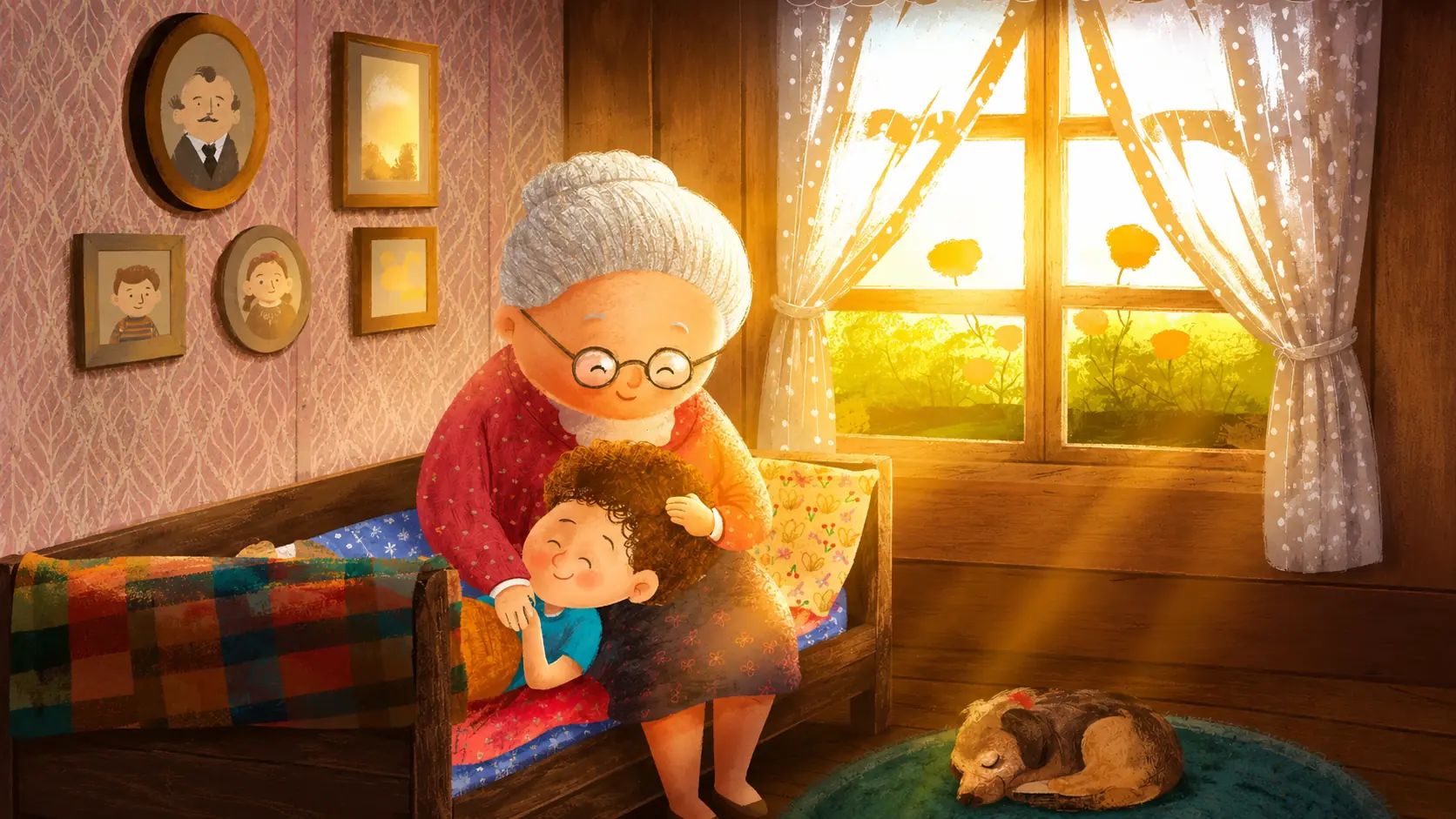
2. “Tell Me Exactly What Happened, Starting From the Beginning.”
Once the child feels heard, help them move from the emotional summary to the actual sequence of events.
“Tell me exactly what happened, starting from the beginning.”
Children often begin with the conclusion.
“They were all mean.”
“She hates me.”
“Nobody wanted me there.”
The conclusion may be understandable, but it leaves out information that could help the child make sense of the experience.
Asking for the beginning encourages slower thinking.
What was happening before the conflict?
Who was present?
What was said?
What happened next?
How did the child respond?
Grandma should listen without deciding too early who was right.
A grandchild may say that another child refused to let them join a game. The full story might reveal that the game had already begun and the group said they could join the next round. The child experienced rejection, but the situation may not have been an intentional act of cruelty.
Another time, the full story may reveal a repeated pattern of exclusion, insults, or threats that adults need to address.
Details help distinguish the two.
Children may not tell the story in perfect order. They may jump between moments, add unrelated details, or remember important information halfway through. Grandma can gently guide.
“What happened right before she said that?”
“Who else heard it?”
“What did you say next?”
The goal is not to cross-examine the child. It is to help them organize the event.
This process itself is educational.
When children are overwhelmed, the brain may hold the entire experience as one painful mass. Retelling the sequence can help separate facts, feelings, assumptions, and choices.
Grandma can reflect back what she heard.
“So you asked to sit with them, and one child said there wasn’t room. Then another child laughed, and that is when you felt they were all against you.”
The child may correct her.
“No, she laughed about something else.”
That correction matters. The story becomes clearer.
Grandma should avoid inserting motives too soon.
“They were jealous.”
“Those children have no manners.”
“They wanted to embarrass you.”
These statements may comfort the child temporarily, but they can also teach them to assign negative motives without evidence.
Listen first.
There are also times when Grandma’s questions reveal that the grandchild contributed to the conflict.
Perhaps the child repeatedly interrupted the game, took something without asking, or used a harsh tone first.
This does not mean they deserved cruelty. Two things can be true: the other children responded badly, and the grandchild made a choice that affected the situation.
Grandma should not jump on this information with, “Well, there you go. It was your fault.”
That reaction can shut down honesty.
Instead, continue listening.
“I see. You were already angry when you said that. Then what happened?”
The child learns that telling the whole truth will not automatically turn Grandma against them.
When the story involves potential danger, ask clear safety questions calmly.
“Did anyone threaten to hurt you?”
“Did anyone touch you or block you from leaving?”
“Did they tell you to keep something secret?”
“Is this happening online too?”
If the answer raises concern, Grandma should involve the parents or responsible caregivers. She should not promise to handle serious issues privately without them.
She can say, “I’m glad you told me. This is something the adults need to help with.”
The child should never feel that asking for help caused the trouble.
For ordinary social conflict, hearing the complete story teaches the child an essential life skill: before deciding what something means, gather enough information to understand what happened.
3. “Do You Think They Meant to Hurt You, or Could Something Else Have Been Going On?”
Once the facts are clearer, Grandma can help the child examine intention.
“Do you think they meant to hurt you, or could something else have been going on?”
This question does not excuse unkind behavior. It teaches the child that impact and intention are related but not always identical.
A comment can hurt even if the speaker did not intend harm.
A child can feel left out even if the group was not deliberately excluding them.
Someone can also claim they were “just joking” while knowingly humiliating another person. Intention should not automatically erase impact.
Grandma’s question invites curiosity rather than immediate certainty.
Perhaps the friend was distracted, embarrassed, or upset about something unrelated. Maybe the group misunderstood what the grandchild wanted. Maybe the other child thought they were teasing in a way both people enjoyed.
Or perhaps they did intend to hurt.
The purpose is not to force the most generous interpretation. It is to consider possibilities.
Children often experience what psychologists call a hostile interpretation of ambiguous behavior. When they are already feeling insecure or hurt, they may assume another person’s action was deliberate.
A friend does not answer, so the child thinks, “She is ignoring me.”
A group changes seats, so the child thinks, “They moved because they hate me.”
Sometimes the assumption is correct. Sometimes important information is missing.
Grandma can ask, “What makes you think they meant it that way?”
This encourages the grandchild to look for evidence.
If the child says, “They looked at me and laughed,” that detail matters.
If they say, “I don’t know. I just felt it,” Grandma can respect the feeling while keeping the conclusion open.
“Your feeling is important. We may need more information before we know what they meant.”
This teaches mental flexibility.
Mental flexibility is not the same as doubting oneself constantly. Children should not be trained to ignore intuition or explain away repeated mistreatment. But they should learn that one interpretation is not always the only possible explanation.
Grandma can use an example from ordinary life.
“Sometimes I am quiet because I am tired, and someone may think I am angry. Their feeling makes sense, but my intention was different.”
This helps the child understand how misunderstandings occur.
She can also teach the grandchild to ask directly when appropriate.
“When you laughed after I spoke, I felt embarrassed. Were you laughing at me?”
Direct clarification can prevent days of painful guessing.
Of course, children need help deciding whether it is safe to ask. If the other person is threatening, much older, physically aggressive, or repeatedly cruel, the child should seek adult support rather than confronting them alone.
Grandma can say, “You can ask questions in safe relationships. You do not have to question someone who frightens you.”
This keeps curiosity from becoming vulnerability to harm.
The deeper lesson is that strong emotions deserve attention, but they do not always provide the complete explanation.
A child who learns this can become less controlled by assumptions and more capable of resolving misunderstandings before they become permanent stories.
4. “Has This Happened Before, or Was Today Different?”
One painful incident and a repeated pattern require different responses.
“Has this happened before, or was today different?”
This question helps the child recognize frequency, repetition, and change.
A single conflict between friends may need conversation and repair. Repeated exclusion, insults, threats, or manipulation may signal bullying or an unhealthy relationship.
Children do not always recognize patterns. They live close to the present moment. An event feels enormous because it is happening now.
Grandma can help them look across time.
“Has this child said things like this before?”
“Does it happen only during one game or in many places?”
“Does the behavior stop when you ask?”
“Do other children join in?”
“Do you feel worried before going to school?”
These questions help determine whether the problem is occasional or ongoing.
Pattern awareness protects children from two opposite mistakes.
The first is treating every isolated disagreement as proof that a relationship is bad.
Friends sometimes disappoint one another. Children make careless comments. A healthy friendship can survive conflict when both people are willing to listen and repair.
The second mistake is normalizing repeated harm.
A child may say, “That’s just how she jokes,” even though they regularly feel humiliated. They may believe friendship requires tolerating cruelty because the other child is kind sometimes.
Grandma can explain, “Everyone makes mistakes. A pattern is what someone keeps choosing after they know it hurts.”
That is an important distinction.
Suppose a classmate makes one insensitive comment, apologizes sincerely, and changes. That looks different from a child who repeatedly targets the grandchild and claims every incident was a joke.
Patterns also include the grandchild’s own reactions. Grandma can gently ask whether similar conflicts occur with many different children.
If the grandchild says “everyone is mean” regularly across several settings, there may be more happening. Perhaps they struggle with social cues, enter games in ways others find difficult, react strongly to small disappointments, or expect friendships to follow very specific rules.
This does not mean the child is to blame for everything. It means they may benefit from coaching or additional support.
Grandma can approach this without shame.
“I notice this feeling has happened with several different groups. Let’s see whether there is something we can help make easier for you.”
The word “we” matters.
The child is not being labeled as the problem. They are being invited into understanding.
Pattern awareness also helps identify changes that deserve attention. A grandchild who previously enjoyed school but suddenly says everyone is mean may be responding to a new class dynamic, friendship breakup, or online conflict.
Grandma should share relevant concerns with the parents.
“I have noticed she has mentioned being excluded several times this week.”
This is more useful than making a dramatic conclusion after one story.
Grandparents should support the parents rather than privately investigating classmates or contacting families without coordination.
A repeated problem requires adults to communicate thoughtfully.
The lesson for the child is valuable beyond childhood. They learn not to define a person by one mistake, but also not to ignore repeated behavior that damages safety and trust.
5. “What Did You Do in That Moment?”
This may be the most delicate question because it can easily sound like blame.
“What did you do in that moment?”
The tone should communicate curiosity, not accusation.
Grandma is not asking, “What did you do to deserve it?” Nobody deserves bullying, humiliation, threats, or violence.
She is helping the child identify their own choices within the situation.
Children often tell stories with themselves positioned only as the recipient of everyone else’s behavior. This is natural. When we are hurt, our attention goes toward what others did.
But personal power begins with recognizing what we did and what choices may still be available.
The grandchild might say:
“I yelled back.”
“I walked away.”
“I told the teacher.”
“I pretended I didn’t care.”
“I called them a name.”
“I didn’t say anything.”
Each answer opens a different conversation.
If the child walked away from escalating behavior, Grandma can reinforce the wise choice.
“You protected yourself instead of making it bigger.”
If they told a trusted adult about danger, say clearly, “That was the right thing to do.”
If they insulted the other child, Grandma can acknowledge the hurt while addressing responsibility.
“I understand why you were angry. Calling them that name probably made the conflict worse. What could you say next time?”
This is accountability without blame.
Grandma should avoid making the child responsible for controlling another person’s behavior. The grandchild can choose their response, but they cannot guarantee that someone else will become kind.
She can say, “You are responsible for your words and choices. They are responsible for theirs.”
That boundary protects the child from carrying excessive guilt.
The question can also reveal that the child froze. Some children become silent when frightened or overwhelmed. Adults may later say, “Why didn’t you just walk away?” or, “Why didn’t you tell them to stop?”
Freezing is a common response to stress. The child should not be shamed.
Grandma can say, “Sometimes our bodies get stuck when we are scared. You did not do anything wrong by freezing. Let’s think about who you could go to if it happens again.”
This restores agency without judging the past.
When a grandchild admits contributing to the conflict, appreciate the honesty.
“Thank you for telling me that part too.”
The child learns that Grandma wants the truth, not a story in which the grandchild must always appear innocent.
This is essential for moral growth.
Children cannot learn responsibility if they believe love depends on presenting themselves as faultless.
Grandma can hold both compassion and accountability.
“What they said was unkind, and your response was also hurtful. We need to think about both.”
That is a fair, mature approach.
6. “If It Happens Again, What Is One Thing You Could Try Differently?”
After the child feels heard and understands more about the situation, help them prepare.
“If it happens again, what is one thing you could try differently?”
The goal is not to create a perfect script for every possible conflict. It is to help the child leave the conversation with one realistic next step.
One step feels manageable.
The child might say:
“I could tell them to stop.”
“I could ask what they meant.”
“I could sit with someone else.”
“I could walk away.”
“I could tell the teacher.”
“I could ask my friend privately instead of yelling in front of everyone.”
Grandma can help turn the idea into language.
“That hurt my feelings. Please stop.”
“Were you laughing at me?”
“I want to play, but not if people are calling names.”
“I’m going to leave now.”
“I need an adult’s help.”
Practicing the sentence aloud makes it more available under stress.
Grandma can role-play briefly.
“I’ll pretend to be the child who won’t give you a turn. What could you say?”
The child practices, Grandma responds, and the situation becomes slightly less overwhelming.
Confidence grows through rehearsal and experience, not only reassurance.
The response should match the level of risk.
For an ordinary misunderstanding, the child may speak directly.
For repeated exclusion, they may need help seeking a healthier group.
For bullying, threats, or physical danger, the plan should involve responsible adults.
Grandma must not say, “You need to stand up for yourself,” in a way that suggests adult help is weakness.
Sometimes the strongest choice is to tell.
She can say, “Handling small problems is a skill. Getting help with unsafe problems is also a skill.”
This teaches judgment.
The phrase “one thing you could try differently” should not imply that the child caused the mistreatment or could always prevent it.
Even a wise response may not change someone who is determined to be cruel.
Grandma can make this clear.
“You can choose a strong response, but you are not responsible for making them behave well.”
That protects the child from blaming themselves if the problem continues.
Grandma should also avoid taking over the entire situation immediately unless safety requires it. Solving every small social problem for the child can create dependence.
She can say, “I believe you can try this first. If it keeps happening, we will involve the adults who can help.”
The child receives both confidence and backup.
When Grandma Should Stop Coaching and Start Acting
Not every situation should remain a reflective conversation.
Grandma should involve parents or responsible caregivers when the child reports repeated bullying, physical aggression, credible threats, discriminatory harassment, coercion, sexual behavior or contact, unsafe secrets, online exploitation, self-harm concerns, or fear that prevents the child from attending normal activities.
A grandchild should never be expected to solve these situations alone.
Take sudden changes seriously too. A child who becomes withdrawn, has trouble sleeping, complains of frequent unexplained physical symptoms, or shows intense fear around a particular person or place may need closer attention.
Grandma can say, “I’m glad you told me. This is important enough that we need more help.”
Do not confront another child or family impulsively without coordinating with the parents. Protective anger can make a situation more complicated.
Share what the grandchild said accurately, without exaggeration or added conclusions.
Avoid promising complete secrecy.
“I will only tell the people who need to help keep you safe.”
This is more honest.
What Not to Say
Some familiar responses can unintentionally close the door.
“Everyone isn’t mean to you” may correct the exaggeration but dismiss the pain.
“Just ignore them” may leave the child without practical support.
“You’re too sensitive” teaches shame.
“You must have done something” sounds like blame before the facts are known.
“I’ll take care of everything” may remove the child’s sense of agency.
Grandma can replace these with curiosity, compassion, and clear support.
The goal is not to prove the child wrong or immediately prove everyone else wrong.
It is to understand enough to respond wisely.
Grandmothers Must Support Parents, Not Create a Secret Alliance
A grandchild may prefer telling Grandma because the relationship feels less pressured. That trust is precious, but Grandma should not use it to compete with the parents.
Avoid saying, “Your mother never understands you like I do,” or, “Don’t tell your father we talked about this.”
These words place the child between adults.
Grandma can say, “I’m glad you came to me. Let’s think about how we can help your parents understand too.”
When the matter is minor, she may encourage the child to speak directly with them.
When it is serious, Grandma should share the concern herself and remain emotionally supportive.
The purpose is to expand the child’s circle of safety, not make Grandma the only safe person.
Before “Everyone Is Mean” Becomes a Lifelong Story
Children are constantly forming stories about themselves and other people.
“I am always excluded.”
“Nobody likes me.”
“I cannot handle conflict.”
“Other people are dangerous.”
One painful experience can begin such a story, especially if no trusted adult helps the child examine it.
Grandma cannot guarantee that grandchildren will always be treated kindly. She cannot remove every rejection, misunderstanding, or friendship loss.
She can help them build a more accurate and resilient inner story.
“This hurt, and I can talk about it.”
“I can gather the facts before deciding what everything means.”
“Not every mistake is deliberate cruelty.”
“Repeated harm deserves attention.”
“I can take responsibility for my choices without accepting blame for someone else’s behavior.”
“I can try a new response.”
“I can ask adults for help when the situation is unsafe.”
These beliefs protect both empathy and self-respect.
The child learns not to excuse cruelty, but also not to assume cruelty everywhere. They learn to trust feelings without treating every feeling as a complete fact. They learn that asking for help and solving problems independently are not opposites.
One day, the grandchild may face a difficult coworker, strained friendship, or misunderstanding in a relationship. Grandma may not be there to hear the first emotional summary.
But her questions may remain inside them.
“What exactly happened?”
“What else might have been going on?”
“Is this a pattern?”
“What did I do?”
“What can I try next?”
This is how emotional coaching becomes inner wisdom.
So when a grandchild says, “Everyone is mean to me,” Grandma does not need to rush into battle or immediately correct the exaggeration.
She can move closer and begin where trust begins:
“I’m really glad you told me. That sounds tough.”
Then she can listen carefully enough to discover whether the child needs comfort, perspective, accountability, a plan, or protection.
Sometimes the situation will require adult action.
Sometimes it will require the child to use a new sentence, reconsider an assumption, or choose a healthier friend.
Every time, it requires the child to know they are not alone.
That is the gift Grandma offers—not a life without unkind people, but a relationship safe enough to help a child understand what happened and strong enough to help them decide what comes next.