My parents took down every door after my brother died, then let my uncle sleep between me and my sister for protection. When I told them he watched us shower and tried to get in with me, my Dad said, "He's family. Family means trust." I just stared at him. That was 11 months ago. Last night, Mom opened a letter, went pale, and threw up in the kitchen sink.
My parents removed every door, wall, and curtain from our house, and made us live in one giant open space because they said physical barriers were the reason my brother was dead. My parents had always been obsessed with what they called radical transparency. When I was young, it just meant no secrets and lots of family meetings. But after my older brother Ryan took his own life in his locked bedroom when I was 10, they spiraled into paranoia about privacy. They blamed his door, said if they'd been able to see him, they could have saved him.
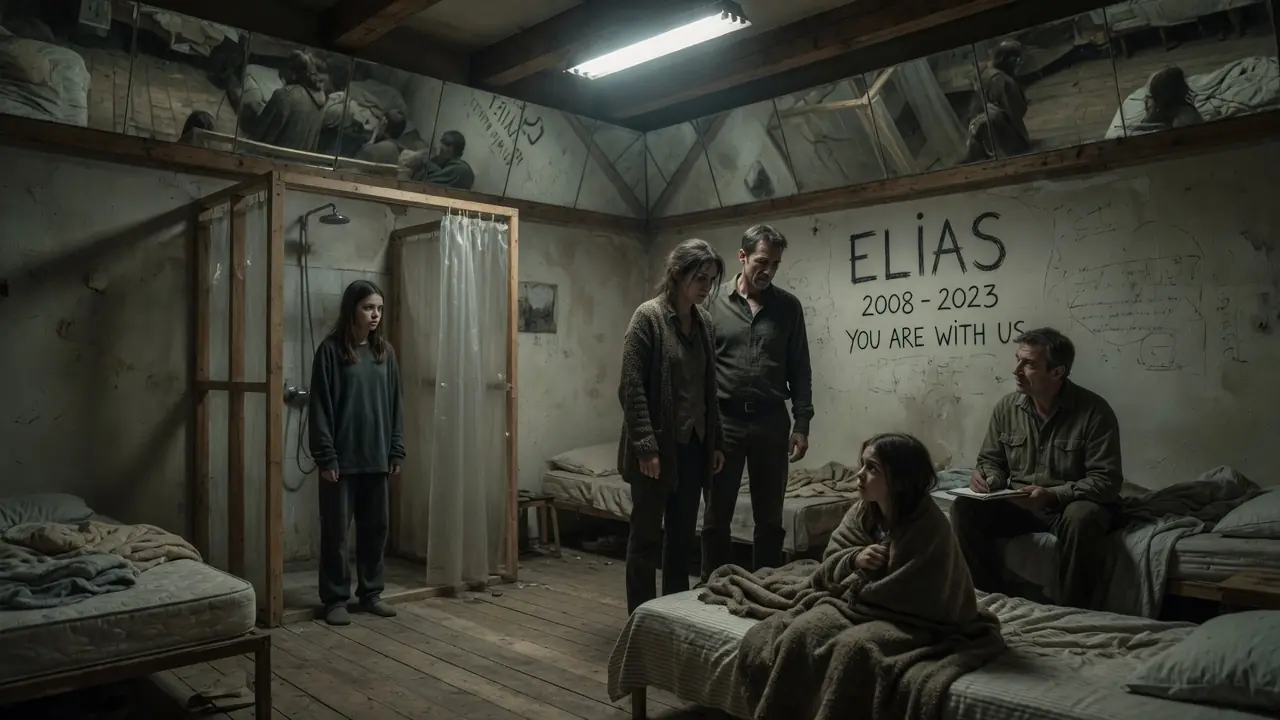
Within a week of his funeral, contractors arrived. They gutted our house down to support beams, creating one massive room where nothing could be hidden. They said they wouldn't lose another child to secrets. Our house became one enormous space containing everything. Beds lined against walls, a single toilet behind a knee-high partition, a shower head sprouting from exposed pipes.
My parents called it healing through visibility. This is how families should live, Dad announced, gesturing at our destroyed home. When you can see everything, no one suffers alone. Mom installed mirrors on the ceiling so there were no blind spots. Even our thoughts felt exposed in that endless space.
They said Ryan's privacy had been the weapon he used against himself and they'd never let walls help another child end their life. We learned to exist in full view of each other. Every moment visible, every sound shared. For 3 years, my sister Autumn and I adapted and found little ways to create whatever privacy we could. We perfected the art of changing clothes in 30 seconds flat.
Developed selective blindness when necessary and learned to sleep facing the exterior walls. It wasn't normal, but it was survivable. We even got good at bringing friends over, joking that our house was avant-garde and turning it into a weird badge of honor. But then everything changed when Uncle Jeremy got evicted from his apartment. Mom's brother had always made my skin crawl with his lingering hugs and comments about how I was filling out nicely.
Now he was moving into our wallless house, setting up his bed 15 ft from mine. Just checking your breathing, he said. Can't be too careful after what happened to Ryan. He positioned himself with perfect sight lines while Autumn and I changed, pretending to read, but tracking our every move. When I started changing in the tiny space behind the water heater, the only spot with partial coverage, Dad removed it for encouraging secretive behavior.
So now we had no privacy and no hot water. Mom thought Jeremy's concern was sweet. He volunteered to do laundry so he could handle our underwear. offered to help us shower safely and somehow always needed the bathroom when we did. I started sleeping in my school's library, changing in restaurant bathrooms, essentially becoming homeless to avoid him.
When Mom demanded I come home, I finally told them about Jeremy. Dad's response, he's family. Family means trust. But I couldn't be trusted with a closed door. The night Jeremy tried to get in the shower with me to save water.
I shoved him hard enough that he slipped and hit his head on the exposed pipes. While he cursed and bled, I threw on clothes and ran to the neighbor's house. She took one look at my face and called the police. The social worker who came to investigate actually dry heaved when she saw our living situation. Jeremy was still there, ice on his head, positioned where he could watch Autumn doing homework in her underwear because she'd spilled juice on her clothes.
"This is how we live," Mom explained proudly. "No walls, no secrets, no more dead children." The social worker watched Uncle Jeremy openly stare at Autumn and asked how long this had been going on. By evening, we were in emergency foster placement. Mom screamed that we were choosing walls over our brother's memory. Dad said Ryan would be rolling his grave if he knew we prioritized walls over his memory.
As we left, I heard him asking my parents if they'd considered expanding their philosophy to the whole neighborhood. Once we were gone, our parents doubled down on everything. They painted Ryan's room on the wall closest to his bedroom and invited grieving parents to tour our house, showing how transparency could have saved him. At the custody hearing, they brought these parents as witnesses. Their lawyer argued that foster homes were endangering children prone to taking their own lives.
Then Jeremy stood up. I've been studying the girl's behavior, he said. The older one shows the same warning signs as Ryan. Isolation, secrecy, violence. He looked directly at me.
I believe she's planning something. That's why I'm volunteering to move in permanently as a preventative guardian. 24-hour watches. I'll sleep in her bed if necessary. The judge's face softened.
Mr. Jeremy's dedication is admirable. Mom added quickly. We've actually prepared a new sleeping arrangement. One large bed like families used to share.
All of us together. the girls between Jeremy and their father for maximum protection. The judge nodded. Approved. Effective immediately.
Anything to keep this young woman from making a terrible mistake. Jeremy leaned over to Autumn and whispered something that made her face go white. Both of us knew we weren't going back to how things were. We were going somewhere much worse. The social worker from our original case stood up immediately.
Your honor, I must object. The living conditions I witnessed were not protective, but predatory. Mr. Jeremy was observed engaging in voyoristic behavior toward both minor children. The judge waved her off.
That's a serious accusation. Mr. Jeremy has volunteered his time and shown nothing but concern for these children's safety. I watched Mom beam at Jeremy while Dad nodded approvingly. They genuinely believed they were saving us.
3 years of living in their transparent prison had warped their ability to see danger even when it stared directly at their daughters. The social worker tried again. The children were thriving in foster care. Their grades improved. They were sleeping through the night behind locked doors, Mom interrupted.
Her fingers were ice cold and trembling. Jeremy noticed our connection and smiled wider. I've actually prepared a presentation. Jeremy announced, pulling out his phone. I've been documenting concerning behaviors that prove these girls need constant supervision.
He started swiping through photos, pictures of me changing behind the water heater. Autumn stepping out of the shower, both of us sleeping. Dozens of images he'd taken while protecting us. The judge studied them carefully. This is excellent documentation, Mr.
Jeremy. It's clear you take your guardian responsibilities seriously. Our foster mother gasped. Those are voyeuristic photos. He's been stalking them.
I prefer the term of monitoring. Jeremy corrected smoothly. Every image was taken in full view of their parents in their home. Nothing inappropriate about family members looking out for each other. Dad stood up.
We support Jeremy completely. He's shown more dedication to our daughter's safety than anyone. The judge made his decision. The children will return home immediately. Mr.
Jeremy will serve as an appointed guardian monitor. The sleeping arrangement will be modified as the parents suggested. One shared family bed for maximum supervision. I stood up so fast my chair fell backward. You can't do this.
He's sick. He watches us constantly. He tried to shower with me. Young lady, the judge's voice turned stern. These outbursts only prove you need the structure your parents provide.
Your uncle is trying to save your life. He's trying to, I started, but our lawyer grabbed my arm. Don't make it worse, she whispered. We'll appeal, but I could see it in her eyes. She knew we'd lost.
The ride home was silent, except for Jeremy, humming softly. Mom kept reaching back to pat our knees, saying things like, "Soon we'll all be together again, and no more walls between us." When we pulled up to the house, I saw they'd made changes. The single beds were gone. In their place was one enormous mattress that took up half the main space. California king wasn't big enough, Dad explained.
So, we had three queens custom joined, room for all five of us with no gaps. Autumn made a small sound like a wounded animal. Don't worry, Jeremy said, putting his hand on her shoulder. I'll be right next to you all night, every night. Just like the judge ordered.
Inside, our belongings from foster care were already unpacked and arranged. Our clothes were laid out on the communal bed. Jeremy had organized them by type and color. I took the liberty of going through everything, he said. Removed anything with strings, belts, or ties.
Can't be too careful. Mom clapped her hands. Wonderful thinking. See, girls, this is what family does. We protect each other.
That first night back was a nightmare made real. The massive bed felt like a trap. Mom and Dad on the outer edges, Jeremy in the middle, Autumn and I pressed against him on either side. Every time I tried to shift away, he'd throw an arm over me in his sleep. I lay rigid for hours, feeling his breath on my neck, his hand accidentally brushing against me.
Autumn was crying silently on his other side. I could see her shoulders shaking in the darkness. You look so much like Ryan when you sleep, he whispered. I'm going to make sure nothing happens to you. The next morning, Mom announced new safety protocols.
Jeremy would accompany us everywhere, school, friends houses, even doctor appointments. He's taken leave from work to focus on your protection, she said proudly. At school, he waited outside my classroom. During PE, he stood by the locker room door. When I tried to eat lunch with friends, he sat at our table documenting everything in his notebook.
Your parents asked me to track your social interactions, he explained to my horrified friends. Isolation is a warning sign. My friends stopped talking to me. Who could blame them? Would you want someone's creepy uncle recording your every word?
 Autumn was faring even worse. She'd stopped eating, barely spoke, and flinched whenever Jeremy came near. When I tried to talk to our parents about it, Mom just said she's processing Ryan's death. Jeremy's presence is helping her heal. I started planning.
If the system wouldn't protect us, I'd have to find another way. But Jeremy seemed to sense my resistance. He began sleeping with one hand on my wrist, claiming he was monitoring my pulse for signs of distress. The school counselor pulled me aside after 2 weeks. Your teachers are concerned, your grades are dropping.
You seem exhausted, and frankly, your uncle's presence is disturbing other students. I wanted to tell her everything, but Jeremy was right outside her door, ear pressed against the glass. Everything's fine. I lied, just adjusting to being home again. She didn't believe me, but what could she do?
The court had spoken. That night, Jeremy announced he'd installed cameras for when I can't be physically present, he explained, pointing to the tiny lenses now dotting our ceiling. They feed directly to my phone. Dad helped him test the angles. Perfect coverage, he said approvingly.
No blind spots. I caught Autumn scratching at her arms until they bled. When I tried to stop her, she whispered, "It's the only thing he doesn't watch, the only thing that's mine." That's when I knew we were running out of time. Jeremy was escalating. Our parents were enabling, and the system had failed us completely.
If we stayed much longer, something terrible would happen. But Jeremy must have sensed my desperation. That night, he held my wrist tighter. "I know what you're thinking," he murmured. "But there's nowhere to run.
I'll always find you. I'll always bring you home. That's what family does." I stared at the ceiling, at Ryan's name painted on the wall, and wondered if he'd felt this trap. If this was why he'd chosen his locked door and permanent escape, but I wouldn't let that happen to Autumn or to me. I just had to figure out how.
The following morning, I discovered Jeremy had removed the lock from the school bathroom stall I usually changed in. The janitor found me crying behind the dumpster, still in yesterday's clothes. He radioed the principal, who called Jeremy to pick me up. Jeremy arrived within minutes, explaining to everyone how concerned he was about my destructive patterns. Back at the house, Mom had rearranged our belongings again.
All our clothes now hung from a single rack in the center of the room, completely exposed from every angle. She demonstrated how we should change by holding up a towel while standing in full view. Jeremy positioned himself on the communal bed with a perfect sighteline, notebook in hand. I refused to change. Mom's face darkened as she reminded me about Ryan, about walls, about trust.
Dad joined in, explaining how my resistance proved I needed more supervision, not less. Jeremy suggested they might need to help me change clothes if I continued being difficult. The threat hung in the air like poison. That afternoon, I watched Autumn mechanically remove her school uniform. Her movements were robotic, her eyes vacant.
Jeremy documented the time it took, the way she folded each item, her concerning lack of emotional expression. When she reached for her pajamas, her hands shook so badly she dropped them. Jeremy noted that, too. The school called about my absence from afternoon classes. Mom explained, I was adjusting to enhanced safety protocols.
They accepted it. Who questions grieving parents trying to protect their surviving children during dinner, prepared and eaten in full view of everyone. Jeremy announced new bathroom procedures. He would stand inside the knee-high partition while we use the toilet, facing away but listening for signs of distress. Mom praised his dedication.
Dad offered to take shifts so Jeremy wouldn't exhaust himself. I stopped eating. My stomach churned at the thought of needing the bathroom under those conditions. Autumn had already developed a pattern of only going at school, but Jeremy had started accompanying her there too, waiting right outside the stall. That night, I pretended to sleep while Jeremy settled between us.
His breathing was heavy, excited, I felt his weight shift as he turned toward Autumn. She whimpered softly. I reached across him to grab her hand and he caught my wrist instead. His grip was firm as he placed my hand back at my side, patting it like I was a disobedient pet. The next few days blurred together in a nightmare of constant surveillance.
Jeremy timed our showers, standing just outside the spray radius with a stopwatch. He implemented safety checks every two hours through the night, shining a flashlight in our faces to confirm we were breathing. He started a detailed log of our bathroom habits, eating patterns, and sleep positions. Our foster mother called repeatedly. Mom blocked her number.
The social worker attempted a surprise visit, but Dad met her at the door, explaining they were following the court's orders precisely. Jeremy appeared behind him, showing his documentation, proving how dedicated he was to our safety. The social worker left, promising to file another report. At school, I tried to slip away during PE. Jeremy caught me at the edge of campus, his hand closing around my arm hard enough to bruise.
He marched me back to the principal's office, explaining how I'd exhibited flight risk behavior. The principal agreed to email him if I left class for any reason. Autumn stopped speaking entirely. She moved through each day like a ghost, following Jeremy's instructions without protest. When he told her to change clothes in the center of the room for maximum visibility, she complied.
When he insisted on checking her arms for self harm, she held them out wordless. Mom called it progress. I started leaving notes in library books, hoping someone would find them and understand. Jeremy discovered one during his daily backpack search. That night, he went through every book in the house, removing pages that could be written on.
Dad helped, talking about how Ryan might have left notes they never found. The cameras multiplied. Jeremy installed them in our school lockers, claiming the principal had approved it for our safety. He added motion sensors to the communal bed that alerted his phone if we moved too much during the night. Mom bought him a newer phone with a larger screen so he could monitor multiple feeds simultaneously.
2 weeks into our return, I made my first real escape attempt. During a fire drill at school, I slipped into the crowd and ran. I made it six blocks before Jeremy's car pulled alongside me. He'd been tracking my phone, which he'd sewn into my backpack lining. The principal gave him permission to keep me in the office for the rest of the day where he could watch me directly.
That evening, Mom announced a family meeting. She'd prepared a presentation about trust and transparency. Using Jeremy's documentation, she showed how our resistance behaviors were escalating just like Ryan's had. Dad presented charts correlating privacy with suicide risk. Jeremy contributed photos showing our concerning body language and secretive tendencies.
They concluded we needed more intensive intervention. Jeremy would now sleep between us with an arm over each girl for immediate response capability. He would accompany us into bathroom stalls at school. He would sit in on any conversations with teachers or counselors. Mom cried about how much she loved us, how she couldn't lose another child.
Dad hugged Jeremy, thanking him for his sacrifice. I found Autumn that night standing at the kitchen sink, holding a knife, not to hurt herself, just holding it, staring at the blade. Jeremy appeared instantly, gently taking it from her hand. He didn't yell or panic. He simply noted it in his log and removed all sharp objects from the kitchen area.
Mom praised his calm response. Dad started using only plastic utensils. The school counselor made another attempt to intervene. She pulled me from class, closing her office door before Jeremy could follow. She spoke quickly, saying, "Teachers were concerned that my grades had plummeted, that Autumn hadn't turned in assignments in weeks.
I opened my mouth to explain, but Jeremy was already knocking, explaining through the door about court orders and supervision requirements. The counselor had to let him in. Our foster mother showed up at school with a lawyer. They met with the principal, demanding to speak with us. Jeremy produced the custody order, highlighting the judge's specific language about his guardian role.
The lawyer argued it didn't extend to school hours. Jeremy called Mom who arrived with their lawyer. The meeting devolved into legal threats. We never got to speak. That night, Jeremy's hand was heavier on my wrist.
He'd moved his grip higher, fingers pressing into my pulse point. On his other side, Autumn lay rigid as a board. I could hear her breathing, shallow and quick like a trapped animal. When I tried to turn away, Jeremy's grip tightened. When Autumn shifted, his other hand found her shoulder.
Mom woke up the next morning with exciting news. She'd found a support group for families practicing radical transparency. They met in a community center sharing strategies for eliminating privacy and preventing tragedy. We would attend that evening, all five of us, to show how committed families could thrive without walls. The meeting was surreal.
A dozen families crowded into a small room, parents describing their various approaches to constant supervision. One family had removed their roof, installing clear panels so satellites could monitor them. Another had their children wear body cameras at all times. Jeremy took notes, occasionally sharing our family's methods. The other parents nodded approvingly.
During a break, I cornered a woman whose teenage son sat silent in the corner. She smiled sadly and patted my hand, explaining that resistance was normal, but family transparency saved lives. Her son had tried to run away twice before accepting their lifestyle. Now he was thriving. The drive home was filled with Mom's enthusiasm about new ideas from the group.
Installing clear shower curtains so Jeremy could monitor us more safely. Using thermal cameras to track our body heat through blankets, creating a family social media account where Jeremy could post daily updates about our well-being. Dad suggested they implement everything immediately. That night, I made a decision. The system had failed.
The school had failed. Even other families living this nightmare had failed to see the danger. If I wanted to save Autumn and myself, I'd have to get creative. I started documenting everything, but not in writing. During Jeremy's bathroom supervision, I began narrating softly to myself, describing what was happening as if recording a diary.
He thought I was losing my mind, noted it as concerning behavior, but I was creating witnesses, even if they were just future memories. At school, I found microscopic spaces Jeremy couldn't monitor. The two seconds it took to pass between classes. The moment when students crowded through doorways, I started leaving tiny clues everywhere. A borrowed pencil with help scratched in tiny letters.
A bathroom stall door where I'd written our address and condensation that would only appear when someone else showered. Autumn began copying me. She hummed constantly, but the humming was Morse code she'd learned in Girl Scouts. SOS over and over. Jeremy documented it as a soothing behavior.
Mom was thrilled she was making sounds again. Three weeks into our new arrangement, something shifted. The other students at school had started noticing things. Jeremy's constant presence, our deteriorating appearance, the way we flinched when anyone approached. A group of senior girls began casually positioning themselves between Jeremy and the bathroom when we needed to go.
Teachers started accidentally keeping Jeremy in the hallway for conversations while we were in class. The librarian, Mrs. Burns, was the boldest. She created a new reading program that required absolute silence and privacy for participating students. When Jeremy protested, she produced schoolboard documentation about educational requirements.
For one hour each day, Autumn and I sat in a small study room while Jeremy waited outside, visible through glass, but unable to hear us. It was during these sessions that I met Cassandra. She was a senior who noticed our situation and started researching. Her mother worked for child protective services in a different county. Cassandra couldn't intervene directly, but she could provide information.
She taught us about mandated reporters, about documentation requirements, about the difference between court orders and legal guardianship. More importantly, she helped us understand Jeremy's pattern. He was escalating, but he was also getting sloppy. The photos on his phone, the detailed logs of our bathroom habits, the recordings he'd started making of us sleeping. In trying to document our concerning behavior, he was actually creating evidence of his own predatory actions.
Cassandra's mother couldn't take our case officially, but she could advise. Through Cassandra, she suggested we needed an incident that couldn't be explained away as protection. Something that would force a different judge to look at our situation, something Jeremy would do in front of witnesses who weren't our parents. The opportunity came during a school assembly. Jeremy had positioned himself at the end of our row, blocking any exit.
Halfway through, Autumn needed the bathroom urgently. Jeremy insisted on accompanying her. When she stood to leave, he grabbed her wrist, pulling her back down. She cried out in pain. The entire row of students turned to look.
Mrs. Burns was supervising nearby. She approached immediately, asking if everything was all right. Jeremy explained he was preventing a safety risk. Mrs.
Burns asked Autumn directly if she needed the restroom. When Autumn nodded, Mrs. Burns stated firmly that she would escort her. Jeremy insisted on coming, too. Mrs.
Burns refused. The standoff lasted 30 seconds. Jeremy's grip on Autumn's wrist tightened. She whimpered. Students pulled out phones.
Mrs. Burns called for security. Jeremy finally released Autumn, but followed them to the bathroom, arguing about court orders and supervision requirements. Autumn's wrist showed clear finger marks. Jeremy tried to explain, but the damage was done.
Multiple students had recorded the interaction. The school security officer wrote an incident report. Mrs. Burns filed a formal complaint. That afternoon, the police arrived at school, not to arrest anyone, but to investigate a possible assault.
They photographed Autumn's wrist, took statements from witnesses, and asked to see Jeremy's documentation. He proudly showed them everything, including the photos, the logs, the recordings. The officer's expression grew increasingly concerned. Mom arrived in a panic. Dad close behind.
They explained about Ryan, about transparency, about the court order. The officer asked to see the actual order. As he read it, his frown deepened. The order granted our parents custody and recommended supervision. It didn't name Jeremy specifically or grant him any legal authority.
The officer asked Jeremy why he had photos of minor children changing clothes. Jeremy explained about protection and monitoring. The officer asked why he had recordings of them sleeping. Jeremy talked about breathing patterns and safety. The officer asked about the bathroom logs.
Jeremy proudly showed his detailed documentation. Two more officers arrived. They spoke quietly with the first, reviewing the evidence. Mom was growing hysterical, talking about losing another child, about walls killing Ryan. Dad tried to show them the family transparency materials.
The officers weren't interested in philosophy. They were interested in the photos on Jeremy's phone. They asked Jeremy to come to the station for further questioning. It wasn't an arrest, they emphasized, just questions. Mom wanted to come too, but they suggested she stay with us.
As Jeremy left with the officers, he looked back at me with an expression I'd never seen before. Not the fake concern or creepy interest. Pure rage. That night was the first in weeks we slept without Jeremy between us. Mom positioned herself there instead, crying continuously about failing to protect us.
Sad and misguided instead of predatory. The next morning, a different social worker arrived. She had the police report, the school's documentation, and a new emergency order. Jeremy was not to have any contact with us pending investigation. Mom sobbed about transparency saving lives.
The social worker asked if she could speak to Autumn and me privately. For the first time in months, we sat in a room with a door that closed. The social worker, Miss Lopez, listened as everything poured out. Not just Jeremy's escalating behavior, but the years of forced transparency, the removal of walls, the bathroom supervision, the communal bed. She took notes without judgment, occasionally asking clarifying questions.
When we finished, she explained our options. The original custody order stood, but Jeremy's involvement had changed things. The photos on his phone, combined with witness statements, had triggered a criminal investigation. We could return home without Jeremy or request emergency placement while the court reviewed the situation. I looked at Autumn.
Her wrist was purple with bruises, but her eyes had something I hadn't seen in weeks. Hope we both knew our parents wouldn't change overnight. The house still had no walls. The beliefs about transparency remained. But without Jeremy, we might have a chance.
We chose to go home. with conditions. Miss Lopez would visit weekly. We would have mandatory counseling privately. Any further incidents would result in immediate removal.
Mom agreed to everything, desperate to keep us. Dad promised things would be different. The ride home was quiet. No humming from Jeremy. No promises about protection.
Just Mom's occasional sniffles and Dad's heavy size. When we pulled up to the house, it looked exactly the same. One giant room exposed everything. But Jeremy's bed was gone. That night, Mom and Dad slept on opposite ends of the communal bed with Autumn and me in the middle.
No hands on wrists, no breath on necks, no weight of surveillance, just four broken people in a broken house, trying to figure out how to move forward. The investigation into Jeremy had revealed more than anyone expected. The prosecutor called Mom the next day. They'd found thousands of images, not just of us, but of other children Jeremy had protected over the years. His documentation obsession had created a perfect evidence trail.
He wouldn't be coming back. But our fight wasn't over. The house still had no walls. Mom and Dad still believed transparency could have saved Ryan. And somewhere in their grief, twisted logic, they still thought they were protecting us.
The real battle would be helping them understand that walls didn't call Ryan. Depression did. Isolation did, but not physical walls. Miss Lopez became our lifeline. She brought in specialists who understood grief and trauma.
She advocated for gradual changes. A curtain here, a partition there, small steps toward normal that wouldn't trigger our parents' panic. The school rallied around us, too. Mrs. Burns organized a subtle support network.
Teachers who kept us after class for extra help. That was really just a chance to exist without observation. Students who created human shields during changing for PE. The senior girls who adopted us, teaching us to be visible survivors instead of transparent victims. Cassandra became a constant presence.
She couldn't undo years of forced exposure, but she could show us what normal looked like. Her house had doors that closed, bathrooms with locks, bedrooms where you could be alone with your thoughts. She didn't make a big deal about it. Just let us exist in spaces with boundaries. Autumn slowly began speaking again.
First to me, then to Miss Lopez, eventually even to Mom and Dad. She talked about Ryan, about missing him, about how the walls hadn't been the enemy. She was braver than me, confronting our parents with truths they didn't want to hear. The breakthrough came during a family therapy session. The therapist had us build a small model house out of cardboard.
As we constructed walls and doors, she asked us to talk about what each barrier meant. Mom cried as she realized walls could mean safety, not secrets. Dad admitted he'd been so afraid of losing us that he'd forgotten to let us live. Change came slowly. First, a shower curtain that could be pulled for privacy, but left open when not in use.
Then, a folding screen near the toilet. Small victories that felt monumental. Mom still checked on us constantly, but she knocked first, even if there was no door to knock on. The investigation into Jeremy expanded. Other families came forward with similar stories.
Parents who trusted him to protect their children. His documentation obsession had created evidence of a pattern spanning years. The prosecutor built a strong case, but that was a battle for courts and lawyers. Our battle was smaller, but no less important. Learning to exist in spaces again, remembering what privacy felt like.
Teaching our parents that love didn't require constant visibility. Some days were harder than others. Mom would panic about closed curtains. Dad would insist on family meetings about transparency. But we were making progress.
3 months after Jeremy's arrest, I woke to find Autumn reading in her own corner of the room. A sheet hung around her makeshift space for privacy. Mom was cooking breakfast, humming normally, not frantically, checking sightelines. Dad was reading the paper, occasionally glancing up, but not staring. It wasn't perfect.
Our house still lacked proper walls. We still shared more than most families, but we were learning the difference between chosen openness and forced exposure, between family closeness and predatory surveillance, between protecting children and imprisoning them. The real victory came in small moments. Autumn laughing at something on her phone without having to share it immediately. Me changing clothes without an audience.
Mom respecting a closed curtain. Dad admitting that maybe, just maybe, everyone deserves some privacy. We still had family meetings, but now they were about healing, not surveillance. We talked about Ryan openly, about missing him, about how his death had broken us all in different ways. We learned that transparency meant emotional honesty, not physical exposure.
That protecting each other meant respecting boundaries, not eliminating them. Miss Lopez continued her weekly visits, documenting our progress. The house slowly accumulated more barriers. Nothing permanent yet, but fabric walls and portable partitions that gave illusions of privacy. Mom struggled with each addition, but was learning to manage her anxiety without controlling our every movement.
The criminal case against Jeremy moved forward. We gave depositions in a private room, not a courtroom. The prosecutor used Jeremy's own documentation against him. His lawyers tried to argue he was just a concerned uncle following the family's wishes. The thousands of photos suggested otherwise.
School became our sanctuary. Teachers who'd watched our situation unfold became fierce advocates. Mrs. Burns started a support group for students dealing with family trauma. Cassandra organized fundraisers for therapy and legal costs.
The community that had seemed indifferent while Jeremy stalked us now rallied to help us heal. But healing wasn't linear. Some nights I still woke in panic, expecting to find Jeremy's face inches from mine. Autumn still flinched when anyone touched her unexpectedly. Mom still had days where she removed every curtain in a grief fueled panic.
Dad still insisted on bed checks, so now he called out before entering our spaces. The hardest part was forgiving our parents. They'd been so blinded by grief over Ryan that they' handed us to a predator. Their obsession with preventing another tragedy had nearly caused one, but they were victims, too, of their own trauma and Jeremy's manipulation. Family therapy helped us navigate the complicated emotions.
Anger at our parents for not protecting us. Guilt for not saving Ryan. Fear that privacy would lead to tragedy. Hope that we could build something better from the ruins of our wallless house. 6 months after Jeremy's arrest, a contractor came to assess the house.
Not to tear down more walls, but to potentially rebuild them. Mom had finally agreed to consider partial walls, maybe just for the bathroom at first. It was a huge step, one that would have been impossible without months of therapy and support. The day they installed a proper bathroom door was emotional for everyone. Mom cried as they hung it, remembering Ryan's door.
Dad tested the lock repeatedly, assuring himself it could be opened from outside in emergencies. Autumn and I simply stared at it in wonder. A door, a barrier, a choice. That night, for the first time in years, I used the bathroom in complete privacy. No audience, no documentation, no eyes tracking my every move, just me alone with my thoughts, existing in a space that was temporarily mine.
It was the smallest room in the world, but it felt like freedom. The progress continued in fits and starts. A bedroom partition here, a changing area there. Each addition carefully negotiated in therapy, balancing our need for privacy with our parents' trauma. It wasn't the house we'd had before Ryan died, but it was becoming something livable.
Jeremy's trial date was set. We wouldn't have to testify in person. Our depositions were enough, but knowing it was coming brought fresh anxiety. Mom worried about publicity. Dad feared revenge from Jeremy's supporters.
We just wanted it over. Through it all, Miss Lopez remained our advocate. She pushed for normalcy when our parents backslid. She celebrated small victories like curtains that stayed up for a whole week. She reminded us that healing wasn't about forgetting Ryan or forgiving Jeremy, but about reclaiming our right to exist safely.
The anniversary of Ryan's death approached with its usual weight. But this year felt different. We had spaces to grieve privately if needed. Mom had learned to channel her pain into advocacy for suicide prevention that didn't involve destroying privacy. Dad had started building small wooden boxes where we could keep personal items safe from view.
On the anniversary itself, we did something new. Instead of a family meeting about transparency, we each spent an hour alone, remembering Ryan in our own ways. Then, we came together to share what we wanted to share, keeping private what we needed to keep private. It was a balance we'd never have found without everything we'd been through. The house still looked strange to visitors.
Fabric walls and portable partitions created a maze of semi-private spaces. The bathroom had a door, but no walls around it yet. The communal bed had been separated into individual mattresses that could be pushed together or apart as needed. It was unconventional, but no longer unsafe. Autumn had started painting again, something she'd stopped when the walls came down.
Her art was abstract, full of barriers and openings, light and shadow. She painted her trauma and her healing, creating beauty from our bizarre experience. Mom even let her hang a curtain around her art space. I found my own healing and writing. Not the frantic notes I'd left in library books, but real stories about survival and recovery.
Stories about families who lost their way and found it again. Stories about the difference between protection and control. Stories that helped me make sense of our wallless years. The news of Jeremy's other victims had spread through our community. Families who trusted him were grappling with their own guilt and trauma.
Mom started a support group for parents, sharing how grief had made her vulnerable to manipulation. It was her way of making amends, helping others avoid our mistakes. Dad threw himself into research about healthy family dynamics and appropriate boundaries. He read every book, attended every workshop, trying to understand how love had become surveillance. His journey was perhaps the hardest, confronting how his need to protect had enabled harm.
As the trial approached, we prepared ourselves for publicity we'd never wanted. Our story was unusual enough to attract attention. The wallless house, the transparency philosophy, the uncle who'd exploited it all. Reporters started calling, wanting to understand how it had happened. We made a family decision to control our own narrative.
With Miss Lopez's help, we released a statement about grief, vulnerability, and the importance of boundaries. We didn't share everything. maintaining the privacy we fought so hard to reclaim. But we shared enough to help other families recognize dangerous dynamics. The response was overwhelming.
Messages from people who'd experienced similar boundary violations. Parents who'd gone too far in protecting their children. Survivors who'd been told family meant no privacy. Our strange story resonated with more people than we'd imagined. But we also faced criticism.
People who said we should have fought harder, run farther, spoken louder, people who blamed our parents entirely or defended them completely. People who couldn't understand how a house without walls had seemed normal to us for so long. We learned to protect ourselves from judgment as fiercely as we'd learned to protect our privacy. Through it all, we kept rebuilding. Not just our house, but our family.
Learning to trust each other again. finding the balance between openness and boundaries, creating new traditions that honored Ryan without sacrificing ourselves. The day Jeremy was convicted was anticlimactic. We weren't in court. We were at home in our strange maze of a house playing board games behind a semi-transparent curtain.
The prosecutor called with a verdict. Guilty on all counts. Mom cried with relief. Dad hugged us carefully, asking permission first. Autumn and I just held each other, feeling a chapter close.
But our story wasn't ending. It was transforming. The house would never have traditional walls again. That dream died with Ryan. But we'd found ways to create privacy within transparency, boundaries within openness, safety within vulnerability.
Ms. Lopez's visits became less frequent as we stabilized. The court maintained oversight but recognized our progress. Teachers reported our improving grades and social connections. Therapists documented our healing journey.
Slowly, carefully, we were proving that families could recover from even the strangest traumas. A year after Jeremy's arrest, I stood in our bathroom with its single door and no walls, brushing my teeth in privacy. Outside, I could hear Mom cooking. Dad reading news aloud. Autumn practicing violin behind her curtain.
We were visible but not exposed. Together, but not imprisoned. Transparent by choice, not force. The mirror showed someone I barely recognized. No longer the girl who'd changed in restaurant bathrooms to avoid Uncle Jeremy's eyes.
No longer the teenager who'd slept rigid with fear in a communal bed. I was becoming someone new. someone who understood both the value of privacy and the importance of connection. Autumn appeared in the doorway, knocking on the frame even though the door was open. She'd grown taller, stronger, finding her voice in therapy and art.
She smiled, a real smile that reached her eyes, and asked if I wanted to see her latest painting. I did, but first, I closed the bathroom door just because I could. The painting was beautiful and painful. It showed our house from above, walls dissolved, but spaces defined by light and shadow. In the center, four figures stood together, but separate, connected by thin lines that could be threads or chains, depending on how you looked.
It was our family, broken and healing, transparent and private, surviving despite everything. Mom saw it and cried, but not the hysterical tears of the early days. These were tears of recognition of seeing our journey captured in paint. She asked Autumn if she could hang it in the main space, then caught herself and added, "Only if you're comfortable with that." It was a small thing, asking permission, but it meant everything. We hung the painting where Ryan's name had been painted on the wall, not to replace his memory, but to show how we'd survived it.
How we'd taken his loss and our trauma and Jeremy's exploitation and somehow built something new, imperfect and strange, but ours. The house would never be normal. We'd accepted that, but it had become something better than normal. It had become a place where privacy was respected because it was rare, where boundaries were honored because they had been fought for, where transparency meant truth, not exposure. As I looked around our bizarre home with its fabric walls and single bathroom door, its communal spaces and private corners, I realized we'd done more than survive.
We'd redefined what family meant. Not constant surveillance, but chosen connection. Not forced transparency, but earned trust. Not walls or no walls, but the right to choose. And in that choice, in that hard-won right to close a door or open a curtain, we'd found our way back to each other.
Different than before, scarred, but not broken. A family that had learned the hardest lesson. Sometimes the greatest protection is letting people protect themselves. The investigation had revealed Jeremy had done this to three other families over the years. each time he'd found grieving or struggling parents, offered to help, and gradually inserted himself into their children's lives.
But none had been as extreme as ours, the wallless house had been his perfect hunting ground. The week after Jeremy's conviction, I discovered he'd been writing letters from jail, not to us directly, but to Mom, filled with manipulations about family loyalty and forgiveness. She'd hidden them in her dresser drawer, reading them when Dad wasn't around. I found them while putting away laundry and immediately took them to Miss Lopez. Ms.
Lopez contacted the prosecutor, who filed for a restraining order, preventing any contact, even through third parties. Mom broke down when confronted, admitting she'd been struggling with guilt about testifying against her brother. The therapist added extra sessions focused on manipulation tactics and how predators exploit family bonds. At school, a new challenge emerged. Jeremy's mother, my grandmother, who'd been absent for years, suddenly appeared at the campus gates.
She cornered Autumn during lunch, pressing a letter into her hands before security intervened. The letter blamed us for destroying the family, claiming we'd misunderstood Jeremy's protection as something sinister. The school implemented new security protocols. Only pre-approved visitors could access campus. Our photos were added to the office system with alerts about potential family members who might attempt contact.
Mrs. Burns personally escorted us between classes for the first few days until we felt safe again. Autumn's reaction surprised everyone. Instead of retreating into silence, she marched into the principal's office and demanded to file a formal complaint. She wrote a detailed statement about feeling threatened and harassed.
The principal contacted law enforcement, who added grandmother to the restraining order. That weekend, we discovered someone had been photographing our house. Neighbors reported a woman matching grandmother's description parked outside for hours, taking pictures of our strange wallless structure. Dad installed security cameras. Ironic given our history with surveillance, but these faced outward, protecting rather than invading.
The photos appeared on social media with captions about child abuse and false accusations. Grandmother had created a page defending Jeremy, painting our family as mentally unstable people who lived without walls and had destroyed an innocent man. Comments poured in from strangers judging our lifestyle and questioning our credibility. Cassandra discovered the page first and immediately started documenting everything. She helped us report it to the platforms while her mother advised on legal options.
The prosecutor added harassment charges to the existing case. Within days, the page was removed, but screenshots had already spread through certain corners of the internet. At school, most students rallied around us, but some had seen the posts. Whispers followed us through hallways about the weird family with no walls who'd sent their uncle to prison. A few parents questioned whether we should be allowed around their children.
The principal held an emergency meeting addressing cyber bullying and supporting survivors. Mom wanted to respond publicly to defend our choices and explain our journey. Dad worried about drawing more attention. I suggested a different approach. We would continue living our lives, making progress, showing through actions rather than words that we were healing.
The best response to lies was truth lived quietly. The harassment escalated when grandmother recruited Jeremy's ex-girlfriend to the cause. She showed up at Mom's workplace, causing a scene about false accusations and ruined lives. Security removed her, but Mom came home shaken. Her employer supported her, but the stress was affecting her recovery.
We held a family meeting behind our makeshift fabric walls. Everyone shared their fears and frustrations. Mom admitted she felt responsible for bringing Jeremy into our lives. Dad revealed he'd been having nightmares about failing to protect us again. Autumn surprised us by suggesting we turn our experience into something positive.
Her idea was simple but powerful. Instead of hiding from the attention, we would volunteer with organizations supporting abuse survivors. Not publicly, not seeking recognition, but quietly helping others navigate systems that had initially failed us. It would be our way of reclaiming the narrative through action rather than words. Ms.
Lopez connected us with a local shelter that needed volunteers. They didn't want our story or publicity, just help organizing donations and preparing spaces for families in crisis. Every Saturday, we spent hours sorting clothes, assembling care packages, and painting rooms where families could feel safe. The volunteer work revealed how common our experience was in different forms. Families torn apart by manipulation.
Children failed by systems meant to protect them. parents struggling to rebuild after trauma. Our strange story with its wallless house wasn't so strange after all. Boundary violations came in many forms. At school, the whispers gradually faded as we refused to engage with drama.
We focused on grades, activities, and normal teenage life. Autumn joined the art club, channeling her experiences into powerful pieces about privacy and protection. I started writing for the school paper, carefully avoiding our personal story while advocating for student safety. Grandmother made one final attempt at contact, appearing at our house late one evening. Dad met her at the door while Mom called the police.
She ranted about family loyalty and forgiveness until officers arrived. They arrested her for violating the restraining order. As they led her away, she screamed about walls and transparency, showing how deeply she misunderstood everything. The arrest made local news briefly. A small article about a grandmother violating a restraining order.
No names or details. We didn't comment or engage. The story died within days. Just another family dispute in a world full of them. No fame, no documentary offers, just a quiet legal consequence for harassment.
With grandmother facing charges, Jeremy's support network crumbled. His ex-girlfriend disappeared after receiving her own restraining order. Other family members who'd initially defended him grew silent as evidence mounted about his pattern of behavior with multiple families. The truth had a way of revealing itself without our involvement. At home, construction continued slowly.
We'd added a partial wall around the shower, just chest high, but enough for basic privacy. The bathroom door now had a lock that worked. Small victories that felt monumental. Mom still struggled with each addition, but was learning to sit with her discomfort rather than act on it. The anniversary of our return from foster care approached.
Miss Lopez suggested we mark it somehow, acknowledging how far we'd come. We decided on a small ceremony in our backyard, planting a tree that would grow as we healed. No publicity, no social media posts, just our family and a few close supporters marking survival. Mrs. Burns came bringing a card signed by teachers who'd watched our journey.
Cassandra attended with her mother who'd advised from afar but never met us officially. Our foster parents who'd kept in touch despite everything brought seedlings from their garden. It was quiet, private, exactly what we needed. As we planted the tree, each person added soil and shared a hope for the future. Mom talked about learning to trust without controlling.
Dad spoke about protection meaning different things at different times. Autumn described privacy as a gift, not a weapon. I simply said I hoped we'd keep choosing connection over surveillance. The tree was small, fragile, but with proper care, it would grow strong. Like us, it needed the right balance of exposure and protection, openness and boundaries.
That evening, we had dinner in our strange home with its evolving barriers. The communal bed had been fully separated into individual spaces. Curtains could be drawn or opened as needed. The bathroom had its door and partial walls. Progress measured in fabric and wood rather than concrete, but progress nonetheless.
Mom announced she'd been promoted at work, her first good news in years. The stability helped her focus forward rather than backward. Dad had started teaching woodworking at the community center, sharing skills while processing his own healing. We were all finding ways to build lives beyond trauma. School improved steadily as the drama faded.
Teachers who'd witnessed our struggle became quiet champions, nominating us for programs and opportunities based on merit, not pity. Autumn won an art contest with an abstract piece about boundaries. I placed in a writing competition with an essay about resilience that never mentioned our specific story. The legal proceedings against grandmother concluded quietly. She plead guilty to harassment and violating restraining orders, receiving probation and mandatory counseling.
No jail time, no dramatic confrontation, just consequences for actions. She was prohibited from any contact, direct or indirect, for 5 years. Jeremy's prison letter stopped after authorities intervened. He was transferred to a facility farther away, making any potential contact even more difficult. Mom finally threw away the letters she'd hidden, a small but significant step in breaking his hold.
Our volunteer work at the shelter became a regular commitment. We met families in crisis, offering practical help without sharing our story unless asked. Sometimes just holding donated clothes or organizing toiletries was enough. Action over words, presence over preaching, exactly what we'd needed when systems failed us. One afternoon, a mother arrived with two young daughters, fleeing a situation she couldn't yet articulate.
While staff handled intake, Autumn and I prepared their room. We made beds with fresh sheets, placed stuffed animals on pillows, ensured curtains worked properly. Small acts of care that meant everything when your world collapsed. The mother found us later, tears streaming as she thanked us for the room. We hadn't done anything special, just prepared a space where her daughters could sleep safely.
But sometimes that's enough. Sometimes small acts of restoration matter more than grand gestures. Spring arrived with unexpected warmth. Our planted trees showed new growth. Tiny leaves unfurling towards sun.
The house continued its slow transformation. We'd added a folding screen that created a small study area. Not a room, not walls, but defined space for homework and reading. Cassandra graduated and left for college, but stayed in touch through messages and video calls. She was studying social work, inspired partly by our experience, but mostly by her own desire to fix broken systems.
We missed her presence, but celebrated her journey, proof that life moved forward despite everything. Miss Lopez announced her visits would decrease to monthly check-ins. We'd stabilized beyond crisis, no longer needing weekly oversight. The court maintained supervision, but recognized our progress. It felt like training wheels coming off.
Scary, but necessary. We were ready to balance on our own. The shelter director approached us about sharing our story out of volunteer training. Not publicly, not for publicity, just context for why we understood certain struggles. We declined.
Our story lived in our actions, not performances. We would help through presence and practical support, not testimony. Summer meant the 1-year anniversary of Jeremy's arrest. We marked it quietly, acknowledging survival without celebration. Mom made dinner while Dad adjusted curtain rods.
Autumn painted in her corner while I wrote in mine. Normal activities in an abnormal space, but our version of normal hard one and carefully balanced. That night, I used the bathroom with its door and partial walls, brushing teeth in relative privacy. Through fabric barriers, I heard my family preparing for bed in their separate spaces. No hands-on wrists, no monitoring breathing, no documentation of bathroom habits, just people who'd learned the difference between connection and control.
We gathered briefly in the main space, checking in before bed. Mom asked if everyone felt safe, a new ritual replacing surveillance. We confirmed our comfort, said good night, and retreated to individual spaces. Curtains closed for privacy, but could open for connection. Choice, the freedom we'd fought to reclaim.
I lay in my sectioned area, listening to the house settle. Autumn hummed softly, not SOS anymore, but actual melodies. Mom and Dad murmured quietly in their space, processing the day together. Normal sounds of family life, extraordinary in their ordinariness after everything we'd survived. The future stretched ahead, uncertain, but no longer terrifying.
We would face challenges, setbacks, moments of regression. Mom would panic about closed curtains. Dad would insist on checking locks. Autumn and I would struggle with trust and boundaries. Healing wasn't linear, but we'd learn to navigate curves.
Our house would never have traditional walls. We'd accepted that limitation while creating alternatives. Fabric and screens, curtains and partitions, boundaries defined by agreement rather than architecture. It worked for us. This strange compromise between transparency and privacy.
The tree in our backyard grew slowly but steadily. Roots deepening while branches reached upward. Like us, it adapted to its environment while maintaining its essential nature. We watered it together. A simple act of caretaking that required no words, no performance, just consistent attention.
As sleep approached, I thought about Ryan, wondering if he would recognize us now. We transformed his tragedy into something complex but livable. Not healing from his loss that would never fully heal, but learning to carry it without letting it crush us. He existed in our careful balance between openness and boundaries. Tomorrow would bring new challenges.
School, volunteer work, family dynamics, the ongoing process of recovery. But tonight, we rested in spaces we'd carved from trauma. Imperfect, unconventional, but ours. A family that had learned through hardship that love meant respecting limits, not eliminating them. The house stood quiet.
Its strange configuration a testament to survival. Fabric walls breathed with air currents. The bathroom door remained closed but unlocked. Curtains provided privacy while maintaining connection. We built something unique from ruins.
Not beautiful, but functional, not normal, but safe. This was victory. Not grand gestures or public vindication, but daily choices to respect boundaries. Not fame or recognition, but quiet volunteer work and gradual healing. Not perfect walls, but adequate barriers.
Not complete privacy, but enough. We'd fought for this ordinary extraordinariness and won through persistence, creativity, and refusing to accept that transparency required exploitation. Our story would never make headlines or inspire documentaries. We were just another family navigating trauma with help from overworked systems and kind individuals. But in our small corner of the world, behind our makeshift walls and careful boundaries, we'd proven that survival was possible.
That families could redefine themselves. That protection didn't require imprisonment. The tree would grow. The walls would evolve. We would continue healing at our own pace, in our own way, and in that quiet ongoing victory lay everything that mattered: choice, safety, and the hard-won right to exist on our own terms.