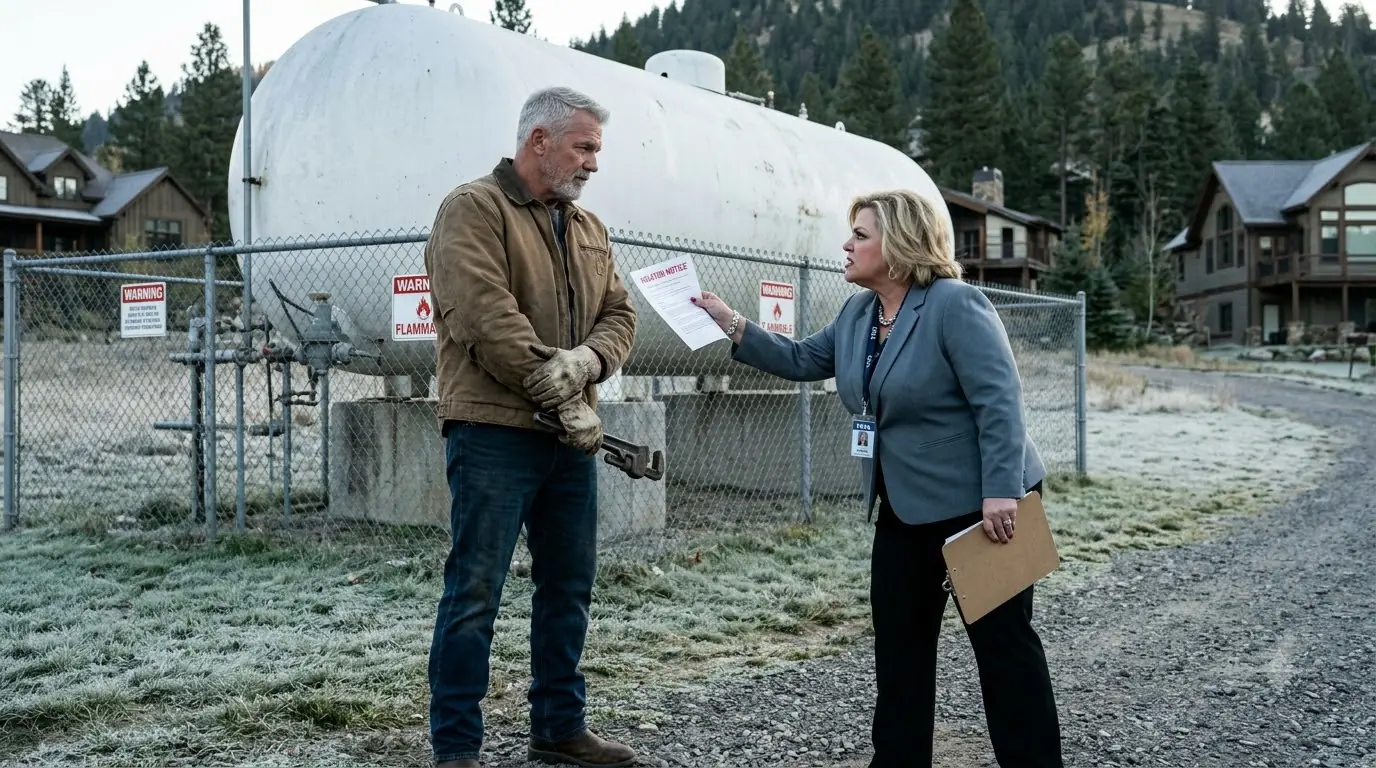
The woman in the red coat laid a yellow notice against Franklin Wade's chest and said, loud enough for three neighbors to hear, "You have ten days to remove your illegal water system, or our association will have it removed for you." Then she pointed toward the little brick pump house at the bottom of his pasture. "And don't bother telling me your grandfather built it. Old men built a lot of things they had no right to keep." Franklin looked at the notice, then at the children waiting beside the school bus shelter across the road. The pump house supplied the only dependable drinking water those children had ever known, and the woman threatening it had no idea why.
Franklin was sixty-eight, a widower with a silver beard and hands that had spent forty years repairing farm machinery. He lived on eighty-seven acres outside Cedar Hollow, Tennessee, in a white farmhouse whose porch leaned slightly toward the setting sun. Beyond his eastern fence stood Cedar Glen, a development of forty-three houses with decorative stone gates and a neighborhood association that liked to describe itself as the guardian of rural standards. The houses had been built on an old hay meadow ten years earlier. Franklin's land had never been part of the development, although the people moving in sometimes behaved as if every tree visible from their windows belonged to the same carefully landscaped picture.
The woman was Meredith Vale, recently elected president of the Cedar Glen Property Owners Association. She had moved from Nashville two years earlier, bought the largest house near the entrance, and announced that she intended to make the neighborhood worthy of its asking prices. Her husband owned a construction company. She drove a spotless black SUV and wore expensive boots that had never collected the kind of mud that could tell a person which pasture he was standing in. None of those things made her a bad neighbor. What made her dangerous was her confidence that a job title gave her permission to skip the ordinary work of finding out whether she was right.
"This pump is outside your gates," Franklin told her. "And it's connected to a permitted water cooperative, not your association." Meredith gave him a tight smile. "We have people looking into that. Our documents say the community owns the utility improvements serving these homes." Franklin waited for her to mention a survey, a recorded deed, or even the name of the county utility that had issued the permit. Instead, she straightened the notice against his jacket and told him that resistance would increase his fines. She turned toward her SUV before he could explain that he was not a member and had never paid the association a dollar.
He could have followed her and argued. Twenty years earlier, before his wife died, he probably would have done exactly that. June had been the steady one, a woman who could listen to an insult without mistaking it for an emergency. Since losing her, Franklin had learned that anger sometimes gave another person the pleasure of believing they mattered more than they did. He folded the paper and took it into the kitchen, where an old brass key hung from a nail beneath a photograph of his father. Then he called his daughter, Rebecca, an attorney in Knoxville, and said, "I think we've got a paperwork problem. Might be worth bringing your reading glasses."