The first box Ben Carter ever carried for Mrs. Hammond weighed less than a bag of dog food, but she stood at the end of her porch as if he had moved a piano. It was the hottest week Oak Haven had seen all summer, the kind of Iowa heat that made the sidewalks look pale and the porch railings too warm to touch.
Ben had been pulling his nine-year-old sister Lucy and their friend Darius around the block in an old red wagon when Mrs. Hammond called from her driveway and asked whether he could bring a delivery up to the shade. Ben lifted the box, set it beside her front door, and expected that to be the end of it.
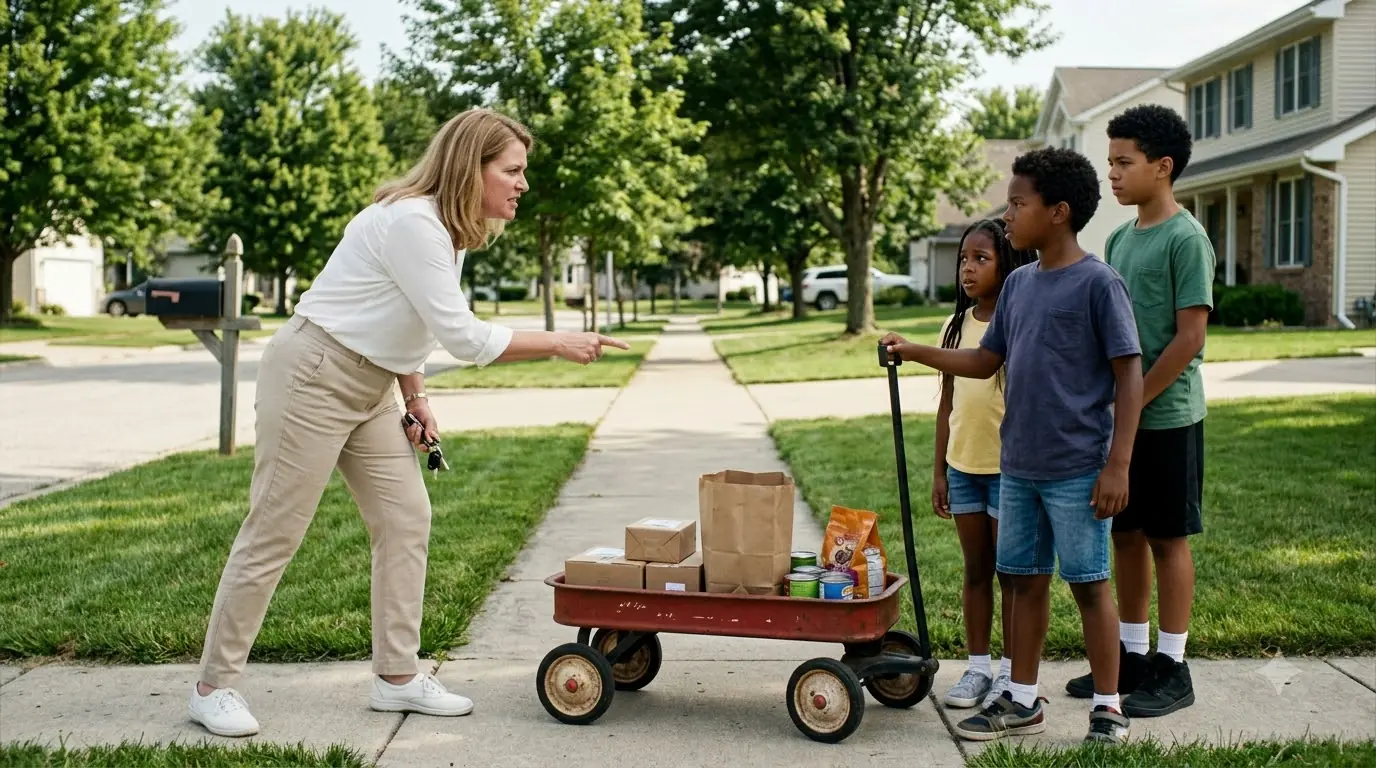
Instead, Mrs. Hammond pressed one hand against the small of her back and said, "You just saved me three trips." Ben looked down the driveway, which was not especially long, and then back at the seventy-nine-year-old woman who had spent the past five minutes arguing with a package because her hands hurt too much to grip it well.
He realized that distance could change depending on who was walking it. Lucy, who had been sitting cross-legged inside the wagon, immediately asked if Mrs. Hammond wanted them to bring her newspaper tomorrow too.
That was how HOUSE HELP began, although none of the kids called it a project at first. Mrs. Hammond mentioned the wagon to Mr. Lewis two houses over, who sometimes had grocery sacks left beside his garage when his daughter dropped them off before work.
Mr. Lewis mentioned it to Mrs. Reed, who liked ordering birdseed in small bags but hated bending to pick them up from the driveway. Within a week, Ben, Lucy, and Darius had six names written on the back of a piece of cardboard in Lucy's purple marker.
The rules came from their parents before the first Saturday route. No mailboxes, because mail was private and not theirs to touch. No medications, no packages marked fragile, no expensive-looking electronics, and nothing from a porch unless the resident had clearly asked for help.