Margaret Whitmore chose the exact moment the room grew quiet. The crystal glasses had just finished clinking. The cake, three tiers high, shimmered under chandelier light. Sixty guests turned toward Lauren Sullivan, one hand resting gently over her pregnant stomach. Margaret smiled first, then she slapped her.
The sound cut clean through the ballroom, sharper than the gasp that followed. Phones froze mid-record. No one moved fast enough, not even John. What none of them knew—and what Margaret could not have imagined—was that three hours earlier, Lauren had closed a 27 billion deal. And power, unlike humiliation, leaves a paper trail.
Lauren Sullivan had learned long before she married into the Whitmore family that silence was not the same thing as surrender. At 32, she had already built a reputation in Chicago's corporate legal circles as someone precise, unflappable, and relentless in preparation. Partners trusted her with transactions that spanned continents. CEOs lowered their voices when she spoke, not because she was loud, but because she was exact. She did not waste language.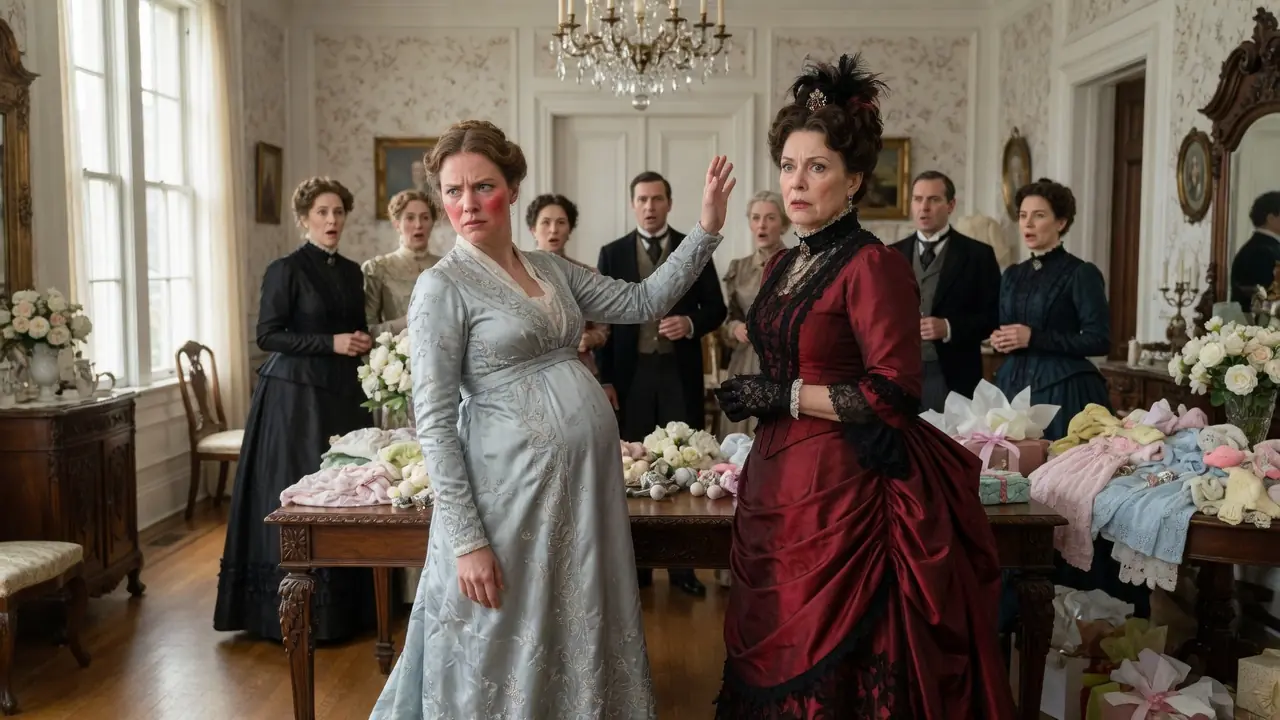
She did not posture. She documented. At home, however, documentation was quieter. The Whitmore residence stood along the north edge of the Gold Coast, all limestone symmetry and inherited confidence. Oil portraits lined the staircase: men in navy suits and women in pearls.
Legacy hung heavier than the chandeliers. John Whitmore fit naturally into that hallway of ancestors. He carried himself with the casual assurance of someone who had never needed to introduce himself twice. His work in commercial real estate finance paid well, and he preferred that it be known. Not aggressively, just consistently.
Lauren never corrected him when he implied he carried the larger financial weight in the marriage. That had been a decision. Early in their relationship, John had framed it as privacy. "Our family doesn't talk numbers," he had told her gently. "Especially not at dinners.
Mom values discretion. Lauren valued leverage. She agreed. Now 5 months pregnant, she moved through the Whitmore household with deliberate calm. Her heels had been replaced with low leather flats.
Her tailored suits hung slightly differently at the waist. Her body was working harder than it ever had, and she carried that labor without commentary. Margaret Whitmore noticed everything. Margaret was a woman who believed posture revealed character. She hosted charity galas and chaired boards whose missions were engraved in brass plaques.
Her cruelty when it surfaced wore gloves. "Oh Lauren, dear," Margaret had said two weeks before the baby shower, adjusting a floral arrangement in the dining room. "You mustn't overexert yourself. Legal work is intense." "It's fortunate John can shoulder the pressure right now."
Lauren had been seated at the long table reviewing a document on her tablet. She looked up, smiled softly, and nodded. In her mind, she recorded the phrasing, "Fortunate John can shoulder the pressure." The irony did not irritate her. It clarified her.
John had laughed lightly at his mother's comment, the way he often did, half amusement, half reflex. He kissed Lauren's temple afterward, a gesture that might have been affection or reassurance. It was difficult to tell the difference while unspoken. Later that evening, Lauren stood alone in the guest bedroom they had converted into a nursery. One hand rested at the small of her back.
The other held her phone. In a secure encrypted notes application, she typed March 3rd. Dinner Margaret implied financial dependency. John did not correct the tone. performative concern. Witness House staff present.
She did not write these entries out of bitterness. She wrote them because clarity required sequence. Sequence required memory. And memory over time blurred under emotional strain. Lauren did not intend to blur.
Her work life required the opposite of blur. the transaction she was currently leading. Though no one at this dinner table knew it was one of the largest acquisitions the firm had handled in a decade. Regulatory hurdles were stacked like dominoes. Deadlines moved with ruthless precision. There were nights she slept 4 hours woke to nausea and still chaired a conference call with three international boards.
John never asked for details. He asked if she was tired. He asked if she had eaten. He asked if she needed to scale back. When she told him she was managing, he nodded with visible relief.
The relief was not about her health. It was about control. Lauren had observed something else over the past 6 months, something small but persistent. John's financial conversations were oddly segmented. Certain projects were described in broad strokes, others not at all.
When mail arrived addressed to him in heavy cream envelopes from banks, she did not recognize he removed them before she entered the room. One evening, while sorting through a stack of documents on the kitchen island, Lauren noticed a statement partially tucked beneath a property tax notice. It bore the letterhead of a private trust management firm, Whitmore Family Holdings. She did not touch it immediately. Instead, she poured herself water, sat down, waited until John left the room to take a call.
Then she glanced. The statement listed a series of transfers, substantial ones. Six-figure movements between accounts over the past quarter. Some marked consulting, others coded in abbreviated internal references. Lauren did not assume wrongdoing.
She assumed omission. She replaced the document exactly where she had found it. Later that night, she searched public corporate records for any LLCs recently registered under variations of the Whitmore name. Two appeared, both newly formed. She did not confront John.
She opened a new digital folder instead. Observation first, conclusion later. Margaret's behavior intensified as the baby shower approached. Planning became choreography. Guest lists were curated carefully.
Lauren's college friends were forgotten in favor of Margaret's social circle. The venue, a private ballroom overlooking the Chicago River, was booked without consultation. "It's tradition," Margaret explained. "Our family events are hosted properly." Lauren's own mother, Diane Sullivan, had called quietly after receiving the formal invitation.
"It's beautiful," Diane had said, voice gentle but uncertain. Is this what you wanted? Lauren had paused. Yes, she answered. And the lie felt less like deception and more like protection.
She did not want her mother worrying. Diane had worked 30 years as a public school administrator. She understood effort, not spectacle. John seemed oblivious to the undercurrents. He approved invoices.
He complimented his mother's taste. He told Lauren she should feel honored. honored. The word lingered. That night, Lauren added another entry. March 14th, shower planning, guest exclusions, narrative control increasing, pattern consistent.
She closed the notebook app and rested both hands over her abdomen. The baby shifted slightly and almost imperceptible movement. Life continuing unaware of adult performance. Lauren allowed herself one long breath. Power did not need to announce itself.
It needed to endure. 3 days before the shower, she received confirmation that the final regulatory hurdle on her deal had cleared. Only one board vote remained. If successful, the 27 billion acquisition would close within 48 hours. She did not tell John, not because she doubted him, but because she understood timing. Silence, she had learned, was most effective when paired with documentation. and she was documenting everything.
Across town, Margaret reviewed seating charts with meticulous satisfaction. In the Whitmore hallway, the oil portraits watched with painted detachment. And in the nursery, beneath soft, unassembled crib rails, Lauren Sullivan continued to prepare, not for confrontation, but for consequence. She did not yet know how public that consequence would become, but she sensed with a calm certainty that had carried her through every negotiation room she had ever entered that the family who mistook her restraint for weakness had underestimated the one thing she never miscalculated. Evidence.
The conference room on the 39th floor of Halpern Weiss and Klein overlooked Lake Michigan gray and endless beneath a March sky. Lauren Sullivan stood at the head of the polished walnut table, one hand resting lightly against the surface, the other scrolling through the final version of a 78-page merger agreement. No one in the room commented on the slight curve of her pregnancy beneath the structured navy dress. In this space, her body was incidental. Her mind was the currency.
Section 9.4, she said evenly. Eyes scanning the screen mirrored on the wall. We tighten indemnification survival to 18 months. No exceptions. If they want the accelerated escrow release, this is the trade.
Across from her, the CFO of one of the merging corporations hesitated. That's aggressive. Lauren did not look up immediately. She finished reading the clause in silence, then met his gaze. It's protective, she replied.
You're acquiring 11 billion in overseas exposure. If we shorten that window, you're gambling on perfect compliance. The room quieted. They would not gamble. For 9 months, Lauren had structured this transaction.
Two multinational logistics conglomerates consolidating into one of the largest infrastructure platforms in North America. 27 billion in valuation. Regulatory review in three jurisdictions. Hundreds of employees waiting to learn what their futures would look like. And Lauren, 5 months pregnant, had held the architecture steady. The final board vote was scheduled for 3:00 p.m. At 2:52 p.m., she stepped into a private office to take the call.
Her reflection in the glass showed fatigue at the corners of her eyes, but not doubt. She pressed her palm gently against her abdomen, an unconscious gesture. The call connected, Lauren, the chairman's voice said. The vote passed unanimously. There was no applause on the line, only the measured exhale of executives accustomed to large numbers.
Proceed to closing, he continued. Lauren closed her eyes for one second. Just one. Understood, she replied. By 4:17 p.m., wire confirmations began to register.
Escrow accounts funded. Signature pages circulated electronically. The acquisition, years in planning and months in negotiation, was complete. At 4:42 p.m., an internal press release draft circulated among senior partners. Lauren's name appeared beneath the headline.
Lead transactional counsel Lauren Sullivan Esquire. She read the line once, then she forwarded the confirmation email thread, including timestamps, board resolutions, and wire receipts, to a secure personal archive she maintained outside firm servers. Not because she distrusted her firm, but because she trusted records. Subject line closing confirmation 27B transaction. She did not celebrate.
There would be time later for acknowledgement, perhaps a quiet dinner alone, perhaps nothing at all. Instead, she checked the time. The baby shower was scheduled for the following afternoon. At home that evening, the Whitmore residence felt unchanged. Margaret stood in the foyer directing a delivery team arranging oversized floral installations.
Pale roses, imported peies, excess disguised as elegance. Lauren Margaret called lightly as she entered. You're late. I was beginning to worry the firm wouldn't spare you. Lauren removed her coat calmly.
It was a busy day. John emerged from his study, loosening his tie. Mom's been orchestrating everything he said with a grin. You should see the dessert table plans. Lauren smiled softly.
I'm sure it's beautiful. Margaret approached, adjusting the silk scarf at her neck. I've invited several of John's colleagues. It's important they see the family expanding. Stability matters in business.
Lauren recognized the subtext. Visibility as leverage. Of course, she replied. Margaret tilted her head slightly. I do hope you're not exhausted.
Pregnancy can affect judgment. The sentence floated in the air, delicate and sharp. Lauren's expression did not shift. I feel well. John glanced between them, missing the blade entirely.
"She's tougher than she looks," he joked. Lauren watched him carefully. "Tougher than she looks." In another context, it might have been admiration. Here, it felt like dismissal strength, acknowledged only as an anomaly.
Later that night, in the nursery, illuminated by a single lamp, Lauren opened her notebook again. March 17th, deal closed. 4:17 p.m. board unanimous bonus structure confidential shower tomorrow M increased social exposure intentionally Jay unaware of transaction magnitude. She paused then added power asymmetry misunderstood by household. She set the phone down and leaned back in the rocking chair. The baby shifted again a quiet reminder of future responsibility.
Lauren did not resent John for not knowing. She had chosen not to tell him. What unsettled her was not ignorance, but assumption. The assumption that she existed inside his narrative rather than alongside it. In the kitchen downstairs, Margaret reviewed a seating chart once more.
Margaret believed in optics. Upstairs, John scrolled through real estate projections on his laptop. A message notification briefly appeared. An email from Whitmore Family Holdings. He minimized it quickly when Lauren entered.
She noticed. Everything all right? She asked. Just routine transfers. He replied too quickly.
Mom's trust management stuff. Lauren nodded as if satisfied. After he fell asleep, she accessed public filings again. One of the recently formed LLCs, Rivercrest Advisory Group, had listed a managing partner whose name she recognized from Margaret's charity board. Lauren did not assume fraud, but she recognized pattern alignment when she saw it.
The next morning arrived clear and bright. Chicago sunlight filtered through tall windows as stylists moved through the house, steaming dresses, adjusting centerpieces, finalizing details. Margaret supervised with military precision. Lauren dressed slowly, a pale blue maternity dress, minimal jewelry, no heavy makeup. She studied her reflection.
There was no visible trace of the previous day's triumph. No headline across her forehead announcing a $27 billion victory. No public recognition, only composure. John entered behind her, fastening his cufflings. "You nervous?" he asked lightly.
"About what all the attention?" Lauren considered the question. No, she answered truthfully. He kissed her cheek. Mom's intense, but she means well.
Lauren did not correct him. Downstairs, guests began to arrive. The ballroom by the river filled with controlled laughter and curated admiration. Crystal glasses chimed. Cameras positioned discreetly on tripods captured the event for social media montages.
Lauren greeted each guest with measured warmth. She noticed the angles of the cameras, the proximity of Margaret's closest allies. The way her own parents stood slightly apart, polite but outnumbered. At 2:58 p.m., Margaret tapped her champagne flute gently. "May I have everyone's attention?" she called.
The room quieted. Lauren placed one hand over her abdomen instinctively. 3 hours earlier, she had secured a transaction larger than most people in this ballroom could conceptualize. Now she stood beneath imported flowers, waiting for a different kind of negotiation to begin. The narrator knew what would follow. Lauren did not yet, but she sensed in the subtle tightening of Margaret's smile and the deliberate positioning of John beside his mother that something in this room had been staged long before she arrived.
And unlike corporate contracts, family theatrics carried no indemnification clause. Margaret Whitmore believed that tone was everything. A woman could humiliate another woman, she often thought, if she did it with enough refinement. The baby shower ballroom shimmered with curated warmth. Sunlight bounced off the Chicago River outside the Florida ceiling windows, scattering pale reflections across linen draped turbles.
Silverware gleamed. Crystal caught the light. A string quartet played something soft and tasteful near the entrance. Optics were immaculate. Lauren Sullivan stood near the center of the room, posture straight despite the strain in her lower back.
She wore pale blue. Her hair was pinned simply at the nape of her neck. She did not compete with the decor. She allowed the room to perform. Margaret took the microphone.
Friends, she began her voice smooth and well practiced, "Thank you for coming to celebrate the next generation of the Whitmore family." Applause followed polite, enthusiastic in measured degrees. Lauren noted the phrasing, "Not Lauren and John's child, the Whitmore family's next generation." Margaret continued weaving a narrative about legacy, about stability, about how important it was for children to be raised in homes with structure and guidance. Her eyes drifted toward Lauren at specific moments, each glance calibrated.
And of course, Margaret added lightly, "We're grateful John worked so tirelessly to provide such a secure future." A few guests nodded approvingly. Lauren stood still. John shifted slightly beside her, accepting the praise with modest amusement. He squeezed Lauren's hand briefly as if including her in the credit.
She did not pull away. Margaret lowered the microphone and gestured toward a table stacked high with elaborately wrapped gifts. "Let's begin," she said. Lauren was guided to a decorative armchair placed deliberately at the front of the room. The positioning reminded her of a deposition witness centered illuminated observed.
"Phoes were raised discreetly," she said. The first several gifts passed without incident. plush blankets, silver rattles, embroidered onesies bearing the Whitmore crest. Each item received appreciative gratitude. Lauren smiled, set them aside carefully. Margaret hovered nearby, narrating details to guests.
That one is from the Harringtons, she would say. They've known John since prep school. Lauren opened a gift from her own mother. Handk knit baby booties in soft cream yarn. Margaret's smile tightened almost imperceptibly.
"How quaint," she murmured, "just loud enough for the front tables to hear. "There's something very homespun about that." A few guests chuckled. Lauren lifted the booties gently. "My mother made them," she said evenly.
"She started knitting when I was a child. She did not elaborate." Margaret stepped closer. "Well," she replied sweetly, "Not everyone has the resources for luxury brands." The room shifted slightly.
It was subtle. No sharp intake of breath, no overt discomfort, but something recalibrated. A line had been approached. Lauren placed the booties carefully back in the box. Comfort doesn't always require luxury, she said quietly.
Margaret's eyes hardened for half a second before smoothing again. John cleared his throat lightly. Mom, he began attempting levity. Let's not turn this into a budget seminar. Margaret laughed.
Of course not. We're simply celebrating how fortunate this child is. Fortunate. Lauren recognized the repetition. Another gift was placed in her lap and envelope this time.
Inside was a check large enough that several nearby guests leaned forward instinctively. Margaret took the microphone again. A small contribution she announced toward nursery expenses. since legal salaries can be unpredictable. The word lingered unpredictable. Lauren felt the baby shift again beneath her palm.
She breathed slowly. In her mind, she recorded the sentence exactly. Legal salaries can be unpredictable. There were Sixty guests in attendance. Three event staff near the bar.
A videographer Margaret had hired to capture family memories. At least a dozen phones raised intermittently. Witnesses. Lauren looked up at Margaret, her expression composed. "My compensation structure is quite stable," she said gently.
"But thank you," Margaret's smile faltered. John's grip on Lauren's shoulder tightened. Subtle pressure cautionary. Lauren noticed that, too. Margaret leaned closer, lowering her voice, but not enough to prevent those nearest from hearing.
"Well, dear," she said, "We all know John carries the real weight, especially now. It must be difficult relying so heavily on him." The sentence was not framed as a question. It was framed as a verdict. Silence fell in a wider radius this time.
"Lin's gaze did not waver." She considered her response carefully, not for emotion, but for a record. "I don't rely on John financially," she said evenly. "We both contribute." Margaret's jaw tightened.
Now, now there's no need to pretend. A faint ripple moved through the room. Uncertainty, curiosity, discomfort. John leaned down slightly. Lauren, he whispered.
Just let it go. Let it go. Lauren understood the mechanics unfolding. Margaret had not expected resistance. The narrative had been rehearsed.
The grateful wife, the benevolent matriarch, the prosperous son. Correction disrupted performance. Margaret straightened abruptly. "You should remember where you came from," she said, voice losing its velvet edge. "Before this family, there it was, direct, unfiltered."
Lauren did not flinch. "I remember exactly," she replied. Margaret's hand moved before thought could intercepted it. The slap landed clean across Lauren's cheek. The sound cracked through crystal and string music alike.
For a fraction of a second, no one moved. Lauren's head turned slightly with the impact. Her palm instinctively braced against the arm of the chair. The room inhaled collectively. A phone near the third table remained raised recording.
Margaret's breathing was audible. John stared stunned, then reached toward his mother. Mom, it was disrespectful. Margaret snapped, though her voice trembled now. She will not embarrass this family.
Lauren slowly turned her face back towards center. A faint redness bloomed across her cheek. Her eyes were steady. She rose from the chair without haste. "Thank you all for coming," she said calmly.
The composure unsettled more than tears would have. John stepped toward her. Lauren, it was just as she looked at him, not angrily, clearly. 3:42 p.m.," she said softly. He blinked. "What?"
"3:42," she repeated. Then she stepped away. Guests parted instinctively as she walked toward the exit. No dramatic rush, no raised voice. The videographer lowered his camera uncertainly.
Outside, the march air was sharp against her skin. Lauren paused on the sidewalk, one hand resting again over her abdomen. Inside the ballroom, Margaret was already reframing the narrative. She's emotional, she insisted to anyone who would listen. Pregnancy hormones.
John remained inside, torn between optics and pursuit. Lauren did not wait. In her car, she opened her phone. March 18th, 3:42 p.m. Public assault. Approx 60 witnesses.
Video evidence likely. Verbal statements proceeding act documented. She added one more line, "Escalation confirms pattern." Then she closed the app. Her cheek throbbed faintly, but her breathing remained steady.
The narrator knew this moment would not define her by humiliation. It would define the beginning of procedure. Margaret had believed tone was everything. She had forgotten documentation, and documentation, unlike performance, does not fade under chandelier light. By the time Lauren Sullivan reached the underground parking garage, the tremor in her cheek had dulled into heat.
Pain she knew was temporary. Documentation was not. She sat in the driver's seat for a full minute before starting the engine. Not because she was overwhelmed, but because she was sequencing event, witnesses, digital recordings, physical impact, verbal escalation. She replayed Margaret's exact words in her mind, capturing tone and order before memories softened them.
You should remember where you came from. Legal salaries can be unpredictable. You rely on John. Then the slap. Lauren adjusted the rear view mirror and examined the faint red mark on her face.
It would likely darken before fading. Visible evidence mattered. She lifted her phone and took two photographs. One straight on, one angled. timestamp automatically embedded. Then she drove.
John arrived home 40 minutes later. Lauren was seated at the kitchen island, an ice pack wrapped in a dish towel resting lightly against her cheek. The nursery light glowed upstairs unfinished and silent. He closed the door harder than necessary. "What just happened?" he demanded.
Lauren did not answer immediately. She set the ice pack down, carefully folded the towel once aligned its edges. "She struck me," she said. John exhaled sharply. You embarrassed her in front of everyone.
Lauren met his eyes. She struck me. His jaw tightened. You corrected her publicly. She misstated facts.
It was a baby shower, Lauren. Not a deposition. The word hung between them. Not a deposition. Lauren recognized the implication.
That truth was inappropriate in ceremonial spaces. That hierarchy superseded accuracy. She assaulted me. Lauren repeated tone even. John ran a hand through his hair.
It was a reflex. She felt disrespected. Did you? He hesitated. That's not the point.
Silence filled the kitchen. The refrigerator hummed softly. Outside, a car passed on the street. Lauren reached for her phone. I've documented the incident.
She said there were approximately 60 witnesses. At least one visible recording device captured the moment when John stared at her. You're not seriously considering doing something legal over this. I'm considering facts. Over a slap, Lauren watched him carefully.
The minimization was instinctive, not strategic. That made it more revealing. She made repeated statements implying financial dependency. Lauren said, then escalated physically when corrected. John's voice lowered.
Why couldn't you just let it go? Because she never let contracts go unsigned. Because she never left liability undefined. Because silence, when weaponized against her, required structure. But she did not say those things.
"I'm pregnant," she replied instead. John exhaled again, pacing now. "Mom's already calling people, trying to smooth it over. She says she lost her temper. She'll apologize.
Publicly, he stopped. She shouldn't have to apologize publicly, he said quietly. That would damage her. Lauren felt something inside her settle into clarity. Damage her and me?
She asked. He did not answer. Upstairs, Lauren moved slowly through the nursery. The room smelled faintly of fresh paint. A crib box remained unopened near the wall.
She sat in the rocking chair and opened her secure notes application again. March 18th, 56 p.m. Jay minimizes assault. Refers to correction as embarrassment. No acknowledgement of harm. She paused, then added, "Pattern preservation of M's image prioritized over my safety."
The baby shifted gently beneath her palm. I know she whispered though no one else was present. Her phone buzzed. A text message from an unknown number. Video attached.
The message read, "I'm so sorry. You didn't deserve that. Thought you should have this." Lauren downloaded the file. The video angle was slightly elevated likely from a guest seated near the second table.
It captured Margaret's final sentence clearly, captured Lauren's response, captured the slap in sharp clarity. The timestamp in the corner matched 3:42 p.m. Audio was clean. Lauren saved the file to her encrypted folder and forwarded a copy to a secure external storage account she maintained privately. Then she sat still, not shaking, not crying, calculating. Margaret's narrative began circulating within hours.
She's emotional. She misinterpreted humor. It wasn't that hard. Lauren received two more messages from guests before midnight. One offered support.
Another apologized for not intervening. A third confirmed the videographer had continued recording after the incident. Each message was archived. John knocked on the nursery door around 9:30 p.m. "Can we talk?" he asked. Lauren gestured for him to enter.
"He remained standing." Mom is willing to send flowers, he said carefully. Maybe we can all sit down privately. A mediated conversation, Lauren asked. Just family.
She studied him. Would you characterize what happened as assault if it were anyone else? She asked. John's expression hardened slightly. You're escalating this.
I am identifying it. She lost control. And I lost what Lauren asked quietly. He opened his mouth then closed it. Lauren rose slowly from the chair.
I will not be struck in public, she said. Or private. You're overreacting. There it was again. Minimization as instinct.
Lauren felt the final piece settle into place. Not anger, but confirmation. "Do you have access to the Whitmore family holdings accounts?" she asked suddenly. John blinked. What?
The trust accounts? That's unrelated, is it? His silence lasted 2 seconds too long. Why are you bringing that up? I'm assessing stability.
Lauren replied calmly. He stared at her confusion edging into suspicion. You're acting like you're preparing for litigation. Lauren did not answer because she was. At 11:12 p.m., after John retreated to the guest room under the pretense of giving her space, Lauren made a call.
Elena, she said when the line connected, Elena Ramirez had been her colleague in law school before shifting into highle litigation. Sharp, uncompromising, discreet. I saw a clip circulating in a private group, Elena said immediately. Are you okay? Yes.
A pause. Do you want to pursue this? Lauren looked at the nursery walls. Yes. Civil or protective?
Both potentially. I need to review financial exposure first. Is there more there may be? Elena's tone sharpened. Start collecting everything.
Video originals, witness names, medical documentation, if there's any physical mark. I already have photographs. Of course you do, Elena murmured. Lauren's voice remained steady. I will not announce anything yet.
Good, Elena said. Silence is leverage. After the call ended, Lauren stood by the window overlooking the darkened street. Inside the Whitmore home, oil portraits still lined the staircase. Margaret was likely confident the narrative would hold.
That reputation could outrun record. She underestimated two things. Lauren's profession and Lauren's patience. In the quiet house beneath inherited chandeliers and curated history, a new file folder existed, now secure, timestamped building. The slap had not broken composure.
It had triggered process. And process once initiated by someone who understood the law intimately did not reverse itself easily. Upstairs, Lauren closed her notebook application. Not in defeat, in preparation. The bruise surfaced fully the next morning.
It bloomed beneath Lauren Sullivan's left cheekbone in a muted shade of violet, subtle but undeniable. She studied it in the bathroom mirror under natural light, tilting her head slightly to observe the edges. There was minor swelling, no broken skin, no dramatic distortion, but it was visible. Visible mattered. She took two additional photographs, this time beside a digital clock on the bathroom counter displaying the date and time.
Then she emailed the images to herself using her encrypted account, preserving metadata. Originals untouched, no filters, no compression. Documentation she had learned early in her legal career was strongest when it anticipated scrutiny. Downstairs, John sat at the kitchen table with a mug of coffee he had not touched. His phone lay face down in front of him.
He looked up when Lauren entered. His gaze moved immediately to her cheek. He inhaled as if the mark had only now made the incident real. "It looks worse today," he said quietly. "Yes, I told mom she needs to apologize."
Lauren poured herself a glass of water before responding. "Privately, she said she'll say she regrets the misunderstanding." Lauren did not react to the phrasing. "An apology acknowledges harm," she said calmly. "A misunderstanding implies mutual fault."
John's shoulders sagged. Lauren, please. This doesn't have to turn into something destructive. She sat across from him. It already is, she replied.
Silence stretched between them. He reached for his phone, hesitated, then turned it over. Several unread messages from Margaret illuminated the screen. She's worried you'll exaggerate this, he said carefully. Lauren watched him.
Exaggerate. She thinks you're angry enough, too. He stopped to do what? To make it bigger than it was. Lauren folded her hands loosely on the table.
It was public assault, she said. Documented. John exhaled sharply. You talk like you're in a courtroom. I talk like I understand liability.
He rubbed his forehead. This is family. Yes, Lauren said. And that makes it more concerning. By midm morning, Lauren had scheduled a sameday appointment with her obstitrician.
Not because she felt immediate medical distress, but because medical records carried evidentiary weight. The waiting room was quiet. Soft music played. A television mounted on the wall displayed muted daytime programming. When the nurse called her name, Lauren rose carefully.
Inside the examination room, Dr. Patel greeted her with professional warmth. I saw the note you left when you booked the doctor, said gently. Are you safe? Yes, Lauren answered truthfully. I need documentation of a physical incident.
Dr. Patel examined her cheek carefully, noting the discoloration and mild swelling. Blood pressure slightly elevated, fetal heartbeat strong and steady. Was there abdominal impact? Dr. Patel asked. No.
Any dizziness? No. The doctor typed methodically into the electronic record. Do you plan to pursue legal action? she asked without judgment. Lauren met her gaze.
I am considering it. Then this will be in your chart, Dr. Patel said. If you need certified copies, request them through the portal. Lauren nodded. Medical documentation secured.
As she left the clinic, her phone vibrated again. Another message, this time from a colleague at her firm. Just saw a rumor circulating about an incident at your shower. Everything okay? Lauren typed a brief reply handled.
Thank you. She did not elaborate. Her professional life would remain insulated from family chaos unless necessary. At home, she moved deliberately through the office space John rarely used. The filing cabinet in the corner held household financial records, tax returns, mortgage documents, insurance policies.
She opened the top drawer calmly. Whitmore family holdings appeared again in a folder labeled trust distribution. Lauren removed it. Inside were quarterly statements, each listing distributions to subsidiary entities. Rivercrest Advisory Group appeared repeatedly.
She sat at the desk and reviewed the numbers carefully. Transfers had increased significantly over the past 6 months. 6 months ago, aligned precisely with the timeline of Margaret's intensified involvement in her and John's financial conversations. Lauren did not assume illegality. She assumed exposure. She photographed the statements without removing them from the house. each page captured clearly, then return the folder exactly as she found it.
No disturbance. If litigation emerged, she would subpoena formally, for now, she gathered awareness. That evening, Margaret arrived unannounced. Her car pulled into the driveway with practiced entitlement. John met her at the door before Lauren could reach it.
They spoke in hush tones in the foyer, but Lauren caught fragments. She's escalating. She can't seriously. You need to control this. Lauren stepped into view.
Margaret straightened immediately. My dear, she said with forced softness. I came to smooth things over. Lauren observed her carefully. No remorse in the eyes, only calculation.
You struck me, Lauren said evenly. Margaret's lips pressed together. You provoked me. John shifted uncomfortably. In front of Sixty guests, Lauren continued.
And a videographer. Margaret's expression flickered. What videographer? She asked. The one you hired.
For the first time, uncertainty crossed Margaret's face. It was an emotional moment. She recovered quickly. We are family. We don't destroy each other over mistakes.
Lauren studied the word destroy. I am not destroying anything, she said calmly. I am documenting. Margaret stepped closer, lowering her voice. If you pursue this publicly, she said, you will regret it.
Custody courts look at temperament at stability. There it was. Threat. John stiffened. Mom Lauren did not interrupt.
Are you threatening me? She asked quietly. Margaret smiled thinly. I'm advising you. Lauren held her gaze for several seconds.
Then she reached into her pocket and pressed a button on her phone screen. The audio recording interface glowed silently. I appreciate clarity, Lauren said. Please continue. Margaret froze.
John noticed the phone. Lauren, you're recording? Margaret snapped. Yes. Margaret's composure fractured briefly.
This is absurd. Is it? Lauren asked gently. Margaret straightened her jacket. If you choose to behave like a stranger, don't expect to remain part of this family.
Lauren felt something shift internally. Not anger, but confirmation. I will remain part of my child's life. She said, "That is sufficient." Margaret turned sharply toward John.
"You see what she's doing?" John looked between them, trapped between loyalty and discomfort. Lauren stopped the recording after Margaret left. File saved, timestamp intact, threat regarding custody, direct statement implying retaliation. She emailed the audio file to her encrypted archive.
That night, she called Elena again. There's financial irregularity, Lauren said. And now verbal threats tied to custody. Good, Elena replied calmly. Good for the case, not good for them.
I want to proceed carefully. We will. Lauren sat in the nursery again, the rocking chair creaking softly beneath her. File preparation, Elena continued. Chronology first, then we decide on protective order.
Lauren looked at the unopened crib box. I don't want spectacle, she said. You won't get spectacle, Elena replied. You'll get procedure. After the call ended, Lauren closed her eyes briefly.
The bruise on her cheek would fade within days. the video would not. Margaret believed power resided in reputation. John believed power resided in unity. Lauren understood something they did not. Power, when documented correctly, resided in evidence, and evidence, once assembled, did not require raised voices to speak.
The Whitmore home felt different after the recording. Not louder, not colder, sharper. Lauren Sullivan moved through the rooms with the same measured calm, but now the air carried awareness. Every conversation had potential weight. Every sentence could become record.
John noticed the shift, even if he did not fully understand it. He had started choosing his words more carefully. Margaret had stopped dropping by unannounced. Silence, Lauren knew, often preceded strategy. 2 days after the baby shower, the video began circulating beyond private messages. Not publicly yet, but within Margaret's social circle, the clip was being forwarded discreetly, edited in some versions, cropped in others.
In one cut, Lauren's correction about financial independence was removed, leaving only the slap isolated context stripped. Narratives were already being curated. Lauren did not respond. Instead, she requested a full unedited copy from the guest who had first sent it. The woman, whose name was Clare Donnelly, replied quickly.
"I'm so sorry," Clare wrote. Margaret asked people not to share anything. I kept the original. Lauren thanked her. "Original file received.
Metadata intact. Duration 3 minutes 27 seconds." The slap was not isolated. It followed provocation. It followed repeated public diminishment.
Sequence preserved. Lauren saved the file into a structured digital folder titled March 18th incident. Subfolders video original photos day 1 and two. Medical record OB visit audio custody threat. Elena had advised organization before action.
Lauren excelled at organization. John returned home early that afternoon. We need to talk, he said, standing in the doorway of the study Lauren had begun using more frequently. She gestured for him to sit. I've spoken to a family attorney, he said carefully.
Lauren did not react outwardly about what she asked about the implications of escalation. He struggled with a word and Lauren prompted. He said pursuing charges would make things messy. that it could impact custody arrangements negatively for whom Lauren asked calmly. For everyone? She leaned back slightly.
"Did you tell him your mother threatened custody leverage?" she asked. John's eyes flickered. "No." "Why not? Because she didn't mean it like that."
Lauren's voice remained level. She stated, "I would regret going public and reference custody courts." She was emotional. So was she when she struck me. John stood abruptly, frustration breaking through.
Why are you doing this? Lauren watched him. Doing what? Turning this into litigation. She folded her hands.
I am protecting myself and our child. You're creating a war. No, she said quietly. I am responding to one. Silence settled heavily.
John's face softened slightly. If you file anything, he said, Mom will fight back. Lauren held his gaze. I am prepared for that. He studied her more carefully than perhaps seeing something he had overlooked for years.
Not defiance, not anger, competence. That evening, Lauren met Elena in person. They chose a quiet office in downtown Chicago rather than a cafe. Privacy mattered. Elena spread printed documents across a conference table.
Let's outline options, she said. Lauren nodded. Civil assault claim, Elena began. Clear video, witnesses, medical documentation, strong foundation. Lauren listened without interruption.
Protective order, Elena continued. Based on physical assault and subsequent custody related threat that could restrict contact and divorce, Lauren asked. Elena paused. That depends on you, but the financial irregularities you mentioned, those are separate exposure points. Lauren slid a printed summary of the Whitmore family holding statements across the table.
Elena scanned the numbers. These transfers are substantial, she said. Have you confirmed legitimacy? Not yet. I only photographed what was accessible.
Good. Don't remove originals. If we move forward, we subpoena formally. Lauren nodded. I don't want retaliation to escalate unpredictably, she said.
It already has, Elena replied calmly. The question is whether you respond strategically. Lauren rested her hands on the table. I don't want spectacle, she repeated. You won't get spectacles, Elena said.
You'll get procedure. Back home, Margaret called that night. Lauren let it go to voicemail. The message was brief. I hope you're thinking rationally, Margaret said, voice tight but controlled.
Families survive mistakes by keeping matters private. Lauren saved the voicemail. Pattern insistence on privacy over accountability. John entered the room as Lauren finished archiving the file. Mom says you're refusing to return her calls.
He said, "I am prioritizing written communication. She thinks you're trying to trap her." Lauren met his eyes. I am preserving accuracy. He exhaled slowly.
You're not the only one who can document things. The sentence lingered, a subtle shift. Lauren considered it carefully. Is that a warning? She asked.
John hesitated. No, just a reality. She nodded once. I welcome documentation, she replied. He did not respond.
Later that night, Lauren reviewed her firm's internal press release draft again. The $27 billion acquisition would go public within a week once announced her professional profile would expand significantly. Media inquiries industry recognition. Margaret's narrative of dependency would become untenable. Lauren did not intend to weaponize her success, but she understood its weight.
Power imbalance often dissolved under transparency. She closed the document and placed her phone down. The baby shifted again, stronger now. Soon, she whispered, "Not to the child, to the process." The following morning, Elena sent a draft affidavit.
Lauren read every line carefully. Statement of facts, chronology, verbatim quotes, reference to video evidence, medical documentation attached, no emotional adjectives. No inflammatory language, just record. Lauren made minor edits for precision adjusting a timestamp clarifying a sequence. Then she sent it back.
Approved downstairs. Margaret was unaware that procedure had begun. She was meeting with two long-standing acquaintances at a private club, dismissing the incident as an unfortunate overreaction. Reputation she believed would outpace record. But reputation did not carry metadata.
Back in the Whitmore home, John stood in the foyer beneath the oil portraits phone in hand. He sensed something shifting beyond his control. Lauren emerged from the study composed as ever. Are you filing? He asked quietly.
Yes, she answered. He swallowed. For a protective order? Yes. He searched her face for hesitation.
There was none. This will change everything he said. Lauren considered that it already has. She walked past him toward the staircase. Upstairs in the nursery, she placed one hand over her abdomen and one over the unopened box of crib rails.
She did not feel triumphant. She felt aligned. The slap had been a moment. The response would be a process. And Lauren Sullivan understood process better than anyone in the Whitmore household realized.
Filing a protective order was not dramatic. There were no raised voices in the clerk's office, no swelling music, no cinematic declarations. There was fluorescent lighting, neutral carpet, a number dispenser humming softly beside a plastic sign that read domestic relations division. Lauren Sullivan took a ticket and sat down. Her cheek had mostly faded to yellow at the edges.
The visible bruise was no longer striking. But that she knew was irrelevant. The video was permanent. Elena sat beside her, a slim leather folder resting on her lap. "You don't have to look brave," Elena said quietly.
"I'm not trying to," Lauren replied. "She wasn't trembling. She wasn't crying. She was thinking." At the counter, she submitted the affidavit supporting exhibits attached in careful sequence.
Exhibit A, video recording original. Exhibit B, photographs timestamped. Exhibit C, medical record OB, visit summary. Exhibit D, audio recording, custody related statement. The clerk flipped through the documents methodically, then stamped the top page.
A date for a preliminary hearing was assigned. Service would follow within 48 hours. Procedure had begun. John was served that evening, not Margaret. The protective order named Margaret Whitmore as the respondent.
But because the filing addressed potential harassment and custodial threats within the shared household, John received formal notice as an interested party. He stood in the foyer when the process server arrived. Lauren was upstairs. She heard the knock, heard the low exchange of voices, heard the shift in tone when John realized what the envelope contained. He climbed the stairs slowly.
She actually filed," he said, the voice hollow. Lauren closed her laptop. "Yes, for a protective order." "Yes." He stared at her as though seeing her for the first time.
"You could have warned me." I did. When I said I was documenting, he shook his head, pacing once across the nursery floor. "This makes mom look violent." "She was."
"That's not how it will be seen." Lauren considered that carefully. "How will it be seen?" she asked. as you attacking an elderly woman. She is 62, Lauren replied evenly. And she struck a pregnant woman in a room of witnesses.
John's jaw tightened. You're destroying the family. Lauren did not respond immediately. She stood slowly, steadying herself. "I am setting a boundary," she said.
He looked at her cheek now faintly discolored. It was one moment, he insisted. It was the moment she lost control publicly, Lauren corrected gently. "I do not intend to wait for the private version," Margaret called within the hour. Lauren let it go to voicemail.
"The message was no longer composed." "This is outrageous," Margaret said her voice sharp. "Do you have any idea what this will do to John's reputation?" To the family, withdraw it immediately. Lauren saved the message.
Exhibit E. Pattern of pressure following filing. Elena had warned her this would happen. They will escalate emotionally before they recalibrate legally, Elena had said. Lauren anticipated both.
The following morning, Lauren turned her attention back to finances. The Whitmore family holdings documents she had photographed lingered in her thoughts. transfers to Rivercrest Advisory Group. Large sums labeled vaguely as consulting fees. She ran a deeper public records search. Rivercrest Advisory Group listed a managing member, Thomas Greer.
Thomas Greer sat on the board of a charitable foundation chaired by Margaret Whitmore. Lauren cross referenced dates. Significant trust distributions had occurred within weeks of large foundation fundraising events. She did not jump to conclusions. But she noted alignment.
If funds were being redirected improperly, that was a separate matter, civil or even criminal, depending on structure. Lauren opened a new digital folder, financial review, preliminary. Inside, she organized public LLC filings, trust distribution summaries, timeline alignment chart, no accusations, just data. at Halpern Weiss and Klein. The press release for the $27 billion acquisition went live that afternoon. Industry media outlets began circulating the announcement.
Historic consolidation in North American logistics sector. Laurens's name appeared prominently in trade publications by evening. Lead architect of 27 billion, Deal Lauren Sullivan. She did not forward the article to John. She did not mention it at dinner, but she noticed when his phone buzzed repeatedly during the meal.
"Congratulations," he said, finally placing the device face down. "For what?" She asked calmly. "The deal," she nodded once. "It closed last week.
You didn't tell me. I was busy." John studied her, something unsettled in his expression. "That's a massive transaction." "Yes, how much was it worth?" 27 billion.
The number lingered between them. Margaret's previous insinuation about unpredictable legal salaries now felt almost absurd in contrast. John's voice softened. That changes things. Lauren looked at him.
It doesn't change what happened. He fell silent. 2 days later, Margaret was formally served. The reaction was swift. She contacted her own attorney immediately. Within hours, Lauren received a letter via certified mail.
It accused her of exaggeration, of malicious intent, of attempting to leverage a minor familial disagreement for financial advantage. Lauren read it once, then forwarded it to Elena, expected. Elena replied, "They're positioning you as unstable because I filed because you documented." Lauren placed the letter into the case folder. Exhibit F response letter from council.
Pattern deflection and character attack. The preliminary hearing date approached quickly. John oscillated between defensiveness and unease. You don't have to go through with testimony, he said one evening. We could settle this privately.
On what terms? Lauren asked. An apology? Maybe a written statement. Admitting assault, he hesitated.
She would never use that word. Lauren nodded. That is the problem. Margaret, meanwhile, began contacting mutual acquaintances. She's unstable, she told one.
She's overwhelmed with pregnancy hormones, she told another. She's embarrassed John professionally, she told a third. But the video had circulated quietly beyond her control. and videos, unlike rumors, carried timestamps. Lauren did not engage socially. She focused on preparation.
Elena structured questions for potential cross-examination, clarified factual sequence, reinforced calm delivery. No anger, Elena advised, just facts. Lauren had no interest in anger. Anger diluted precision. The night before the hearing, Lauren sat in the nursery again.
The crib had finally been assembled. Clean white lines against soft gray walls. She ran her fingers lightly over the rail. John stood in the doorway. I never thought it would come to this, he said.
Lauren did not turn. It didn't have to. He swallowed. You could still withdraw. She looked at him.
Then u would you withdraw if someone struck you publicly? She asked. He didn't answer. Silence stretched. The oil portraits downstairs bore witness to a different generation standards.
But the law did not operate on tradition. It operated on record. Lauren rested her hand over her abdomen, steady and composed. Tomorrow would not be spectacle. It would be procedure.
And procedure once initiated by someone who understood its architecture did not collapse easily under pressure. Margaret believed reputation would save her. John believed unity would. Lauren believed documentation would. The court would decide which belief held weight.
The preliminary hearing was scheduled for 9:0 a.m. Chicago's domestic relations courthouse did not carry the grandeur of federal courtrooms or the cinematic drama Margaret Whitmore might have imagined. The building was functional. Beige stone, narrow hallways, fluorescent lighting. Procedure did not require elegance. Lauren arrived at 8:25 a.m. dressed in a charcoal maternity suit tailored with quiet precision.
No dramatic jewelry, minimal makeup. Her bruise had faded completely now, leaving no visible trace of impact. But the video would supply that. Elena walked beside her leather portfolio in hand. Remember, Elena said softly measured answers, no embellishment.
Lauren nodded. She had testified in depositions before. She understood how questions could be shaped to distort narrative. She understood pacing. Margaret arrived at 8:47 a.m. She wore cream, pearl earrings, her posture immaculate, her expression composed in the way of someone accustomed to control.
Her attorney, a tall man with silver hair and expensive glasses, walked beside her. He carried no visible anxiety. John stood between them for a moment, uncertain where to position himself. Lauren did not look at him. She took a seat on the wooden bench near the courtroom doors.
Margaret's eyes lingered on her briefly, then shifted away. When the case was called, the room held fewer than 15 people. No press, no spectators beyond two unrelated parties waiting their turn. The judge, a woman in her late 50s with measured authority, reviewed the file silently before speaking. "Miss Sullivan," she said, "you are requesting a temporary protective order based on alleged physical assault and subsequent intimidation."
"Yes, your honor," Lauren replied. Her voice was steady. Elena approached first. "We submit exhibit A," she said, handing the court clerk a flash drive. "Original video recording of the incident."
The screen mounted beside the bench flickered to life. The video played. The room watched in silence. Margaret's voice filled the courtroom speakers. You should remember where you came from.
Legal salaries can be unpredictable. We all know John carries the real weight. Then Lauren's calm correction, then the slap. The sound was unmistakable. The judge paused the video.
"Is this unedited?" she asked. Yes, your honor, Elena replied. Metadata available upon request. Margaret's attorney rose. Your honor, my client acknowledges a brief physical contact, but disputes characterization as assault.
Emotions were high. It was a private family event. Lauren did not react. The judge adjusted her glasses. A private family event with Sixty guests and professional recording equipment, she noted.
Riley. Margaret's attorney continued, "There was no ongoing threat, no repeated physical aggression. My client regrets the incident." The judge looked at Lauren. "Did the respondent apologize directly to you, Miss Sullivan?"
"No, your honor," Lauren replied. She described it as a misunderstanding and the alleged intimidation Elena submitted exhibit D. The audio played, "If you pursue this publicly, you will regret it. Custody courts look at temperament." The courtroom fell silent again.
Margaret's expression tightened. "That was taken out of context," her attorney interjected. "The judge leaned back slightly." "Miss Whitmore," she said, addressing Margaret directly. "Did you make this statement?"
Margaret hesitated. "I may have said something similar," she admitted carefully. But it was advisory, not threatening. Lauren remained still. The judge reviewed the affidavit again.
Physical strike documented. Public setting. Subsequent statement referencing custody consequences. I am granting a temporary protective order pending full hearing. Margaret inhaled sharply.
The judge continued. Miss Whitmore, you are to refrain from direct contact with Miss Sullivan outside legal council communication. Any violation will result in further review. The gavl struck lightly. It was not dramatic.
It was final for now. Outside the courtroom, Margaret turned toward John immediately. This is humiliating, she hissed under her breath. John did not respond. He looked at Lauren.
I didn't think the judge would, he began. Evidence, Lauren said gently. He swallowed. You've turned my mother into a defendant. She did that herself, Lauren replied.
Margaret stepped forward. You've made your position clear, she said coldly. Do not expect reconciliation. Lauren met her gaze calmly. I expect compliance.
Margaret's attorney guided her away before she could respond further. By noon, Elena had filed additional discovery motions related to the Whitmore family holdings transfers. Once litigation entered formal channels, financial disclosure became unavoidable. Timing is strategic, Elena explained later that afternoon. Their credibility has just been weakened in court.
Judges do not favor parties who minimize recorded facts. Lauren nodded. Do you anticipate settlement attempts? She asked. Almost certainly, Elena replied.
Especially once financial review begins. Lauren thought of Rivercrest Advisory Group, of Thomas Greer, of foundation events. If funds had been misallocated, even unintentionally, the implications extended beyond family conflict. They extended into regulatory territory. John returned home early again.
He stood in the kitchen, hands resting on the counter. She's furious, he said. Lauren poured tea slowly. She believes you embarrassed her intentionally. I did not intend embarrassment.
Intent doesn't matter now, he said. This will follow her socially. Lauren considered that it followed me physically. He exhaled sharply. You're different, he said.
Yes. He looked at her more carefully. I didn't realize how extensive your documentation was. Lauren did not answer. She did not need to.
By evening, word of the protective order had quietly circulated within Margaret's circle. Not publicly reported, but known. Reputation began shifting subtly. Questions replaced certainty. At Halpern, Weiss and Clay Lauren received a congratulatory email from a senior partner regarding the 27 billion acquisition.
The press coverage had expanded. Industry analysts praised the structuring. Her professional stature strengthened. The contrast between public competence and private dismissal grew sharper. Lauren did not weaponize it, but she understood its inevitability.
Later that night, she sat in the nursery again. The rocking chair moved slowly beneath her. She placed one hand over her abdomen. The baby kicked firmly now, strong, rhythmic. John appeared in the doorway.
I underestimated you, he said quietly. Lauren did not look up immediately. In what way I thought you would absorb it, he admitted for peace. She lifted her gaze to meet his. Peace without safety is silence, she said.
He had no rebuttal. Margaret across town was meeting with her attorney again. Damage control discussions replaced social planning. Financial records may be requested, her attorney warned. Margaret stiffened.
There is nothing improper, she insisted. Then transparency will confirm that he replied. She did not answer because she knew transparency was rarely comfortable. In the Whitmore hallway, the oil portraits remained unchanged. But the structure beneath the family image had shifted.
Lauren had not raised her voice. She had not retaliated with humiliation. She had submitted record and record once accepted by a court altered gravity. The slap had lasted less than a second. The consequences would last much longer.
Lauren understood that fully. She rested her hand gently over the crib rail. Procedure had begun, and procedure once validated did not retreat easily under social pressure. The temporary protective order altered the geography of the Whitmore family overnight. Margaret Whitmore could no longer enter the Gold Coast residence without prior legal coordination.
She could not call Lauren directly. She could not appear unannounced under the pretense of reconciliation. Contact, if any, would be filtered through attorneys. For Margaret, control had always been physical presence proximity tone. Now it was paperbound.
Lauren Sullivan felt the shift immediately. The house was quieter, not peaceful, just recalibrated. John moved through it differently, as though unsure which doors were still his to open. 3 days after the hearing, Elena called with an update. They responded to our preliminary financial inquiry, she said. And Lauren asked, "Defensive, predictable.
They claim all transfers were legitimate consulting fees, documented deliverables, Lauren asked. Sparse. Lauren sat at the kitchen table reviewing the timeline chart she had constructed earlier. Trust distributions had increased sharply after she had reduced her public presence in Whitmore social events due to work demands. Interesting subpoena, she asked.
Yes, Elena replied. But once we serve formal financial disclosure requests, this escalates beyond Family Optics. It already has," Lauren said. Elena paused briefly. "You're prepared for what that might expose," Lauren thought of, of the Rivercrest filings, of Thomas Greer's dual roles, of charitable foundation expenditures rising in tandem with trust outflows.
"Yes," she answered. "John found her later that afternoon in the study." "Ela's digging into the trust," he asked. "Yes." He leaned against the doorway.
"You're not just defending yourself now," he said. "You're investigating my family." "I am following documented discrepancies," Lauren replied. "There's a difference. Not legally."
He stepped further into the room. "If this becomes a financial scandal, I am not creating one." Lauren interrupted gently. "If it exists, it exists." His expression hardened.
You don't understand what that could do to us. Lauren met his gaze steadily. I understand exactly what undisclosed financial exposure does in litigation. Silence filled the space between them. John exhaled.
You've changed, he said. No, Lauren replied softly. You're just seeing me fully. Margaret's attorney formally responded to the financial disclosure motion within 48 hours. The language was polished, restrained.
It emphasized long-standing family trust structures, generational asset management, routine advisory payments, but it did not include itemized consulting deliverables. Elena noticed that immediately. They're describing services without attaching proof of services, she said. Lauren nodded. Which means either documentation exists and they're stalling, Elena replied.
Or it doesn't. Lauren folded her hands on the desk. If funds were misallocated from a family trust for non-rust purposes, it becomes fiduciary breach. Elena finished, possibly more. Lauren did not smile.
She did not need to. That evening, John received a call from his firm's compliance department. a routine inquiry framed casually, but someone had noticed the court docket entry linking the Whitmore name to a protective order. And someone had seen the financial discovery motion filed shortly thereafter. Is there exposure we should be aware of? The compliance officer had asked.
John assured them there was not. He was less certain after hanging up. Margaret requested a mediated meeting through council. Lauren agreed on the condition that it be recorded and attended by attorneys. The mediation was scheduled in a neutral conference room downtown.
Margaret arrived composed but thinner somehow control narrowing into tight edges. She did not look at Lauren initially. Her attorney opened. "My client is willing to issue a written statement acknowledging that physical contact was inappropriate," he said. "In exchange for withdrawal of extended financial discovery."
Lauren listened without interruption. Elena spoke quietly. "The protective order remains necessary," she said. "And financial transparency is independent of personal apology. Margaret's composure cracked slightly.
This is extortion," she said sharply. Lauren finally spoke. No, she replied calmly. It is sequence. Margaret's eyes flashed.
You're leveraging one incident to dismantle decades of family structure. I am responding to assault, Lauren said. And evaluating fiduciary responsibility. The room stilled. Margaret looked at John.
Do you see what she's doing? She demanded. John did not answer immediately because he was beginning to see it differently. not dismantling structuring. The mediation ended without settlement. Margaret refused expanded disclosure.
Elena filed formal subpoenas the next morning. Rivercrest Advisory Group. Whitmore Family Holdings, Thomas Greer, all named. Procedure widened at Halpern Weiss and Klein Laurens reputation continued rising. The $27 billion acquisition had triggered follow-on interviews with industry publications.
She accepted none. Focus remained local, private, precise. The contrast between her professional discipline and Margaret's public miscalculation was becoming harder to ignore within Chicago's interconnected business community. Reputation did not evaporate overnight, but credibility shifted under evidence. John confronted his mother two days later.
"Did Riverrest actually provide consulting services?" he asked directly. Margaret stiffened. "Of course. Where's the documentation?" She did not answer immediately.
"These are standard advisory arrangements," she said carefully. for what he pressed for strategic philanthropy positioning. John stared at her from the family trust. Margaret's jaw tightened. You don't understand asset layering. He understood enough and doubt once introduced rarely retreated.
Lauren, meanwhile, scheduled a second medical appointment, not for injury, but for routine prenatal care. Dr. Patel noted stable blood pressure, strong fetal movement, stress manageable, the doctor asked gently. Yes, Lauren replied. It was true. Stress was present.
But it was structured. Structure reduced chaos. That evening, John entered the nursery again. "You subpoenaed Rivercrest," he said. "Yes, that will pull everything.
Yes." He sat in the rocking chair slowly. Mom says you're trying to ruin her. Lauren leaned against the dresser, one hand resting on her abdomen. I am trying to prevent future harm, she said.
To yourself, to my child. He looked up at her. The word child shifted something in him. You think she'd hurt the baby? I think she prioritizes control, Lauren replied evenly.
And control escalates when challenged. He had no rebuttal because he had seen it. Margaret's attorney contacted Elena again within 24 hours. The tone had changed, more cautious. They requested time to assemble comprehensive documentation, which meant they were assembling it or reconstructing it.
Both required effort. In the Whitmore hallway, the oil portraits remained still, but the living structure beneath them was shifting under scrutiny. Lauren had not shouted. She had not retaliated socially. She had followed sequence.
Slap, threat, filing, disclosure. Now, finance entered the equation. And finance, once examined under subpoena, rarely remained decorative. Lauren stood alone in the nursery that night, fingers brushing the crib rail lightly. She did not feel victorious.
She felt aligned. Margaret believed this was escalation. John believed it was overreach. Lauren understood it differently. It was exposure.
And exposure, once initiated through lawful channels, did not depend on emotion. It depended on record. The slap had been visible for seconds. The financial paper trail had been invisible for years. Now both were entering the same file.
Procedure was expanding and Margaret Whitmore was beginning to understand that reputation alone could not close a subpoena. Subpoenas did not arrive with spectacle. They arrived in sealed envelopes delivered by neutral professionals who did not care about family legacies or social standing. Rivercrest Advisory Group received theirs on a Tuesday morning. Whitmore Family Holdings received theirs 20 minutes later.
Thomas Greer was served at his downtown office before noon. By the end of the day, Margaret Whitmore's attorney had left two voicemails for Elena Ramirez, each more measured than the last. Lauren Sullivan listened to neither immediately. She was in a conference room on the 39th floor of Halpern Weiss and Klein leading a postacquisition integration call. Charts filled the screen. numbers flowed across projected timelines.
Her voice was steady, analytical controlled. No one in the room mentioned the court docket attached to her name. But they had seen it. Chicago's corporate world was smaller than it pretended to be. When the meeting concluded, Lauren gathered her files and returned to her office.
Only then did she call Elena back. They're requesting extension for document production. Elena said, "On what grounds?" Volume, complexity, historical archiving. Lauren sat down slowly.
"How far back are we demanding 5 years?" Lauren considered the timing. "Five years would predate her marriage." "Good," she said quietly. "At the Whitmore residence, tension had shifted from confrontation to calculation."
John stood at the kitchen counter reviewing the subpoena language for the third time. All communications related to advisory services rendered. He read aloud. Itemized invoices. Proof of deliverables.
Correspondence between trustees and managing members. He looked up at his mother. Do you have this? Margaret's lips were pressed thin. We have records, she said, itemized.
She did not answer directly. "These structures are sophisticated," she replied instead. "You wouldn't understand." John's patience thinned. "Try me."
Margaret stood. "Your wife is attempting to dismantle decades of financial planning because of a moment of emotional misjudgment." John inhaled sharply. "It wasn't just a moment," he said. Margaret's eyes flashed.
"She provoked me. She corrected you." The word hung there. Margaret turned away. You've been influenced," she said coldly.
John did not respond because he had begun reviewing bank summaries himself. Transfers were not insignificant. They were substantial. Lauren returned home late that evening. The house felt like a negotiation table now, quiet layered charged.
John was waiting in the study. "I need transparency," he said without preamble. Lauren removed her coat carefully. Regarding the trust, Rivercrest, she nodded once. I agree.
He stared at her. You agree? Yes. His expression shifted confusion, perhaps even relief. I didn't know about some of the transfers he admitted.
Lauren watched him carefully. Were you a signatory number? Mom manages most of it. Lauren noted that internally. Fiduciary delegation without oversight.
Risk concentration. Did you benefit directly from any of the advisory payments? She asked calmly. He hesitated. They were distributions, he admitted.
But I assumed they were standard. Assumption is not protection, Lawrence said quietly. He exhaled. You're treating me like a witness. I'm treating you like a participant.
Silence followed. He lowered into a chair. If there's exposure, he said slowly. I need to know. You will, Lauren replied. 3 days later, the first document production arrived.
Boxes, physical boxes, delivered to Elena's office. Lauren joined her that afternoon. They opened the first container methodically. Inside were binders labeled River Advisory Strategic Consulting, Foundation Alignment Initiatives, Trust Dispersement Authorizations. Elena flipped through invoices.
Many were generalized. Advisory services rendered. Strategic planning, brand alignment, consultation, no detailed breakdowns, no hourly logs, Elena murmured. Lauren reviewed dates. Several invoices corresponded precisely with weeks preceding high-profile fundraising galas chaired by Margaret.
She turned another page, an email printout from Thomas Greer to Margaret Whitmore. Subject allocation timing. The message read, "We should root the next trunch before quarter close. keeps optics clean. Lauren's eyes remained steady. Elena looked at her.
"That's ambiguous," Elena said carefully. "Yes," Lauren replied. "But context accumulates." They continued reviewing. Another email from Margaret to Thomas.
Ensure documentation reflects advisory purpose if reviewed. Elena stopped. That one is not ambiguous, she said quietly. Lauren did not smile. She did not react emotionally at all.
She photographed the email. Exhibit G. Across town, Margaret sat in her attorney's office. Fingers intertwined tightly. They're over interterpreting language, she insisted.
Language matters, her attorney replied. It was informal correspondence. Informal correspondence under subpoena becomes formal evidence. Margaret's composure faltered slightly. You assured me this would remain contained, she said.
Her attorney did not answer that directly. John received a call from his firm's managing partner the next morning. We need clarity. The partner said, "Your name appears in trust distribution summaries under review." John swallowed.
There's no wrongdoing, he said. Then transparency will confirm that the partner replied. The phrase echoed something Lauren had said days earlier. John felt something tightening in his chest, not anger, but awareness. That evening, Lauren sat in the nursery once more, reviewing printed copies of the produced emails.
The crib stood assembled now. Soft blankets folded neatly along the side table. The room felt calmer than the rest of the house. She marked sections lightly with a pencil, not to alter, but to categorize, intent language, timing, coordination, documentation, awareness. She was not building revenge.
She was building clarity. John appeared at the doorway again. "There are emails," he said quietly. "Yes." He stepped inside.
"Mom says they're misinterpreted." Lauren looked up at him. Do you believe that? She asked. He hesitated.
I don't know, he admitted. That's honest, she replied. He sat in the rocking chair, the same one he had once imagined holding their child in without complication. I never thought financial review would follow a slap, he said. Lauren's expression softened slightly.
Not sympathy, but acknowledgement. Actions rarely stay isolated, she said. He looked at her. You're not trying to ruin her, are you? No, Lauren replied calmly.
I'm trying to prevent future harm. He lowered his gaze, and if the harm is financial, then it should be corrected. Silence lingered. He looked around the nursery. It feels like everything is unraveling.
Lauren placed one hand gently over her abdomen. "It's restructuring," she said. Elena filed a motion to compel full itemization within 48 hours. The court scheduled a follow-up hearing. Margaret's attorney requested negotiation again, but leverage had shifted.
The protective order stood. The video remained, and now documentation suggested potential fiduciary breach. Margaret had once believed reputation insulated her from consequence. But courts did not evaluate reputation. They evaluated evidence.
Lauren closed the final binder and stacked it neatly on the dresser. The slap had opened a door. The threat had widened it. The subpoenas had illuminated what lay beyond. She did not feel satisfaction.
She felt steadiness. Because for the first time since the baby shower, the narrative was no longer social. It was procedural. And procedure did not bow to chandelier light or inherited portraits. It followed record.
The second hearing was not about the slap. It was about compliance. Judge Eleanor Markham entered the courtroom at 10:30 a.m. files already tabbed with color-coded markers. She had reviewed the motion to compel the initial document production and the follow-up objections filed by Margaret Whitmore's council. Procedure had shifted from personal injury to financial disclosure.
Lauren sat beside Elena, posture composed. The pregnancy was more visible now. The curve of her abdomen pressed gently against the front of her suit jacket. She felt the baby move once steady and rhythmic. Across the aisle, Margaret looked smaller than she had at the baby shower.
Not physically diminished, but recalibrated. Her pearls remained. Her posture remained straight. Control had narrowed into containment. Judge Markham began without preamble.
Counsel, she said, glancing toward Margaret's attorney. The subpoena requested itemized documentation supporting advisory payments from Whitmore Family Holdings to Riverrest Advisory Group. What has been produced is generalized invoicing. Where are the deliverables? Margaret's attorney cleared his throat.
Your honorrest provided strategic consulting services over several years. The nature of those services does not always lend itself to hourly documentation. Judge Markham did not look convinced. Strategic consulting without measurable output is difficult to evaluate, she replied. Particularly when trust funds are involved.
Elena stood. Your honor, we have submitted email correspondence suggesting awareness of potential review and an intent to structure documentation accordingly. She handed the highlighted printout to the clerk. Judge Markham read silently for several seconds. Ensure documentation reflects advisory purpose if reviewed.
Her gaze lifted. Miss Whitmore, she said, addressing Margaret directly. Did you write this? Margaret inhaled slowly. Yes, she said, but it was taken out of context.
What was the context? The judge asked, clarifying administrative language, Margaret replied carefully. Judge Markham closed the file. I am ordering full financial disclosure within 14 days. Itemized services dates deliverables communications.
Failure to comply will result in sanctions. The word sanctions landed quietly but firmly. Lauren did not react outwardly. Margaret's composure flickered. 14 days. Procedure did not accelerate emotionally.
It advanced incrementally. Outside the courtroom, Margaret turned to her attorney. This is absurd, she hissed. There is nothing improper. Then transparency will confirm that her attorney repeated.
Margaret's jaw tightened. John stood nearby, silent. For the first time, he did not step automatically toward his mother. He looked at Lauren instead. "You didn't mention the emails before filing," he said quietly.
I did not need to, she replied. You knew this would escalate. I knew documentation existed, she corrected. He studied her face. You're always three steps ahead, he said.
Lauren did not smile. I prepare, she answered. At Halpern, Weiss and Klein, the announcement of Lauren's 27 billion transaction continued to ripple through professional circles. Industry panels requested her participation. Interviews were offered.
She declined all of them. Public visibility would complicate proceedings. Precision required focus. Still, reputation shifted quietly in the background. Colleagues who once saw her as reserved now recognized discipline.
Partners who once assumed maternity leave would slow her trajectory recalculated their assumptions. Competence carried weight. Margaret spent the next week in consultation after consultation. Accountants were called. Archived files reopened.
Emails re-examined. Some documentation existed. Some did not. Rivercrest had provided strategic positioning analysis before philanthropic events advising on guest selection, donor influence metrics, brand optics. But those services had been build at rates disproportionate to the work described.
Thomas Greer had been compensated generously. Margaret had approved transfers personally. Intent mattered less than structure, and structure under scrutiny exposed weakness. John requested a private meeting with Lauren one evening after dinner. They sat across from each other at the long dining table where Margaret had once implied financial dependency.
I've reviewed the trust summaries, he said. Lauren waited. There are discrepancies, he admitted. Yes, I should have looked sooner. Yes.
He exhaled. I didn't think it was my place to question her. Lauren tilted her head slightly. It is always your place to question financial exposure tied to your name. He nodded slowly.
You're right. The acknowledgement was not dramatic, but it was real. Elena called 2 days later. "They've requested settlement discussion again," she said. "Terms?"
Lauren asked. "Withdrawal of extended financial claims in exchange for formal written apology and expanded custody agreement acknowledging your sole decision-making authority regarding the child's welfare." Lauren paused. "Sle decision-making authority. Margaret was offering structural concession to limit financial scrutiny.
Conditional Lauren asked. Yes, they want confidentiality regarding trust review. Lauren considered that carefully. Confidentiality would protect Margaret's reputation, but it would also protect potential misconduct. What is your assessment?
She asked Elena. Financial exposure appears moderate but not catastrophic, Elena replied. However, continuing review could reveal additional inconsistencies. Lauren closed her eyes briefly. She was not seeking devastation.
She was seeking safety. Protective order remains, she asked. "Yes, and custody authority documented." "Yes." Lauren exhaled slowly.
"Then we negotiate transparency within the settlement," she said. "Trust restructuring, independent oversight." Elena smiled faintly on the other end of the line. You don't want punishment, she observed. I want prevention, Lauren replied.
Margaret resisted independent oversight initially. I will not be audited like a criminal, she snapped during mediation. It is not criminal review, her attorney corrected gently. It is structural compliance. John spoke quietly then.
It might protect you, he said. Margaret looked at him as though betrayed, but doubt had entered her circle of control, and doubt required containment. The revised settlement proposal included continuation of protective order for a defined period, written acknowledgement of physical misconduct, sole medical and custodial decision authority to Lauren, independent fiduciary review of Whitmore family holdings for 2 years. Restructuring of advisory payment approval process. Lauren read each clause carefully.
This was not victory. It was architecture. Margaret's attorney added one final condition. No public disclosure of financial review findings unless legally mandated. Lauren agreed because transparency under court supervision would still exist and silence this time would not be coercive.
It would be strategic. The settlement was signed in a quiet conference room. No applause, no spectacle. Margaret's signature was deliberate but tense. John's was steadier.
Lauren signed last. Ink dried quickly. Procedure closed one chapter and opened another. That evening, Lauren returned home to a house that felt less like contested territory. The oil portraits still watched from the staircase, but the architecture beneath them had shifted.
John stood in the foyer. It's done, he asked. For now, Lauren replied. He nodded. Mom won't contact you.
I know. He hesitated. I didn't protect you, he said quietly. Lauren met his gaze. You can protect our child, she replied.
He swallowed. I will. Upstairs, Lauren stood in the nursery once more. The crib was ready, the room calm. She placed one hand over her abdomen.
The baby kicked firmly. The slap had lasted seconds. The process had lasted weeks. The outcome was not humiliation. It was boundary.
Margaret retained her reputation, but not unchecked control. The trust retained its assets, but not unreed discretion. And Lauren retained something more important than vindication. She retained agency. Procedure had not destroyed the family.
It had redefined its limits, and for the first time since the baby shower, the house felt aligned with record rather than performance. Lauren turned off the nursery light gently. There would be another hearing months from now to formally dismiss temporary orders and finalize custody documentation. But the structure was in place, and structure once reinforced did not collapse easily under inherited expectation. The settlement did not restore normaly.
It created distance. Margaret Whitmore no longer arrived with floral arrangements or unsolicited advice. Her communication, when necessary, moved through council. Invitations to social events ceased, not out of reconciliation, but calculation. Silence, once used as pressure against Lauren, now surrounded Margaret instead. and silence felt different when it was chosen.
The independent fiduciary review began quietly. An outside accounting firm, one with no social ties to Chicago's philanthropic circuit, was appointed to examine Whitmore Family Holdings. The review was not criminal. It was structural. Still, structure under scrutiny unsettled those who had grown comfortable with assumption.
John received the first preliminary memo on a Tuesday afternoon. Advisory compensation exceeds standard market range for described services. It read. He sat at his desk in his office overlooking Michigan Avenue, rereading the sentence. Exceeds standard market range.
Not illegal, but questionable. The memo continued documentation of deliverables inconsistent with payment frequency. John closed his eyes briefly. Across town, Margaret received the same memo. Her reaction was sharper.
This is technical, she told her attorney. Strategic advisory cannot be quantified like billable hours. Her attorney responded carefully perhaps, but perception under review matters. Perception had once been Margaret's greatest tool. Now it was vulnerability.
At Halpern, Weiss and Klein, Lauren continued her work uninterrupted. The 27 billion acquisition had transitioned into integration phases. She chaired meetings with calm authority. Her pregnancy advanced steadily. The firm had adjusted her schedule without diminishing her role.
A legal publication published a feature article on the transaction. Her photograph accompanied the headline, "Precision in highstakes mergers, Lauren Sullivan." The image showed her composed analytical grounded. It circulated quietly through Chicago's corporate community. Margaret saw it.
So did members of her board. Narrative shifted not through confrontation, but through visibility. John returned home early that evening, the memo still in his briefcase. He found Lauren in the nursery folding small cotton blankets. They flagged compensation irregularities, he said.
Lauren looked up. Yes. He stepped inside. They're recommending restructuring advisory agreements. That's reasonable, she replied.
He hesitated. They're also recommending repayment adjustments. Lauren paused, but only briefly. To the trust, she asked. Yes.
He swallowed. It could amount to seven figures over time. Lauren resumed folding. Then adjustment is appropriate. He studied her.
You're not satisfied, he said. I'm aligned, she answered calmly. He lowered himself into the rocking chair. "I used to think mom controlled everything because she was the most capable," he said quietly. "Len did not interrupt."
"Now, I'm not sure if she controlled everything because no one questioned her." "That distinction matters," Lauren replied. Margaret requested a private conversation through council. Lauren agreed again in a neutral setting, again recorded. Margaret entered the conference room alone, this time.
No pearls, no elaborate scarf, just a navy suit and a tightened expression. I will repay any overages recommended, she said without greeting. Lauren nodded. I will restructure Rivercrest contracts. Lauren remained silent.
Margaret's eyes flicked up. You've made your point, she said. Lauren tilted her head slightly. My point was never humiliation, she replied. Then what was it?
Margaret asked, voice thin. Safety, Lauren answered. Margaret's composure cracked for a moment, not into anger, but something closer to recognition. You believe I would harm your child? She asked.
I believe you escalate when challenged, Lauren said evenly. I am unwilling to test that further. Silence filled the room. Margaret's shoulders lowered slightly. I misjudged you, she said finally.
Lauren did not respond immediately. Yes, she agreed. The admission did not erase the past, but it altered posture. The fiduciary review concluded with formal recommendations. Advisory contracts to be rebid through independent firms.
Repayment schedule for excess compensation. Removal of unilateral approval authority from Margaret. Appointment of co-rustee oversight. Margaret signed the restructuring documents reluctantly. Reputation remained intact publicly, but internally authority shifted.
John watched the transformation quietly. One evening, he stood beside Lauren on the balcony overlooking the city lights. "I thought strength was loud," he said. Lauren rested her hand on the railing. "Strength is consistent," she replied.
He glanced at her profile. "You never raised your voice. I didn't need to." He nodded slowly. I didn't protect you at the shower, he said again.
Lauren met his gaze. You can choose differently next time. He swallowed. There won't be a next time. She held his eyes.
That depends on your choices. Margaret retreated from several social boards over the next month, citing family priorities. The narrative remained polished, but invitations arrived less frequently. Influence recalibrated quietly. Control once assumed permanent had limits now.
Lauren's due date approached. The nursery was complete. Soft gray walls, white crib, a small shelf of carefully chosen books. The protective order remained in effect for its designated period. Margaret had not violated it.
John had complied fully with custody authority clauses. Procedure had reshaped behavior without spectacle. One afternoon, a letter arrived addressed to Lauren. Handwritten. Margaret's handwriting was elegant, measured.
Lauren opened it slowly. I allowed pride to override judgment. The letter read. I do not ask for forgiveness. I acknowledge error.
The language was restrained. No excuses, no qualifiers. Lauren folded the letter carefully and placed it in her file. Not a sentiment as record, the baby arrived on a quiet October morning. Labor was steady, controlled.
Lauren focused on breathing on sequence on outcome. John remained beside her the entire time. When their daughter cried for the first time, the sound filled the hospital room with something undeniable. Margaret was not present, not by order, by structure. Lauren held her daughter close, feeling the fragile weight settle against her chest.
Safety, not dominance, not victory. Safety. Weeks later, during the final custody documentation review, Judge Markham addressed the parties briefly. "The court appreciates compliance," she said. May future disagreements remain within lawful boundaries.
Margaret nodded. Lauren did not smile. Procedure had done its work. Not to destroy, to define. The oil portraits in the Whitmore hallway still watched from gilded frames.
But beneath them, authority was no longer assumed. It was balanced. Lauren stood at the top of the staircase one evening, her daughter resting against her shoulder. John stood below. Margaret had not visited, and when she would, if she would, it would be under terms documented and agreed.
Lauren had not humiliated. She had not retaliated publicly. She had followed record. The slap had been visible. The paper trail had been hidden.
Both had been addressed. And in the quiet house with a newborn breathing softly against her, Lauren understood something clearly. Power did not belong to the loudest voice in the room. It belonged to the one who prepared for consequence. The final hearing was procedural, not adversarial.
There were no raised voices, no dramatic objections, no gasps from spectators, just paperwork. Lauren Sullivan sat at council table with her daughter, sleeping in a carrier beside her chair. The baby was 6 weeks old now, small, warm, steady, a quiet counterweight to months of tension. John sat on the opposite side of the aisle, not as opposition, but as respondent in the formal custody framework. Margaret sat two seats behind him, present, but restrained.
The protective order had expired according to its timeline. The fiduciary restructuring had been completed. Repayment schedules were documented. Oversight mechanisms were in place. Now the court would formalize custody and financial disclosure compliance.
Judge Markham reviewed the settlement packet once more. "Miss Sullivan," she said, looking over her glasses. "You are requesting sole medical and primary custodial decision-making authority with structured visitation parameters for extended family." "Yes," your honor. Lauren replied calmly.
"And Mr. Whitmore has agreed." John nodded. Yes, your honor. The judge's eyes moved to Margaret briefly. Miss Whitmore, you understand the boundaries outlined.
Margaret's posture was straight, though less rigid than it once had been. I do, she said. The judge tapped her pen lightly against the file. The court finds the proposed framework reasonable and in the best interest of the child. Custody terms are hereby entered.
The gavl touched wood with a muted finality. There would be no appeals, no additional motions, just structure. Lauren did not exhale visibly, but something inside her settled. Outside the courtroom, the hallway was nearly empty. Margaret approached slowly.
"May I see her?" she asked, glancing toward the carrier. "Lynen considered the request. The protective order had expired. The custody framework allowed supervised family contact under Lauren's discretion. Lauren nodded once.
Margaret stepped closer, careful, almost tentative. "The baby stirred slightly, but did not wake." "She looks like John did," Margaret said quietly. Lauren did not correct her. "She looks like herself," she replied.
Margaret's lips pressed together, but she did not argue. Silence lingered. Not hostile, not warm, measured. "I will comply," Margaret said finally. "I expect that Lauren answered.
There was no triumph in her tone. just clarity. Margaret stepped back. John remained where he stood, watching both women. When Margaret left the hallway, her heels echoing softly against tile. John turned to Lauren.
"I didn't understand you," he said. Lauren adjusted the blanket around their daughter gently. "In what way?" she asked. "I thought you were escalating. I thought you were attacking."
And now she asked. I think you were protecting. Lauren held his gaze for a moment. Yes, she said. In the weeks that followed, the Whitmore home felt quieter than it ever had.
Not tense, just real. Margaret visited once under agreed terms. The meeting lasted 40 minutes. No raised voices, no commentary about legacy or financial dependence. When the baby fussed, Lauren picked her up immediately.
No one questioned that authority. The fiduciary review continued in the background, though no further irregularities surfaced. Repayment installments were scheduled. Rivercrest advisory contracts were terminated. Thomas Greer quietly resigned from the foundation board.
Margaret stepped down as chair months later, citing renewed focus on family. Reputation adjusted but did not collapse. Consequence had been measured. Lauren returned to work gradually. Her firm accommodated her schedule without diminishing her role.
She led calls with the same calm precision her daughter's photograph now placed discreetly on her desk. Colleagues treated her differently, not out of sympathy, but respect. Not because of the custody case, because of how she had handled it. Documentation without spectacle, boundaries without public humiliation. A partner pulled her aside one afternoon.
You've always been strategic, he said. But this quiet controlled that's something else. Lauren simply nodded. It was not something else. It was the same principle applied consistently.
One evening, months after the baby shower, Lauren stood alone in the ballroom where it had happened. The venue was hosting a charity gala unrelated to the Whitmore Circle. She had been invited professionally, not socially, the chandeliers were the same, the polished floors unchanged. She stood near the place where the decorative armchair had once been positioned like a spotlight. The memory surfaced briefly, not sharp, not painful, just factual. 3:42 p.m. 60 witnesses, one slap.
She did not feel anger. She felt distance. The moment had been loud. The response had been quiet, and quiet had reshaped everything. John joined her later that evening.
"You didn't have to come," he said. "I know," she replied. They stood side by side observing the crowd. Do you regret it? He asked after a moment.
Filing, she clarified. Yes. Lauren considered carefully. No, she said. I regret that it was necessary.
He nodded. So do I. He looked at her profile, steady, composed, unchanged. You left me a choice, he said. I left you structure, she corrected.
He absorbed that structure required participation. Participation required accountability. He had learned that slowly. Margaret did not attend that gala. Her absence was noted but not questioned.
Influence once automatic had become conditional, and condition was safer than assumption. At home later that night, Lauren stood in the nursery once more. The rocking chair moved gently beneath her as she held her daughter close. The oil portraits downstairs still watched from their frames. But the story they represented had shifted.
Legacy was no longer unquestioned authority. It was responsibility. Lauren closed her eyes briefly. She had not humiliated Margaret publicly. She had not broadcast financial irregularities beyond necessary channels.
She had not retaliated socially. She had followed law, and law, when applied without emotion, often revealed more than anger ever could. The baby's breathing was soft and even. Outside Chicago skyline, glowed quietly. The slap had been intended to silence.
Instead, it had clarified, and clarity once gained did not fade easily. Lauren adjusted the blanket around her daughter. No raised voice had been required, no revenge delivered, just record. Just boundary, just consequence. Winter arrived slowly in Chicago.
The first snow fell overnight, softening the hard lines of the Gold Coast streets. By morning, rooftops were powdered white, and the lake beyond the skyline looked almost silver. Inside the Whitmore residence, the air was warmer than it had been in months. Not because tension had disappeared, but because tension had been defined. Lauren Sullivan stood by the nursery window, her daughter resting against her shoulder, watching snow gather along the branches outside.
The baby was 3 months old now, alert, curious, steady in her gaze. Lauren shifted her gently and stepped back toward the rocking chair. The house no longer felt like a stage. It felt lived in. Margaret had visited twice since the final hearing.
Both visits were scheduled, structured, documented on the shared custody calendar. The first had been tentative, the second quieter. There were no references to legacy, no remarks about provision or dependence. Margaret held her granddaughter carefully, as though aware that even tone carried weight now. Control had been replaced with caution.
It was not warmth, but it was safe. Lauren did not mistake compliance for transformation. She simply acknowledged the boundary holding. The fiduciary oversight process had continued without further escalation. Independent trustees now reviewed large distributions before approval.
Advisory contracts required itemized documentation. Rivercrest Advisory Group had dissolved quietly. Repayment installments moved automatically from designated accounts back into the trust corpus. No headlines appeared. No public scandal erupted.
Reputation remained intact, slightly muted, but intact. Lauren had not pursued public exposure. She had pursued structural correction, and structural correction had been enough. John stood in the kitchen one evening watching Lauren sterilize bottles with quiet efficiency. "I've been thinking," he said.
She glanced at him briefly. "That can be productive," she replied. A faint smile touched his mouth. I relied on assumption, he said. About mom, about you.
Lauren capped a bottle and set it aside. Assumption is comfortable, she said. Until it isn't. He nodded slowly. I should have intervened at the shower, she asked.
Yes. She met his eyes. Yes. The acknowledgement did not wound. It clarified.
He stepped closer. I won't hesitate again. Lauren considered that. See that you don't? She replied gently at Halpern Weiss and Klein.
Lauren resumed a more visible role. She spoke at a small industry panel on governance and risk mitigation, not about her personal life, but about corporate oversight structures. Her comments were measured. Documentation, she said during the discussion, is not distrust. It is clarity.
Clarity protects relationships by defining expectations. The audience listened carefully. Her words applied to more than corporate transactions. But she did not say that aloud. One afternoon, months after the snow had melted and spring edged back into the city, Lauren received an envelope in the mail.
Margaret's handwriting again. Lauren opened it at the kitchen island. Inside was a single sheet. I am stepping back from board leadership permanently. The letter read.
The past months have clarified limits I failed to recognize. There was no apology this time, no defense, just acknowledgement. Lauren folded the letter and placed it in the file cabinet alongside the earlier one. Not as proof of victory, as proof of sequence. The nursery changed with the seasons.
The crib lowered as the baby grew stronger. A mobile spun gently above soft blankets. Books lined the shelf. Stories chosen deliberately, each one about courage that did not shout. One evening, Lauren stood alone in the hallway beneath the oil portraits.
She studied the faces men in tailored suits, women in silk gowns, generations preserved in curated stillness. Legacy had once meant unquestioned authority here. Now it meant something different. Responsibility, constraint, choice. John joined her quietly.
You're thinking, he said. Yes. About what? About what we teach her. He followed her gaze to the portraits.
She'll inherit all this, he said. Lauren shook her head slightly. She'll inherit structure, she corrected. He looked at her. Structure can change.
Yes, she said. That's the point. Margaret arrived for a scheduled visit that weekend. She entered without commentary, removed her gloves neatly, and washed her hands without being asked. Small gestures measured.
When the baby reached toward her unexpectedly, Margaret's composure softened just slightly. Lauren observed. She did not intervene. Trust was not blind. It was supervised.
After 45 minutes, Margaret stood. I will see you next Sunday, she said. Lauren nodded. Yes. Margaret hesitated at the doorway.
I was wrong, she said quietly. Not about finances, not about boards, but about the slap. Lauren held her gaze. Yes, she replied. There was no embrace, no theatrical reconciliation.
Just truth, acknowledged without embellishment. Margaret left. The door closed softly. Later that evening, John stood beside Lauren in the nursery. I don't think she understands you fully, he said.
Lauren adjusted the baby's blanket. She doesn't need to, she replied. He considered that. She respects you now. Lauren did not answer.
Respect earned through consequence was quieter than admiration, but it lasted longer. The ballroom, where the slap had occurred, continued hosting events. Chandeliers still glittered. Crystals still chimed. But the memory of that afternoon no longer held weight over Lauren.
It had been a moment, a visible one. But moments did not define futures. Responses did. Lauren had not shouted. She had not retaliated publicly.
She had not dismantled a family for spectacle. She had drawn a line. And she had held it. That was enough. On a quiet night, long after the baby had fallen asleep and the house settled into stillness, Lauren sat at her desk.
She opened her secure notes application for the first time in weeks. The earliest entry from that season remained March 3rd. Dinner implication of dependency. She scrolled slowly. March 18th, 3:42 p.m. Public assault.
Then further down, settlement signed. Custody entered. Trust restructured. She closed the app. There would be no new entries.
Not because vigilance had ended, but because balance had been restored. Lauren turned off the desk lamp and walked toward the nursery one last time before bed. Her daughter slept peacefully. Outside, Chicago moved quietly beneath city lights. Inside, the house no longer felt like a performance.
It felt deliberate. The slap had been intended to diminish. Instead, it revealed, and revelation, when met with calm procedure, had reshaped everything. Lauren did not feel triumphant. She felt steady, and steadiness she knew, would teach her daughter more than any raised voice ever could.