The summer Garrett Brixton turned 44, he stopped counting the miles. Not because he had lost track of them, but because counting implied that the distance meant something, that arriving somewhere was different from leaving somewhere else. And Garrett had spent 3 years learning that those two things were exactly the same. You left, you arrived. The road between them was just noise and heat and the vibration of engine metal against your bones.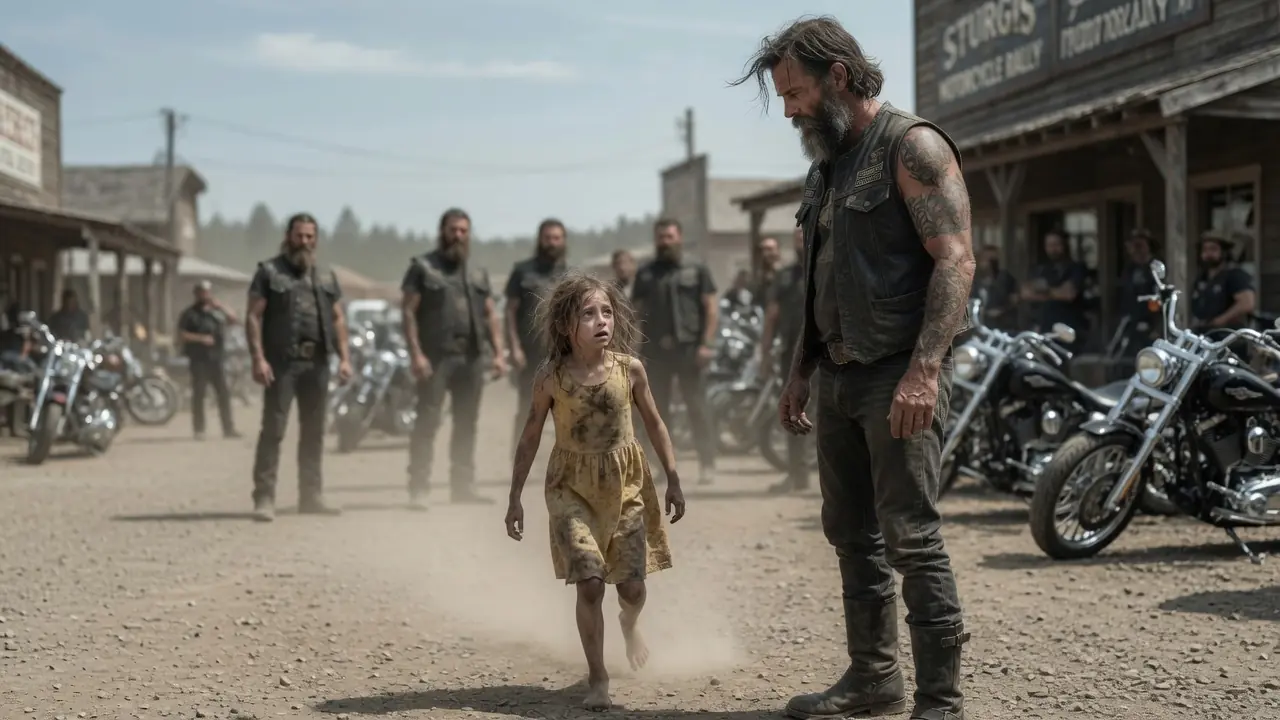
A frequency so constant that your body eventually stopped registering it as sensation and started accepting it as silence. He had loaded his saddlebag on a Thursday morning in Knoxville, Tennessee before the sun cleared the ridge line behind his property. The air at that hour still carried the faint coolness of night. The kind that would be gone by 8:00 and forgotten by 9:00, burned off by an August that had decided to make a point. He had checked the oil, checked the tire pressure, checked the chain tension with the automatic efficiency of a man who had been doing the same things in the same order for 15 years.
His hands knew the routine so well they could perform it while the rest of him was somewhere else entirely. And the rest of him that morning, as on most mornings, was in a hospital room in Knoxville. Three years back and three floors up and completely unreachable no matter how many miles he put between himself and the memory. Caleb had been 8 years old. Dark-haired like Garrett with the same tendency to go quiet when something interested him, the same habit of watching a thing from three different angles before deciding what it was.
He had loved engines with the focused devotion that some children reserve for sports or comic books or the obsessions of childhood that adults smiled at and forgot. He could identify a Harley by sound before it came around the corner. He knew the difference between a flathead and a knucklehead by the shape of the engine cases. He had learned these things sitting on an overturned bucket in Garrett's garage in the evenings asking questions that Garrett answered one by one carefully the way you answer questions from someone whose curiosity you respect. The accident happened on a Saturday in November.
Garrett had been at the shop finishing a transmission rebuild that had taken three days longer than it should have. His ex-wife Dana had Caleb for the weekend. The roads were dry, the weather was clear. None of the conditions that people usually blame for what happened were present that afternoon. What was present was Dana's blood alcohol level which the hospital later recorded at .17 and a guardrail on Merchant's Drive that the car hit at 42 mph after drifting across the center line on a gentle curve that Garrett himself had driven a thousand times without incident.
Dana survived with a broken collarbone and a fractured wrist in a case that the district attorney eventually reduced to a misdemeanor because of circumstances that Garrett's lawyer had explained to him in careful legal language that he had heard and not heard simultaneously, the words landing on his ears but never reaching the part of his brain that processed meaning because the part of his brain that processed meaning had been offline since the phone call. Caleb did not survive. The dates were on Garrett's right wrist just below the edge of his sleeve. Small numbers in a plain black font. Nothing decorative, nothing that drew attention. Eight years between the first date and the second.
Eight years that Garrett had been present for almost every day of eight years of questions answered and voices imitated during bedtime reading and engine sounds identified from around corners compressed now into two lines of ink that he could cover with his thumb. He covered them now with his thumb as he pulled out of the driveway and pointed the bike north. 900 miles, Sturgis, South Dakota. Cal Merritt had called the meeting 3 weeks earlier. The full chapter assembled in the back room of Ridgeline Bar on the east side of Knoxville.
The Iron Wolves were not the Hells Angels. They were not the Outlaws. They occupied a different space in the landscape of American motorcycle culture. Men who had come to the road from various directions. Veterans, tradesmen, working men who had found in the brotherhood something that civilian life had not provided, a structure, a code, a set of obligations that meant something because they were chosen rather than assigned. They rode clean. They did not deal. They had their history and their complications as any group of men who had lived hard lives inevitably did. But Cal had spent 14 years steering the chapter towards something he called standing, which meant being the kind of men that a community trusted rather than feared.
280 members. The full chapter at Sturgis was a statement of unity, Cal had explained. A reminder that the Iron Wolves were intact, that the bonds held, that the miles between members were temporary conditions rather than permanent separations. Garrett had nodded and packed his bag and not mentioned that unity was an abstract concept that currently held very little weight for him because the only bond that had ever mattered to him in a bone deep way had been severed 3 years ago on a dry Saturday in November. And no amount of chrome or brotherhood had managed to close the gap it left behind. He rode alone, which was unusual for a chapter run, but not unprecedented.
He had left a day early citing shop business that needed handling before he could get away, which was partially true and mostly a way of buying himself 9 hours on the road without conversation. He needed the noise of the engine and the wind and the emptiness of highway miles to perform the compression that always happened before he arrived anywhere. The taking of everything that lived in his chest and pressing it down into something smaller and denser and more manageable a stone instead of a flood. Something that could be carried without spilling. By the time he crossed into South Dakota, the compression was complete.
He arrived in Sturgis on a Friday evening and found the town already transformed into the temporary nation it became every August. 70,000 people where 7,000 usually lived. The streets thickened with leather and denim and the smell of engine oil and food vendor smoke and the underlying salt of human beings in concentrated summer heat. The rally had been happening since 1938 and it had long since developed its own gravity, pulling riders from every state and several countries into this corner of the Black Hills every August with the reliable force of tradition. Garrett found the motel where the chapter had reserved rooms, checked in, dropped his bag and walked back out into the evening without unpacking.
He was not ready to be inside four walls yet. He needed to decompress from the compression, which was its own process slower and less predictable than the first one. He found a wooden bench outside the Iron Saddle Saloon on Main Street and sat on the edge of it with his elbows on his knees and a bottle of water sweating between his hands. The temperature had dropped to 91, but the heat still pressed down on the street with physical weight bending the air above the asphalt into shimmering distortions that made the crowd beyond 20 ft look like a painting that had been left in the rain. He watched the crowd with the detached patience he had developed in the Marines, the ability to observe a complex environment without being absorbed by it, to track movement and pattern and anomaly without committing emotionally to any of it.
He had served two tours, the first in his 20s before Caleb was born, the second in his 30s when Caleb was four and old enough to know that his father was gone and young enough not to understand fully what that meant. Garrett had come back both times. He had come back carrying things that he managed through the same mechanism he managed everything else. Compression, reduction, the conversion of floods into stones. The crowd moved through the street in its Saturday afternoon rhythm. Families, vendors, photographers crouching beside custom paint jobs, a group of older men comparing tattoos outside the saloon with a serious attention that older men brought to such comparisons.
Somewhere behind Garrett inside the bar, someone was playing Lynyrd Skynyrd through speakers that were no longer entirely equal to the task. The guitar coming through clearly, but the low end muddied into something that vibrated more than it sang. Garrett drank his water and watched and let the afternoon move around him. It was the movement that caught his attention first. Not the content of it, not the details, but the quality. Among the crowd which moved with the rhythm of people who were somewhere voluntarily, who were enjoying themselves, who had nowhere specific to be and were experiencing that freedom as pleasure. There was a movement that did not fit.
A shape threading through the crowd in the wrong direction, not against it exactly, but without relation to it. Moving through the gaps between people the way water moved through cracks in pavement, not choosing a path so much as following the path of least resistance. He straightened on the bench. The shape was small. He registered that first. Small and low moving between the bodies of adults who did not notice it because they were looking at each other, at vendors, at the bikes parked along the street in their gleaming rows. Not at what was happening at knee level.
She was 15 ft away when he understood what he was looking at. A girl, 7 years old perhaps, though the thinness of her made age difficult to read. She wore a dress that had once been yellow. The color faded now to something closer to cream. The fabric stained at the hem with brown that might have been mud and might have been something else. Her hair was light brown and matted close to her scalp. The kind of tangle that came from weeks rather than days of inattention.
Her arms visible below the short sleeves of the dress were thin in the way that registered before you understood why it registered. Not the thinness of a child who had grown fast and not yet filled in. A different kind of thinness. The kind that spoke of systematic absence. She was walking without shoes. The asphalt was 103°. It had been at or above that temperature since 10:00 in the morning.
Garrett knew this because he had checked his phone thermometer twice in the afternoon out of the habit of a man who paid attention to the conditions he was operating in. The pavement under this girl's bare feet had been cooking for 7 hours. She was 10 ft away and her steps were uneven. The weight shifting slightly with each one her body making the small continuous adjustments of someone walking on a surface that was hurting them, but moving forward anyway because stopping was a worse option than continuing. Her eyes were open. They were aimed generally forward, but focused on nothing in the immediate environment.
She was looking at something beyond the crowd, beyond the street, beyond Sturgis, South Dakota, beyond anything that existed in the physical space she was moving through. 7 ft. Garrett stood up. 5 ft. Her knees buckled. Not suddenly, not all at once, but in the slow incremental way of a structure that had been under load too long, the joints giving out in sequence, a downward progression that her body was too depleted to interrupt. 3 ft. She went forward. Garrett was already moving.
He covered the distance without thinking about it, without the mental step of deciding to move, and then moving the way the body operated in the moment before the conscious mind finished its deliberations. His hands found her shoulders. He turned her as she fell, guiding the collapse so that she came down onto his arms rather than the pavement, catching her weight, which was almost nothing, which was the first thing about her that reached through the compression he maintained and touched something that lived below it. She weighed almost nothing.
He lowered himself to his knees on the hot asphalt, cradling her against him. Her skin was hot. Not the external heat of a child who had been in the sun, but the internal heat of a fever. Her lips were pale and cracked. Her eyes were closed now or nearly closed, the lids not quite meeting, a sliver of gray-blue iris visible beneath the lashes. "Hey," Garrett said. His voice came out low and controlled, the voice he used in situations where controlling his voice was necessary. "Hey, can you hear me?"
Her lips moved. A sound came out that was not a word. It was the sound an animal makes when it has stopped expecting rescue, when the noise it produces is no longer a signal directed at anything external, but simply the last audible expression of something that is still barely alive. The crowd around him had begun to notice. He could hear it, the shift in the ambient noise, conversations tapering off, a ring of attention forming around the space he occupied. He was aware of it without being distracted by it, the way he was aware of peripheral things in the field present in his perception, but not commanding it. "Give her some room." This was Boone Draker's voice coming from somewhere above and behind him.
Boone was 38, 6'2", with a shaved head, and the kind of physical presence that communicated without requiring words. Garrett heard the crowd shift back. He heard Boone's phone come out, heard the terse, efficient speech of someone calling 911. Cal Merritt arrived 30 seconds later. Garrett heard the silence that formed around Cal when he moved through a group, the way men made room, not because they were told to, but because something in them recognized that a situation had found its authority. Cal crouched beside Garrett and looked at the girl with the focused assessment of a man who had been reading difficult situations for 50 years. "Who's child is this?" Cal asked. Nobody answered.
Vera Hutchins pushed through the outer ring of people with the purposefulness of someone who has a skill the moment requires. She was 41, compact and direct, a registered nurse from Rapid City who attended the rally every year. She knelt on the other side of the girl and pressed two fingers to her neck, counting silently, her eyes moving across the child's visible condition with professional speed. "Pulse is rapid, weak." She placed the back of her hand against the girl's forehead. "She's running a fever, high. She's severely dehydrated." She looked up at Garrett briefly, then back down. "How long do you think she was walking?" "I don't know. I just saw her come through the crowd."
Vera reached for the edge of the girl's sleeve. She lifted it carefully only far enough to see what was underneath. Then she stopped. Her hands went still. The expression on her face changed in the way that a composed professional's expression changes when they encounter something that professional composure was not designed to absorb. She looked at Cal. Cal looked at what was under the sleeve. The ring of people around them had grown. Iron Wolves patches were visible throughout it.
Men who had come from the saloon in the street and the vendor rows drawn by the gravity of an event that was larger than a medical emergency. They stood with their backs to the inner circle and their eyes scanning outward, the formation so natural that it had not been ordered. It had simply happened because the instinct had been trained into them by years of operating as a coherent body. The bruises ran from the girl's shoulder blade down across her ribs and disappeared beneath the fabric of the dress. They were not the scattered accidental bruises of childhood, the shin bangs and elbow scrapes and the purple marks that appeared on active children like punctuation. These were deliberate, patterned, colors stacked on colors, the deep black purple of injuries that were days old layered over the green and yellow of injuries that were weeks old.
The entire palette of progressive harm laid out on a child's body like evidence in a trial that had never happened. The crowd was completely silent. Not the silence of people who had nothing to say, the silence of people who understood that whatever they said next would not be adequate to what they were looking at and had the dignity to recognize that inadequacy rather than attempt to fill the space anyway. Cal stood up slowly. He turned to face the ring of men and spoke in a voice that carried without being raised, a voice that meant what it said and required no repetition. "Find out who she belongs to, now."
The command moved through the assembly and outward phones appearing, men peeling off from the ring and moving with purpose into the crowd. The network of 280 men activated with a speed and coordination that impressed even those who had watched it happen before. Conversation starting, contacts being pulled up, the collective intelligence of a large group of connected people being turned toward a single question. Garrett stayed where he was. The girl's eyes opened, gray-blue as he had seen from above, but larger than he had registered, too large for the thin face, the irises very clear and very focused, tracking to him with the directness of someone who had learned to assess quickly and accurately.
She looked at him the way people looked at things when they were deciding whether they could be trusted. Whatever she decided, she decided it in the space of a few seconds. Her hand moved, slowly, without strength, a movement that was more intention than muscle, her small fingers finding the edge of his leather vest and curling around it. Not gripping, not clutching, but holding. The way a drowning person holds onto the thing they have reached, not with confidence, but with the last available version of hope. "Hey," Garrett said again. "What's your name?" Vera leaned in gently. "Sweetie, can you tell us your name?"
The girl's lips moved. The sound was very quiet, almost lost under the ambient noise of the rally that was still happening all around them, the world continuing its ordinary business while this extraordinary thing occurred at its edge. "Ellie." Vera looked at Garrett, then back at Ellie. "Ellie, where is your mom or dad? Can you tell me where they are?" The response was immediate. The girl's entire body tensed a full body flinch that traveled from her shoulders down through her spine, a motor reflex so deeply conditioned that the word itself, the word that should have meant safety, had been converted into a trigger for the opposite. Her fingers tightened on Garrett's vest. Not the tentative holding of a moment before, but something with more urgency in it. "Don't." The word came out barely above a breath. "Don't tell him where I am."
The words moved through the assembled men like a current through water invisible, but felt the atmosphere changing in the way atmospheres changed when everyone in a space understood something at the same moment. Boone's hand landed on Garrett's shoulder. Not in comfort, in the weight of shared recognition. Two men who had both understood what they had just heard and were standing on the same side of the understanding. The ambulance arrived 8 minutes later. The paramedics moved with the efficient calm of people accustomed to walking into situations that had already peaked, assessed Ellie quickly, and began the IV line with a practiced speed that Garrett noted and was grateful for.
They worked under the observation of 200 men who had formed a perimeter around the scene without being asked, facing outward. When the paramedics moved toward the ambulance, Garrett stood up with Ellie. Her hand was still on his vest. He looked at the paramedics. He looked at the open doors of the ambulance. He stepped in. Nobody said he could. Nobody said he couldn't. He sat on the bench inside and Ellie lay on the gurney beside him, and her hand stayed where it was curled around the edge of his vest, and the doors closed and the ambulance moved through the crowd with its lights going. During the ride, Ellie's eyes opened twice. Both times they went directly to Garrett's face, confirmed he was still present and closed again.
The female paramedic watched this happen. She did not comment. Her expression said that she understood what she was looking at and that it was not her place to rearrange it. Sturgis Regional Hospital smelled the way small regional hospitals always smelled antiseptic and industrial cleaner and the faintly sweet undertone of hand sanitizer mounted at every door frame. They moved Ellie quickly, the emergency team taking over with the coordinated speed that Garrett recognized from combat medicine, the same quality of purposeful urgency, each person knowing their function and executing it without the need for direction. Garrett ended up in the hallway. He stood with his back against the wall and his arms crossed and his eyes on the door of the room they had taken her into.
Boone arrived 12 minutes later. He had ridden over from the rally and stood beside Garrett without speaking because Boone understood the value of silence in the ways that mattered. They stood there together for 40 minutes. Dr. Patricia Woodward came out of the room at the end of those 40 minutes. She was a pediatrician, mid-50s, with the kind of face that had been trained into composure by years of delivering news that people were not ready to receive. She looked at Garrett and she looked at Boone and she made whatever assessment she made about who they were and why they were there and she began speaking anyway. "She's malnourished," Dr. Woodward said. Her voice was low, calibrated for the hallway, for the ears of the two men in front of her and no others. "Significantly, we're looking at weeks, possibly months, of inadequate nutrition. She has multiple contusions in various stages of healing across her back, shoulders, and upper arms."
She paused. "Two cracked ribs, one partially healed, one recent. There are ligature marks on her wrists consistent with restraint." The fluorescent lights above them buzzed with a frequency that Garrett could feel in the back of his skull. "This child has been systematically abused," Dr. Woodward said. "This is not a one-time incident. This is sustained deliberate harm, and the pattern of injuries indicates escalation over time. Whoever is responsible for this child has been hurting her for a long time, and hurting her with increasing severity." Garrett closed his eyes. Behind his eyelids, he saw the hospital room in Knoxville where Caleb had not been, where there had been no long descent, no weeks of watching, only the phone call, and then the understanding that he was the parent of a child who was no longer alive, the most abrupt and absolute lesson in helplessness that the world had available to teach.
He had stood in hallways like this one, receiving information from doctors like this one, and the information had reached him and had not been translatable into anything actionable, because there was nothing to act on. The thing that had happened had already happened. The damage was complete. The only direction was the aftermath, and the aftermath was a 3-year road that had led him to a bench outside a saloon in South Dakota. He opened his eyes. "Where is the person who did this?" he asked. The answer came from Boone's phone, not from the doctor. Boone had stepped a few feet down the hallway and was listening, and when he came back, his face was carrying controlled anger, the kind that had learned to move slowly because it knew that the speed of its movement determined whether it was useful or destructive. "His name is Warren Pruitt," Boone said quietly. "46 years old, lives out on County Road 18 east of town. He's her stepfather. Her mother died 2 years ago. I-90 winter storm, black ice. After that, Pruitt got custody by default. No biological father in the system. Della Fontaine, a neighbor on the same road, called CPS twice in the last year. Both times closed. Both times Pruitt cleaned up, dressed the girl nice, said the right things."
Garrett listened. He stood with the information and felt the weight of it distribute itself across everything he already knew. The weight on the road, the light in the sky, the way the hallway smelled, the faint sound of Ellie's monitors through the closed door. "Both times," he said. "Both times," Boone confirmed. Garrett pressed the heel of his hand against the wall beside him and held it there. The wall was cool and solid. He focused on that. The temperature of the wall, the resistance of it, the way it did not move regardless of how much pressure he applied. "Cal knows," he said. "Cal called an emergency meeting. Full chapter. Parking lot behind the Iron Saddle. 30 minutes." Garrett did not go to the meeting. He went back to Ellie's room instead.
He pushed the door open quietly and stepped inside and stood for a moment while his eyes adjusted to the dimmer light. She was awake. Her eyes found him immediately when he came through the door, the same direct assessment he had seen on the street, the same rapid cataloging of the situation, and then something settled in her face when she confirmed he was who she remembered. The IV ran from her left arm to a bag of nutrients hanging from a metal stand. A thin blanket covered her legs. Someone had left apple juice on the bedside table. Someone else had placed a small stuffed rabbit near her right hand, the kind of thing a hospital pediatric unit kept in supply for exactly this kind of situation. She looked very small in the bed. The kind of small that was not simply about physical size, but about the gap between what a 7-year-old was supposed to be and what this particular 7-year-old had been reduced to. A gap that made looking at her feel like looking at something that should not have been allowed to happen in a world where attention was paid.
"You stayed." She said. "Yeah." Garrett said. He pulled the chair close to the bed and sat down. He was aware distantly that he was still wearing his vest, the Iron Wolves patch visible on his back. The various pins and insignia of 15 years of membership arranged across the front. He was aware of how he looked, the tattoos and the gray streak beard and the bearing of a man who had spent decades in environments that required a certain kind of hardness. He did not try to soften any of it. He had learned that children read authenticity before they read surface, that they made their assessments of trustworthiness from deeper signals than adults gave them credit for. Ellie looked at him for a moment with those gray-blue eyes that were too large for her thin face. "I walked toward the loud sound." She said. Her voice was small but clearer now, the fluids already doing their work. "The motorcycles. I heard them from the road."
Garrett looked at her. "I heard them from the road." She said again as if confirming the memory to herself. "He was sleeping. He always sleeps after." "I went out the back and I walked toward the sound." A pause. "He always said I had to be quiet." "I thought if something was that loud, it wasn't afraid of anything." "I thought maybe if I could get close enough to it, I wouldn't have to be afraid either." The logic of a 7-year-old mind navigating a world that had given her only wrong options for a very long time. And in the space between those wrong options, finding a direction that was not given to her by anyone that she had arrived at herself through the clarity of a child who has run out of alternatives and must finally make a choice. Loud things were not afraid. Therefore, loud things might be safe. Therefore, she had walked toward the loudest thing she could find.
12 miles barefoot, 103°, two cracked ribs, a fever, a body that had been systematically starved for months. She had walked 12 miles. Garrett sat with that for a moment and did not speak. He pressed his palm flat against his thigh and held it there, the pressure grounding him, holding the line between the man sitting in this chair and every other version of himself that was trying to find a way to the surface. The version that had stood in a different hospital hallway and received different news and had been completely, catastrophically unable to do anything about it. The version that had driven 900 miles trying to put distance between himself and that helplessness. He looked at Ellie. She was watching him with the patient directness of a child who had learned to read silences, who had developed the ability to wait in a quiet room without making noise that might attract the wrong kind of attention. "You were brave," he said. "I'm scared all the time," she said. "That's what brave means," Garrett said. "It means you're scared and you do it anyway."
She considered this. He could see her considering it, the slight change in her expression as something was rearranged, some understanding that had been organized one way shifting into a different configuration. Then she looked at the window where the late afternoon light was moving toward something amber and warm. Her eyes moved in the unhurried way of a child who had been awake for a long time and was finally in a place where she did not need to monitor the door. Within 2 minutes, her breathing changed. Her eyes closed. Her fingers, which had found the edge of his vest where he had draped it over the bedrail, stayed where they were. Garrett sat in the chair beside her and listened to the monitors and listened to her breathe. And outside the window, the August sun continued its descent toward the Black Hills. And somewhere across town, 280 men were assembling in a parking lot to decide what happened next. And Garrett was not among them because he was already exactly where he needed to be.
He reached over and picked up the children's book that a nurse had left on the bedside table. It was about a bear who got lost in the woods. He opened it to the first page and began to read quietly, giving each character a slightly different voice. Not because he was skilled at it, but because it was what you did. It was what he had always done. The room was still except for the soft turning of pages and the faint sound of the machines keeping count of her heartbeat. And somewhere down the hall, a phone ringing twice and going silent. Outside the rally continued its ordinary business, indifferent and loud. Garrett turned another page.
Cal Merritt's voice carried across the gravel parking lot behind the Iron Saddle Saloon. The way it always carried without effort, without the artificial amplification of a man who needed to perform authority because he had never actually possessed it. Cal's authority was structural. It had been built over 14 years of consistent decisions made under inconsistent circumstances. And the men who stood before him now in the fading August heat recognized it the way they recognized the sound of a well-tuned engine. Not because they were told to listen, because the sound itself commanded attention. 280 men in a loose semicircle. The sun dropping toward the western ridge, painting the chrome of their bikes in shades of copper and fire. The temperature had fallen to 89°, but nobody noticed. The air between the men was charged with something that had nothing to do with weather.
Cal stood on the bed of a flatbed truck that one of the members had backed into the lot. He did not raise his voice. He did not need to. "Most of you saw what happened this afternoon," he said. "A little girl collapsed in the street. Her name is Ellie. She is 7 years old. She walked 12 miles on bare feet through 103° heat to get away from the man who has been hurting her. The medical report says cracked ribs, ligature marks, months of systematic abuse and starvation." The lot was completely silent. The distant noise of the rally reached them from beyond the buildings like something from another world, a world that was continuing its ordinary operations while this one stood still. "Her stepfather's name is Warren Pruitt. He lives out on County Road 18. CPS was called twice in the last year. Twice the case was closed. Twice this child was left with the man who was hurting her."
Cal paused. He looked across the faces of his brothers. "The system looked at her and decided she wasn't worth protecting. We are going to make a different decision." Boone Draper stepped forward from the second row. "What's the play, Cal?" Cal looked at him, then at the assembled chapter. "We do this right. We do not break laws. We do not give law enforcement a reason to come after us. We do not touch Warren Pruitt. But we make sure that child is safe and we make sure the man who did this to her understands that the world he was living in no longer exists." The plan divided itself into three columns with the efficiency of men who had operated as a coordinated body for long enough that the logistics of collective action had become second nature.
Boone would take 30 riders to the hospital and establish a rotating guard four men at a time in 6-hour shifts around the clock. A retired attorney in the chapter named Douglas Hale would coordinate with the Meade County Sheriff's Department providing witness statements and whatever legal pressure the chapter's network could bring to bear on the formal process. The remaining 200 would do something that required no law to be broken and no line to be crossed. They would ride to County Road 18. They would park. They would be seen. The convoy formed at dusk. 200 Harley-Davidsons in a column that stretched the length of three city blocks before it finished assembling engines turning over one by one. A rolling thunder that built from individual to collective. From sound to weather, from weather to something that the earth itself seemed to register.
The column moved south out of Sturgis onto the county road with its headlights on and its formation tight. A river of steel and light moving through the darkening South Dakota landscape with a quality of purpose that could not be mistaken for anything else. The sound reached Warren Pruitt's property long before the first headlight appeared over the hill. At Sturgis Regional Hospital, room 214 was quiet. Garrett had finished the bear book an hour earlier reading it through twice because Ellie had been nearly asleep at the end of the first reading and he had not been certain she had heard the ending. He wanted her to hear the ending. The bear found his way home by following the stars which was the kind of ending that a seven-year-old girl who had been navigating by sound in the dark deserved to hear at least once before she went to sleep. She was sleeping now.
Deeply the monitors reporting a pulse that was still faster than it should be but steadier than it had been in the ambulance. The IV was doing its work. The fever had come down half a degree. Dr. Woodward had said that was encouraging using the word with the careful precision of a physician who had learned not to use stronger words than the evidence supported. Garrett sat in the chair with his vest draped over the rail of the bed. Ellie's fingers still loosely touching the leather even in sleep. He sat the way he had learned to sit in waiting rooms and field positions and all the other places where sitting still was the only available action with his body at rest and his mind doing whatever it needed to do, which tonight meant returning repeatedly to the same set of images without his permission. Caleb in the garage on the overturned bucket, his small hands wrapped around a wrench that was too large for them, listening to Garrett explain the relationship between the carburetor and the fuel line with the focused silence of a child who was genuinely interested rather than performing interest.
Caleb at 8 years old had developed the habit of asking a follow-up question after every explanation. Not to fill silence, but because the explanation had generated a genuine new question and the chain of questions and answers could go on for an hour before Caleb was satisfied. Garrett had never told him to stop, had never looked at his watch and indicated that the questions were becoming an imposition. He had answered every single one carefully, completely, the way you answered questions from someone whose curiosity you intended to protect. He had not known that he was building a memory. He had simply been present in the evening with his son answering questions about engines and the memory had built itself around him without his awareness. And now it was one of the primary structures of his interior life, load-bearing in ways he had not understood until the weight it carried had nothing left to rest on. A nurse named Janet came in at 9:00 to check Ellie's vitals and change the IV bag. She was 60, efficient, and warm in the way of someone who had been doing this long enough to be both without effort. She looked at Garrett without surprise. The hospital staff had already adjusted to the presence of the large, tattooed, leather-vested man who had arrived with the child and not left. "There are six men in the waiting room," Janet said quietly while she worked. "They arrived about an hour ago. They've been very polite." "They'll rotate out at midnight," Garrett said. "Different six will come in." Janet nodded as if this were standard information. "Can I get you anything? Coffee?" "Water's fine, thank you." She left.
Garrett looked at Ellie's sleeping face. He thought about what Dr. Woodward had told him in the hallway. The words that he had heard and processed and then heard again, the way words sometimes needed to complete two circuits before they fully registered. Systematic. That was the word the doctor had used. Systematic abuse, not accidental, not situational. Systematic, which meant deliberate, which meant recurring, which meant that every single day for months this child had woken up in a house where the person responsible for her safety was the primary source of her danger. And she had walked 12 miles to get away from it. On bare feet with two cracked ribs. Boone appeared in the doorway at 10:15. He moved quietly the way large men sometimes learn to move when they understood that their size made quietness a courtesy rather than a default. He looked at Ellie sleeping, then at Garrett, and kept his voice to a murmur. "Convoy reached Pruitt's property about an hour ago," he said. "200 bikes. They parked along the road, shut everything down. Lights off, engines off. Cal stood out front."
Garrett waited. "Pruitt came out on the porch. Looked at them for about 2 minutes. Went back inside. That's all." "That's all." "20 minutes later the Meade County Sheriff arrived with three patrol cars and a warrant. Douglas had been on the phone with the DA's office for 4 hours. The medical report from Dr. Woodward, the statements from Vera Hutchins, the records from two CPS calls, and signed statements from Della Fontaine and two other county road neighbors." Boone paused. "Pruitt was trying to leave through the back when they got there. Had a bag packed. One of the deputies was already at the truck." Garrett said nothing for a moment. He looked at the window where the night was fully dark now, and the glass reflected the room back at him. The two of them, the sleeping girl and the man in the chair. "He's in custody," Garrett said. "Meade County Detention Center. Bail hearing Monday. Douglas says the DA is going for no bail given the medical evidence and the flight risk." Boone glanced at Ellie. His voice already quiet went quieter. "She walked 12 miles, Garrett." "I know." "In this heat." "I know."
Boone put his hand briefly on Garrett's shoulder. Then he left as quietly as he had come, going back to the waiting room to relieve whatever combination of men was currently sitting there maintaining the perimeter that Cal had established. And that would remain established until the situation resolved itself into something that did not require a perimeter. The night passed in the compressed way of hospital nights, time measured not in hours, but in the intervals between nursing checks, in the rhythm of the monitors, in the quality of the light coming through the window. Blue black and then gray, and then the first pale suggestion of morning along the eastern edge of the sky. Garrett slept briefly in the chair, the trained sleep of a man who had learned to take rest in small units and in uncomfortable positions, waking at each nursing check and returning to sleep when the nurse left. Ellie woke at 6:30 in the morning. She woke the way children woke who had slept deeply for the first time in a long time. Gradually surfacing through layers. Her eyes opening and closing twice before they stayed open. She lay still for a moment processing the room, the ceiling, the monitors, the IV in her arm, and then she turned her head and found Garrett in the chair and her face settled. "You're still here." She said. "Yeah." He said.
She looked at the ceiling again. The morning light was coming through the window at a low angle laying a pale rectangle across the foot of her bed. She watched it for a while. "Is he in jail?" She asked. "Yes." Garrett said the same way he had said, "No, he's not coming near you." Not a reassurance, a fact. She absorbed this. Her expression did not change dramatically. She did not cry or smile or show any of the large demonstrative responses that the question might have expected. She simply processed it with a quiet internal thoroughness that reminded Garrett of someone much older, of a person who had learned that reactions cost something and had become careful about the expenditure. "Okay." She said. They were quiet together. The morning light moved slowly across the bed. "What's his name?" Ellie asked. "Yours." "Garrett." She tried it out silently, her lips moving around it. "Then you read good voices." "My son taught me." Garrett said. He had not planned to say it. The sentence arrived complete before he had decided to speak it, assembled somewhere below the deliberate level of his mind and delivered without permission.
He felt the familiar compression response activate the automatic mechanism that took anything approaching that territory and pressed it down, reduced it, converted it from flood to stone. But the sentence was already in the air. Ellie turned her head to look at him. "You have a son." "I had one," Garrett said. "His name was Caleb." She looked at him with those eyes that were too large for her thin face, and she did not fill the silence with the various things that adults filled it with the expressions of sympathy and the questions about what happened and the attempts to locate the loss within a framework of meaning that made it easier to hold. She was 7 years old and she understood silence and she let it be what it was. After a moment, she said, "He liked engines." Garrett looked at her. He had not mentioned engines. "Yeah," he said. "He did. How did you know?" She glanced at the vest, at the patch and the pins and the iconography of 15 years on the road. "You seem like someone whose son would like engines," she said.
Garrett looked at the window. The morning light was fully established now, the pale rectangle on the bed brightening towards something that could be called warm. "He did," he said again. And then, because the sentence was there and the morning was what it was and the girl in the bed had walked 12 miles to find something loud enough to trust, he answered a lot of questions. "Did you answer them?" "Every one." She nodded slowly as if this confirmed something she had already suspected. Then she reached out and touched the edge of his vest where it lay over the bedrail, the same gesture she had made on the street when her body was failing and her will was not. Just the fingertips. Just contact. They had breakfast together, the cafeteria food that a volunteer brought up on a tray, scrambled eggs and toast and apple juice, and Garrett watched Ellie eat with the careful attention of a man watching someone remember how to do something their body had almost forgotten. She ate slowly, deliberately, taking each bite with a thoughtfulness that was not pickiness, but the opposite. The thoughtfulness of someone who had learned not to waste anything because waste was a luxury that had not been available to them. She ate everything on the plate and then looked at it for a moment as if surprised that it was gone. Garrett went down to the cafeteria and brought back another plate. She ate that, too.
Dr. Woodward came by at 9:00 and examined Ellie with the same focused efficiency of the previous evening. The fever was down to 101. The IV had made significant progress on the dehydration. The cracked ribs would heal with time and rest and the kind of nutrition that was now finally being provided. Dr. Woodward said all of this in the calm measured language of a physician reporting facts, but her eyes, when she looked at Garrett, carried something additional. A recognition of the situation that the clinical language was not designed to contain. She left. Garrett pulled his chair back to the bedside. In the two days that followed, a rhythm established itself in room 214. Garrett read. Ellie listened. He brought food from the cafeteria and watched her eat with the focused appreciation of someone rediscovering something essential. The chapter rotated through the waiting room in shifts of six polite and steady nodding to the nurses, stepping aside for the doctors, occupying space without claiming it. The hospital staff had moved from initial weariness to something approaching acceptance. Nurses stopping to update Garrett on Ellie's progress as if this arrangement, this tattooed man in the chair and the small girl whose fingers found his vest in sleep were entirely unremarkable.
On the third day, Ellie asked for crayons. A volunteer found a box in the pediatric supply closet and brought it with a stack of blank paper. Ellie spent an hour drawing motorcycles, her tongue visible at the corner of her mouth, in the expression of concentrated effort that children had when they were drawing something that mattered to them. The motorcycles were enormous and vibrantly colored with wheels roughly the size of the body of each bike and tiny riders on top wearing black vests with very determined expressions. She held one up for Garrett's assessment. "That's a good bike," he said. "The wheels are a little big," she said critically. "Little bit." She looked back down at the paper, added a detail to the wheel that she seemed satisfied with, then set the drawing on his side of the tray table without comment. He understood this was a gift. He folded it carefully and put it in the inner pocket of his vest.
It was on the fifth day that everything nearly came apart. Boone called Garrett's phone at 7:42 in the morning with a voice that was carrying something carefully, the way you carried something fragile, keeping your movements smooth and your grip steady. "Pruitt's lawyer filed an emergency motion this morning," Boone said. "Temporary guardian rights. They're arguing that until a court formally terminates his guardianship, Warren Pruitt retains legal authority over Ellie's care and placement. They want her released from the hospital into his custody." Garrett stood up from the chair. He walked to the window without being aware of the decision to walk. Outside the South Dakota morning was bright and empty and entirely indifferent. "He's in jail," Garrett said. "He bonded out yesterday afternoon. The DA went for no bail and didn't get it. Judge set it at 50,000. Someone posted it." Boone's voice remained level. "The motion is in front of Judge Harlan at the Meade County Courthouse. Hearing is at 11:00 this morning."
Garrett looked at the window, at the bright indifferent morning, at the parking lot below where the current rotation of six Iron Wolves sat on their bikes in a loose formation that was not quite a blockade but communicated something similar. "Claire Addison," he said. Claire was the social worker from the state's Department of Social Services who had come to the hospital on the second day, a serious and methodical woman in her 40s who had asked questions and taken notes and said she would be in contact. "Already called, she's been on with Douglas since 6:00 this morning. She's filing a counter motion requesting emergency protective custody designation under state statute. She needs to get the medical documentation submitted to the judge in the next 2 hours." Garrett moved back to the bedside. Ellie was still sleeping the early hour and the accumulated exhaustion keeping her under. He looked at her face. The bruise along her jaw had faded slightly from purple to the greenish-yellow of healing. Her breathing was even. "What are her chances?" Garrett asked. Boone was quiet for a beat. "Douglas says 60/40 in our favor if Claire gets the documentation in time. The medical evidence is overwhelming, but the statute on emergency guardianship removal has a high bar and if the judge is conservative about guardian rights." "He's not her parent. He has legal standing as her guardian, which functionally gives him the same protections until a court says otherwise." Another pause. "Douglas and Claire are doing everything that can be done, Garrett. The hearing is at 11:00." Garrett hung up. He sat down in the chair. He looked at Ellie sleeping and thought about the phrase legal standing and what it meant that a man who had done what this man had done could walk out of a jail on $50,000 and show up in a courtroom and invoke his rights as if the cracked ribs and the ligature marks and the 12 miles of bare feet on burning asphalt were facts that existed in a separate universe from the one where his legal standing was honored. He thought about Caleb. He thought about the helplessness of standing in a hospital hallway receiving information that you could not act on the floor dropping out from under you and the fall having no bottom. He thought about Ellie saying, "I walk toward the loud sound." He thought about the reasoning that had produced that decision. Loud things are not afraid. Therefore, loud things might be safe. He was going to be worthy of that reasoning.
He picked up his phone and called Douglas Hale. Douglas answered on the first ring. He was 63 sharp and had spent 30 years as a trial attorney before retiring and joining the chapter. Because as he had once told Garrett, he had spent 30 years fighting for people in courtrooms and wanted to spend the rest of his life riding with people who fought for each other everywhere else. He had the voice of a man who was completely at home with complexity and completely unmoved by pressure. "Tell me what you need from me," Garrett said. "Your written account of everything you observed from the moment you saw Ellie until the paramedics took over. Time sequence specifics, the physical condition you observed, what she said, exactly what she said in your words. I need it in the next 45 minutes." "You'll have it in 30." He wrote it by hand on the notepad the hospital had left on the bedside table printing clearly and completely the account of a former Marine who had been trained to report accurately and specifically, who understood that the value of an observation depended entirely on the precision with which it was rendered. He described the heat and the crowd and the movement he had seen that did not fit. He described the dress and the matted hair and the bare feet on asphalt that had been cooking for 7 hours. He described what Vera Hutchins had found when she lifted the sleeve. He wrote down Ellie's exact words, "Don't tell them where I am." "I walk toward the loud sound." He wrote it all down. He photographed each page with his phone and sent it to Douglas. He looked at his watch, 27 minutes.
At 11:00 he was sitting in the hospital hallway because he could not sit in the room without waking Ellie, and he did not want to wake Ellie until he knew what was on the other side of the hearing. He sat with his phone in his hand and waited. Outside the hospital, Boone had quietly doubled the rotation. 12 men now instead of six arranged in two rows along the hospital entrance. Their presence neither aggressive nor concealed, simply factual. They were there. They would continue to be there. This was a fact about the world that was not going to change. Douglas called at 12:43. Garrett picked up before the first ring finished. "Claire got it in," Douglas said, "all of it. The complete medical documentation, Vera's professional assessment, your written account, the CPS records showing two prior reports, and affidavits from Della Fontaine and two other county road residents. Judge Harlan reviewed everything and issued an emergency protective custody order. Ellie stays under state protective supervision until the guardianship case is fully adjudicated. Pruitt's motion was denied." Garrett let out a breath. "How close was it?" he asked. A pause. "The hearing ran two hours. At one point the judge asked Pruitt's attorney to clarify the statute on emergency guardian rights in cases of contested medical findings." Another pause, longer. "Four hours, Garrett. If Claire had needed another four hours to compile the documentation, the outcome might have been different." Garrett sat with that. He sat with the specific number. Four hours. The width of the gap between one version of the next year of Ellie's life and another version. Four hours. "Is it over?" he asked. "The emergency phase is over. The guardianship case will take months. Claire will file for formal termination of Pruitt's rights. That's a separate proceeding." Douglas's voice carried the even quality of a man delivering facts without embellishment. "But she is safe right now. Right now she is safe." Garrett thanked him and hung up. He sat in the hallway for another minute. The fluorescent lights buzzed above him. A gurney moved past at the far end of the corridor. A nurse walked by with a tray. Ordinary hospital time resuming its ordinary pace after 4 hours of something else. He got up and went back into the room. Ellie was awake bent over a fresh sheet of paper with a red crayon, her tongue at the corner of her mouth. She looked up when Garrett came in. "Is everything okay?" she asked without looking at him directly, her eyes still on the paper. He had come to understand this particular indirection, the way she checked the temperature of a room through peripheral observation rather than direct inquiry. A skill built over time. A necessary one. "Everything is okay," he said. She nodded once, went back to the drawing. "Good," she said, and then still without looking up, "Can you read more of the book?" He pulled the chair to the bedside. He reached for the bear book. "We finished it," he said. "You were almost asleep." "I know." She kept her eyes on the drawing. "I want to hear it again." He opened it to the first page. He gave the bear his voice. He gave the other animals their voices. He read slowly with the understanding that the point was not to get through the book, but to be in it, to stay inside the world of it for as long as the reading lasted. Because inside the world of the book, the bear was lost but not afraid, and the forest was dark but not permanent, and the brightest star was always there if you knew to look up. Outside the room in the waiting room at the end of the hall, six men in leather vests sat in the chairs arranged along the wall, their hands on their knees, their eyes on the door. They had not been asked to come. They would not be asked to leave. They would be there when the shift changed, and different men would take their seats, and the perimeter would hold because it had been decided. And when the Iron Wolves decided something, the decision remained until the situation was resolved. In the parking lot of the Meade County Detention Center, Warren Pruitt sat in a vehicle with his attorney and learned that his emergency motion had been denied. He learned that the chapter of men who had parked 200 motorcycles in front of his house had not dispersed. He learned that the neighbor woman he had dismissed as an irrelevant inconvenience had provided a sworn affidavit to the court. He learned that the nurse from the rally had submitted a professional medical assessment that the judge had described as among the most thorough documentation of systematic child abuse he had encountered in his courtroom. He learned that the world he had been living in, the one where a quiet house on a county road outside of Sturgis was sufficiently invisible to sustain what he had been doing no longer existed.
At the hospital, the bear found the brightest star. He walked toward it through the dark forest steadily without stopping. The trees thinned. The light grew. He came out of the woods onto a hillside he recognized, and below him was the valley where he had started, and the path down was clear. Garrett read the last line. Ellie's breathing had slowed. He closed the book. Her fingers, as they always were, as they had been since the moment on the street when she had made her decision, and his vest had been the thing available to hold, were touching the leather where it lay over the rail. He sat in the chair. Outside the South Dakota sky was moving toward evening. The light changing from the flat bright of afternoon to something more complex, something with depth and color in it, the kind of sky that made you understand why people had looked at it for thousands of years and decided it meant something. Garrett sat in the chair and let the evening come.
The trial of Warren Pruitt was set for October, which meant that September belonged to the slower, quieter machinery of consequence, the kind that did not announce itself with sirens or the rolling thunder of 200 motorcycles on a county road, but moved instead through courtrooms and filing offices and the accumulated weight of documented evidence grinding forward with the patience of a process that had learned to outlast the people who tried to interrupt it. Garrett left Sturgis on a Tuesday morning in the second week of September. He had stayed 3 weeks longer than he had planned. Cal had not commented on this. Boone had not commented on this. The chapter had rotated its hospital presence for the full duration without complaint or question. They understood what was happening without being told the way the chapter understood most things. Not a skill exactly, more a shared frequency tuned over years of riding together. Ellie was discharged from Sturgis Regional Hospital on a Friday in the first week of September. Her weight had climbed. The fever was gone. The bruises were fading through their spectrum purple to green to the pale yellow of the body reclaiming itself from damage. Dr. Woodward signed the discharge papers with the careful notation of a physician who was releasing a patient into circumstances she had assessed thoroughly and found provisionally adequate. The circumstances were Della Fontaine's ranch on County Road 18, 3 miles past the property where Warren Pruitt's house sat empty and locked, a detail that Claire Addison had flagged as potentially distressing for Ellie, and that Ellie herself had addressed with the directness that Garrett had come to understand was simply how she operated. "I don't care about the house," she had told Claire during one of their sessions in the matter-of-fact tone of a 7-year-old stating a preference about lunch. "I care about where I'm going, not what I'm passing." Della Fontaine had completed emergency foster certification in the 2 weeks following Ellie's hospitalization, supported by Claire's coordination and the endorsement of Dr. Woodward. And in a letter that Douglas Hale had helped compose the character assessment of Cal Merritt on behalf of the Iron Wolves chapter. Della was 58, a former school teacher who had retired to the property she had inherited from her parents, a working ranch with four horses, two dogs, 12 chickens, and the ordered calm that came from decades of attention to living things. She had called CPS twice for Ellie without knowing Ellie, which Garrett considered among the most important facts about her character. She had seen something wrong and reported it twice even after the first report resulted in nothing. That was not a small thing.
Ellie had been introduced to the horses within 48 hours of arriving at Della's ranch. The palomino, whose name was Butterscotch and who had the serene temperament of an animal that had been well handled for many years, had lowered her enormous head and allowed Ellie to press her face into the warm curve of her neck. And Ellie had stood there for a long moment with her eyes closed and her small hands gripping the mane. And Della had watched from the fence rail and said nothing because some moments required silence to be what they were. Garrett had driven to the ranch the morning of his departure. He had not told Ellie he was leaving the previous evening because he had learned in 3 weeks that Ellie processed information better when she had time to see the thing coming rather than receiving it as an accomplished fact. He had told her 2 days before. He had told her clearly and without softening it with reassurances that would have undermined her trust in his accuracy. "I'm going back to Knoxville," he had said. "I have a shop. It's been 3 weeks without me there. I need to go back." She had absorbed this with the internal processing silence that he had learned to read as thinking rather than withdrawal. "Then, will you call every night 7:30?" She had nodded. The nod was a transaction, a confirmation that the terms were acceptable, that the arrangement was being entered into by both parties with clear understanding. He recognized it because it was the same nod he gave when Cal proposed something at chapter that he had assessed and found reasonable. At the ranch on the morning of his departure, Ellie was in the paddock with Butterscotch. She saw him coming across the yard and she walked to the fence rail and climbed it so she was at eye level with him, which was something she had taken to doing in the last week, adjusting the geometry of conversations so they happened face-to-face rather than with him looking down and her looking up. "You'll call tonight," she said, not a question. "7:30," he said. She looked at him with the gray-blue eyes that had found him in the ambulance and confirmed he was there, enclosed again with something that was not relief exactly but was adjacent to it. She had grown. Not in the dramatic, visible way of children in stories, but in the quieter way of a body that was receiving adequate nutrition for the first time in a long time, filling in at the edges, the hollows of her cheeks less pronounced, the collarbone less sharp beneath the skin. She reached out and put her hand flat on the lapel of his vest. Just the palm for a moment. Then she climbed back down from the fence rail and went back to Butterscotch.
He drove south out of Sturgis in Boone's truck, which Boone had lent him because they had both agreed without extensive discussion that a motorcycle was the wrong vehicle for the return. He did not entirely understand why he had agreed to this until he was an hour south of the South Dakota border and realized that he had made the decision sometime in the past 3 weeks without being aware of making it. That the return trip was different from the departure. That arriving back in Knoxville was not the same as leaving Sturgis. That the distance this time meant something. The shop was as he had left it managed in his absence by his two employees, a 30-year-old named Pete Dalton who could rebuild a carburetor in his sleep, and a 55-year-old named Roy Sutherland who had been working with Garrett since he opened the place 7 years ago and who ran the front end with the unflappable efficiency of a man who understood that the business of a repair shop was mostly the business of making people feel their problem was being taken seriously. They had handled the 3 weeks without complaint. The books were current. Three bikes had been completed and picked up. Two new jobs had come in. Garrett thanked them and paid them and then sat in the office for a long time looking at the calendar on the wall and the dates that had passed and the dates that were still to come.