In those four days I learned several things about Nora Voss. She didn't sleep late and she didn't leave work undone. She had a system for everything. The way she organized the kitchen, the way she kept track of what was used and what was left, the way she fixed things. On the second morning she found a crack in the mortar around the kitchen stove pipe and pointed it out to me and asked if I had the mix to fix it.
I did. She watched me do it and asked one question about what I was using and why and I could tell she was filing the answer away for later. The third day she rehung the kitchen door, which had been dragging on the sill for two winters. She didn't mention it before or after, just did it. I came in for the noon meal and the door moved clean.
She wasn't soft. That's maybe the clearest way to say it. Not hard, not cold. She laughed when something was funny and she could sit quiet in a room without making it feel like something was wrong. But she wasn't soft.
She'd done hard things and expected to do more hard things and didn't waste time minding that. She also read. She had two books in her saddlebag and she'd read them both already on the trail, she said. And when she found my three books on the shelf above the desk, she asked if she could borrow one. I told her they weren't much, a farm almanac, a history of the territory, and a novel Margaret had brought from her mother's house, and I'd read twice because there was nothing else to read.
Nora took the history of the territory and read half of it the first evening and the rest the second, and then talked about it at supper on the third night. Things she'd noticed, things she had questions about. The land grant system and what it meant for the smaller ranchers, where the water rights had gotten complicated. She'd been thinking about the territory she was riding into. That was the thing.
She wasn't just passing through on her way to something else. She was learning the place. The fourth night the weather broke and we sat by the stove and I told her more about the ranch than I told anyone in years. The original claim, what it had looked like when I first ran cattle on it, why I'd switched to horses. The two years when it went badly and I'd sold down to the studs and started over.
She listened to all of it and didn't say anything reassuring, which was the right call. There's nothing reassuring to say about a man selling down to the studs and starting over. It's just a thing that happened. She did say, ""But you built it back. "" Not a question, just a statement.
"Took a while," I said. "Most things do," she said. Then she asked about Margaret. I don't know why I told her. I don't talk about Margaret easily, not with anyone, but I told her.
The way we'd worked this place together in the early years, the way she'd read a ledger. The way the cancer had come on slow and then fast and then she was gone. The way the ranch had gotten harder after, not just because of the labor, but because when you're doing it alone, the point of it gets harder to keep track of. Nora listened to all of that. She didn't say I'm sorry, which I appreciated because I've heard I'm sorry from enough people that the words have gotten worn smooth.
She said, "She sounds like she was someone worth knowing. " "She was," I said. "And you've run this place 15 years without her. " "I have. " She nodded.
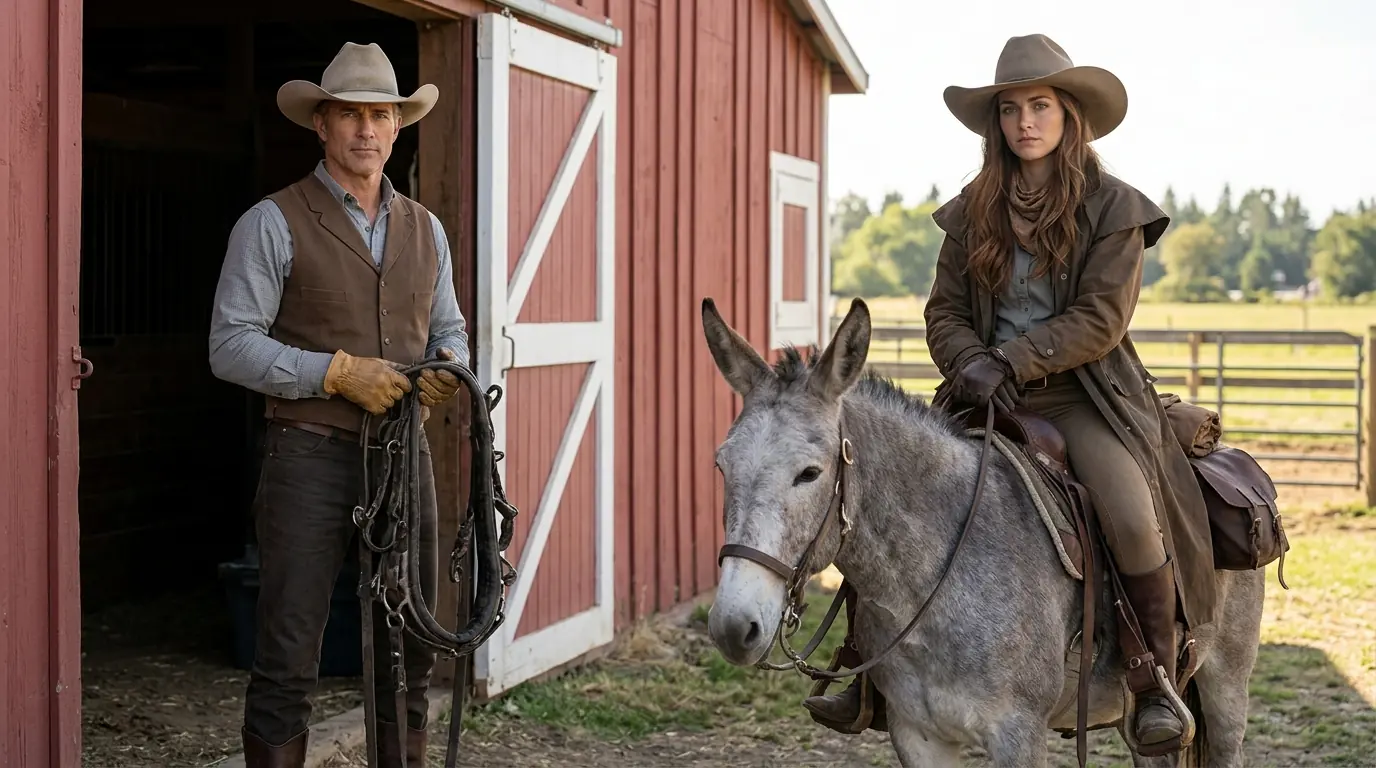
And then she let it go, which was exactly the right thing. The fifth morning was clear and cold, and there was no good reason for her not to ride. She'd been in my spare room five days, and she had a woman waiting in Caldwell Wells and a job to get to. I fed the mule and got him ready and brought him out to the yard, and she came out of the house with her bag and tied it on. She stood by the mule for a moment.
"The valley people," she said, "the ones who know you, do they think poorly of you? " It was a strange question, and I didn't answer it right away. I thought about what the honest answer was. The Denton ranch to the south hadn't bought from me in 2 years, which was their right, but it had stung. The feed merchant in town was polite, but no longer chatty the way he used to be.
When you lose a string of horses to a storm, and it's your second bad stretch in a decade, people remember. Not unkindly mostly, just as a data point in their accounting of you. "Some do," I said. She looked at me directly. Nora had that way of looking at a person, not unkind, not judgmental, just straight.
Like she was reading something and wanted to read it right. "They're wrong," she said. Just that, no elaboration. She said it the way you state a fact you've had time to verify. I didn't know what to say to that, so I didn't say anything.
She picked up the reins, didn't get on the mule yet, just held them. "I spent five days watching you work. " You fixed three things without being asked. You knew the mare's leg was improving before I told you. You've kept this place running for how long?
"22 years. " "22 years," she said. "On your own the last 15. " "I've had help," I said. "A hand sometimes.
" "The place itself," she said. "The decisions, what to breed, what to sell, what to hold—you. " "Yes. " "They're wrong," she said again, quieter, like she was just confirming it to herself. She put her foot in the stirrup and got up on that ugly gray mule and looked down at me.
"I'm going to ride to Caldwell Wells," she said. "I'm going to look at the store and talk to the woman and decide if it's what I thought it was. " I said that sounded reasonable. And then, she said, and she paused, and she looked out at the horses in the south pasture like she was buying herself a moment. "And then I might ride back and tell you what I found out, if that's something you'd want to hear.
" I held on to what I wanted to say and said something simpler. "I'd want to hear it. " She rode out. I didn't let myself think about it too much. That sounds like a lie, but it's true.
I'd gotten good over the years at not wanting things I probably couldn't have. It's a skill you develop. You put the thought in a back room and close the door on it and you get to work because the work is always there. I worked on the fence line for two days. The lower section had been needing attention since October and I'd been finding other things to do instead, which is a habit I have when I'm avoiding the thing I'm actually thinking about.
Out there in the cold with the wire stretcher and my hands going numb, it's harder to think. That's the point. I turned the sorrel mare out into the small paddock and watched her move and she was fine, sound, no hitch in her stride. I watched the chestnut gelding and his shoulder was already loosening up. A week more and you wouldn't know it had been stiff.
The horses were good. That was something. I cleaned out the spare room and washed the bedding because it needed doing and not for any other reason. I aired the blankets on the line. Nora had left the room tidy, the bed made, the washbasin clean and dry.
She'd folded the extra blanket the way Margaret used to fold it, which I noticed and then told myself was not something to read into. I cooked plain food and ate it without thinking about biscuits. On the sixth day I rode into town for supplies. The feed merchant was his usual polite self and I bought what I needed and loaded it and he made conversation about the weather, which there was plenty to say about. On the way home I passed the whole place, which had been empty since old Cal Holt died two winters ago, and I noticed smoke from the chimney.
Somebody had moved in or was at least looking at it. I wondered if it was one of the land company people, the ones who'd come from the east with promises and a railroad brochure. I thought about Nora's party of women, 2nine days out of St. Louis, however many of them there had been, spread out now across the valley looking for what they'd been promised. The ones who'd turned back at the pass were probably back in Missouri by now, telling people it hadn't been what they thought.
Nora hadn't turned back. On the ninth day I heard the mule. I was in the barn working on a piece of harness. One of the breast straps had worn thin where it ran over the hame and I'd been meaning to replace it before it failed, and I heard him on the trail before I saw anything. That particular shuffling walk a hard-used mule makes when he's covering ground steady, but not fast, doing the miles because the miles need doing.
I set the harness down and walked to the barn door. She came into the yard and stopped and looked at me, and I looked at her, and she said, ""The store was smaller than she made it sound in her letters. "" I said that was often the way with letters. "The books were a mess," she said. "I spent 4 hours looking at them, and I could see what was wrong, but the woman doesn't entirely want someone to tell her that.
She wants the work done without the diagnosis. "People are like that sometimes. "" ""I know. "" She got down from the mule. She was dusty from the road, and her eyes were tired, but she was looking at me with that straight look.
I told her what I saw anyway. She didn't like it, but she'll think about it. People usually do. ""What did you decide? "" "About the store.
" She shook her head a little. "It's not what I thought it was. She wants someone to do the numbers and stay quiet. That's not partnership. " She paused.
"I've been quiet long enough. " I took the mule's reins when she offered them. "I did a lot of thinking on the way back," she said. I waited. "You need someone," she said, "not unkindly, just straight.