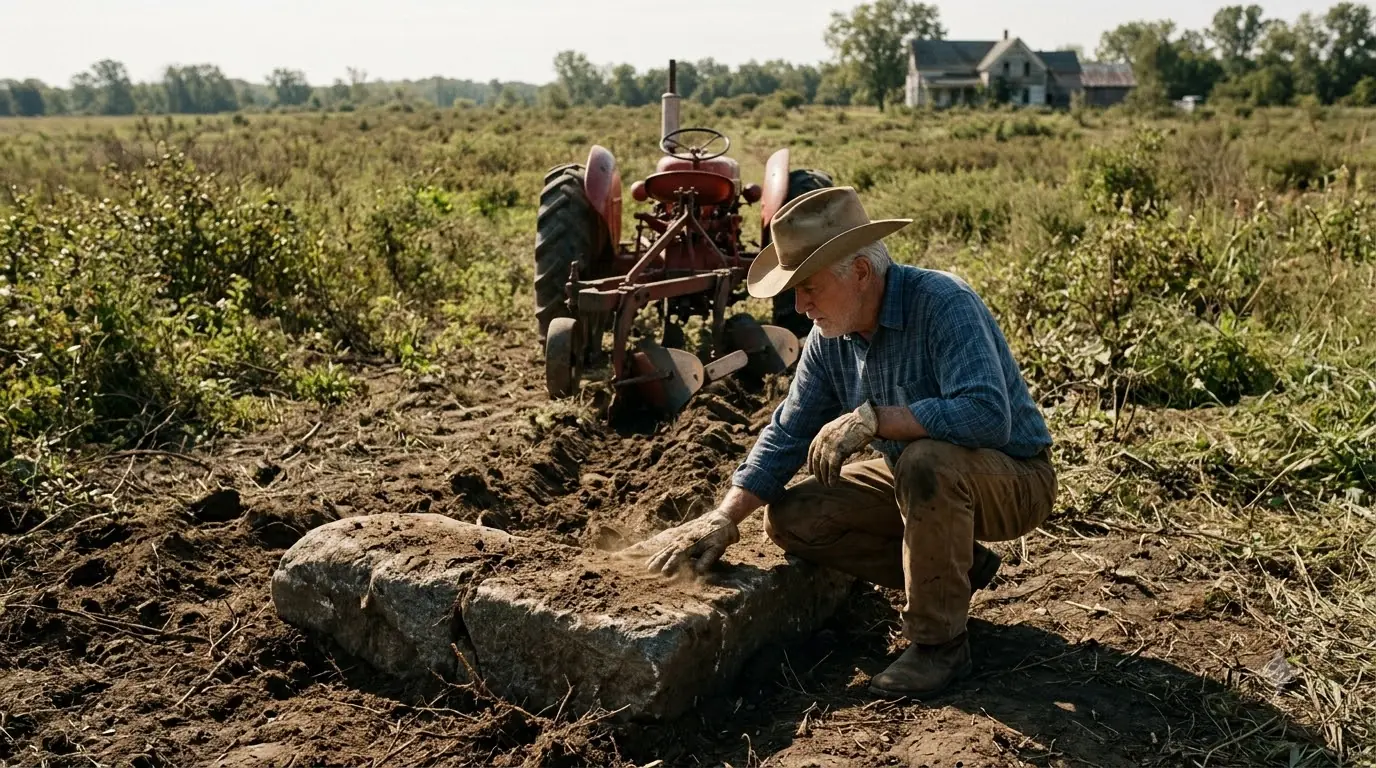
The auctioneer had already lowered his hammer when the man in the second row began laughing. It was an uncomfortable, sharp sound that carried across the county meeting hall and made several people turn. At the front of the room, seventy-year-old Harold Winters stood with his receipt in one hand and the deed documents in the other, studying the number that had just consumed nearly everything he had left. Two hundred and forty acres, a farmhouse with a broken roof, an unreliable well, and soil that local farmers considered too exhausted to bother with. He had bought all of it with one bid, and the laughter told him exactly what the county thought of his judgment.
“You bought yourself two hundred and forty acres of disappointment,” said Calvin Rusk, a broad-shouldered rancher whose family owned half the adjoining valley. “I’ve seen folks throw good money into bad ground before, but at least they were young enough to earn it back.”
Harold folded the receipt along its original crease. “Maybe so,” he said. “That’s one way of looking at it.”
Calvin shook his head, apparently disappointed that there would be no argument. A younger bidder asked what Harold intended to raise there. Harold considered telling him about the cover crops, the weather records, and the shallow depression on the eastern side where a creek had once run. Instead, he said, “I suppose I’ll start by raising the roof.” A few people laughed again, but this time the sound was kinder. Harold collected his papers and walked out into the parking lot without looking back.
He sat in his pickup for several minutes before starting the engine. On the passenger seat rested a blue knitted scarf that had belonged to his wife, Margaret. The last time she had worn it, she had complained that the winter sunlight was too bright, and then she had asked him to stop at the feed store because she wanted to bring the clerk's newborn daughter a blanket. She had died fourteen days later, not in some dramatic accident but in a hospital room after an infection that had progressed faster than either of them understood. That was almost two winters ago. Harold still kept her scarf beside him when he drove alone.
Their old ranch had stood sixty miles southwest, in a sheltered basin where they had raised cattle for forty-one years. He had known every fence post and every stubborn calf, and Margaret had known the books, the weather forecasts, and the names of people who needed help before they would admit it. After she died, the work became a kind of conversation with a person who no longer answered. He could maintain the fences and feed the herd, but he could not manage the entire operation at his age without hiring labor he could no longer afford. Selling the ranch had hurt him more than signing the final papers of her estate. There had been mornings when he sat outside the empty kitchen and wondered whether leaving that place meant leaving her as well.
His daughter, Caroline, had offered him a bedroom in her house outside Omaha. It was a generous offer, and he knew she meant every word. But Caroline worked full-time as a nurse, her husband traveled for his construction business, and their teenagers needed the kind of quiet privacy he remembered wanting at their age.