One month before her wedding, Ophelia Hilda discovered her fiancé in bed with her best friend.
Adam Barton did not even have the courage to apologize. Stella stood beside him wearing the smug expression of a woman who believed wealth excused cruelty.
“Adam never loved you,” Stella said. “A low-born girl like you was never going to become Harrison Barton’s daughter-in-law.”
Harrison Barton was a legendary attorney, a widower worth billions, and the head of one of the country’s most powerful law firms. Adam had spent his life enjoying the Barton name while avoiding the discipline required to deserve it.
Ophelia looked at the two people she had trusted most and made a reckless promise.
“Then I’ll marry Adam’s father,” she said. “You may still enter the Barton family, Stella—but you’ll have to call me Mom.”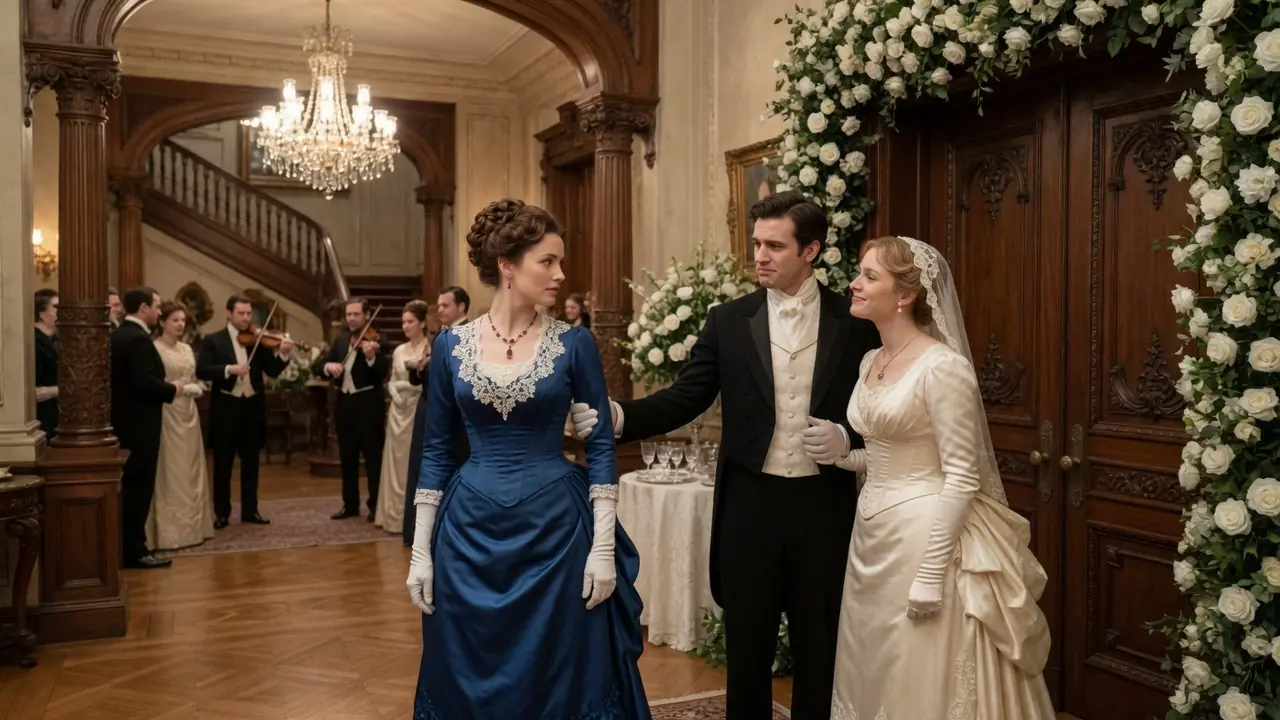
At first, even Ophelia thought it was only something a wounded woman said. Then, days later, her car struck the rear of Harrison’s stalled vehicle near her university. His driver could not restart it, and Harrison was late for an important meeting.
Ophelia, a final-year law student, offered him a ride. She knew every shortcut around campus and delivered him to the administration building ten minutes early.
“What do you want from me?” he asked.
“An opportunity,” she answered. “I’ve studied every major case your firm has handled. I want to become a lawyer people cannot ignore.”
Her admiration was real, even if her motives were not entirely innocent. When Harrison later reviewed internship candidates, he chose Ophelia because her academic record was exceptional. She became his assistant, impressed an important client during a tennis match, and repeatedly spotted weaknesses experienced associates had missed.
She also flirted with him shamelessly.
Harrison resisted. He considered her too young, too impulsive, and far too close to the age of his son. But beneath Ophelia’s teasing, he found intelligence, courage, and a loneliness she tried to hide behind confidence.
After an office celebration, Ophelia finally confessed that she wanted him. Harrison warned her not to make a choice she would regret in the morning. She did not retreat.
The next day, Harrison proposed—not because of one night, but because he had already fallen in love.
Ophelia said yes.
Their marriage was announced without revealing the bride’s identity. Adam was furious that his father had remarried. He feared a new wife—and possibly another child—would reduce his inheritance. Harrison warned him that his wife was now mistress of the Barton household and deserved respect.
Living with Harrison was nothing like Ophelia expected. He rose before dawn, made strong coffee, and read legal briefs at the kitchen counter instead of ordering servants to bring breakfast. He remembered that she hated coriander and left the hallway light on when she studied late. When she lost her first argument before a senior partner, he did not rescue her. He took her home, opened the case file, and worked through every error until she could explain the law more clearly than the man who had embarrassed her.
“I don’t need you to make things easy,” she told him.
“Good,” Harrison replied. “I intend to help you become impossible to dismiss.”
Those evenings made Ophelia’s plan harder to justify. Adam had once praised her ambition only when it did not interfere with his comfort. Harrison respected it enough to challenge her. She began to understand that being cherished was not the same as being indulged. Sometimes it meant someone took her future seriously, even when she was tired enough to resent it.
Adam and Stella decided to flatter the mysterious stepmother until they could force her out.
They first met her without recognizing her voice. Stella bought a rare ruby necklace as a peace offering, paying twice its value after snatching it from Ophelia at a boutique. She had no idea the necklace was intended for Ophelia herself.
When Adam and Stella asked their stepmother to organize their wedding, Ophelia accepted. She canceled Stella’s extravagant couture gown, reduced the honeymoon, and replaced the castle carriage with an ordinary car—all while claiming the wedding had exceeded its budget.
Her revenge reached its peak at the ceremony.
Stella saw Ophelia wearing the ruby necklace and accused her of buying a fake. Adam tried to throw her out before Harrison entered.
“Show some respect,” he said. “Ophelia is my wife.”
The room went silent.
Adam stared at his former fiancée and realized she had kept her promise. The woman he betrayed was now legally his stepmother.
When the officiating priest suffered a medical emergency, Ophelia volunteered to conduct the ceremony. She made Adam and Stella promise to remain together through ruined reputations, lost fortunes, sickness, and even prison. Then she forced them to repeat their vows loudly enough for everyone to hear.
“Yes, Mom,” Adam finally said through clenched teeth.
Ophelia smiled for the wedding photograph, but satisfaction faded quickly. Humiliating them had not repaired what they broke. Worse, Harrison’s affection had become real to her, and every tender moment made her guilt heavier.
That night, she removed the ruby necklace and found Harrison waiting on the balcony. He had noticed that her triumph disappeared as soon as the guests left.
“Did today give you what you wanted?” he asked.
Ophelia could not answer honestly, so she said the ceremony had gone according to plan.
“That wasn’t my question.”
He did not press further. He wrapped his jacket around her shoulders and returned inside. His restraint left her more ashamed than accusation would have. Revenge had promised the clean satisfaction of balancing a debt. Instead, she had used a good man as part of the payment, and no humiliation inflicted on Adam could make that fair.
Adam remained convinced she still loved him. He cornered her and offered to leave Stella if Ophelia divorced Harrison.
“Your father is intelligent, disciplined, and kind,” she replied. “You are still asking him for an allowance while pretending to be a man. Why would I trade him for you?”
Adam’s humiliation became hatred. He and Stella prepared mushroom soup for Ophelia despite knowing she was allergic, but Harrison made them eat it when they refused to explain why neither would touch the bowl. Their childish revenge failed, yet their resentment deepened.
They then enlisted Willow Sterling, Harrison’s longtime business partner. Willow had loved him for years and believed Ophelia was a gold digger. At a charity event, Willow offered Ophelia five million dollars to divorce him. When Ophelia refused, Willow’s guests surrounded and threatened her. A struggle ended with Ophelia being pushed into a swimming pool while Adam and Stella watched.
Harrison arrived in time to save her.
When the guests blamed Ophelia, Harrison did not hesitate.
“Anyone who harms my wife makes an enemy of the entire Barton family.”
He ended his partnership with Willow and removed her from every company connected to him. Then he took Ophelia home, dried her hair himself, and stayed beside her through the night.
Ophelia realized the revenge that brought her into the marriage no longer mattered. She loved Harrison—not his money, power, or ability to punish her enemies, but the way he believed her when other people found it convenient not to.
Harrison gave Adam one final chance. Adam had finally graduated from law school and joined the family firm, but he still expected his name to compensate for his lack of preparation. During a major client presentation, his proposal collapsed under basic legal scrutiny. Ophelia presented a stronger strategy and won the account.
Instead of learning from the failure, Adam blamed her.
Stella feared Ophelia would have a child and replace Adam as heir. She persuaded him that Harrison had to die before changing his will. Together, they damaged the brake line on Harrison’s car.
The vehicle crashed.
Doctors announced that Harrison might never wake from his coma. Ophelia refused to leave his bedside, while Adam convened a shareholders’ meeting the next morning and demanded control of the Barton estate and law firm.
Before anyone signed, Harrison entered the room.
The accident had injured him, but not as severely as Adam believed. Suspecting sabotage, Harrison had worked with investigators and asked the hospital to exaggerate his condition. Security footage, financial messages, and tools found in Adam’s garage proved the conspiracy.
Adam blamed Stella. Stella blamed his greed. Harrison listened without emotion.
“You tried to kill your father for an inheritance,” he said. “From today, you are no longer my heir or my son in anything but blood.”
He expelled them from the family and froze Adam’s accounts. Without Barton money, their marriage collapsed almost immediately. Stella suffered a miscarriage and learned she might struggle to become pregnant again. Adam demanded a divorce, accusing her of destroying his life.
Desperate to hurt everyone, Stella revealed Ophelia’s secret.
“She was Adam’s fiancée,” she told Harrison. “She married you only because we betrayed her. You were her revenge.”
Ophelia did not deny it.
Harrison’s silence wounded her more than anger could have. She signed divorce papers, packed her belongings, and prepared to leave the villa.
Before she could go, Harrison summoned her to his study.
“Tell me one truth,” he said. “Did you ever love me?”
Ophelia admitted everything. She had approached him to punish Adam and Stella. She had believed marrying him would make their betrayal hurt less. But revenge had turned hollow, while her feelings for Harrison had become the most honest part of her life.
“I love you,” she said. “That is why I am leaving. You deserved the truth before you gave me your name.”
Harrison tore up the divorce papers.
He did not excuse the deception. He asked for openness, time, and the right to decide whether the marriage was worth rebuilding. Then he confessed that his life no longer made sense without her.
Trust did not return in one dramatic embrace. For weeks, Harrison asked questions he had avoided before, and Ophelia answered even when the truth made her look selfish. She told him which encounters had been accidental and which choices had been calculated. Harrison admitted that part of him had always suspected she wanted something, but pride had convinced him he could control the risk.
They attended counseling away from the Barton firm, where neither money nor professional reputation could decide who was right. Ophelia learned that remorse was more than feeling terrible; it meant accepting that Harrison might need time, boundaries, or even separation. Harrison learned that forgiveness did not require pretending the deception never happened.
They began again with ordinary promises. No secret meetings. No using family influence to settle private arguments. No threats of leaving merely to force reassurance. Ophelia moved into the guest room until both were ready to share a life without treating intimacy as proof that the damage had disappeared.
Months later, Harrison asked her to put her wedding ring on again. This time, there was no revenge hidden beneath it.
“The revenge may have brought you to me,” he said, “but it did not make me fall in love with you. And it did not make you stay.”
Soon afterward, Ophelia became nauseated at work. A doctor confirmed she was seven weeks pregnant.
Harrison, who had spent years regretting how work consumed Adam’s childhood, promised to be present for every part of their child’s life.
Stella’s final attack came outside a bakery. Consumed by envy after reading about Ophelia’s pregnancy, she rushed toward her in traffic. Harrison pulled Ophelia away before she was struck. Stella was arrested for attempted murder.
Adam returned one last time to apologize. Ophelia no longer cared about his infidelity, but she refused to decide whether Harrison should forgive a son who had tried to kill him.
Harrison gave Adam enough money to begin again and sent him to work as an aid lawyer in Africa.
“I hope you become a better man,” he said. “But I can no longer build my future on that hope.”
Months later, Harrison sat beside Ophelia reading stories to their unborn child. He cooked her lunch, rearranged meetings around medical appointments, and learned that love was not proven by wealth or grand declarations. It was proven by presence.
Ophelia had entered his life to become her ex-lover’s stepmother. In the end, the cruelest twist belonged to neither Adam nor Stella.
It was that revenge led her to the one person who taught her to release it.
THE END