On a rain soaked street in a crumbling southern town, a young girl hurries home after a long shift, clutching her last few dollars. She spots an old man collapsed beside a broken down truck, ignored by everyone else. Without thinking, she rushes to help him, offering all she has. What she doesn't know is that this small act of kindness will change her entire future forever. 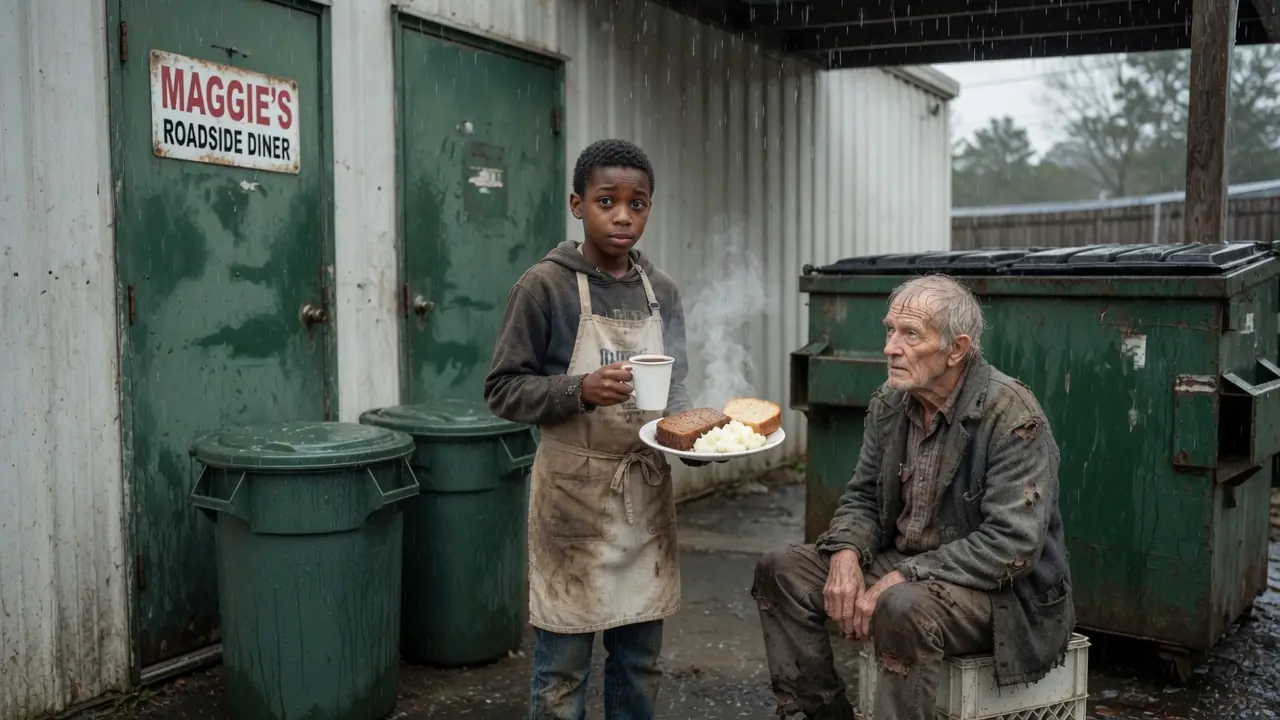
The air was heavy with the scent of old wood and wet earth as the sun struggled behind thick clouds, casting the small town of Milstone, Georgia, into a sleepy haze of muted golden gray. The streets, cracked and patched with years of wear, wound their way past sagging porches, peeling paint, and yards choked with weeds, telling silent stories of hard times and forgotten dreams. On the corner of Maple and Third, in a weathered little house with crooked shutters and a rusting mailbox barely hanging by one hinge, lived Amara Johnson, a 14-year-old girl whose smile shone brighter than any light this tired town had left.
Inside that house, the scent of old books and fried cornbread clung to the air, mixing with the faint, persistent smell of menthol ointment from the bedroom where Grandma Ruth lay coughing softly into a handkerchief worn thin from use. Amara moved quickly through the narrow halls, her worn sneakers squeaking on the faded linoleum floors, balancing a chipped tray with a bowl of watery soup, and a glass of tap water filled halfway. Her arms were thin but strong. Her dark curls tied back with a frayed pink ribbon that had seen better days, and her wide, earnest brown eyes carried the weight of someone who had learned too soon that life didn't hand out favors.
The neighborhood was a patchwork of worn out dreams, with kids in threadbare clothes playing with makeshift toys in dusty yards, old men rocking on creaky porches with suspicious eyes, and mothers dragging tired feet as they carried grocery bags too heavy for their thin arms. Most people kept their heads down, minds occupied with their own daily battles, and smiles were rare currency here. Yet somehow Amara managed to carry one everywhere she went. A real smile, not a pasted on practiced one. It was the kind of smile that made you believe in good things again, even if just for a second.
She shared her laughter freely, even with strangers. She gave away the broken pieces of candy Mr. Denny let her take home, handing them to the little kids who pressed their noses against the store window, but never had a penny to spend. Once just a week ago, she had handed her only sandwich to old Pete, the town drunk, who sat slumped against the side of the gas station with shaking hands and eyes too tired to hope. She hadn't hesitated, hadn't thought about how her own stomach would growl hours later, when the store closed and dinner would be a glass of water and a dream.
The people in town noticed her, of course, but not always in kind ways. Some shook their heads, muttering that no good ever came from kindness when you had nothing yourself. Others sneered, thinking her foolish, too soft-hearted for a world that chewed up girls like her and spat them out without a second thought. But Amara, she didn't seem to care. Maybe because deep down in that fierce little heart of hers, she believed that being kind wasn't about getting something back. It was about being the one small light in a town that had long since forgotten how to shine.
And so, under the bruised sky of a weary Georgia afternoon, Amara Johnson sprinted down cracked sidewalks, past crooked mailboxes and silent houses, her backpack bouncing on her back, her worn shoes kicking up little clouds of dust, chasing a future that so far seemed determined to stay just out of reach. But still, she ran because hope, even the smallest flicker of it, was a powerful thing.
The storm showed no mercy that night, hammering against the town with a relentless fury that turned streets into rivers and gutters into roaring streams. Inside Maggie's diner, the old fluorescent lights flickered nervously as if they too were shivering from the cold. Amara sat across from the old man, the dampness seeping into her bones, making her teeth chatter despite the cup of cheap coffee she cradled in her hands. She glanced at the clock ticking above the counter and felt a pang of panic. Grandma Ruth's medicine, the rent money, the electricity bill, all flashed through her mind like warning signs on a dark highway. She couldn't afford mistakes. She couldn't afford kindness. But here she was, sitting with a stranger, watching him struggle to stay warm, and every part of her knew she couldn't just walk away.
When the waitress slapped the bill down with a grunt, Amara dug into her pocket, pulling out every crumpled dollar and coin she had. It wasn't enough for the tow, not even close. Her stomach twisted into a tight knot as she realized what she had to do. Without a word, she grabbed her backpack and stood, the chair scraping loudly against the floor, drawing a few sideways glances from the other patrons. She forced herself to smile at the old man. Stay here, she said, voice steady, though her heart was racing. I'll be back.
The rain pelted her as she dashed out into the night, her sneakers slipping on the slick sidewalk, her mind racing faster than her feet. She had one thing of value, her phone. A battered old smartphone with a cracked screen and a charger that barely worked, but it was something. At the pawn shop three blocks over, she could probably get just enough to pay for a tow truck. Maybe she hated the idea. That phone was her lifeline for emergencies, for school assignments, for calling Grandma Ruth when she stayed late at work. But right now, looking back at the diner's glowing windows, where the old man sat huddled and alone, she knew there was no real choice.
The pawn shop buzzed with the stale scent of dust and regret. The clerk, a man with greasy hair and a permanent scowl, barely looked up when she stumbled in, dripping water all over the grimy floor. She slapped the phone down on the counter and gritted her teeth. How much for it? she demanded. He squinted at it, muttered something under his breath, then shrugged. 50 bucks? he said without sympathy. Amara wanted to scream. 50 wasn't much. It wasn't nearly enough for what she needed, but it was better than nothing. She took the money and ran, her lungs burning, the cold slicing into her skin like knives.
She flagged down a local tow truck driver, a gruff man with a belly that strained against his oil stained overalls, who grumbled and cussed, but eventually agreed to help after she pressed the damp bills into his hand. Every penny she had. They drove back through the flooded streets, the wipers thudding in frantic rhythm against the windshield, and by the time they got to Maggie's, the rain had started to let up, leaving the town soaked and shivering under a bruised sky. Amara burst back into the diner, soaked to the bone, her teeth chattering so hard it hurt. She found the old man still there, staring into his now cold coffee like he was trying to disappear into it. She tugged at his sleeve and gave him a breathless, crooked smile. Truck's going to get towed, she said, her voice hoarse but bright.
The old man looked up, his eyes glistening in a way that had nothing to do with the rain. He opened his mouth to speak, but no words came out. Instead, he just nodded, slow and heavy, like the weight of the world had settled on his shoulders. And maybe, just maybe, Amara had helped lift a piece of it away. When the driver hooked up the old pickup and hauled it onto the truck, Amara stood beside the old man on the sidewalk, her wet jacket clinging to her skin, her shoes squelching with every step. She should have been exhausted. She should have been furious with herself for giving up the little she had. But as the truck rumbled away into the night, she only felt a strange, fierce sense of peace.
The old man turned to her, his voice rough with emotion. Why'd you do all this, girl? You don't even know me. Amara looked at him, really looked at him, past the wrinkles and the dirt and the broken down clothes, and saw someone who had been left behind by the world, just like so many others in Milstone. She shrugged, a small, almost defiant gesture, and said simply, Because someone's got to start being kind first.
The old man stared at her for a long time, blinking rapidly like he was fighting off something heavy behind his eyes. He didn't say thank you. He didn't need to. In that broken rain slicked street under a sky still bruised and bleeding light, the words hung between them, unspoken but understood. And somewhere deep inside Amara's shivering body, despite everything she had just lost, a tiny spark of warmth flickered to life and refused to die.
The days that followed crawled by slow and heavy, like thick syrup sliding down a cold plate. The storm had passed, but the sky above Milstone remained stubbornly gray, hanging low over the rooftops like an old tattered blanket that refused to lift. Amara trudged through her routine with a weariness she couldn't shake, feeling the emptiness left behind by the phone she no longer had, the missed homework she couldn't complete, the call she couldn't make to check on Grandma Ruth when her shifts ran long. She told herself it didn't matter, that it was just a thing, that helping the old man had been worth it. But in the quiet hours before dawn, when she lay awake listening to the leaky faucet drip, drip, drip into the kitchen sink, doubts gnawed at her like rats in the walls.
She hadn't seen the old man since that night. He hadn't come back to the diner. He hadn't sent word. Maybe he was just another drifter passing through. Maybe her kindness had been tossed into the gutter like everything else around here. It was a Tuesday afternoon, the kind that sagged under its own weight when the world changed without warning. Amara was stacking dented cans of beans on the high shelves at Mr. Denny's store, her arms sore, her stomach rumbling from skipping lunch again, when the sound of tires crunching on gravel outside caught her ear. She barely glanced up, probably another delivery. Maybe old Mr. Burton and his rusted Chevy.
But then the door creaked open, and the bell above it gave a sharp, almost alarmed jingle, and suddenly the entire store fell silent. Amara turned, wiping her hands on her jeans, and froze. Parked just outside was a long gleaming black limousine, its chrome grill flashing like a predator's smile under the muted light. Standing in the doorway, dripping water from a freshly opened umbrella, was a man she barely recognized at first, the old man from the diner, but transformed. Gone were the torn coat and battered boots. Now he wore a dark tailored suit that looked more expensive than anything anyone in Milstone had ever laid eyes on. His white hair neatly combed back, his posture straight and commanding. His blue eyes, sharp and assessing, swept the room until they landed squarely on her.
For a moment the whole world seemed to tilt, the cheap fluorescent lights buzzing louder than before, the smell of stale bread and old mop water thick in her nose. Mr. Denny's mouth hung open, his hand frozen halfway to ringing up a customer's bottle of soda. The few other customers in the store gawked openly, whispering behind cupped hands. The old man, no, not just any old man, stepped forward with slow, deliberate steps that echoed off the scratched tile floor. He stopped in front of Amara, his eyes softening slightly as he looked down at her, and he smiled, a real smile, warm and full of something like pride.
Amara Johnson, he said, his voice deep and steady, the kind of voice used to giving orders and having them followed. I've been looking for you. Amara blinked, her throat tightening. Sir, I, she started, but the words tangled up and died. My name is Charles Whitmore, he continued, slipping a hand into his jacket pocket, and pulling out a slim leather wallet, flashing a card that glinted with the insignia of Whitmore Industries, one of the biggest real estate development companies in the entire southeastern United States. A name she'd only ever seen on the news or on billboards halfway falling down outside of town. I'm the owner of the land surrounding this town. I came here quietly to see it for myself, to see the people, the spirits still left behind in these broken streets. I didn't want yes men or fancy tours. I wanted to know if there was anything left worth saving.
He paused, letting the weight of his words sink in, and Amara felt her knees wobble, her heart hammering so hard she thought it might break her ribs. Charles Whitmore, the Charles Whitmore, had been the old man she helped in the rain, the man nobody else had looked twice at. And you, he said, his voice lowering so only she could hear. You were the only one who saw me. Not a paycheck, not a headline, just a man who needed help. Amara shook her head, still unable to comprehend. I didn't I didn't do it for She started, but again he cut her off, this time with a laugh, warm and genuine. I know you didn't. That's why it matters.
He turned slightly, gesturing to a man in a gray suit standing just outside the door, who nodded and stepped forward, carrying a thick envelope and a set of keys. Charles took them and pressed them into Amara's trembling hands. In that envelope, he said, you'll find a full scholarship to any university you choose, starting with private tutoring to get you there. There's also the deed to a newly renovated home for you and your grandmother, fully furnished, paid in full, and a trust fund to make sure you never have to pawn your phone to help a stranger again. Amara could hardly breathe. Her fingers clutched the keys like a lifeline, the metal cool and real and solid against her skin. She opened her mouth to protest, to say she couldn't accept this, that it was too much. But Charles shook his head, his expression kind but firm.
You earned this, Amara, he said. Not because you asked, but because you gave when you had nothing left to give. Behind her, Mr. Denny coughed awkwardly, and when she turned, she saw tears glistening in the old man's eyes, quickly wiped away with a gruff swipe of his hand. Around the store, people were whispering, pointing, their faces split between awe and shame. Shame that they had ignored the old man. Shame that it had been Amara, the skinny girl with hand me down sneakers and a smile too big for her face, who had shown them all what it meant to be decent. For the first time in what felt like forever, Amara stood tall, the rain outside forgotten, the gray sky breaking open just a little to let a shaft of golden sunlight pour through, warm and blinding and beautiful.
Weeks passed and the town of Milstone began to hum with a new kind of energy. A slow rising buzz like the first crackle of a summer storm promising rain after a long drought. Where broken windows once gaped open like missing teeth, glass now gleamed clean and strong. The potholes that had jarred every axle and bone were filled smooth. Yards once overgrown and wild now wore fresh grass like proud new suits. And laughter, real laughter, started drifting through the air again, carried on warm breezes that smelled of hope.
Amara's world transformed too, but not in the way she had expected. The new house was bigger than anything she had ever dared to dream of, with a working heater that hummed softly through the cold nights, a roof that didn't leak when it rained, and a real bed where Grandma Ruth could sleep without coughing herself awake from the drafty windows. She still woke up some mornings in a panic, heart racing, half thinking it had all been a cruel trick her mind had played. But then she would hear the kettle whistling from the kitchen and grandma's off key humming, and she knew deep in her bones that it was real.
Charles Whitmore didn't disappear after handing over the keys, either. True to his word, he kept showing up, sometimes in the big limousine, sometimes on foot, a coffee cup in one hand and a newspaper tucked under his arm, asking about her schoolwork, teasing her about how he expected nothing less than straight A's if he was going to be her personal investor, as he liked to call himself, with a wink. He wasn't just saving Milstone with his money. He was saving it with his presence, reminding the people that their town still mattered, that they still mattered.
And Amara, she wasn't just the girl from the old part of town anymore. She became a symbol, a living, breathing reminder that kindness wasn't weakness, that helping someone when you had nothing yourself was the purest kind of strength. The day of the new school's grand opening dawned bright and warm, the kind of perfect spring day that felt like a blessing, whispered straight from heaven. The entire town gathered in the freshly paved parking lot, dressed in their best clothes, faces flushed with excitement and disbelief. Banners snapped in the soft breeze, and balloons bobbed against the clear blue sky.
Amara stood behind the podium, her hands trembling slightly as she clutched the speech she had spent days writing and rewriting, the neat black letters blurring and dancing in front of her eyes. She could see Grandma Ruth sitting in the front row, a bright red hat perched proudly atop her silver curls, waving wildly when their eyes met. She could see Mr. Denny, Mr. Burton, even the grumpy pawn shop clerk, all packed together, waiting, watching, and standing a little apart from the crowd, arms folded across his chest, a small smile tugging at the corners of his mouth, was Charles Whitmore. Amara took a deep breath, feeling the words settle in her chest like stones finding their rightful place in a riverbed.
Her voice when it came was small at first, a little shaky, but grew stronger with every word. Kindness, she said, her voice carrying across the silent crowd, costs nothing but gives everything. I didn't know when I helped a stranger that it would change my life. I only knew that it was the right thing to do. We are all pieces of each other's stories. We can be the part that saves someone or the part that lets them drown. I hope we all choose to save.
There was a moment of breathless stillness, and then the crowd erupted, clapping and cheering, some people whistling through their fingers, others wiping at their eyes with crumpled tissues. Amara smiled wide and unashamed, feeling something burst open inside her chest, something bright and fierce and unstoppable. Later, as the ribbon was cut and the children swarmed into the gleaming new school building, Amara wandered the edge of the crowd, soaking it all in, the laughter, the music, the impossible reality of it all.
She felt a tug at her sleeve and looked down to see a little boy no older than six, his shoes untied, his face sticky with cotton candy, holding out a melted lollipop toward her with a grin missing two front teeth. Without hesitation, Amara knelt down, took the lollipop with exaggerated solemnity and smiled. Thank you, she said. You have no idea how much this means. And somewhere nearby, Charles Whitmore laughed deep and rich, the sound rolling across the parking lot like a promise that better days were just beginning.
The town of Milstone had found its light again, and it had started with a girl who had nothing but gave everything. And as long as she was there, that light wasn't going out anytime soon.