How Statins Actually Work
Statins inhibit an enzyme called HMG-CoA reductase, which the liver uses in its cholesterol-production pathway. When liver cholesterol production falls, the liver increases the number of LDL receptors on its surface. These receptors remove more LDL particles from the bloodstream.
Lowering circulating LDL reduces the number of cholesterol-containing particles that can enter artery walls and contribute to atherosclerotic plaque. This is why statins are especially valuable for people who have already experienced a heart attack or ischemic stroke, have established atherosclerotic cardiovascular disease, have very high LDL cholesterol, or face a sufficiently elevated future risk.
Statins do not eliminate all cholesterol production. Cholesterol remains essential for cell membranes, hormone synthesis, bile acids, and other biological functions. Treatment lowers excessive circulating LDL rather than attempting to remove cholesterol from the body completely.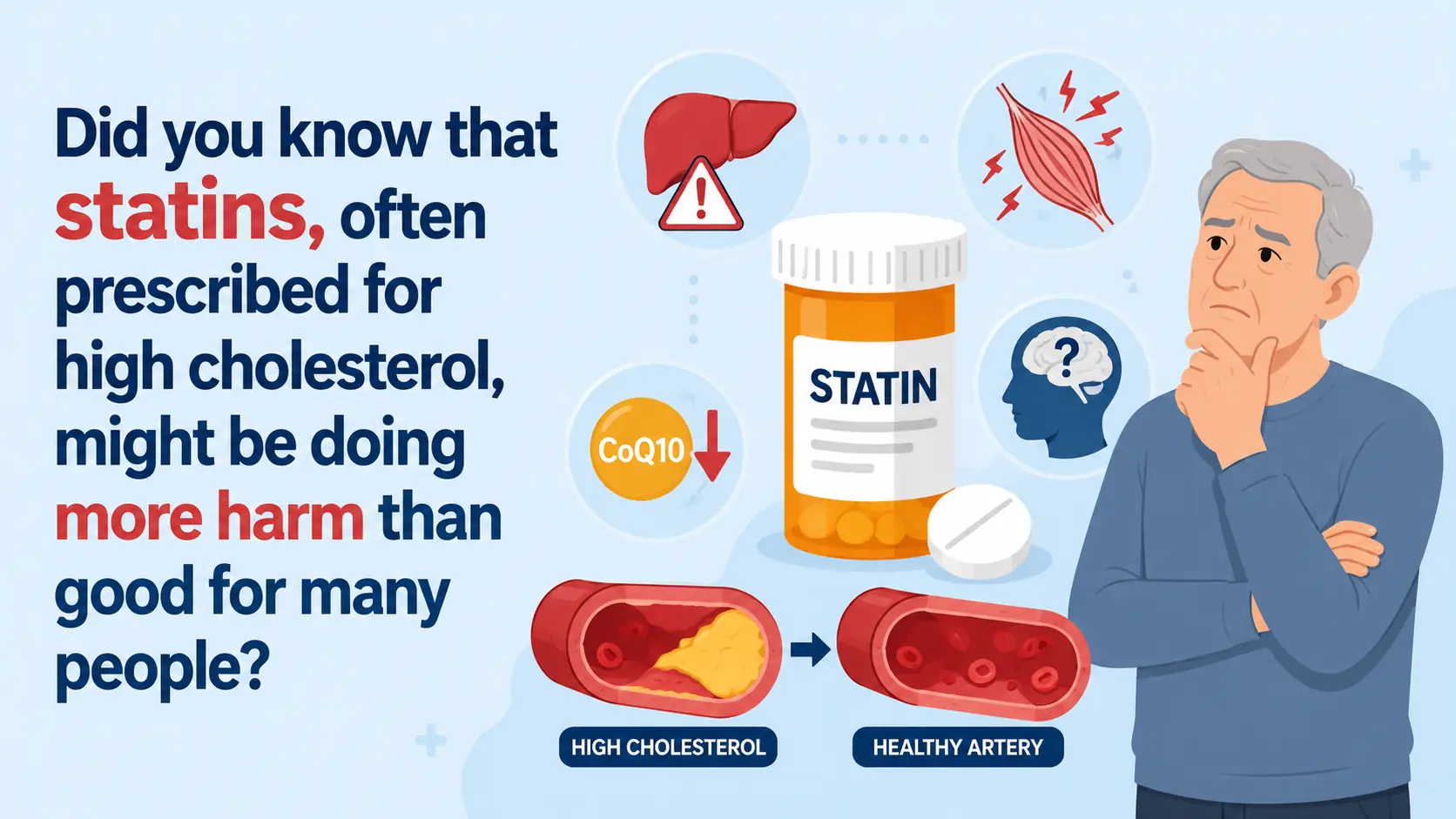
Do Statins Deplete Coenzyme Q10?
Statins affect the mevalonate pathway, which is involved in producing both cholesterol and coenzyme Q10. Blood levels of coenzyme Q10 may fall during statin treatment, and researchers have investigated whether this contributes to statin-associated muscle symptoms. However, the relationship remains uncertain, and reduced coenzyme Q10 has not been established as the sole explanation for muscle pain.
Muscle aching, tenderness, weakness, or cramping can occur in some statin users. Severe muscle injury and rhabdomyolysis are recognized but rare complications. Risk may increase with higher doses, certain interacting medications, kidney or liver impairment, untreated thyroid disease, or particular statin-drug combinations.
Coenzyme Q10 supplements are sometimes promoted for statin-related discomfort, but study findings have been mixed. Some analyses report improvement, while others have not confirmed a consistent benefit. It should therefore not be assumed that every person taking a statin requires CoQ10 or that CoQ10 will reliably prevent muscle symptoms.
Anyone experiencing persistent muscle pain should speak with a healthcare professional rather than stopping treatment independently. The clinician may review drug interactions, check thyroid function or vitamin D status, measure creatine kinase when appropriate, lower the dose, change the dosing schedule, try a different statin, or consider a non-statin therapy.
Do Statins Block Testosterone, Cortisol, or Vitamin D Production?
Although cholesterol is used to produce steroid hormones and vitamin D, standard statin therapy has not been shown to cause widespread clinically important deficiencies of testosterone, cortisol, or vitamin D in most patients.
The body regulates cholesterol production and obtains cholesterol through multiple pathways. Lowering LDL in the bloodstream does not mean that cells suddenly lose the ability to make essential hormones. Some individual studies have explored small changes in hormone levels, but the evidence does not support telling patients that statins routinely prevent the body from producing testosterone or cortisol.
Likewise, statins are not recognized as a common cause of vitamin D deficiency. Vitamin D status is influenced by sun exposure, skin pigmentation, diet, absorption, body weight, age, liver and kidney function, and other factors.
A person with symptoms suggestive of a hormonal or vitamin deficiency should receive proper evaluation rather than assuming that a statin is responsible.
Do Statins Impair Bile Production and Vitamin Absorption?
The liver uses cholesterol to produce bile acids, which help digest and absorb dietary fats and the fat-soluble vitamins A, D, E, and K. However, standard statin treatment is not generally considered a cause of bile acid deficiency or clinically significant fat-soluble vitamin malabsorption.
People with pale stools, jaundice, persistent diarrhea, unexplained weight loss, greasy stools, or documented vitamin deficiencies may have a liver, gallbladder, pancreatic, intestinal, or bile-duct disorder. These symptoms require medical assessment and should not automatically be blamed on cholesterol medication.
What About Small, Dense LDL and Large, Buoyant LDL?
LDL is not one identical substance. LDL particles vary in size, density, and cholesterol content. Small, dense LDL is associated with insulin resistance, high triglycerides, metabolic syndrome, and elevated cardiovascular risk.
However, describing large, buoyant LDL as “generally harmless” is misleading. Both small and large LDL particles contain apolipoprotein B and can enter artery walls. Cardiovascular risk is affected not only by particle size but also by the total number of atherogenic particles, how long they remain in circulation, and the person’s broader risk profile.
A standard LDL cholesterol result estimates the amount of cholesterol carried inside LDL particles. It does not directly count the number of particles. In people with diabetes, metabolic syndrome, high triglycerides, obesity, or discordant lipid results, apolipoprotein B may provide additional information because each atherogenic particle generally carries one apoB molecule.
The updated ACC/AHA guidance recognizes that cardiovascular assessment can extend beyond LDL cholesterol alone and may selectively include apoB, triglyceride-rich particles, lipoprotein(a), and coronary artery calcium. It does not require LDL particle-size testing before statin therapy for every patient.
Does Everyone With High LDL Need a Statin?
No. An elevated LDL result should be interpreted in context.
A young person with mildly elevated LDL, no diabetes, normal blood pressure, no smoking history, and no strong family history may have a very different expected benefit from treatment than someone who has already had a heart attack.
Clinical decision-making may include:
-
Existing cardiovascular disease
-
LDL cholesterol level
-
Diabetes and kidney disease
-
Blood pressure and smoking status
-
Family history of premature heart disease
-
Age and estimated short- and long-term risk
-
Risk-enhancing factors such as elevated lipoprotein(a)
-
Coronary artery calcium testing when uncertainty remains
-
Patient preferences and tolerance of treatment
When risk is uncertain, shared decision-making is appropriate. In selected adults without major high-risk conditions, a coronary artery calcium score may help determine whether statin therapy should begin now or can reasonably be deferred while lifestyle changes continue.
What Are the Established Risks?
The FDA recognizes muscle symptoms, rare serious muscle injury, liver-enzyme abnormalities, possible reversible cognitive complaints, medication interactions, and a small increase in blood glucose or diabetes risk in susceptible individuals. At the same time, the FDA states that cardiovascular benefits generally outweigh these risks in appropriately selected patients.
The balance is especially favorable in secondary prevention—meaning people who already have coronary artery disease, previous heart attack, stroke caused by blocked blood flow, or another form of established atherosclerotic disease.
For people at lower baseline risk, the absolute benefit is smaller, which makes individualized discussion more important.
The Bottom Line
Statins are not harmless, but neither are they broadly unnecessary or more dangerous than high LDL itself. They have strong evidence for reducing cardiovascular events in people whose underlying risk makes treatment worthwhile.
Small, dense LDL can provide useful metabolic information, but large LDL particles should not be considered harmless. Particle number, apoB, LDL exposure over time, and overall cardiovascular risk matter more than particle size alone.
People should not stop a statin because of a social-media claim. Sudden discontinuation can remove important cardiovascular protection, particularly in someone with established heart disease. Concerns about muscle symptoms, diabetes risk, dosage, or whether treatment is truly necessary should lead to a structured review with a qualified clinician.