Judge Elaine Morgan had walked through more federal courthouses than she could remember, but she still noticed the way certain lobbies measured people before the metal detector ever did.
That morning in Dayton, Ohio, the marble floors shone beneath pale skylight and the columns rose in white rows toward a ceiling designed to make the government feel permanent. Attorneys hurried across the lobby carrying leather folders, clerks moved in pairs, and people in dark business suits clustered near the elevators with the anxious expressions of those waiting to be judged by somebody they had never met.
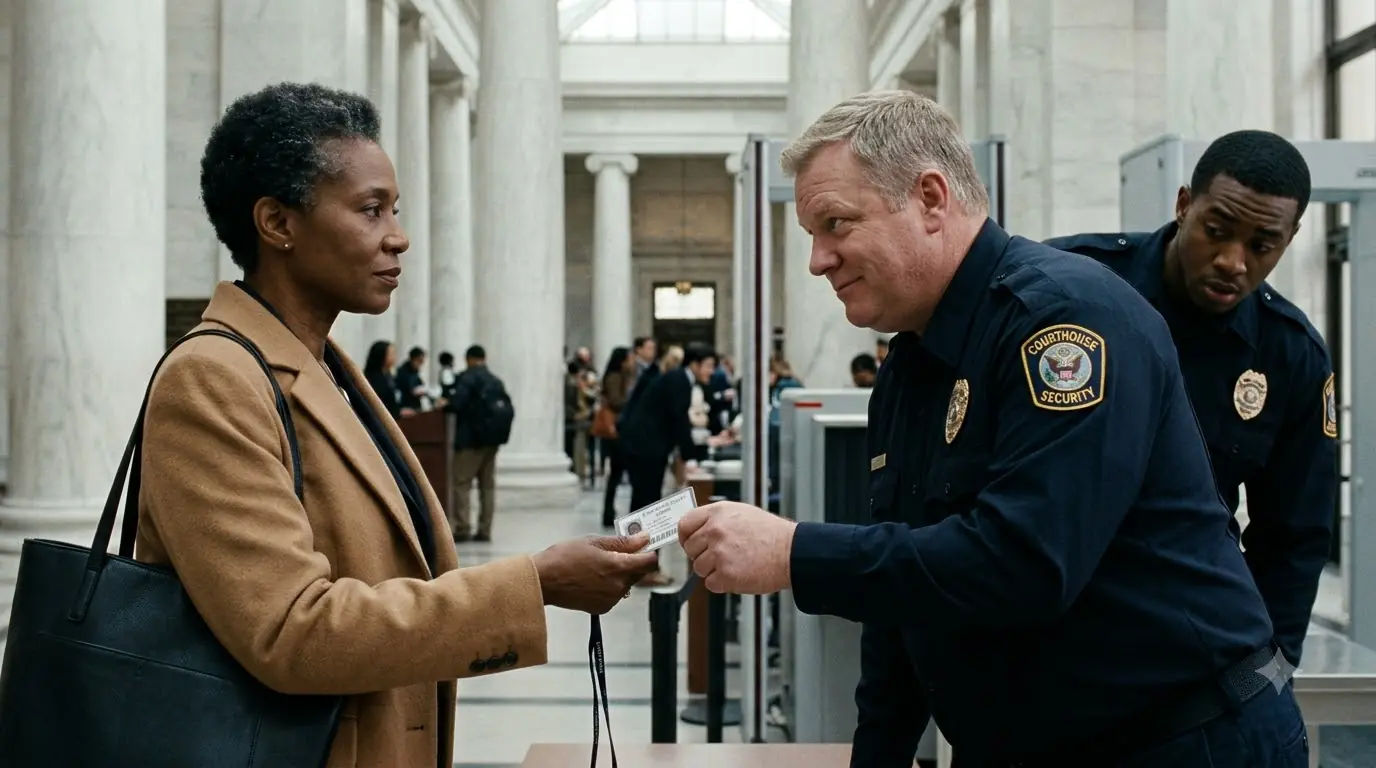
Elaine entered through the revolving doors in a camel wool coat, carrying a black leather tote and nothing else that announced who she was. Her gray-streaked hair was cropped close, her pearl earrings small, her posture easy and composed.
She had arrived twenty-three minutes earlier than required on purpose.
At fifty-five, Elaine had learned that arriving early gave institutions time to reveal themselves. A courtroom could be polished, a judge could deliver a speech, a clerk could quote policy, and a chief marshal could recite every training standard in the book, but the truth about a place often appeared in the minutes before people believed anyone important was watching. That was why Elaine had chosen not to use the underground judges’ entrance on her first morning. She wanted the public lobby.
The courthouse had been under review for four months.
Officially, the review concerned security access procedures, complaint handling, and uneven treatment of lawyers, witnesses, interpreters, and members of the public. Unofficially, it had begun with a folder of letters delivered to the Administrative Office of the U.S. Courts. Several described dismissive treatment at the security desk. Two claimed guards had made degrading comments about accents and clothing. One defense attorney said he had been repeatedly sent through the public line despite active federal credentials, while white attorneys who appeared younger and less experienced were waved toward staff access. None of the complaints alone proved a pattern. Together, they had been enough to bring Elaine to Dayton.
She was not there as a celebrity or visiting dignitary. She had been appointed to a federal judicial oversight panel after twenty-four years on the bench, much of it spent insisting that procedure mattered most when nobody thought it glamorous. She knew the difference between a mistake and a habit. She also knew the difference between a rude employee and a culture that taught people which rudeness would be tolerated.