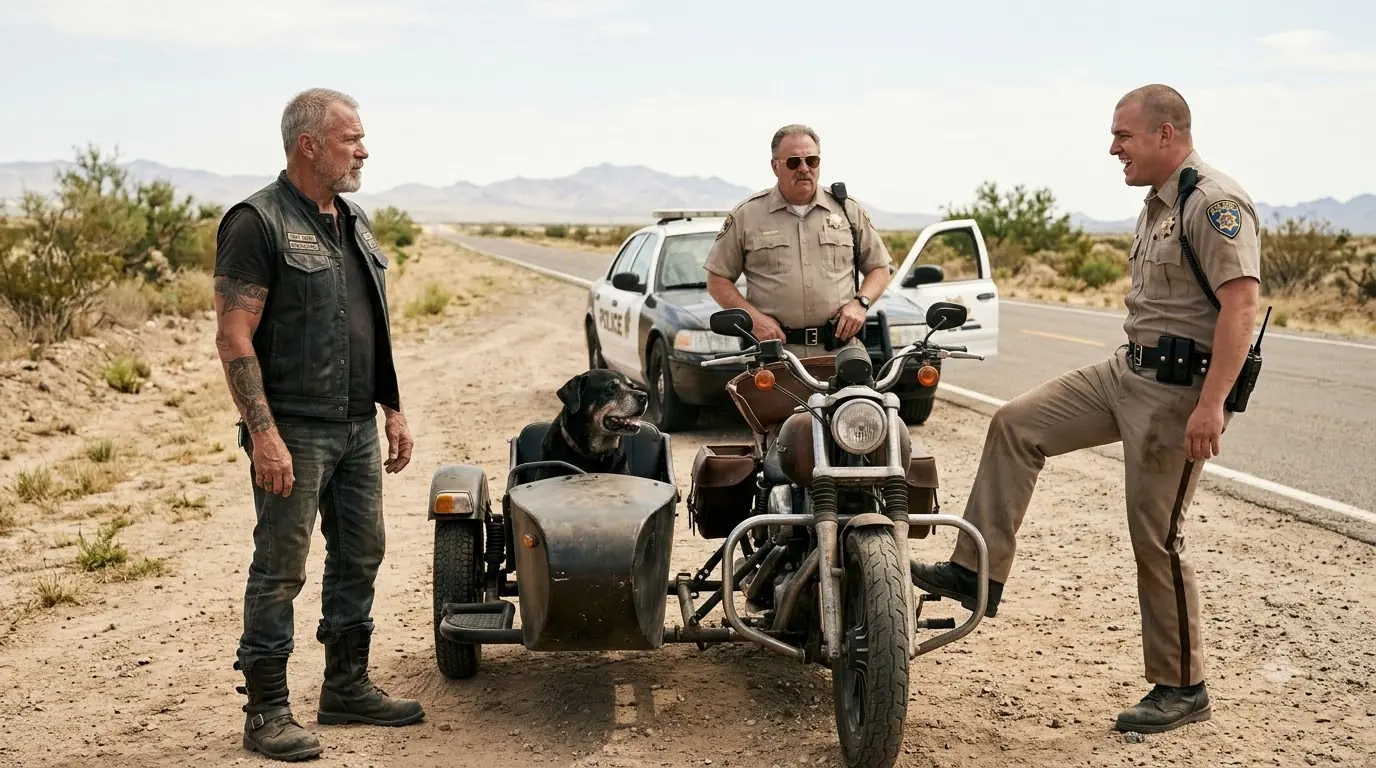
A boot slammed into the side of a motorcycle. The bike tipped, caught, then crashed onto the asphalt. A hand yanked open a saddle bag and dug through it. Out came a thick roll of cash wrapped in a rubber band.
A voice laughed. Another voice told the old man to keep his mouth shut and his hands where they could be seen. He didn't move. He didn't say a word.
He just stood on the shoulder of an empty desert road, watching two men in uniform take everything he had. A big dog sat in the sidecar, ears flat, a low growl building in its chest. One word from the old man kept it still. His name was Cole Mercer.
Most people called him Deacon. And these two officers had no idea what they'd just done. What happens when the desert remembers his name? Let me back up and tell you who was standing on that shoulder.
Cole Mercer was 61 that summer. He wasn't a big man anymore. Time had taken some of the size off him, the way it does to all of us. But he still had those forearms thick as fence posts marked up with old ink gone soft and blue.
He kept a short gray beard. And he had a way of standing still that made younger men nervous, though most of them couldn't have told you why. He rode a strip down Harley with the chrome gone dull and he bolted a sidecar onto it for one reason only. That reason was Diesel.
Diesel was a Rottweiler, 11 years old, gone gray around the muzzle just like his owner. The dog rode everywhere Deacon rode. People out on the back roads knew the two of them by sight. An old man and an old dog moving slow through the heat, minding their own business.
That was the picture that was all most folks ever saw. Here's the thing they didn't see. 30 years before that afternoon, Cole Mercer had put his boot down in the dirt of that county and built something out of nothing. He'd founded a motorcycle club, not a riding group, not weekend guys in matching vests.
A real one with real colors, the kind of patch that made a bar go quiet when it walked through the door. He'd run that chapter as president for the better part of two decades. He'd made peace where there was war and money where there was none. And when it came time, he'd handed it all to younger men, clean on his own terms, which almost never happens in that world.
But stepping back doesn't erase what you built. Deacons still knew every road, every bar, every tow yard, every back office in that stretch of Arizona. And here's what mattered most. Half the county owed him a favor, a debt, a memory of the time he'd shown up when nobody else would.
When a man builds something that big and then walks away quiet, the respect doesn't fade. It waits. It sits there like money in a bank drawing interest. And here's a thing worth understanding about a man like Deacon.
He never called in what he was owed. Not once. He'd help a family through a bad winter and never mention it again. Not to them, not to anybody.