The officer leaned through the open window of the Jeep and smiled at the seventeen-year-old boy as though they were old friends. Then he said, quietly enough that the other cars passing on the highway could not hear, "Get out and show me how brave you are." Eli Turner stared at the silver badge on the man's chest, at the pistol resting on his hip, and at the dark lens of the body camera beneath his name tag. He had never been in a fight in his life, but the officer was offering him one in the middle of a traffic stop, and Eli understood that saying no might not make him safe.
It was a Friday afternoon in October, the kind of bright, dry Georgia day that made the fields along Route 16 look almost golden. Eli was riding in the front passenger seat of his friend Mason Cole's faded green Jeep, with three classmates crowded in the back. They were coming home from helping paint the concession stand at the high school football field, and their hands still carried pale streaks of white primer. The radio was low, the windows were down, and nobody had done anything more dangerous than argue about where to buy milkshakes.
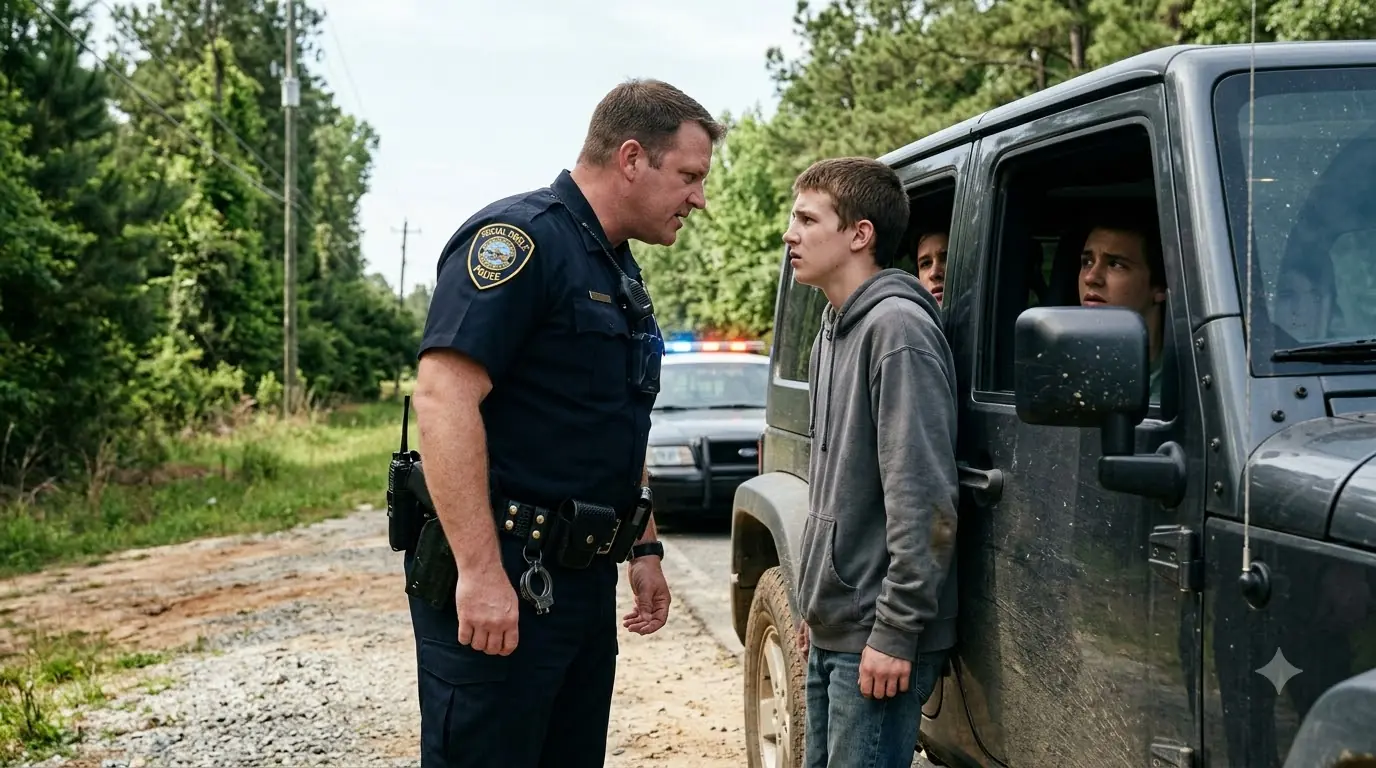
Eli had been in a foul mood before they left the school. His mother, Renee Turner, had called to tell him that her shift at the nursing home had been extended again, which meant she would miss the opening quarter of his little sister's first marching-band performance. At the same time, his best friend Jonah had shown him a video of officers stopping a boy they knew for walking home with a skateboard. Eli was seventeen, tired of watching people in uniforms demand respect while treating teenagers like problems, and not nearly as wise as he would later wish he had been.
As the Jeep passed a patrol car stopped beside a pickup truck, Eli leaned toward the open window and shouted an angry insult at the police. It was a stupid, impulsive thing to do, and he regretted it almost before the wind carried the words away. Mason immediately slapped the steering wheel and told him to shut up. From the back seat, Jonah said the officer had turned around, and then all five boys watched the patrol car pull away from the pickup and swing onto the road behind them.
"Maybe he didn't hear," Eli said, although the flashing blue lights answered him before anyone else could. Mason signaled, pulled into the gravel lot of a closed farm-supply store, and put both hands on the steering wheel. Nobody spoke while the officer approached. Eli could hear a loose piece of metal ticking beneath the Jeep as its engine cooled, and he remembered his mother telling him that being right did not always protect you from somebody determined to be wrong.
The officer's name was Sergeant Wade Mercer. He was forty-six, broad through the shoulders, with close-cropped brown hair and the weathered face of a man who spent most of his working life behind a windshield. He had been with the small Briar County Police Department for fourteen years and liked reminding new recruits that the badge was the only thing keeping the town from becoming a circus. His supervisors called him experienced, but some younger officers called him unpredictable, usually when he was too far away to hear.