The cardboard box was not heavy enough to explain why Evelyn Carter's hands had begun to shake. Inside it were six plates wrapped in yesterday's newspaper, a cast-iron skillet with a broken handle, and two coffee mugs that knocked together whenever she took a step. On its side, in letters she'd written while kneeling on the floor of her old apartment, was the single word KITCHEN. She had carried far heavier things without trembling. What made this afternoon different was that for the first time in nearly three years she was moving somewhere she had chosen rather than somewhere her work had sent her.
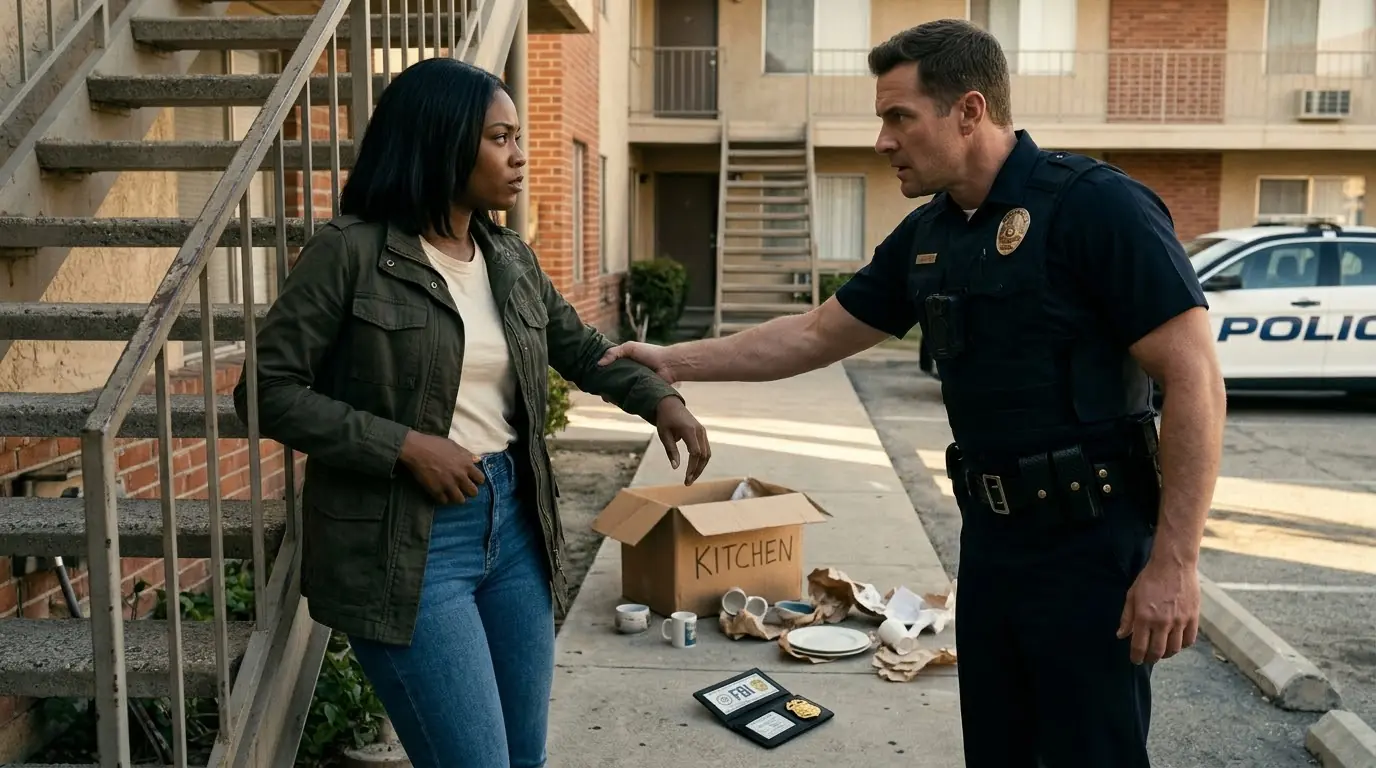
The apartment complex occupied a square block between a dry-cleaning shop and a row of elderly sycamores in a neighborhood on the eastern side of Charlotte, North Carolina. The buildings were ordinary brick and painted concrete. There were faded blue numbers above each doorway, flowerbeds that needed weeding, and a courtyard where children had drawn hopscotch squares on the pavement. Evelyn liked that it did not attempt to look expensive. She had enough experience with expensive rooms to know they could make a person feel small in more elaborate ways than cheap ones.
She was thirty-two years old, a Black woman with closely cropped curls, strong shoulders, and a habit of noticing doors before she noticed furniture. For seven years she had worked as a federal special agent investigating financial crime and public corruption. Her days were filled with bank records, interviews, long evenings explaining transactions to prosecutors, and the occasional confrontation with someone who had assumed money made a person untouchable. At the office her colleagues described her as thorough, patient, and difficult to bluff. At home she misplaced socks, burned rice, and bought houseplants she invariably forgot to water.
A move had become necessary when a long investigation closed and the building where she'd rented near the field office was sold to an investment company. The new lease cost more than she wanted to pay, and after a winter of hotel rooms during an assignment outside the city, she had decided she wanted a neighborhood where people had reasons to sit outside. The Cedar Commons apartments were close to a public library and a grocery store. Her new place had a narrow balcony overlooking a tree and an actual kitchen window. These were minor luxuries, but she'd learned to value things that did not have to be defended in a briefing room.
At four forty-seven on a mild Thursday in September, she stopped beside the courtyard fountain to shift the box against her hip. She had keys in her left hand and the signed lease folded in her canvas shoulder bag. The two people who had promised to help were delayed: her friend Lena Price was stuck at a clinic, and her younger brother Caleb had called to say his borrowed truck had developed a troubling rattle on the interstate. Evelyn had told them both not to rush. She could carry dishes on her own, and there was no prize for arranging a living room before sunset.