Arthur Collins had lived alone in the same small house on the edge of Mason Ridge for almost twenty years. His wife had passed away in the spring of 2006 after a long illness, and their only son had moved to the city for work and rarely came back. Arthur filled his days with small repair jobs for neighbors and with long walks around the old industrial parts of town where he had once worked. He kept to himself mostly and spoke little about the decades he had spent as a mechanic in the big factories that had once lined the river.
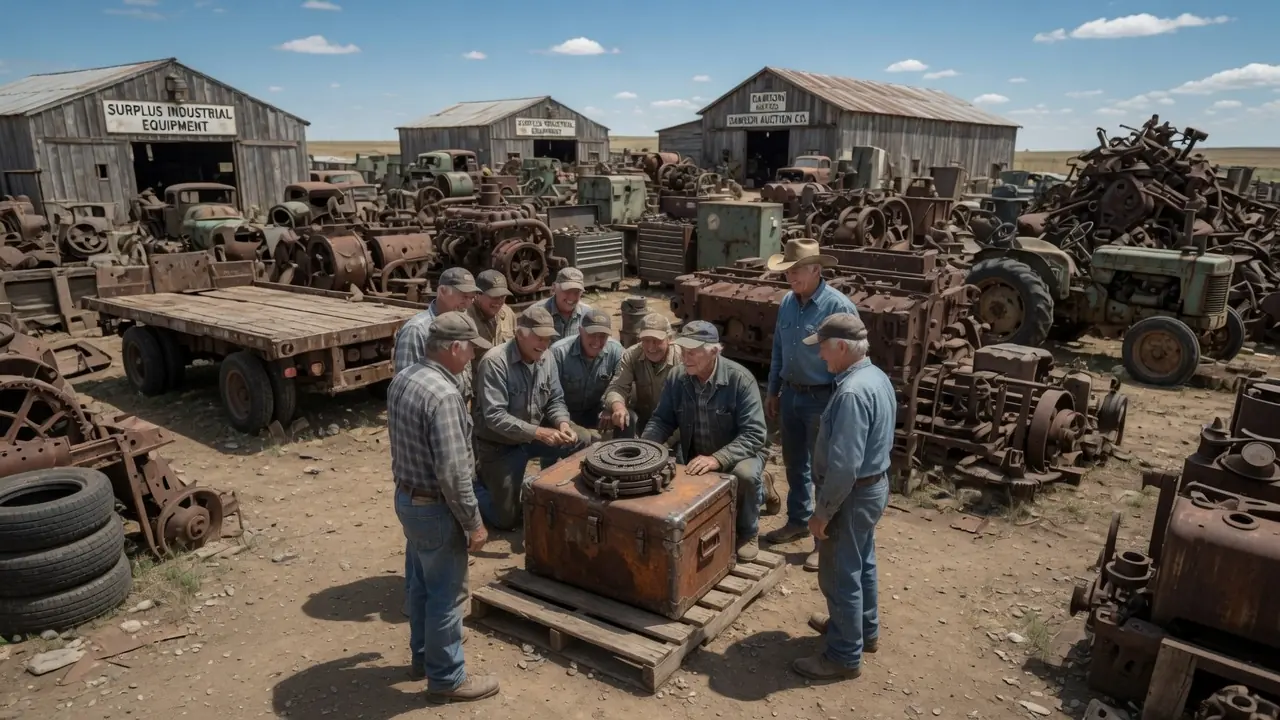
On the day of the auction Arthur arrived early and walked slowly between the rows of items laid out on the grass. He stopped at a large rusted crate that had been welded shut with a thick steel plate. The crate had industrial markings from a plant that had closed in the late 1970s. Arthur ran his hand along one side and felt the weight of the metal. Something about the way it had been sealed told him it was not ordinary scrap. He stayed near it while the bidding began on other lots.
When the auctioneer reached the crate the crowd grew quiet for a moment. Someone in the front row called out that it looked like nothing but trouble and that anyone who bought it would spend more cutting it open than it was worth. Laughter rippled through the small group of bidders. Arthur waited until the auctioneer called for an opening bid. He raised his hand at seventy-five dollars and did not raise it again. No one else bid. The gavel came down and Arthur paid in cash from the worn wallet he kept in his back pocket.
He backed his old pickup close to the crate and used a come-along and wooden blocks to roll it up a pair of planks into the truck bed. The crate was heavier than it looked and it took him almost an hour to secure it with ropes and chains. Several people stood watching and making quiet comments about wasted money and stubborn old men. Arthur ignored them. He drove home at his usual careful speed and parked the truck so the tailgate faced the garage door.
The torch flame cut through the weld in long steady passes. Arthur stopped often to let the metal cool and to check his progress. Sparks landed on the concrete and faded. The smell of hot metal filled the small space. After nearly an hour the last section of the plate fell away and clattered to the floor. Arthur set the torch down and stepped back to look at what he had uncovered. The original door of the crate was now visible, though stiff with rust and age.
He sprayed penetrating oil along every hinge and around the latch. He waited ten minutes and sprayed again. He waited longer this time and tested the handle gently. The door moved a fraction of an inch and then stuck again. Arthur sprayed once more and waited. When he pulled on the handle the second time the door swung open with a long low groan that echoed in the quiet garage. He stopped the door when it was open only a few inches and turned away from the dark space inside.
Arthur walked to the wooden bench against the back wall. He picked up an old address book whose cover was cracked and whose pages were soft with age. He opened it to a page he had marked long ago with a strip of faded ribbon. His finger moved down the list of names written in his own younger handwriting. He found the name he was looking for and lifted the phone from its cradle. He dialed the number with steady fingers and waited while the line rang on the other end.
A voice answered after two rings. It was older and rougher than Arthur remembered but still familiar. Arthur said his name and explained that he had opened a crate from the old plant and that certain papers were still inside. He described one photograph without looking at it again, mentioning the date on the back and a name written in pencil. There was a long silence on the line. Then the voice asked Arthur if he was certain about what he had found.
Arthur said he was certain. He gave his address and said the garage was locked and that no one else had seen inside the crate yet. He said he would wait. The voice on the other end said someone would come and then the line went quiet. Arthur hung up the phone and sat on the wooden stool beside the bench. He did not look back at the open crate. He sat with his hands resting on his knees and listened to the quiet tick of the clock on the wall.
Time passed slowly in the garage. Arthur made a small pot of coffee on the hot plate in the corner and drank it from a chipped mug. He thought about the years he had kept the knowledge of the crate to himself and about the promises he had made to a dying friend. He thought about the men who had laughed at the auction and about how little they knew of the weight that had sat in his truck bed. He did not feel anger toward them. He only felt that the moment he had waited for had finally arrived.
A car turned into the driveway after midnight. Arthur heard the engine stop and two doors open and close. Footsteps crossed the gravel and stopped outside the garage door. Arthur slid the bolt and opened the door just wide enough for the two men to step inside. He closed it again and slid the bolt back into place. The older of the two men looked at Arthur for a long moment before speaking.
The documents were engineering drawings and handwritten reports dated from the late 1970s. They showed design changes and test results for a piece of heavy equipment that had gone into production despite known safety problems. Notes in the margins recorded warnings from engineers who had been told to stay quiet. One set of papers carried the signature of Thomas Reed’s father, a man who had died in an accident involving that same equipment. Thomas read the pages in silence while his son stood beside him.
Arthur watched from the stool. He had known Thomas’s father when they were both young mechanics at the same plant. They had worked on the same machines and had shared the same concerns about shortcuts the company was taking. Arthur had helped load the crate onto the truck the night after the accident. He had been told it contained only routine records and spare parts. He had not known until years later that it also held the evidence that could have changed everything.
Thomas Reed looked up from the papers. His voice was steady but quiet when he asked Arthur why he had waited so long to open the crate. Arthur explained that he had tried once, many years earlier, and had been warned to stay silent. He had a wife and a young son at the time and he had chosen to protect them. He had kept the crate in storage through moves and through the years after his wife died. He had opened it only when he felt the time was finally right.
Michael Reed asked what Arthur wanted now that the papers were in the open. Arthur said he wanted the truth told and the families who had lost people to know what had really happened. He said he did not want money or attention for himself. He had lived quietly for decades and that was enough. He only wanted the documents to reach the people who could finally make use of them.
Thomas and Michael worked through the night photographing every page and making notes. Arthur made more coffee and brought out extra chairs. The three men spoke in low voices about the plant and about the men they had known there. When morning light came through the small window Arthur opened the garage door and let fresh air into the space. Thomas Reed closed the last folder and looked at Arthur across the workbench.
He said the documents would be enough to reopen questions about his father’s death and about the company’s decisions at the time. He asked if Arthur would speak with lawyers if it became necessary. Arthur said he would. He had already decided that the story would be told. Thomas and Michael gathered the papers and prepared to leave. Before they went Thomas asked Arthur if he wanted anything in return for what he had done. Arthur shook his head and said he only wanted the truth to stand on its own.
In the days that followed Thomas Reed and his son met with lawyers and with journalists who had covered industrial accidents in the past. The documents from the crate were examined by experts who confirmed their authenticity and their importance. Public attention grew as the story appeared in local papers and then in larger outlets. Arthur gave one brief interview in which he spoke only about the importance of records and about the men who had worked in the old plant. He asked that the focus remain on the families who had waited for answers.
The company that had once owned the plant issued statements denying any wrongdoing and claiming that all records from that era had been lost. Investigators found otherwise. The documents Arthur had kept showed a pattern of ignored warnings and rushed production that had contributed to multiple accidents. Families who had accepted small settlements years earlier now had new information to bring forward. Legal proceedings began slowly but with steady momentum.
Arthur continued his quiet life in the small house. He still took on small repair jobs for neighbors and still walked in the evenings. Thomas Reed and Michael visited several times. They brought copies of new documents they had found and asked Arthur questions about people and events from the old days. Arthur answered what he could and listened when they spoke about the progress of the investigation. He did not seek any role in the legal process beyond providing what he knew.
The big twist came during one of those visits when Thomas Reed brought an additional folder he had received from an archivist who had been searching company records. The folder contained internal memos showing that Thomas Reed’s own uncle, a mid-level manager at the plant, had been the one who arranged for the crate to be moved and sealed on the night of the accident. The uncle had disagreed with the decision to cover up the safety problems but had been too afraid to speak out directly. He had hidden the evidence intending to retrieve it later when it was safer. He had died before he could return for the crate.
Arthur listened to the new information without surprise. He had always suspected that someone inside the company had tried to preserve the truth even while others worked to bury it. He told Thomas that his uncle had been a decent man who had been caught between loyalty to the company and loyalty to the truth. Thomas nodded and said he wished he had known sooner. The discovery added another layer to the story but it did not change what Arthur had already done by opening the crate and making the call.
The investigation and the resulting legal actions brought settlements for several families and led to new safety standards for similar equipment. The company that had once been involved faced public criticism and financial penalties but continued to operate under closer scrutiny. Arthur received no financial benefit from any of it and asked for none. He continued to live simply and to help neighbors with small mechanical problems when they asked.
Thomas Reed and Michael became regular visitors over the following years. They helped Arthur sort through the remaining contents of the crate and made arrangements for the historical documents to be preserved in a university collection. On one visit Michael asked Arthur why he had chosen to open the crate after so many years of keeping it sealed. Arthur answered that he had promised a dying friend he would one day make sure the truth came out and that he had finally felt the time was right. He said he had not wanted to carry the knowledge alone any longer.
Arthur Collins lived another nine years after the night he opened the crate in his garage. He died in his sleep on a quiet spring morning with the address book still on the table beside his bed. Thomas Reed and Michael Reed were among those who attended the small funeral. They placed a simple plaque on the wall of the garage that read: He kept what others tried to forget. The crate itself was donated to a local historical society where it was displayed with a short account of how an old mechanic had paid seventy-five dollars for a chance to reopen a story that had been buried for decades.
The story of Arthur Collins and the rusted crate became part of the quiet history of Mason Ridge. People who had once laughed at the auction now spoke of it with a different tone. Younger residents who had never known the old plant heard the story in school projects and in conversations with their grandparents. The documents from the crate helped bring a measure of justice to families who had waited a long time for answers. Arthur had lived long enough to see that happen and to know that the promise he had carried for so many years had finally been kept.
In the years after Arthur’s death Thomas Reed continued to visit the small house that now belonged to a young family who had bought it from Arthur’s estate. He sometimes stood in the garage and looked at the empty space where the crate had once sat. He thought about the quiet man who had waited decades to open a door and make a single phone call. The big twist of the hidden documents and the unexpected connection through Thomas’s uncle had not only brought answers but had also shown how one person’s patience could change the ending of a story that others had tried to close long before. The legacy of that night in the locked garage lived on in the records that were now public and in the families who finally had more of the truth than they had been given before.