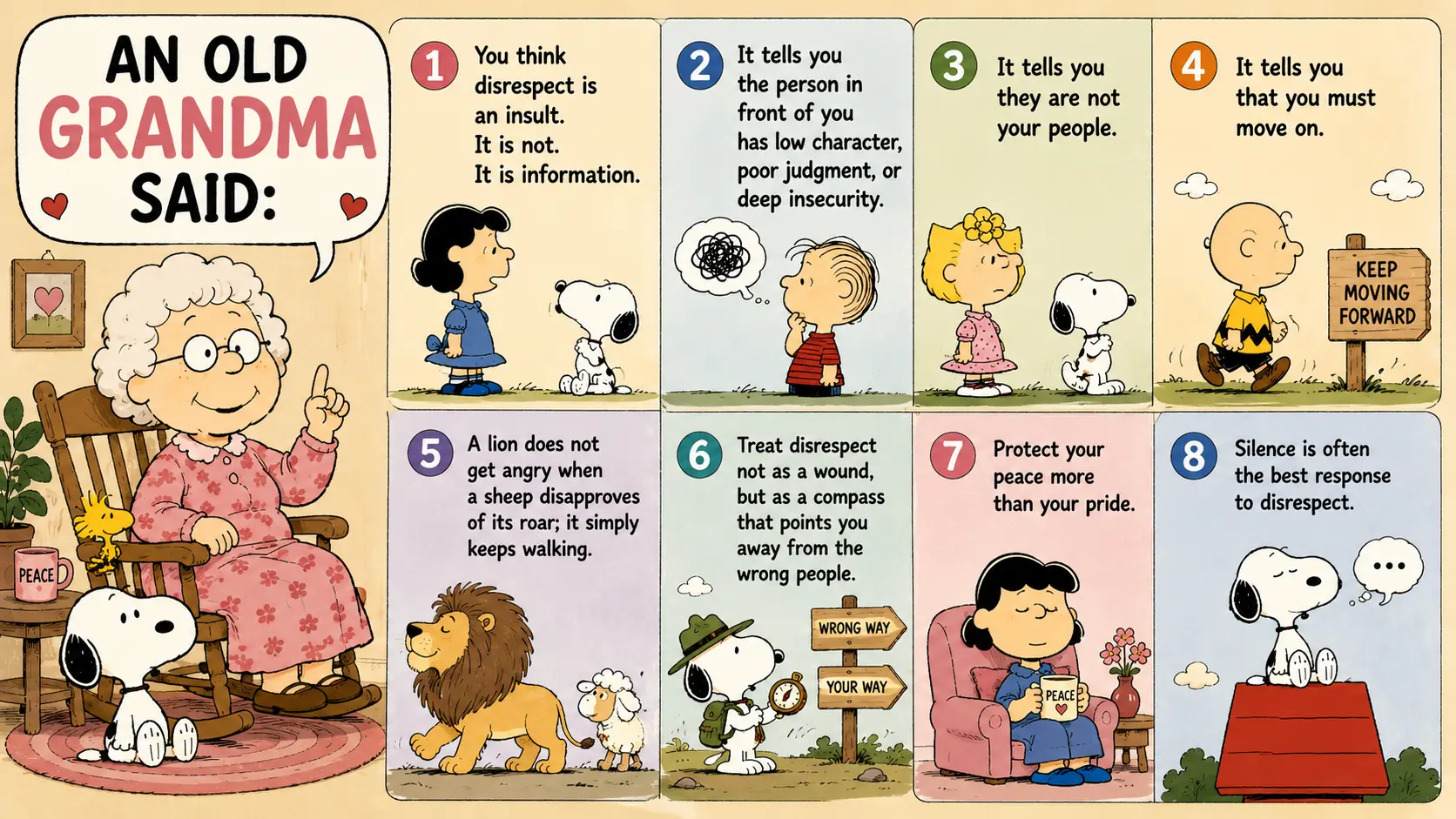
1. "You think disrespect is an insult. It is not. It is information."
Assessment: Largely true, with important context.
Disrespect often provides valuable information about a person's communication style, emotional maturity, or current emotional state. Rather than immediately taking disrespect as a reflection of your worth, it can be more helpful to ask:
- Is this person's behavior consistent?
- Are they under unusual stress?
- Is this part of a larger pattern?
Psychologists call this cognitive reappraisal—viewing difficult situations from a different perspective to reduce emotional distress. Not every disrespectful comment deserves an emotional reaction.
More accurate interpretation:
Disrespect often reveals useful information about a situation, but it should be evaluated in context rather than interpreted as a judgment of your value.
2. "It tells you the person in front of you has low character, poor judgment, or deep insecurity."
Assessment: Sometimes true, but not always.
Disrespectful behavior can stem from:
- Poor emotional regulation
- Chronic stress
- Low empathy
- Insecurity
- Narcissistic traits
- Learned communication patterns
However, it is impossible to accurately diagnose someone's personality based on a single interaction.
Even emotionally healthy people may occasionally speak harshly when overwhelmed, exhausted, or frightened.
What matters most is whether disrespect is:
- Frequent
- Intentional
- Persistent
- Followed by accountability and genuine repair
More accurate interpretation:
Repeated disrespect may reflect emotional immaturity, poor communication skills, or unresolved personal struggles, but one incident alone does not define a person's character.
3. "It tells you they are not your people."
Assessment: Sometimes true, but should not be applied too quickly.
Healthy relationships are built on mutual respect.
If someone repeatedly ignores your boundaries, humiliates you, manipulates you, or dismisses your feelings despite honest conversations, they may not be capable of maintaining a healthy relationship with you.
However, healthy relationships also include:
- Misunderstandings
- Conflict
- Repair
- Apologies
- Growth
A single disagreement does not necessarily mean someone does not belong in your life.
More accurate interpretation:
When disrespect becomes a consistent pattern despite healthy communication, it may be a sign that the relationship is no longer emotionally healthy.
4. "It tells you that you must move on."
Assessment: Sometimes—but not always.
Leaving is sometimes the healthiest choice, particularly in relationships involving:
- Emotional abuse
- Repeated humiliation
- Manipulation
- Chronic boundary violations
- Psychological control
However, moving on should not be the automatic response to every conflict.
Healthy relationships often improve through:
- Honest conversations
- Clear boundaries
- Accountability
- Mutual willingness to change
Psychological flexibility means knowing when to repair a relationship and when to let it go.
More accurate interpretation:
If respectful communication repeatedly fails and harmful behavior continues, moving on may become the healthiest decision.
5. "A lion does not get angry when a sheep disapproves of its roar; it simply keeps walking."
Assessment: A metaphor with useful psychological meaning.
Emotionally secure people do not seek validation from everyone they encounter.
Research on self-esteem and emotional regulation suggests that people with a stable sense of self are generally less affected by random criticism from strangers or people whose opinions they do not value.
The important distinction is between:
- Constructive feedback from trusted people
- Baseless criticism from those who neither know nor respect you
Ignoring every criticism would be unhealthy, but becoming emotionally overwhelmed by every opinion is equally harmful.
More accurate interpretation:
Choose carefully whose opinions deserve your emotional energy.
6. "Treat disrespect not as a wound, but as a compass that points you away from the wrong people."
Assessment: Helpful when applied thoughtfully.
Repeated disrespect often provides important information about relationship quality.
Healthy boundaries involve recognizing patterns such as:
- Repeated belittling
- Mockery
- Manipulation
- Contempt
- Lack of accountability
These behaviors often predict unhealthy relationships.
However, occasional mistakes followed by sincere apologies and changed behavior are part of normal human relationships.
More accurate interpretation:
Repeated disrespect can help identify relationships that may no longer support your emotional well-being.
7. "Protect your peace more than your pride."
Assessment: Strongly supported by psychological research.
Many conflicts continue because people prioritize being right over preserving emotional well-being.
Psychological flexibility, emotional intelligence, and resilience all involve asking:
- Is this argument worth my energy?
- Will responding improve the situation?
- What outcome am I hoping to achieve?
Protecting your peace does not mean avoiding all conflict.
Instead, it means responding intentionally rather than reacting impulsively.
It also includes:
- Setting healthy boundaries
- Saying no when necessary
- Choosing where to invest emotional energy
More accurate interpretation:
Prioritize your emotional well-being over winning unnecessary arguments.
8. "Silence is often the best response to disrespect."
Assessment: Often true—but not universally.
Silence can be powerful because it prevents emotional escalation and avoids rewarding provocative behavior.
It is particularly useful when dealing with:
- Internet trolls
- People seeking attention
- Manipulative arguments
- Verbal baiting
However, silence is not always the healthiest response.
In healthy relationships, respectful communication is often more effective than withdrawal.
If someone repeatedly crosses your boundaries, calmly expressing your feelings can strengthen the relationship.
Silence should not become avoidance when important issues need to be addressed.
More accurate interpretation:
Choose your response intentionally. Sometimes silence protects your peace; other times, calm and respectful communication is the healthiest response.
The Bigger Psychological Lesson
The healthiest response to disrespect is neither immediate confrontation nor automatic withdrawal. Instead:
- Pause before reacting.
- Evaluate whether the behavior is a one-time mistake or a repeated pattern.
- Set clear and respectful boundaries.
- Protect your emotional well-being without assuming the worst about every person.
- Invest your energy in relationships where respect, accountability, and kindness are mutual.
True emotional maturity is not measured by how strongly you react to disrespect—it is measured by your ability to recognize unhealthy patterns, regulate your emotions, and choose relationships that consistently support your well-being.