The first thing Daniel Rourke noticed about the waitress was that she kept looking toward the back booth whenever somebody opened the door. He had been riding long enough to recognize the difference between ordinary nervousness and the watchfulness of somebody responsible for another life. Outside the diner, his old Harley cooled beneath a flickering neon sign, and the California night smelled of wet asphalt and dust. Inside, a little boy slept beneath two winter coats while his mother carried coffee to strangers who hardly looked at her face. Daniel had come to Bakersfield expecting nothing more complicated than breakfast at two in the morning. Before daylight, a stranger would bleed to protect his motorcycle, and he would be forced to remember a promise he had failed to keep thirty years earlier.
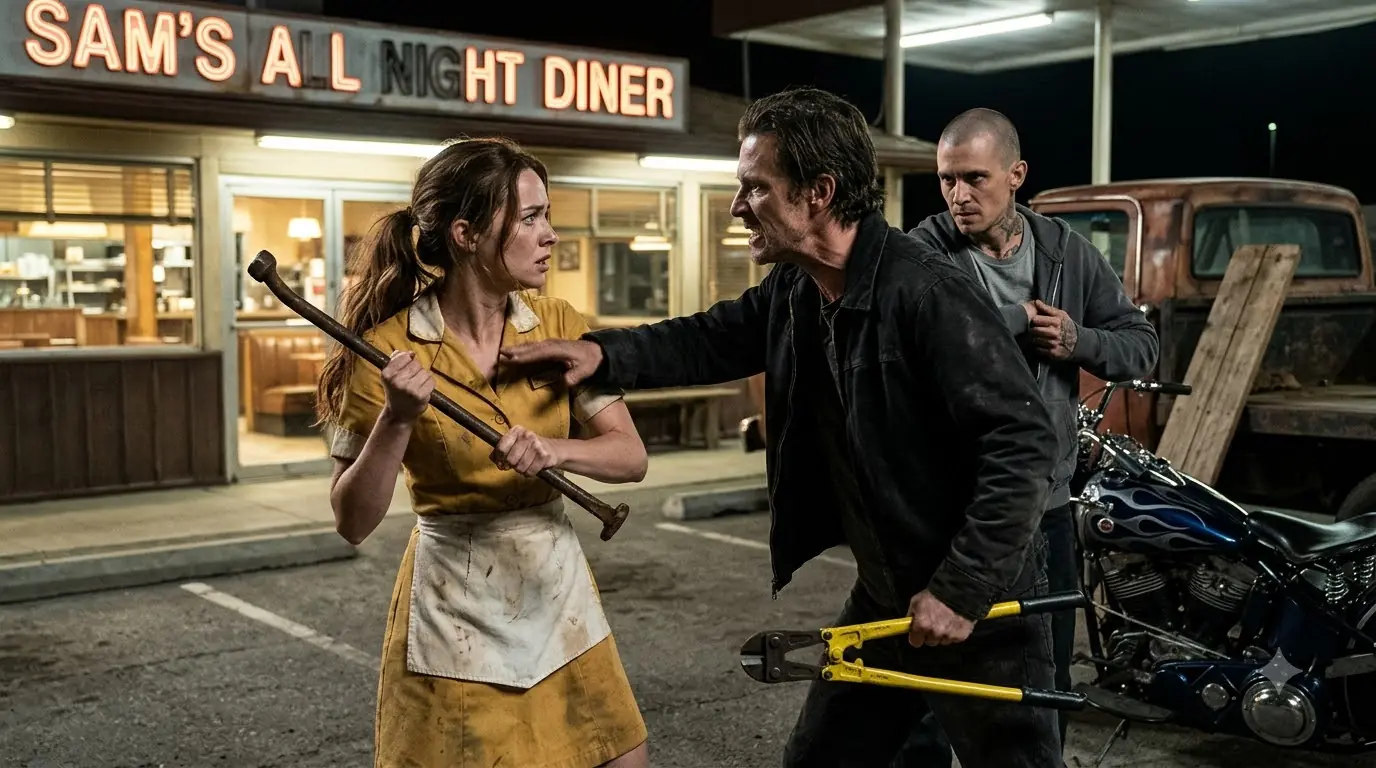
The diner stood beside an older stretch of highway where freight traffic peeled away from the interstate to find inexpensive fuel and a place to rest. Its sign had once said SAM'S ALL NIGHT DINER, but the final letter had failed years ago, leaving a pale red glow that washed the parking lot unevenly. Trucks came and went between midnight and dawn, bringing drivers with sore backs, night-shift workers with tired eyes, and occasional travelers who had mistaken the exit for somewhere more promising. The dining room smelled of coffee, fryer oil, and the lemon cleaner that never quite disguised either one. Most nights, the radio played softly beneath the refrigerators, and the windows held the reflections of people who wished they were somewhere else.
Rachel Bennett had worked there almost three years. At twenty-eight, she could balance four plates along one arm, remember the preferences of a dozen regular customers, and tell whether an approaching car meant trouble by the way it stopped outside. Her yellow uniform had faded at the shoulders, and the soles of her work shoes had started to separate near the toes. She had learned to smile without promising conversation, to be friendly without inviting familiarity, and to add numbers in her head while somebody complained about the price of a refill. None of those abilities was what she had imagined for herself at eighteen, but each helped keep the rent paid and her little boy fed.
Her son, Oliver, was six. He liked dinosaur books, plastic fire trucks, and asking questions that adults needed several minutes to answer properly. He also had asthma that could turn an ordinary cold into a frightening night at an urgent care clinic. His doctor had given Rachel a written treatment plan, two inhalers for different purposes, and instructions about symptoms that required immediate medical attention. What the doctor could not give her was reliable health insurance, affordable childcare, or a quiet place for Oliver to sleep on the nights when the woman who usually watched him was ill. That Tuesday, Rachel's sitter had called at nine with a fever, leaving Rachel to choose between missing a shift and bringing her son along.
She had asked the owner before doing it. Martin Kessler, who had inherited the diner from an uncle and treated it like an investment he regretted, said he would allow one night as long as Oliver stayed out of sight and made no noise. Rachel did not like the arrangement. A diner was not