The first truck arrived before sunrise, carrying six tons of grapes that nobody at the largest vineyard in the Hudson Valley wanted. They came in wooden produce bins, some split open, some crushed by their own weight, others perfectly sound but too ripe to meet a winery's specifications. The driver backed toward a leaning equipment shed and looked at the skinny young man waiting beside it. "You sure this is the right address?" he asked. The young man, nineteen-year-old Caleb Dawson, nodded and pointed to the gravel he had spread himself. "Put them there, please. Leave enough room for another truck."
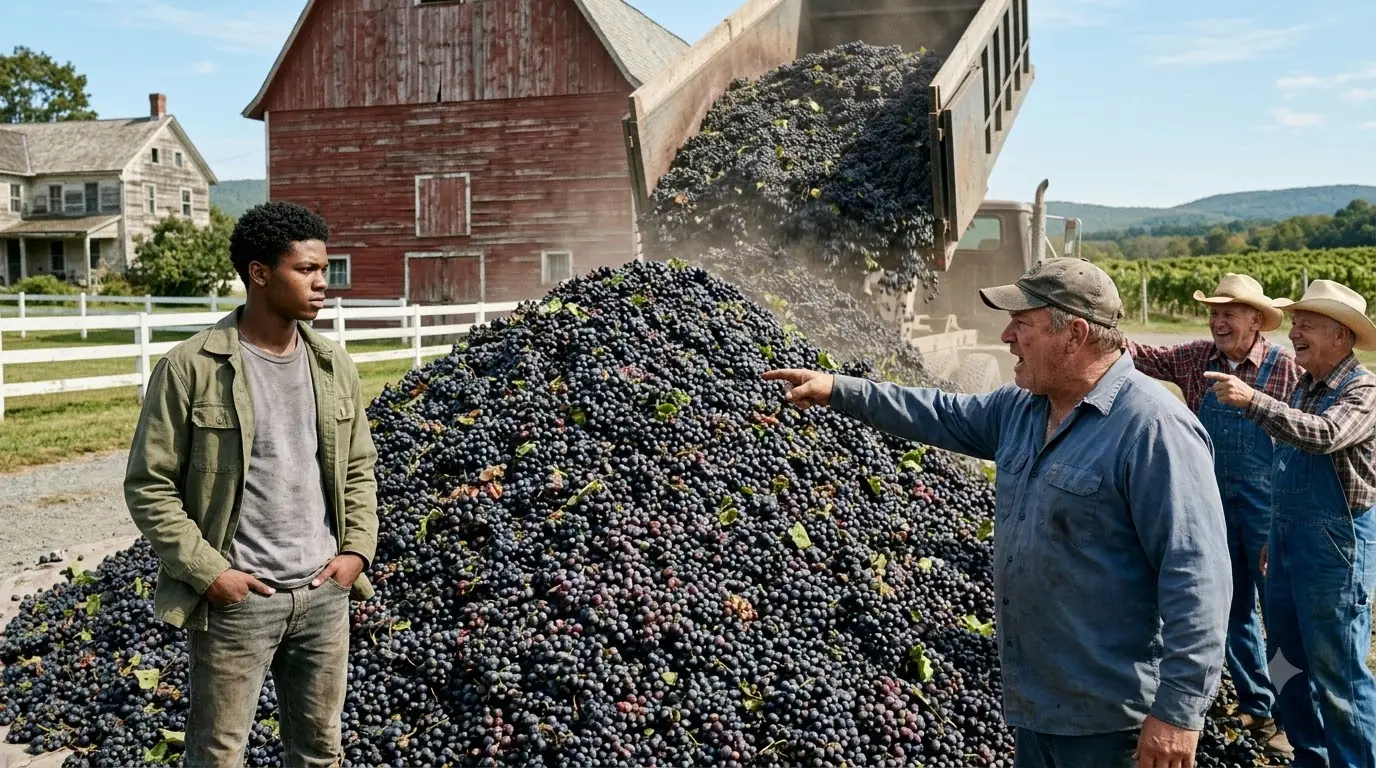
The driver stared at the bins and then at the little farmhouse whose paint had peeled down to gray wood. "Your place is going to smell like a brewery by supper," he said. Caleb did not disagree. He had spent the previous three nights digging drainage channels and setting aside damaged fruit for compost. His boots were wet, his shoulders hurt, and an overdue tax notice lay folded in his jacket pocket. But as the first bins touched the ground, he remembered his grandmother's hands working over a pot of bubbling fruit, and for the first time in months the future seemed to contain something other than a deadline.
Two men from the vineyard stood beside the truck, watching him sort the fruit. One wore a spotless jacket bearing the company's crest, and the other held a clipboard. "Six tons for one boy," the man with the clipboard said, just loudly enough for Caleb to hear. "He'll have this dumped by Sunday and sell the place by spring." The supervisor laughed and glanced at his watch. Caleb lifted one cluster, inspected its broken skin, and set it in a separate bin. He knew they saw a boy collecting garbage. He was not yet sure whether they were wrong.
Eighteen months earlier, Caleb had crossed a stage at his high-school graduation with a borrowed gown slipping from one shoulder. Around him, classmates talked about colleges, apprenticeships, and places far enough away that nobody would know their childhood mistakes. His best friend, Trevor Hale, already had a scholarship to a community college outside Albany. Caleb had been offered a place in a training program for industrial maintenance, but accepting meant leaving his grandmother, Ruth Dawson, alone in the house where she had raised him. She told him to go. He told her there would be time in January. Neither of them knew that January would come without her.
Ruth had been born in rural Georgia and moved north as a young woman with a suitcase, a Bible, and three slips from her mother's muscadine vine. Those slips never survived the cold, but she tried again with cold-hardy varieties until a crooked trellis stood behind her kitchen. A harvest of small, ugly grapes became jelly, syrup, pickles, and a tart vinegar she kept in mismatched bottles. People sometimes laughed at the spotted fruit she bought cheaply at the market. She would hold up a cracked grape, smell its sweetness, and tell Caleb that a thing could become useful at the very moment the world decided it was finished.