Ethan Whitmore had never been hungry in his life.
Not truly hungry.
He had skipped breakfast because the hotel buffet did not have the smoked salmon he liked. He had complained when the private chef at home made pasta two nights in a row. He had once thrown away a full lunch because the sauce touched the salad.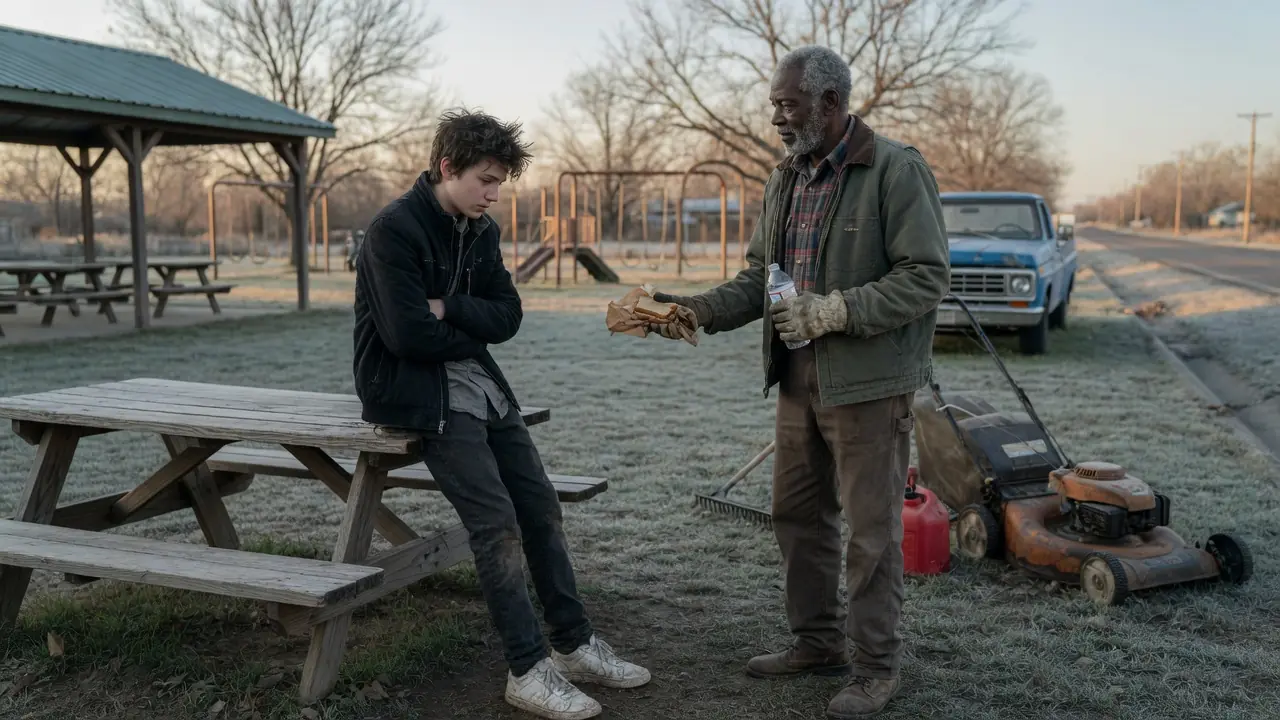
But he had never known the kind of hunger that folded itself into your stomach and stayed there like a fist.
He had never known cold that did not end when someone adjusted a thermostat.
He had never known fear that could not be solved by calling someone richer, older, stronger, or more responsible than himself.
At sixteen years old, Ethan knew the price of everything and the value of almost nothing.
He knew his sneakers cost three hundred dollars.
He knew his jacket had come from a limited holiday release.
He knew the gaming phone in his hand was newer than anything his classmates had.
He knew his parents’ vacation house had six bedrooms and a dock.
He knew the name of every private club where his father did business.
He did not know how much a bus ticket cost.
He did not know how to wash his own clothes.
He did not know what it meant to earn a meal.
He did not know that a man could be poor and still have more dignity than anyone in a marble office.
He would learn.
But the lesson began in the ugliest way possible.
The rest stop sat quiet under the late afternoon sun, just another concrete island along the interstate where travelers grabbed coffee, used the bathroom, bought snacks they did not need, and stretched their legs before driving on.
Inside the small convenience store, Ethan sat slouched in a plastic chair near the window, earbuds jammed in his ears, thumbs moving across his phone screen. Across from him, his feet rested on another seat.
Nike limited edition sneakers.
Three hundred dollars a pair.
Dirty soles right on the furniture.
His designer jacket hung over the chair beside him, careless and expensive, the kind of jacket meant to look casual on someone who had never been casual about money in his life.
His parents, Richard and Caroline Whitmore, stood near the coffee machines. Richard was tall, broad-shouldered, and dressed in the effortless weekend clothes of a wealthy man who still looked like he belonged in a boardroom. Caroline wore a cream wool coat and a tired expression she had been hiding for years behind social smiles and charity luncheons.
They glanced toward their son.
Ethan did not look up.
He never looked up anymore.
Not when they entered a room.
Not when someone spoke to him.
Not when his mother asked him a question.
Not unless the world somehow managed to interrupt whatever game, video, or message had captured his attention.
“Excuse me, young man.”
A rest stop attendant stood beside the table, carrying a small tray with a wet cloth and a spray bottle. She looked to be in her late fifties, with gray threaded through her dark hair and tired lines around her eyes.
Ethan pulled out one earbud without actually looking at her.
“What?”
“I need to wipe down this table. Could you move your feet, please?”
He rolled his eyes.
“My feet aren’t on the table.”
“They’re on the seat.”
“So?”
The attendant’s face tightened, but she kept her voice polite.
“So other people sit there.”
Ethan gave a theatrical sigh and shifted one foot half an inch, not enough to help.
The woman leaned around him carefully, trying to clean what she could without touching his shoes. As she stretched to reach the far corner of the table, her elbow caught the edge of Ethan’s open soda can.
The can tipped.
Dark cola spilled across the plastic surface and ran over the edge.
A few drops splashed onto Ethan’s sneakers.
He shot up as if she had poured acid on him.
“Are you serious right now?”
The attendant froze.
“I’m so sorry. I didn’t mean—”
“You didn’t mean to?” Ethan’s voice rose loud enough that several travelers turned. “Do you have any idea how much these cost?”
“I said I was sorry. Let me get napkins.”
“Of course you don’t know how much they cost,” Ethan snapped. “You probably make minimum wage.”
The woman’s face flushed.
Caroline turned sharply from the coffee counter.
Richard’s jaw hardened.
The attendant grabbed napkins and bent as if to wipe the drops from the shoes, but Ethan jerked his foot away.
“Don’t touch them. You’ve done enough damage.”
“Ethan.”
His father’s voice cut through the rest stop.
Ethan turned, irritated, as his parents approached.
“What?”
“That is enough,” Richard said.
“She ruined my shoes.”
“It was an accident,” Caroline said quietly.
“She should watch what she’s doing. Isn’t that literally her job?”
Caroline looked at the attendant, whose eyes had dropped to the floor.
“I’m sorry,” Caroline said softly.
The attendant shook her head.
“It’s fine.”
“No,” Richard said, his gaze fixed on Ethan. “It is not fine. Apologize.”
Ethan stared at him.
“Apologize for what?”
“Now.”
His father’s tone left no room for argument.
For one long moment, Ethan looked as if he might refuse simply because someone expected obedience. Then he turned toward the attendant with resentment burning in his eyes.
“Fine,” he muttered. “Whatever. Sorry.”
The word came out flat and empty.
It was not an apology.
It was a sound.
The attendant nodded quickly, gathered the wet napkins, and hurried away.
Caroline closed her eyes for half a second.
“Your behavior is unacceptable.”
Ethan scoffed.
“You’re overreacting.”
“We taught you better than this,” she said.
“No, you taught me not to let people ruin my stuff.”
Richard stepped closer.
“People are not beneath you because they work in service.”
“I didn’t say they were beneath me.”
“You implied it clearly enough.”
Ethan laughed once, sharp and ugly.
“Oh, come on. We’re paying customers. Money talks, right? Isn’t that what you always say in your business meetings?”
Something changed in Richard’s face.
Something quiet.
Something pained.
Ethan did not notice.
He pulled out his wallet, thick with bills, because his parents had given him spending money for the trip and Ethan liked carrying cash even when he rarely used it. He peeled off three twenties and tossed them onto the still-wet table.
“There,” he said. “That should cover it. Maybe she can buy herself some coordination lessons.”
Caroline inhaled sharply.
Richard did not move.
For the first time, he looked less angry than afraid.
Afraid of what his son was becoming.
Ethan shoved the wallet back into his pocket, jammed both earbuds in, grabbed his jacket, and walked away before either parent could respond.
The automatic doors slid open.
Cold air rushed in.
He stepped outside into the parking lot, anger buzzing in his chest like electricity.
Through the glass doors behind him, Richard and Caroline stood at the table in silence.
Caroline’s eyes were wet.
Richard looked toward the attendant, who had disappeared behind the counter, then toward the money Ethan had thrown down like a slap.
“This can’t continue,” Caroline whispered.
“I know.”
“He’s cruel, Richard.”
The word hurt them both.
Richard took out his phone.
His fingers moved slowly over the screen.
He typed a message and sent it.
Across the rest stop, a man in a plain gray jacket lowered his newspaper.
His name was Marcus Reed, and he had worked private security for Richard Whitmore’s company for nearly a decade. He had once been a police officer before an injury pushed him into private work. He was quiet, observant, and trusted with delicate problems.
This was the most delicate one yet.
His phone buzzed.
Marcus read the message.
We’re moving forward. Watch him. Do not intervene unless necessary.
Marcus looked through the window.
Ethan was pacing near the side of the building, still furious, still completely unaware that his life was about to split into before and after.
Marcus folded the newspaper.
Then he stood.
Richard and Caroline picked up their coffee cups, gathered their things, and walked toward the exit. But instead of turning left toward the area where Ethan had gone, they turned right toward the far end of the parking lot.
Their black SUV pulled out three minutes later.
Caroline cried silently in the passenger seat.
Richard kept both hands on the wheel and looked straight ahead.
“This is wrong,” she whispered.
“Maybe,” Richard said. “But what we’re doing now is wrong too. Letting him become this.”
“He’s still our child.”
“Yes,” Richard said, voice rough. “And that is why someone is watching him.”
Back at the rest stop, Marcus walked to his car, started the engine, and backed into a spot with a clear view of the building entrance.
Then he waited.
Fifteen minutes later, Ethan came back inside.
His anger had cooled enough that he realized the time. They needed to get back on the road if they were going to reach the hotel before dark.
He pushed through the automatic doors, scanning the seating area.
His parents were not at the table.
He checked the coffee counter.
No.
The restrooms.
Empty.
The small knot of worry that formed in his stomach was unfamiliar enough that he mistook it for irritation.
He walked quickly to the parking lot.
Their car was gone.
Ethan stood in the empty parking space, staring at the oil stain on the pavement where the SUV had been.
He pulled out his phone, his fingers suddenly clumsy.
He called his mother.
It rang four times, then went to voicemail.
He tried his father.
Same thing.
“This isn’t funny,” he said out loud to no one.
He looked around the parking lot expecting to see the SUV circling back. His parents would probably roll down the window, give him some lecture about respect, gratitude, and manners. Then he would pretend not to listen, and everything would go back to normal.
But five minutes passed.
Then ten.
The sun dropped lower, casting long shadows across the pavement. A cold wind picked up, cutting through his designer jacket, which looked good but was not actually warm.
Ethan called again and again.
Voicemail every time.
“They’re just trying to scare me,” he muttered. “They’ll come back.”
But as the twentieth minute passed, then the thirtieth, the certainty in his voice began to crack.
He sat down on the curb, phone clutched in both hands, watching every car that pulled into the lot.
None of them belonged to his parents.
Three rows back, Marcus adjusted his rearview mirror and settled in.
His instructions were clear.
Watch.
Stay close.
Intervene only if Ethan was in real danger.
Let the boy learn.
Marcus poured coffee from a thermos and sighed.
“This,” he muttered, “is going to be a long night.”
By the time the sun touched the horizon, Ethan had called his parents forty-seven times.
His phone battery showed fifteen percent.
The rest stop was emptying out as dinner hour approached. Travelers either settled in for the night at nearby motels or pushed through to their destinations. The small convenience store became quieter. The lights inside looked harsher as the world outside turned blue with cold.
Ethan stood up from the curb, legs stiff.
Fine.
If his parents wanted to play this game, he would just get home himself.
How hard could it be?
He had money.
He had a phone.
He was not helpless.
He walked back inside and approached the counter, where a different attendant was working the evening shift, a woman with tired eyes and a paperback book open beside the register.
“Excuse me,” Ethan said. “How do I get to the city from here?”
The woman looked up.
“Which city?”
“The city. Downtown. The financial district.”
She blinked.
“Honey, there are three major cities within a hundred miles of here. You need to be more specific.”
Ethan’s jaw tightened.
He pulled out his phone and showed her his home address.
The woman leaned closer.
“Oh. That’s a good ways from here. Maybe eighty miles, give or take. You’ll need to catch a county bus into town first, then transfer to the metro line.”
“Where’s the bus stop?”
“About two miles down the access road.”
“Two miles?”
“Yes.”
“Can I get a taxi?”
“You can try, but out here at this hour?” She gave a sympathetic shrug. “Maybe. Maybe not.”
He checked his phone.
Twelve percent.
“And the bus?”
“The last one already left. Next one’s not until six tomorrow morning.”
Ethan stared at her.
“How am I supposed to get there?”
“Walk, I guess. Or wait until morning. There’s a motel another mile past the bus stop if you need somewhere to stay.”
He looked at her as if she had suggested crossing the desert.
“A mile past the bus stop?”
“Yes.”
“That’s three miles.”
The woman’s expression said she had no idea what to do with a teenager who considered three miles a personal attack.
Ethan turned and pushed outside.
The temperature had dropped with the sunset. His breath came out in small clouds. He started walking along the shoulder of the access road, his expensive sneakers crunching over gravel.
Within ten minutes, his feet hurt.
The sneakers had been designed for looking rich, not walking along a rural road in freezing weather.
Headlights swept past him.
Car after car.
None stopped.
Of course they did not stop.
Ethan felt insulted by that, which was ridiculous. He would not have stopped for himself either. Not yesterday. Not if he had seen a teenager trudging along the shoulder with expensive shoes and a bad attitude.
After thirty minutes, he saw the bus stop shelter ahead, a dim light illuminating the bench inside.
He practically collapsed onto it.
His heels burned. His toes were numb. His stomach had begun to ache.
“Rough day?”
Ethan jumped.
A man sat at the far end of the bench, half-hidden in shadow. He was maybe forty, wearing a rumpled jacket and a friendly smile. He looked like the sort of person adults warned kids about and the sort of person Ethan was too desperate to distrust.
“Yeah,” Ethan said. “You could say that.”
“Waiting for the morning bus?”
“I guess so.”
“That’s a long wait. Cold night too.”
The man studied him.
“You look like you’ve got somewhere important to be.”
“Home,” Ethan said. “I just need to get home.”
“Where’s home?”
Ethan told him.
The man whistled low.
“That’s a trek. Bus will get you partway, but you’re looking at multiple transfers. Could take all day.”
Ethan groaned.
The man leaned forward.
“You know, my brother-in-law runs a car service. Private rides. I could give him a call, see if he’s available. He could have you home in under two hours.”
Ethan perked up.
“Seriously?”
“Sure. Cost more than the bus, but way faster.”
“How much?”
“What’s your budget?”
Without thinking, Ethan pulled out his wallet and opened it.
Four hundred dollars.
All in twenties.
“Is this enough?”
For just a second, the man’s eyes lit up.
Then his friendly expression returned.
“Oh, yeah. That’ll cover it and then some. Let me just give him a call.”
The man stood, pulling out a battered cell phone.
“Tell you what, it’s loud out here with traffic. Let me step around back where I can hear better. You stay put, okay? Keep your stuff safe.”
He started to walk away, then turned back.
“Actually, can I borrow your phone? Mine’s almost dead, and I need to text him the pickup address.”
Something flickered in Ethan’s mind.
A warning.
A faint one.
But he was tired, cold, embarrassed, and desperate. The man had a friendly face. He was helping.
Wasn’t he?
“Sure.”
Ethan handed over his phone.
“Great. And hey, better give me the wallet too. My brother-in-law will need the payment upfront. Company policy.”
Ethan hesitated.
“Can’t I just pay when he gets here?”
“Normally, yes. But this late at night, he won’t come out without payment secured first. Too many people flake on late calls. Don’t worry. I’ll hand it right to him, and he’ll give you a receipt.”
The man’s smile was reassuring.
Trustworthy.
Practiced.
Ethan pulled out his wallet and handed it over.
“Perfect,” the man said. “Be right back.”
He walked around the corner of the shelter.
Ethan heard him talking, though he could not make out the words.
One minute passed.
Then two.
“Hey,” Ethan called. “Everything okay?”
No answer.
He stood and walked around the shelter.
The area behind it was empty.
Just trash cans, a chain-link fence, and an open field disappearing into darkness.
The man was gone.
Ethan’s wallet was gone.
His phone was gone.
For a long moment, he stood there, his brain refusing to process what had happened.
Then reality crashed into him like a physical blow.
“No,” he whispered. “No, no, no, no.”
He ran to the edge of the field, scanning the darkness.
Nothing.
No movement.
No sound except the distant rush of traffic on the highway.
“Come back!” he screamed into the empty night. “That’s mine! Come back!”
The darkness swallowed his words and gave nothing back.
Behind a row of trees half a mile away, Marcus stopped his car near an access road and spoke quietly into his phone.
“He was robbed. Phone and wallet. I’m tracking the suspect now. The boy is shaken but physically fine.”
Richard Whitmore’s voice was tight.
“Get the thief.”
“I will. But do you want me to return the phone and wallet to Ethan?”
There was a long silence.
“No,” Richard said finally. “Not yet.”
Marcus looked back toward the bus stop shelter.
The boy had sunk to his knees on the cold pavement, hands pressed to his head.
Marcus’s mouth tightened.
“All right,” he said. “But I don’t like this part.”
“Neither do I,” Richard answered.
The line went dead.
Ethan did not know that Marcus tracked the thief within thirty minutes.
He did not know that his phone and wallet were recovered from behind a gas station dumpster.
He did not know that his parents had the power to end this lesson any time they chose.
He only knew he had nothing.
No phone.
No money.
No ID.
No ride.
No one answering his calls.
And for the first time in his life, Ethan realized that money could not fix what happened when you no longer had any.
The night pressed down on him like weight.
He walked back toward the rest stop, but by the time he arrived, the building had closed. Metal shutters were pulled down over the entrance. The lights were off. The parking lot was mostly empty except for one semi-truck, its driver presumably asleep in the cab.
Ethan tried the doors anyway.
Locked.
He cupped his hands against the glass and peered inside.
Dark.
Empty.
The bathrooms were inside.
So was warmth.
So was help.
All of it unreachable.
He was alone.
The wind picked up, cutting through his jacket. His stomach growled, a hollow ache that reminded him he had not eaten since lunch, back when he had been a different person.
Back when he had parents and money and a phone.
Back when he believed the world was built with safety nets specifically for him.
He found a bench near the building’s side wall, partially sheltered from the wind. He sat down and pulled his knees to his chest, trying to conserve warmth.
The metal bench was so cold it hurt to sit on.
Hours passed.
Ethan did not sleep.
Every sound made him jump. Every passing car made him hope irrationally that his parents had come back, but they never did.
The cold seeped into his bones. His teeth chattered. His fingers went numb inside his pockets.
He thought about the thermostat at home. How he complained when his mother set it at sixty-eight instead of seventy-two. How he demanded she adjust it because he was freezing.
He had not known what freezing meant.
When the first gray light of dawn touched the sky, Ethan’s whole body ached. He stood up, his joints creaking like an old man’s. His throat was dry. His stomach burned. His feet felt blistered and swollen.
He needed water.
Food.
Warmth.
Something.
The rest stop was not open yet, and the bus stop felt like a place of humiliation now. So he started walking with no destination in mind, choosing movement because standing still made the cold worse.
The access road stretched out in both directions, empty and unwelcoming.
He walked until the rest stop disappeared behind him.
After what felt like hours, though it was probably forty-five minutes, he came to a small county park. It was not much. A patch of grass, some playground equipment, a covered pavilion with picnic tables, a maintenance shed, and a short gravel path winding between leafless trees.
Near the far end, an old man in a faded security jacket was pushing a mower along the edge of the grass even though winter had mostly killed it.
Ethan stumbled toward him.
“Excuse me, sir.”
The old man looked up.
He was maybe seventy, with weathered brown skin, gray hair under a knit cap, and kind eyes that seemed to notice everything without rushing to judge. His jacket read:
BROOKS SECURITY & GROUNDS
He turned off the mower.
“You all right, son? You look half frozen.”
“I…” Ethan’s voice cracked.
The old man’s expression shifted from curiosity to concern.
“When’s the last time you ate?”
“Yesterday. Lunch.”
The old man nodded slowly, taking in Ethan’s expensive but dirty clothes, hollow eyes, and trembling hands.
“Wait here.”
He walked to an old pickup truck parked nearby and returned with a paper bag and a bottle of water.
“Made this for my lunch, but you need it more than I do.”
Ethan took the bag with shaking hands.
Inside was a slightly squashed peanut butter and jelly sandwich.
He stared at it for half a second.
Then he tore into it like it was the best food he had ever tasted.
Because in that moment, it was.
The water was even better. Cold, clean, and ordinary in a way that suddenly felt miraculous.
The old man watched him eat.
“Name’s Henry Brooks. What’s yours?”
“Ethan.”
“Well, Ethan. You want to tell me why you’re out here alone?”
Ethan explained.
Not all of it.
Not the ugly part at the rest stop.
Not how he had spoken to the attendant.
Not the money tossed onto the table.
He told Henry about being left behind, his parents not answering, the man at the bus stop, the stolen phone and wallet, and the night outside.
Henry listened without interrupting.
That was the first thing Ethan noticed.
The old man did not talk over him. Did not rush him. Did not make him feel stupid even when the story clearly made him sound stupid.
“That’s a rough situation,” Henry said when Ethan finished. “You got family you can call?”
“My phone got stolen with everything else.”
Henry pulled out his own phone.
It was an old flip model with scuffed buttons.
“Use mine.”
Ethan dialed his mother’s number.
He knew it by heart, though he had rarely needed to actually remember it because it was saved in his contacts.
It rang and rang.
No voicemail this time.
Just endless ringing until the call disconnected.
He tried his father.
Same thing.
“They’re not answering.”
Henry took the phone back and studied Ethan’s face.
“You got anywhere else to go? Friends nearby? Other family?”
“No. Everyone I know is in the city.”
“That’s a problem.”
Henry rubbed his jaw, thinking.
“Look, I’ve got a small place near here. Nothing fancy, but it’s warm, and there’s food. I work part-time security for the county lots and do groundskeeping when they need me. I got a tool shed out back with a heater and an old sleeping bag. You can stay there tonight while we figure something out.”
Ethan stared at him.
This stranger.
This old man in a worn jacket, with a cheap phone and a truck that looked older than Ethan, was offering help.
Real help.
Not because he had to.
Not because there was anything in it for him.
Just because Ethan was in trouble.
“I don’t deserve this,” Ethan whispered.
Henry tilted his head.
“Deserves got nothing to do with it, son. You’re cold. You’re hungry. I can help. It’s that simple.”
They walked together to Henry’s property about half a mile down a dirt road. It was modest: a small house with peeling white paint, a vegetable garden, a chicken coop, a sagging fence, and a row of firewood stacked neatly under a tarp.
The place did not look poor to Ethan at first.
It looked plain.
Then he noticed the details.
The patched roof.
The cracked front step.
The old truck with rust around the wheel wells.
The careful repair on the porch railing.
The way everything had been fixed just enough to last a little longer.
The tool shed was barely bigger than a closet, but it had a space heater, an old sleeping bag, and a small wooden shelf stacked with tools.
“It ain’t much,” Henry said. “But it’ll keep you warm.”
“It’s fine,” Ethan said quickly.
And he meant it.
That evening, Henry brought him a plate of food.
Chicken and rice.
Green beans from a can.
A piece of cornbread wrapped in a napkin.
Simple.
Filling.
Good.
They sat together on Henry’s back porch as the sun went down, both wearing jackets against the cold.
“I’ve got to fix my fence tomorrow,” Henry said, pointing to where several posts had fallen. “If you’re staying, you’re working.”
Ethan looked at him.
“What?”
“You can sleep warm and eat my food, but you’re not sitting around like a guest at a hotel. Fair?”
Part of Ethan wanted to argue.
The old Ethan would have.
The old Ethan would have said his parents could pay later or that Henry should be grateful to have helped someone important.
But that Ethan had spent the night freezing on a bench.
This Ethan was tired enough to tell the truth.
“Fair,” he said.
The next morning, Henry woke him before dawn.
“Time to earn your keep.”
The work was brutal.
Digging post holes in half-frozen ground.
Mixing concrete.
Holding posts steady while Henry secured them.
Pulling wire tight until Ethan’s arms shook.
His hands blistered within the first hour. His back screamed. His expensive sneakers filled with mud. Cold air burned his lungs with every breath.
“I can’t do this,” Ethan gasped, leaning on the shovel.
Henry looked at him calmly.
“Then don’t.”
Ethan stared.
“But the fence won’t fix itself,” Henry continued. “Come tomorrow morning, my chickens are going to get out, and the neighbor’s dogs are going to get in. Then nobody eats.”
Ethan looked at the chickens pecking peacefully in their coop.
He thought about the eggs Henry had made for breakfast.
He picked up the shovel and kept digging.
By lunch, three posts were set.
Ethan’s whole body shook with exhaustion. Blisters had formed on his palms, leaving the skin tender and raw. He sat on the ground with his hands trembling, close to tears from pain and humiliation.
Henry handed him work gloves.
“Should have given you these at the start. My mistake.”
Ethan looked up.
“Why didn’t you?”
Henry’s expression did not change.
“Because you needed to feel it.”
“That’s messed up.”
“Maybe,” Henry said. “But soft hands never learned a hard lesson.”
They worked until sunset.
When the last post was secured, Ethan collapsed on the grass. He could not remember ever being this tired, this sore, this completely used up.
Henry stood over him and inspected the fence.
“Good work.”
Two words.
That was all.
But they landed somewhere deep.
Ethan looked at his hands.
“I didn’t do it for the neighborhood.”
“No,” Henry said. “You did it to survive. To earn your keep. But the result’s the same either way. Good work helps people whether you mean it to or not.”
That night in the tool shed, Ethan cried for the first time since being left behind.
Not because he was hurt.
Not because he was cold.
Not because he was scared.
He cried because he had spent an entire day doing something that mattered, and nobody had paid him. Nobody had praised him beyond those two words from Henry.
And somehow it felt more valuable than anything he had ever been given.
Two days after Ethan arrived, Henry approached him at breakfast.
“I’ve got a friend named Mary. Lives about three miles from here. She’s got more space than I do, and she’s better equipped to help you figure out how to get home. I talked to her yesterday. She’s willing to help.”
Ethan felt a flash of panic.
Henry had become familiar.
Safe.
The thought of leaving made his stomach knot.
“Can’t I just stay here?”
Henry shook his head.
“My place is too small, son. Mary has kids, so she keeps a real house going. You’ll be better off there while we work on getting you home.”
Henry packed a worn duffel bag with some of his own clothes, oversized but clean, and a few supplies. They set out after lunch, walking along the shoulder of the rural road. No cars passed. Just fields on either side, brown with winter dormancy.
They had been walking maybe twenty minutes when Henry stopped abruptly, his hand going to his lower back.
“You all right?” Ethan asked.
“Old injury acting up. Give me a minute.”
Henry eased himself down onto a fallen log by the roadside, his face tight with pain. He stretched carefully, breathing slowly.
Ethan stood there, shifting his weight from foot to foot.
The sun was getting lower.
At this rate, they would be walking in the dark.
“How much longer?” Ethan asked.
The words came out sharper than he meant them to.
Henry opened one eye.
“As long as it takes.”
Ethan exhaled hard through his nose, frustration building in his chest. This was taking forever. They should have driven. Should have called someone. Should have done anything except this slow, painful walk.
Then he looked at the duffel bag sitting on the ground next to Henry.
It was not heavy, maybe fifteen pounds.
But Henry had been carrying it the whole way without complaint.
Ethan stared at it.
Then at Henry, still sitting, still breathing through pain.
Something shifted in Ethan’s chest.
Not a big thing.
Just a small crack in the wall of his selfishness.
He picked up the bag.
“Let me carry it.”
Henry looked surprised.
“You don’t have to.”
“I know.”
Ethan slung it over his shoulder.
“But you do have to walk three miles with a bad back. So let me do this part.”
They sat in silence for a few more minutes while Henry’s back loosened. When the old man finally stood, he moved carefully, like his spine was made of glass.
They started walking again.
After ten steps, Ethan noticed the limp.
“Is it getting worse?”
“I’ll manage.”
“You’re limping.”
“I’m old. I always limp.”
But the limp was becoming more pronounced with every step. Henry’s breathing was shallow and controlled, the kind of breathing people used when they were trying not to show pain.
Ethan stopped walking.
Henry took two more steps before noticing.
“What’s wrong?” Henry asked.
“Come here.”
“What?”
“Just come here.”
Henry limped back, confused.
Ethan shifted the duffel bag to one shoulder, then offered his other arm to Henry.
“You’re going to hurt yourself. Lean on me.”
Henry frowned.
“I don’t need—”
“Yeah, you do. I can see it. So stop being stubborn and lean on me.”
For a long moment, Henry just looked at him.
Then slowly, he placed one hand on Ethan’s shoulder.
Ethan felt the old man’s weight shift, taking pressure off the bad leg.
They walked the rest of the way like that.
Slowly.
Carefully.
Ethan adjusting his pace to match Henry’s.
Feeling each time the old man’s grip tightened when pain shot through his back.
It took almost two hours to cover the remaining distance.
By the time Mary’s house came into view, a small ranch-style home with a neat garden and faded blue shutters, the sun was setting. Ethan’s shoulder ached from carrying the bag and supporting Henry’s weight, but he did not complain.
Mary met them at the door.
She was in her early forties, with kind eyes, worn hands, and the tired efficiency of a woman who had spent years doing more than she had time for.
“Henry, you look terrible. Get inside and sit down.”
As Henry eased himself into a kitchen chair, Mary looked at Ethan, then at the duffel bag he was carrying, then at how carefully he was supporting Henry.
“You must be Ethan.”
“Yes, ma’am.”
“Henry said you needed help getting home.”
“Yes, ma’am.”
“Well, come on in. Let’s see what we can do.”
As Ethan stepped through the door, Henry caught his eye and gave a small nod.
No words.
Just acknowledgment.
One person seeing another do something good without being asked, without expecting reward.
It was the smallest gesture.
But it made Ethan stand a little straighter.
Mary’s house smelled like dinner, something with onions and garlic. The kitchen was small but spotless, everything in its place. Ethan could see through to a living room where two children sat on a threadbare couch doing homework on a coffee table.
“You can sleep on the couch tonight,” Mary said, already moving toward the stove where something simmered. “Kids will sleep in my room. We’ll figure out the rest tomorrow.”
“I don’t want to put you out.”
“Too late. You’re already here.”
But she smiled when she said it.
“You eaten?”
“Not since lunch.”
“Then sit. Henry, you too. You’re not walking home in that condition.”
Henry tried to protest.
Mary gave him a look that ended the conversation.
They all sat around a small kitchen table, scratched and worn but clean. Mary served stew, ladling it into mismatched bowls. The children came in without being called. A girl about twelve and a boy maybe eight.
“Lucy. Tommy. This is Ethan. He’s staying with us for a bit. Ethan, these are my kids.”
Lucy looked at him with open curiosity.
Tommy just nodded and started eating.
The stew was simple but good. Real vegetables. Chicken stretched to feed more people than it should.
Ethan ate slowly, watching this family move around each other with practiced ease. Mary asked about homework. Lucy talked about a test. Tommy described a game at recess. Henry ate quietly, occasionally rubbing his back.
Normal things.
Poor things, Ethan’s old self would have said.
But sitting there with a full bowl and warm walls around him, it did not feel poor.
It felt like something else.
Something he did not have a word for.
After dinner, Lucy and Tommy cleared the table without being asked. Mary washed dishes while Henry dried, the two of them talking quietly about neighborhood news.
Ethan stood awkwardly in the doorway, unsure where he fit.
“You can help me with the table if you want,” Lucy said, wiping it with a damp cloth.
Ethan took the cloth when she offered it and finished the corner she could not reach.
“Mom says you got lost,” Lucy said.
“Something like that.”
“That’s scary.”
“Yeah.” He folded the cloth and handed it back. “Yeah, it was.”
That night, lying on the couch with a thin blanket Mary had given him, Ethan stared at the ceiling.
Through the wall, he could hear Mary reading to Tommy, her voice soft and patient. Lucy was in there too. The whole family crammed into one bedroom so a stranger could sleep in their living room.
At home, Ethan had his own bedroom.
His own bathroom.
His own gaming setup.
His own everything.
He had never had to share space.
Never had to make room for anyone else’s needs.
If he wanted something, it appeared.
If something broke, it was replaced.
Simple.
But this family shared everything because they had to.
One bathroom.
One car.
One income.
And still, they had made room for him without hesitation.
Ethan thought about how he treated the rest stop attendant. How he spoke to his parents. How he acted as if the world owed him something just for existing.
Shame burned in his chest, hot and uncomfortable.
He heard Mary’s reading stop. Heard her say good night to the kids.
A few minutes later, she came out to check on him.
“You need anything? Extra pillow?”
“No, ma’am. This is good. Thank you.”
She nodded, then hesitated.
“Henry told me a bit about your situation. About your parents.”
Ethan tensed, waiting for judgment.
“I don’t know why they left you,” Mary continued. “But I know parents don’t do hard things without believing there’s a reason.”
“They were teaching me a lesson.”
“Must be an important one.”
Then she sat on the arm of a chair across from him.
“You know what I teach my kids? That everything costs something. Not just money. Time. Effort. Sacrifice. When Lucy wants new shoes, she knows she has to wait while I save. When Tommy wants a toy, he does extra chores. They learn that nothing is free, even in your own family.”
Ethan looked down.
“I never had to learn that.”
“I know, sweetheart.” Her voice was not mean. Just honest. “I can tell. The question is whether you’re learning it now.”
She stood and smoothed her worn jeans.
“Get some sleep. Tomorrow, we’ll see about getting you home.”
After she left, Ethan pulled the thin blanket up to his chin.
At home, he had a down comforter, Egyptian cotton sheets, pillows that cost a hundred dollars each.
This blanket was rough against his skin.
But he was warm.
He was safe.
He was fed.
And for the first time since being left behind, he thought maybe his parents had been right.
Maybe he had needed this.
Not the abandonment.
Not the robbery.
Not the cold night alone.
But this.
Seeing how other people lived.
Learning that kindness did not come from wealth.
Understanding that the things he had taken for granted were luxuries other people dreamed of.
He closed his eyes.
For the first time in days, he slept soundly.
Morning came with the smell of pancakes.
Not fancy ones with blueberries and whipped cream like the chef made at home.
Just regular pancakes.
But they filled the house with warmth.
Lucy was already at the kitchen table working on homework. Tommy sat across from her building something with Legos that looked like it had been built and rebuilt a hundred times.
The colors were faded.
Some pieces mismatched.
Some clearly came from different sets.
“Morning,” Mary called from the stove. “Sleep okay?”
“Yes, ma’am.”
“Good. Grab a plate. Then I need you to help Lucy with something in the garage after breakfast.”
After eating, Lucy led Ethan to a small garage that served as storage. Boxes were stacked haphazardly, some labeled, most not.
“Mom wants to reorganize before winter,” Lucy explained. “Tools in one area, holiday stuff in another. School supplies, old clothes, that kind of thing.”
Ethan looked at the chaos inside.
This was going to take hours.
They worked in silence for a while, Lucy directing where things should go. She was organized, efficient, and bossy enough to remind him of kids at his private school who always led group projects.
“These toys are from when you were little?” Ethan asked, holding up a box of worn stuffed animals.
“Yeah. Mom keeps saying we should donate them, but I don’t know. They’re mine, you know?”
“Yeah,” Ethan said. “I know.”
He thought about his own room, filled with things he had played with once and forgotten.
“What’s your favorite?”
Lucy pulled out a stuffed rabbit, one ear half-detached, the fur matted from years of love.
“This is Hopper. I’ve had him since I was three.”
“He looks loved.”
“He is.”
She hugged the rabbit, then put it carefully back in the box.
“Mom says loved things show it. They get worn and old, but that just means they mattered.”
Ethan thought about his own possessions.
The ones kept perfect.
The ones displayed.
The ones replaced when the newest version came out.
Had he loved them?
Or had he only owned them?
Tommy appeared in the garage doorway holding his Legos.
“Lucy, want to play?”
“I’m busy.”
“Please. You promised we could play after breakfast.”
“I said maybe. And now I’m helping Mom.”
Tommy’s face fell.
He looked at the box of Legos in his hands, then back at his sister.
“Later, Tommy. I promise.”
Ethan watched him go, then looked at Lucy.
“You play with him a lot.”
“When I can. He doesn’t have many friends. Kids at school think we’re weird because we’re poor.”
The word hung in the air.
Poor.
Lucy said it matter-of-factly.
No shame.
Just truth.
“That’s stupid,” Ethan said.
“Yeah. But it’s true anyway.”
She moved another box.
“He’s a good kid. He just gets lonely.”
That evening after dinner, Tommy approached Ethan with the Lego box.
“Want to build something?”
Ethan almost said no.
He was tired. His hands still hurt. He wanted to sit and zone out, but something about the hopeful look on Tommy’s face stopped him.
“Sure. What are we building?”
Tommy’s whole face lit up.
“A spaceship. A huge one.”
They cleared space on the living room floor. Tommy dumped out the Legos, and Ethan saw immediately that it was a mismatched collection. Pieces from different sets, some broken, some improvised, nothing like the pristine color-coordinated sets he had at home.
“I know they’re not all the same,” Tommy said quickly, defensive. “But they still work.”
“They’re perfect,” Ethan said.
And he meant it.
They built together for over an hour. Tommy’s imagination was incredible, creating storylines for their spaceship, entire galaxies of adventure. Lucy eventually joined them, then Mary, all of them on the floor, adding pieces, telling stories, laughing.
At one point, Ethan sat back and just watched them.
This family with their mismatched Legos and worn stuffed animals and one bedroom for three people.
They were happy.
Actually, genuinely happy in a way Ethan could not remember being with his own family.
When was the last time his parents had sat on the floor with him?
When was the last time they had built something together just for fun?
“Ethan,” Lucy said. “You okay?”
“Yeah. Just thinking.”
“About what?”
“About how you guys have less than anyone I know,” he said honestly. “And you’re happier than all of them.”
Mary, who was helping Tommy attach a wing, paused.
“Happiness doesn’t come from things, sweetheart. It comes from people. From doing things together. From mattering to each other.”
“But don’t you wish you had more? Better stuff? Nicer things?”
“Of course,” Mary said. “I’d love to give my kids everything. But I can’t. So instead, I give them what I can. Time. Attention. Love. Turns out that’s usually enough.”
Tommy finished the wing and held up the spaceship.
“Look! It’s done!”
“It’s awesome,” Ethan said.
And it was.
Lopsided.
Mismatched.
Held together with determination and imagination.
Perfect.
That night, Lucy pulled out her homework while Tommy got ready for bed. Ethan saw her struggling with math, erasing and rewriting the same problem over and over.
“Need help?” he asked.
She looked up, surprised.
“You’re good at math?”
“Yeah. I had a tutor for two years.”
“Must be nice.”
“It was boring, actually. But I learned stuff. Come on, let me see.”
They worked through the homework together. Ethan explained. Lucy listened. Both of them bent over the paper at the kitchen table. Mary watched from the doorway with a small smile on her face.
When they finished, Lucy looked at her completed homework with pride.
“Thanks, Ethan.”
“No problem.”
“Will you help me tomorrow too? We’ve got a test coming up.”
“Sure.”
As Ethan lay on the couch that night, he thought about his own tutors, his private school, the resources he had been given and never appreciated.
He thought about Lucy, working so hard with so little, determined to learn despite every obstacle.
And he thought about how badly he wanted her to succeed.
Not because it benefited him.
Not because anyone was watching.
Not because he would be praised.
Just because Lucy deserved it.
Because she tried.
Because she cared.
Maybe, Ethan thought as sleep took him, this was what it felt like to care about someone else more than yourself.
It felt good.
The next afternoon, while Mary was at work and Tommy was at a neighbor’s house, Ethan and Lucy sat on the back porch steps.
The day was clear but cold, their breath visible in small clouds. Lucy had her math book open, preparing for the test, but she seemed distracted. She kept looking out at the street, at the houses beyond, at something Ethan could not see.
“What’s wrong?” he asked.
“Nothing.”
She sighed and closed the book.
“Do you know what you want to be when you grow up?”
Ethan thought about it.
“I’ve never really had to think about it. I guess everyone expects me to work for my dad’s company.”
“But is that what you want?”
“I don’t know.”
He had never asked himself that.
“What do you want to be?”
Lucy’s eyes lit up, and for the first time since he had met her, she looked almost shy.
“A teacher.”
“A teacher?”
“Kindergarten or first grade. I love helping Tommy learn stuff. I think I’d be good at it.”
“You would be,” Ethan said. “You explained that math stuff better than my actual tutor did.”
She smiled, but it faded quickly.
“Doesn’t matter.”
“Why not?”
“College costs money. A lot of money. Mom works as hard as she can, but there’s nothing left over to save. By the time I graduate high school, there won’t be enough for state school, let alone a teaching program.”
Ethan had never thought about college costing money.
It had always been assumed he would go wherever he wanted. His parents had probably been saving since he was born. Maybe they had already paid for it. He did not know.
“What about scholarships?” he asked.
“I’d need perfect grades. I’m good, but not perfect. And I’d have to work part-time to help Mom, which means less time for studying.”
She picked at a splinter on the porch step.
“It’s okay. I’ve got other plans.”
“Like what?”
“Maybe work at the grocery store like Mom. Or the diner. Save up. Maybe take classes online later when I can afford them. It’s not teaching, but it’s something.”
The resignation in her voice made Ethan’s chest hurt.
She was twelve years old and already planning for her dreams to fail.
“That’s not fair,” he said.
“Life’s not fair. Mom tells us that all the time. You just work with what you’ve got.”
They sat in silence for a while.
Then Lucy opened her math book again.
“Come on. Help me with these word problems. At least I can ace this test.”
They worked through the problems together.
Lucy was smart, catching on quickly once concepts were explained.
“You really are good at this,” Ethan said as she solved a particularly tough problem.
“Thanks. I like when things make sense. When there’s a right answer and you can figure it out if you try hard enough.”
“Not everything has a right answer.”
“I know. But math does. That’s why I like it.”
On the fourth day at Mary’s house, Ethan woke to Lucy and Mary talking quietly in the kitchen.
He lay still on the couch.
“I can’t buy them, baby. Not this month. The car needs new brakes, and we’re already behind.”
“I know, Mom. It’s okay.”
“It’s not okay. You need those books for class. The library only has two copies, and they’re always checked out.”
“I’ll share with someone or copy pages during lunch. It’s fine.”
But her voice was not fine.
It was tight with disappointment, trying to be brave for her mother.
Mary sighed.
“I’m sorry. I’m doing my best.”
“I know you are. You’re the best mom ever.”
Ethan heard them hug.
He heard Mary leave for work.
He heard Lucy sit back down at the table with her cereal.
He waited a few minutes before getting up, pretending he had just woken.
“Morning.”
Lucy’s voice was too bright.
“Morning.”
He sat across from her.
“What books do you need?”
She looked surprised that he had heard.
“Just some workbooks for school. Don’t worry about it.”
“How much do they cost?”
“Ethan.”
“Seriously. How much?”
“Sixty dollars for both. But I’ll figure it out.”
Sixty dollars.
Ethan had spent sixty dollars on a single lunch without thinking.
He had left more than that as a tip just to show off.
And now Lucy could not get books she needed because sixty dollars might as well be six hundred.
After breakfast, Ethan went through the duffel bag Henry had packed for him. His old clothes were at the bottom, dirty but still there. He checked every pocket, hoping maybe he had missed some cash.
Nothing.
Then his fingers touched something else.
Hard plastic and metal.
He pulled it out.
His robot.
He had forgotten it was there, shoved into his jacket pocket before leaving the rest stop.
The robot was small, about the size of his hand, intricately designed, limited edition. His parents had bought it for his last birthday from a specialty store in the city.
Three hundred dollars.
Not that the price mattered to them.
It was the meaning that had mattered to Ethan.
His father had given it to him after dinner, just the two of them in his father’s study.
“You like engineering,” Richard had said. “Maybe this will inspire you to build something real someday instead of just playing games.”
It was one of the few times his father had spoken to him about the future, about dreams, about potential.
Ethan had kept the robot on his desk, looking at it every day. Sometimes he held it while thinking through problems at school.
It had become a talisman.
A physical reminder that his father believed he could be more than just a rich kid coasting on family money.
Ethan turned it over in his hands, running his thumb over the detailed joints, the tiny LED eyes.
He could not give this up.
It was the only thing he had left from home.
The only thing that connected him to his parents, to his life before.
But sixty dollars would buy Lucy’s books.
He sat there for a long time, the robot in his hands, his mind spinning.
There had to be another way.
Maybe he could call his parents somehow and ask them to send money.
Maybe Mary had something he could trade.
Maybe—
He stopped himself.
That was the old Ethan thinking.
Looking for the easy way out.
Looking for someone else to solve the problem.
The new Ethan knew better.
Sometimes doing the right thing meant sacrifice.
Real sacrifice.
Not giving away money you would never miss.
Giving up something that actually mattered.
Lucy wanted to be a teacher.
Lucy worked harder than anyone Ethan knew with less than anyone deserved.
And she could not get sixty dollars worth of books because life was unfair and money was tight and dreams were expensive.
Ethan could fix that today.
He just had to let go.
His hands shook as he stood.
He wrapped the robot carefully in a spare T-shirt and put it in his pocket.
Then he went to find Lucy.
“I need to go into town. Is there a bus?”
“There’s one that runs twice a day. Where are you going?”
“Just need to take care of something.”
“Are you okay?”
“Yeah,” Ethan said. “I’m good.”
The bus ride took twenty minutes. Ethan asked the driver where he could sell electronics and was directed to a secondhand shop three blocks from the bus stop.
The shop was cramped and crowded, every surface covered with used items: video games, old phones, tools, jewelry, watches, appliances, everything people sold when they needed cash more than possessions.
An older woman behind the counter looked up when he entered.
“Help you?”
Ethan pulled out the robot, still wrapped in the shirt.
His hands were shaking harder now.
He unwrapped it slowly and set it on the counter.
“I need to sell this.”
The woman picked it up, examining it with a practiced eye. She turned it over, checked the joints, pressed the button that made the eyes light up.
“This is quality. Where’d you get it?”
“It was a gift.”
“Parents know you’re selling it?”
Ethan’s throat was too tight to speak.
He just nodded.
She quoted him a price.
“Sixty-five.”
“That’s perfect,” Ethan whispered.
“You sure about this? It’s worth more than sixty-five if you sell it online.”
“I don’t have time. I need the money today.”
She looked at him for a long moment.
Ethan had the feeling she saw more than he wanted her to.
A kid selling something precious.
Something that mattered for reasons that had nothing to do with resale value.
“All right,” she said. “Give me a minute to get the cash.”
While she went to the back room, Ethan picked up the robot one last time.
He remembered his father’s face when he gave it to him.
Remembered promising to take care of it.
Remembered every time he held it and felt connected to something bigger than himself.
“I’m sorry,” he whispered.
The woman came back with sixty-five dollars in small bills.
“You change your mind, you got seventy-two hours to buy it back. After that, it goes on the shelf.”
“I won’t change my mind.”
He took the money and left before the tears could start.
On the bus ride back, Ethan sat with the bills clutched in his hand, staring out the window. His pocket felt wrong, empty, like a missing tooth his mind kept touching.
He had owned that robot for less than a year, but it had become part of his identity.
The smart kid.
The engineering kid.
The kid with potential.
Without it, who was he?
A kid who helped a girl buy books.
Was that enough?
When he got back to Mary’s house, Lucy was doing homework at the kitchen table. Tommy was building with his Legos.
Everything was normal.
Ordinary.
Ethan put the money on the table in front of Lucy.
She looked at it, confused.
“What’s this?”
“For your books. And there’s a little left over for whatever else you need.”
“Ethan, where did you get this?”
“I sold something.”
“What did you sell? You don’t have anything.”
He could not meet her eyes.
“It doesn’t matter. Just buy the books.”
Lucy stared at the money.
Her eyes began to glisten.
“Ethan, what did you sell?”
“Something I didn’t need anymore.”
“That’s a lie. Tell me the truth.”
“Lucy—”
“Tell me.”
So he did.
He told her about the robot.
About what it meant.
About selling it.
He did not cry while he explained, but his voice cracked twice, and he had to stop to breathe.
When he finished, Lucy was crying openly.
“You can’t. You can’t give up something that important for me. I’m not worth—”
“Yes, you are.”
Ethan’s voice came out fierce, almost angry.
“You’re worth that and more. You work harder than anyone I know. You want to help people. You deserve those books and everything else you need to make it.”
“But it was from your dad.”
“I know.”
“Then why would you—”
“Because maybe that’s exactly why I needed to let it go. To prove I can be more than just his rich kid with expensive toys. To prove I can do something that actually matters.”
Tommy had stopped building.
He was watching them, confused but sensing the importance of the moment.
Mary came through the door home early from her shift. She took in the scene: Lucy crying, Ethan trying not to, money on the table.
“What happened?”
Lucy told her, words tumbling over each other.
Mary listened, expression unreadable.
When Lucy finished, Mary walked over to Ethan.
“You didn’t have to do that.”
“Yes,” Ethan said. “I did.”
“Why?”
Ethan thought about Henry’s fence, the duffel bag, the old man’s weight on his shoulder. He thought about mismatched Legos and math homework and a twelve-year-old girl planning around a future already trying to deny her.
“Because someone gave me food when I was hungry,” he said quietly. “And shelter when I was cold. And kindness when I didn’t deserve it. This is how I pay that forward.”
Mary pulled him into a hug, sudden and tight.
Ethan stiffened, not used to being hugged by anyone who did not smell like expensive perfume.
Then slowly, he relaxed into it.
“You’re a good kid,” Mary whispered. “I hope your parents know that.”
“I don’t think they did,” Ethan said. “But maybe they will now.”
That night, Lucy insisted Ethan take her bed while she slept on the couch.
He tried to argue.
She was immovable.
“You gave me something I needed,” she said. “Let me give you something back.”
As he lay in Lucy’s bed, in her tiny shared room, Ethan could still feel the ghost of the robot in his pocket.
The emptiness where it had been.
But there was something else too.
A fullness in his chest.
The weight of doing something hard because it was right.
The knowledge that tomorrow Lucy would walk into class with new books, one step closer to her dream.
And he had done that.
Not with his family’s money.
Not with someone else’s generosity.
With his own sacrifice.
His own choice to value someone else’s future over his own comfort.
The emptiness in his pocket did not feel so bad anymore.
It felt like freedom.
The next morning started like the others.
Breakfast at the small kitchen table.
Lucy excited about the books they would pick up that afternoon.
Tommy chattering about building a new spaceship.
Mary pouring coffee and moving through the kitchen with tired grace.
Then the doorbell rang.
Mary answered it, and Ethan heard voices.
Familiar voices.
His whole body went cold.
His parents walked into the kitchen.
They looked exactly the same.
His mother in her elegant coat.
His father in a dark suit jacket over a cashmere sweater.
Composed.
Collected.
Wealthy.
Behind them, almost invisible, stood Marcus in the gray jacket.
Ethan shot up from the table so fast his chair scraped backward.
“You’re here.”
“Hello, son,” Richard said.
Caroline’s eyes were already wet.
“We’ve been nearby the whole time.”
Ethan stared.
“The whole time?”
Marcus looked down, respectful but silent.
Ethan’s voice shook.
“You’ve been watching me?”
Richard nodded.
“Marcus made sure you were safe.”
“So this was planned.” Ethan’s breath came fast. “The rest stop. You driving away. All of it?”
“Yes,” Richard said.
“Why?”
The word came out almost as a shout.
Tommy flinched.
Mary placed a hand gently on his shoulder.
Caroline stepped forward.
“Because nothing else was working, sweetheart. We tried talking to you. We tried taking away privileges. We tried every punishment we could think of. You weren’t hearing us. You weren’t seeing people. You were becoming someone we didn’t recognize.”
“So you abandoned me.”
“We gave you an opportunity to learn,” Richard said. “To experience what life is like without money, without privilege, without someone always there to fix your mistakes.”
“I was robbed. I spent the night freezing. I could have been hurt.”
“Marcus was always close enough to intervene if needed,” Richard said. “You were never in real danger.”
Ethan wanted to scream.
Wanted to rage.
But he looked at Lucy and Tommy, watching this family drama unfold in their kitchen. He looked at Mary, who had opened her home to a stranger. He looked at the empty pocket where the robot had been.
The anger drained out of him.
Only exhaustion remained.
“Why are you here now?” he asked quietly.
“Because Marcus called us yesterday,” Caroline said. “He told us what you did with the robot.”
Ethan’s eyes snapped to Marcus.
The security guard nodded once.
Richard stepped closer.
“That robot was important to you.”
Ethan swallowed.
“I know.”
“I gave it to you because I wanted you to see you had potential beyond just being my heir. That you could create. Build. Think.”
His father’s voice thickened.
“And you sold it to buy books for someone else’s daughter.”
“She needed them more than I needed a toy.”
“It wasn’t a toy to you, son.”
Ethan looked away.
“No.”
“It was a connection to me. To your future. To the part of yourself you still believed could become something. And you gave it up anyway because it was the right thing to do.”
Caroline covered her mouth with one hand.
“That’s when we knew,” she whispered. “That you had learned what we hoped you would.”
“Which is what exactly?” Ethan asked bitterly. “That rich people are terrible? That I should feel guilty for having money?”
“No,” Richard said. “That money doesn’t make you better than anyone else. That kindness is not transactional. That sometimes the most important thing you can do is sacrifice something you value for someone who needs it more.”
Ethan looked at Mary.
“Did you know? Were you part of this?”
“No,” Mary said firmly. “I had no idea. Henry and I just saw a kid who needed help. That’s all.”
“We contacted Henry yesterday to thank him,” Caroline said. “To offer compensation for his time and trouble.”
Richard gave a small, almost amused exhale.
“He refused it.”
Ethan almost smiled.
Of course Henry refused.
Henry did not help people for reward.
Henry helped because it was right.
“He said you already paid him back by fixing his fence,” Richard added. “Said you earned your keep fair and square.”
Ethan sat back down, suddenly too tired to stand.
His parents pulled out chairs and sat across from him.
For a long moment, nobody spoke.
“I’m sorry,” Ethan finally said.
Caroline closed her eyes.
“For how I acted,” he continued. “For who I was becoming. For making you feel like you had to do something this extreme to reach me.”
“We’re sorry too,” Caroline said. “For letting it get that far. For not seeing sooner that we were raising a child who thought money was love and privilege was power.”
“I still don’t think what you did was right,” Ethan said. “Leaving me like that.”
“Maybe it wasn’t,” Richard admitted. “Maybe we went too far. But I’m looking at you now, and I see someone different.”
He leaned forward.
“Someone who carried an old man’s bag when his back hurt. Someone who helped kids with homework. Someone who gave up something precious to help someone else’s dream. I see the son I hoped you would become.”
Ethan felt tears building but did not fight them this time.
“What happens now?”
“Now we go home,” Caroline said. “But first, we would like to thank the people who helped you.”
She turned to Mary and pulled out her checkbook.
“For the food, the shelter, the kindness you showed our son—”
“No.”
Mary’s voice was sharp.
Caroline stopped.
“Please put that away.”
“It’s the least we can do.”
“I said no.” Mary’s voice softened, but did not weaken. “I didn’t help your son for money. I helped him because he needed help. If you turn that into a transaction, you cheapen it. You make it something it wasn’t.”
Richard studied Mary with new respect.
“Then what can we do? How can we show gratitude in a way that honors what you gave?”
Mary looked at Lucy.
Then at Ethan.
She seemed to weigh something in her mind.
“Your son already thanked us,” she said finally. “In the way that mattered most. He gave something precious to help my daughter. That is worth more than any check you could write.”
“The books,” Caroline said softly. “The robot.”
“Yes.”
Richard was quiet for a moment.
Then he said, “What if we helped Lucy? Not as payment. As an investment in her future. We have connections to scholarship programs and academic resources. If she is as bright and hardworking as Ethan says, she deserves every opportunity to succeed.”
Mary’s eyes narrowed.
“Charity.”
“Partnership,” Caroline corrected gently. “We have resources. You have a daughter with dreams. Let us help open doors. What she does with those opportunities will be hers alone. We’re offering a chance.”
Lucy, who had been silent through all of this, spoke up.
“What kind of help?”
“SAT prep when the time comes,” Richard said. “Application support. Scholarship research. Tutoring if needed. Introductions to teachers colleges with strong financial aid programs.”
He looked at her directly.
“I’m not promising you will become a teacher. I’m promising you will have the same shot at your dream that our son has had at everything.”
Lucy’s voice was small.
“Why would you do that for me?”
Caroline answered before Richard could.
“Because you helped our son become a better person. That is worth more than you know.”
Mary looked at Lucy.
“It’s your choice, baby.”
Lucy looked at Ethan.
He nodded, trying to tell her it was okay.
That his parents were complicated.
That they had made a painful choice.
But they kept their word.
“Okay,” Lucy said quietly. “Thank you.”
As Richard and Caroline worked out details with Mary, Ethan walked outside with Lucy and Tommy.
They sat on the porch steps, the same place where Ethan and Lucy had talked about dreams.
“You’re leaving,” Tommy said.
Not a question.
“Yeah, buddy. I have to go home.”
“Will you come back?”
Ethan looked at the little boy who had shared his Legos, who had trusted a stranger to help him read.
“I will. I promise.”
“Will you bring more Legos?”
Ethan laughed, ruffling Tommy’s hair.
“Definitely.”
Lucy was quiet, picking at the same splinter on the step.
“Thank you for the books,” she said. “For everything.”
“You don’t have to thank me.”
“Yeah, I do. You changed my whole life in like a week. That’s worth thanks.”
“You changed mine too.”
She looked at him, surprised.
“How?”
“You showed me that being good at something isn’t about having the best tools or the most money. It’s about trying. Caring. Working for it even when it’s hard.”
He bumped her shoulder with his.
“You’re going to be an amazing teacher, Lucy. Those kids are going to be lucky.”
She smiled and wiped her eyes.
“You’re going to be pretty great too. Whatever you decide to be.”
When it was time to leave, Mary hugged Ethan at the door.
“You take care of yourself. And remember what you learned here.”
“I will. I promise.”
In the car driving away, Ethan watched Mary’s house disappear in the side mirror.
His mother reached back and squeezed his hand.
“We’re proud of you, sweetheart.”
“I sold the robot Dad gave me.”
“I know,” she said. “And that’s exactly why we’re proud.”
Richard glanced at him in the rearview mirror.
“The robot was meant to inspire you to build something. Turns out you did. Just not what I expected.”
“What did I build?”
His father’s eyes held his in the mirror.
“Character, son. You built character.”
Ethan leaned back against the expensive leather seat.
Exhausted, he thought about the thin blanket at Mary’s house, the mismatched Legos, the study corner made of cardboard boxes and hope. He thought about his robot sitting in a secondhand shop, waiting for someone else to treasure it. He thought about Lucy walking into class with new books, one step closer to her dream.
The emptiness in his pocket did not hurt anymore.
It felt like space where something better could grow.
Three weeks later, Ethan stood in his bedroom at home, staring at the empty space on his desk where the robot had lived.
His parents had offered to replace it.
The newest model.
The upgraded version.
He had said no.
Some things were not meant to be replaced.
School had started again.
The other kids at his private school seemed different now.
Or maybe Ethan was different.
He noticed things he had never seen before.
How some kids always had new stuff while others wore the same clothes every week. How some bragged about vacations while others went quiet when travel came up. How cafeteria workers got ignored unless something was wrong. How janitors moved through halls like ghosts because no one looked up.
He noticed who was kind.
Who was cruel.
Who helped.
Who hurt.
And he noticed that he had been cruel often.
One afternoon in the cafeteria, he saw a younger student drop his tray. Food spilled across the floor. The boy froze as laughter rose around him, his face turning red.
The old Ethan would have laughed.
Or ignored it.
Or made it worse.
The new Ethan stood, grabbed extra napkins, and helped clean up.
The laughter died quickly.
“Thanks,” the boy whispered.
“No problem,” Ethan said. “Happens to everyone.”
That weekend, a box arrived at Ethan’s house.
No return address, but he knew who it was from before he opened it.
Inside was a photo of Lucy and Tommy, both grinning at the camera and holding report cards with all A’s and B’s. There was also a note in Lucy’s handwriting.
Thank you for believing I could do it. You were right. Trying hard matters more than having stuff. Tell your parents I got accepted into the prep program. I’m going to make you all proud.
Love, Lucy and Tommy
P.S. Tommy wants to know when you’re bringing those Legos.
Ethan put the photo on his desk in the space where the robot had been.
His mother found him there an hour later, just looking at the picture.
“You did a good thing,” she said.
“I sold a robot. That’s not exactly saving the world.”
“You gave up something you valued to help someone else. That’s bigger than you think.”
She sat on the edge of his bed.
“We’ve been talking, your father and I, about setting up a foundation. Educational support for kids from low-income families who want to pursue teaching careers. We want you to be part of it.”
“Why me?”
“Because you understand what we’re trying to do, not from books or reports, but from living it. You know Lucy. You know what she’s up against. You can make sure we actually help, not just throw money at a problem.”
Ethan thought about it.
About Lucy’s determination.
Tommy’s dreams.
Mary’s sacrifices.
Henry’s fence.
About how many other kids out there were just as deserving but had no one to open doors.
“Okay,” he said. “I’m in.”
His mother smiled.
“We’re having the first planning meeting next week. We’d like you there.”
After she left, Ethan pulled out his phone.
He had a new one, of course.
Better than the old one.
But he used it differently now.
Less gaming.
More research.
He had been looking into educational programs, scholarship opportunities, and ways to actually help.
He texted Lucy.
Got your photo. Congrats on the report card. Tell Tommy I’m working on the Lego situation.
Her response came fast.
You don’t have to bring anything. Just come visit.
Ethan smiled.
I want to. And I’m bringing Legos anyway. Deal with it.
Okay, bossy. Miss you.
He stared at the words for a moment.
Then typed back:
Miss you too.
The next day at school, Ethan noticed a girl sitting alone at lunch.
She was new, he thought.
Or maybe not new.
Maybe just invisible.
He had never noticed her before.
Then again, he had never noticed much before.
She had one small container of food and ate slowly, like she wanted to make it last. Her clothes were clean but worn. Everything about her said she was trying to fit in and could not quite afford to.
The old Ethan would have walked past.
The new Ethan sat down across from her.
“Hi. I’m Ethan.”
She looked up, surprised and wary.
“Sarah.”
“You’re in my English class, right?”
“Yeah. I just transferred this semester.”
“How do you like it so far?”
She shrugged.
“It’s okay. Different from my old school.”
They talked for a while.
Not about anything deep.
Just normal stuff.
Classes.
Teachers.
The weird cafeteria food.
But Ethan noticed how she relaxed as they talked.
How the weariness faded.
When lunch ended, she smiled.
“Thanks for sitting with me. That was nice.”
“Same time tomorrow?”
Her eyes widened slightly.
“Really?”
“Really.”
That evening, Richard called Ethan into his study.
On the desk was a package.
“This came for you today.”
Ethan opened it.
Inside was his robot.
The same one.
The tiny LED eyes.
The detailed joints.
The familiar weight.
A note sat beneath it, written by the secondhand shop owner.
A man came in and bought this yesterday. Paid full price, then paid extra to ship it to you. Said his son had learned what he needed to learn, and the robot should come home. Thought you should know someone believes you earned it back.
Ethan looked at his father.
“You bought it back.”
Richard nodded.
“You earned it back.”
“But I sold it. I made that choice.”
“You did. And it was the right choice at the time. But that doesn’t mean you should lose it forever.”
Richard walked around the desk.
“Sometimes, son, when you sacrifice for the right reasons, life gives something back. Not always. Not because it owes you. But sometimes.”
Ethan held the robot, feeling its familiar weight.
It felt different now.
Not like a prize.
Not like a possession.
More like a reminder of who he had been, who he had become, and who he wanted to be.
“Thanks, Dad.”
“You’re welcome. But don’t forget what you learned when you didn’t have it.”
“I won’t.”
That night, Ethan put the robot back on his desk beside Lucy’s photo.
Two symbols.
Two parts of who he was now.
The boy who had been given everything.
And the boy who had learned to give.
A week later, the family drove back to visit Mary, Lucy, Tommy, and Henry.
The car was packed with supplies.
Not just Legos, though there were plenty of those. School supplies. Books. Warm clothes. Grocery cards. A new reading lamp for Lucy’s study corner. Gloves for Henry, though Ethan knew the old man would complain that his current pair still had “some life left.”
When they pulled up to Mary’s house, Tommy burst out the door and launched himself at Ethan.
“You came back!”
“Told you I would.”
Lucy followed more slowly, but her hug was just as tight.
Mary stood on the porch, arms crossed, smiling despite herself.
Henry arrived ten minutes later in his old pickup, looked at the Whitmores’ car, then at Ethan.
“Still remember how to hold a shovel?”
Ethan grinned.
“Yes, sir.”
“Good. My garden needs turning.”
Richard laughed.
Caroline covered her smile.
Ethan rolled his eyes, but this time without cruelty.
“Yes, sir,” he repeated.
They spent the afternoon together.
Ethan and Tommy built elaborate Lego cities.
Lucy showed off her prep materials.
Mary and Ethan’s parents talked about the foundation and how to help families without making help feel like humiliation.
Henry argued with Richard about fence posts for twenty minutes and won.
As the sun set, they all sat on the porch.
Tommy leaned against Ethan’s side, half asleep.
Lucy and Caroline discussed colleges.
Mary and Richard talked about community programs.
Henry sipped coffee from a chipped mug, watching everyone with quiet satisfaction.
Richard caught Ethan’s eye and nodded.
A small gesture.
But it meant everything.
Pride.
Respect.
Recognition.
On the drive home, Caroline asked, “What do you think about all of this?”
“The foundation?”
“The foundation. Going back. Seeing them again.”
Ethan looked out the window at the passing fields.
“I think this is what being rich should mean. Not having stuff. Having enough to help other people get what they need.”
Richard glanced at him in the mirror.
“When did you get so wise?”
“When I spent a week without anything and learned that the best things in life aren’t things at all.”
Caroline smiled.
“Your robot is back on your desk.”
“I know.”
“How does it feel?”
Ethan thought about the empty pocket. The secondhand shop. The choice. The sacrifice. The growth. The strange freedom of letting go.
“It feels good to have it back,” he said. “But it felt better to give it away.”
“Why?”
“Because when I sold it, I chose someone else over myself for the first time in my life. That mattered more than the robot ever could.”
They drove in comfortable silence for a while.
Then Ethan said, “I want to do more with the foundation. Not just donate. I want to work. Find kids like Lucy. Help them actually make a difference.”
“That is a big commitment,” Richard said.
“I know. But I want to do it anyway.”
His parents exchanged a look.
Then Caroline said, “Okay. Let’s make it happen.”
Months passed.
The foundation grew.
Ethan spent weekends visiting families, learning their stories, finding ways to help. He failed sometimes. He made mistakes. He learned that good intentions did not always equal good results, but he kept trying.
Lucy got into a summer academic program and later earned a full scholarship to a state university with a strong teaching program.
She called Ethan crying with joy.
Tommy learned to read at grade level, then above it. His teacher said he had real potential. Tommy told Ethan he might become an engineer and build spaceships that actually worked.
Sarah, the girl from the cafeteria, became one of Ethan’s closest friends. She introduced him to other students who needed help, who were struggling, who just needed someone to see them.
And Ethan saw them.
Every single one.
One year after being left at that rest stop, Ethan stood in the same parking lot.
His parents had brought him back.
They said it was important to remember.
The rest stop looked smaller than it had in his memory. Less terrifying in daylight. Just a building beside a highway. Just a place where people passed through, barely thinking about the lives crossing theirs for a moment before disappearing down the road.
Ethan looked at the table inside where the soda had spilled.
He looked at the curb where he had waited.
The parking spot where the SUV had been.
The side wall where he had spent that cold night.
“How do you feel?” Caroline asked.
Ethan took a long breath.
“Grateful.”
Richard’s hand settled on his shoulder.
“For everything that happened here?” he asked.
Ethan nodded.
“For everything. Even the hard parts.”
Caroline’s eyes shone.
Richard squeezed his shoulder once.
“Then let’s go home.”
As they drove away, Ethan looked back one last time.
Somewhere out there, another kid was probably learning a hard lesson. Maybe not the same way. Maybe not as dramatically. But learning, somehow, that people mattered more than comfort. That kindness mattered more than status. That money was useful but dangerous when mistaken for worth.
Ethan hoped that kid would find a Henry.
A Mary.
A Lucy.
A Tommy.
Someone who would feed him when he was hungry, correct him when he was selfish, and see something good in him before he fully knew how to see it in himself.
Because the world did not need more rich boys who knew how to spend.
It needed more people who knew how to give.
The real measure of wealth was never what you kept.
It was what you were willing to let go of when someone else needed it more.