The first orange flag disappeared beneath the tractor tire before fourteen-year-old June Mercer could shout a warning. The second snapped against the axle. By the time the machine stopped, six of her carefully marked stakes lay crushed in the wet Missouri clay, and a dozen men at the county drainage meeting were laughing from the roadside. Graham Voss climbed down from the tractor in polished boots that had never seen much work. He looked at the girl standing in the ditch, then at the little flags scattered around her feet. "You planning a parade down here, sweetheart?" he called. "Because my fields don't need decorating."
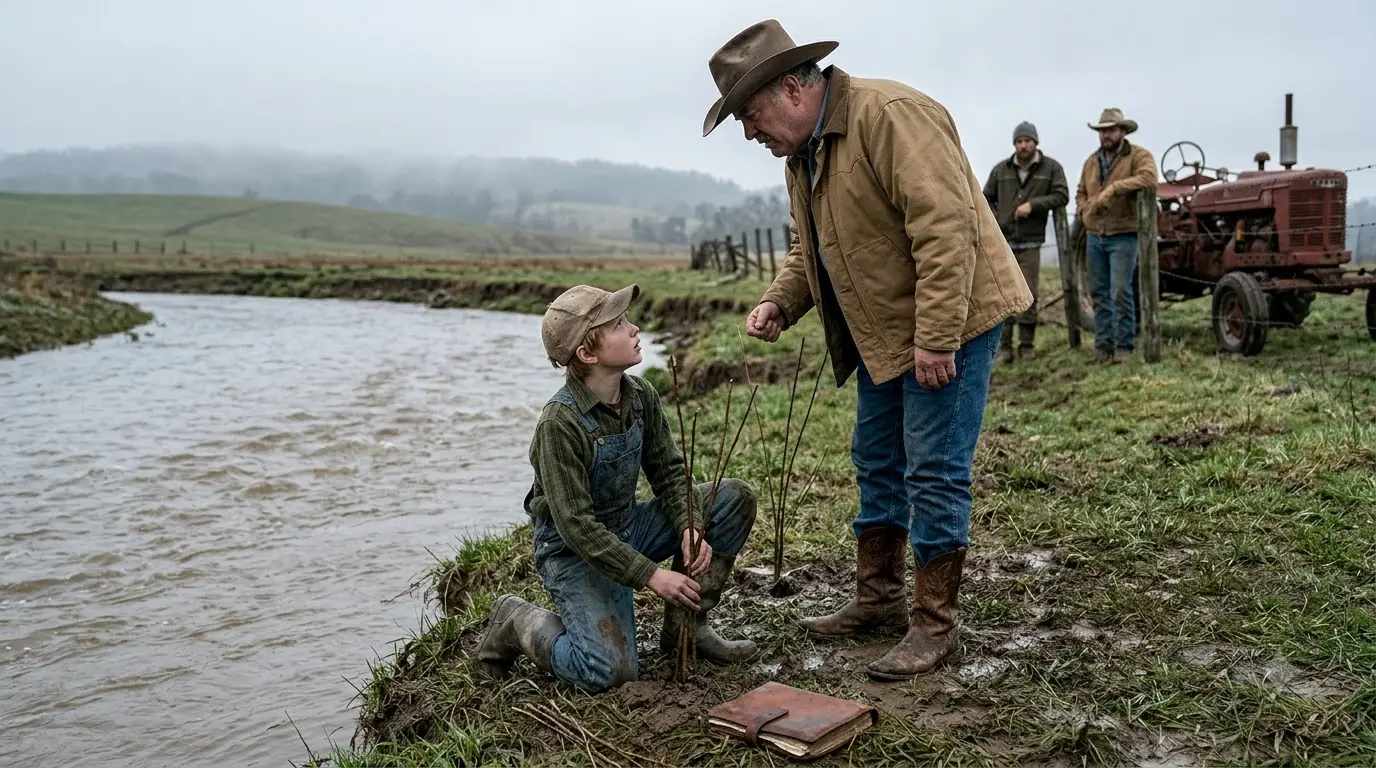
June did not answer right away. She was staring at the stake beneath the front tire, where a narrow strip of blue paint remained visible on the wood. It marked a point her grandmother had measured the summer before she died. June had spent all week finding that point again, using a battered survey wheel, a notebook full of weather records, and an old photograph taken before the county straightened Mill Creek. Now the marker was splintered, and the men laughing behind Graham had no idea what he had driven over. "Please move your tractor," she said. "You're blocking the old spillway."
Graham's smile widened. He owned Voss Agricultural, a business that controlled nearly four thousand acres of corn and soybeans across three counties. His name was painted on grain trucks, equipment sheds, and the sign outside the county fairgrounds. June's mother rented twenty-seven acres and worked nights at a nursing home. Their farmhouse sat lower than Graham's land, at the bottom of a broad shallow valley where floodwater gathered whenever the spring rains became serious. Graham had purchased the neighboring upland fields six years earlier and installed a drainage system that made his harvests more reliable. For the Mercers, every season since had been wetter and more expensive.
"There isn't any spillway," Graham said. "There's a ditch. A neglected one, from what I can see." He pointed toward the flags. "My contractor told you not to interfere with the drainage work, didn't he?" June nodded. The contractor had said exactly that two days earlier, although he had also admitted he did not know what the blue-painted stakes meant. "The old channel crosses here," June said. "If you close this part, the water comes toward our house." Graham looked toward the other men, and they laughed again. "You hear that? One little girl has solved thirty years of county engineering with a handful of sticks."
June's mother appeared from behind the pickup parked at the edge of the road. Claire Mercer had come straight from her overnight shift and still wore her navy nursing-home jacket over jeans. She crossed the muddy ground quickly, not to join the argument but to get