For eighteen months, Graham Lawson tested every woman he dated.
He wore jackets from thrift stores.
He drove a twelve-year-old sedan that sometimes required three attempts to start.
He claimed to work in technical support and rent a small apartment across town.
Then, before the evening ended, something always went wrong.
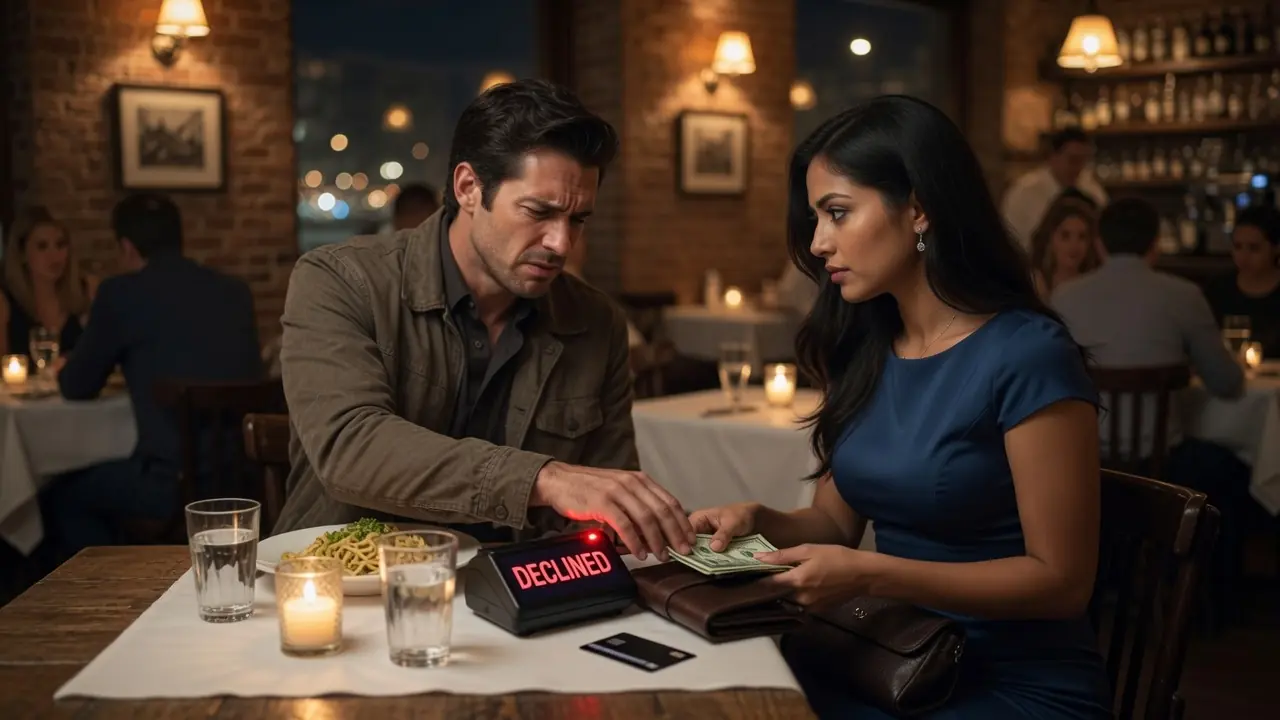
His debit card was declined.
His wallet was missing.
His car needed another repair.
Or he quietly mentioned that money was tight and watched the woman across from him decide whether he was still worth knowing.
Twenty-five women took the test.
In Graham’s mind, all twenty-five failed.
Some became distant before the meal was over.
Others stopped answering his messages.
One woman laughed when he said he could not afford dessert.
Another suggested that he should not date until he was “financially stable enough to be useful.”
Each rejection made Graham feel vindicated.
It also made him lonelier.
At forty-one, he was worth more than forty million dollars.
He had founded Lawson Systems in a rented office fourteen years earlier and turned it into one of the fastest-growing data-security companies in the country. His name appeared in business magazines. He owned a penthouse above downtown Chicago, three investment properties, and enough company stock to protect his daughter’s future for generations.
None of that had protected his marriage.
Two years earlier, Graham discovered that his wife, Allison, was having an affair with one of his senior executives.
The betrayal was bad enough.
What remained in his mind, however, was something Allison said during their final argument.
“You think people love you,” she told him. “They love what your money makes possible.”
The divorce cost him nearly half his liquid assets, two years of public embarrassment, and every illusion he had about the life he had built.
Afterward, Graham made himself a promise.
No woman would ever fool him again.
He called the dates a precaution.
His therapist called them controlled deception.
Graham stopped seeing the therapist.
Then he met Sofia Ramirez.
He first noticed her through the window of a diner on the west side of the city.
He had just left date number twenty-three.
The woman had ordered lobster, champagne, and a dessert she barely touched. When Graham’s card “failed,” she received an emergency call from a friend and disappeared before the check arrived.
Graham sat inside his old Honda in the parking lot, staring at the steering wheel.
He should have felt satisfied.
Another test completed.
Another person exposed.
Instead, he felt tired.
The diner beside the parking lot looked as though it had not been renovated since the late 1980s. Its neon sign flickered above cracked vinyl booths. Steam clouded the lower half of the windows.
Graham considered driving home.
Then he saw the waitress.
She had dark hair twisted into a loose bun and wore a faded green uniform. She was refilling coffee for an elderly man when his hand shook and knocked a full glass of water across the table.
The man looked embarrassed.
The waitress did not sigh.
She did not glance toward the clock or call someone else to clean it.
She placed a napkin beneath his trembling hand and said something that made him smile.
Then she wiped the table while continuing their conversation as though nothing inconvenient had happened.
Graham watched longer than he intended.
Finally, he entered.
The coffee was terrible.
He returned the next afternoon anyway.
Then the next.
On his fourth visit, the waitress approached with the coffee pot.
“You keep ordering one black coffee and sitting here for two hours,” she said. “Either you truly enjoy suffering, or you are trying to ask me something.”
Graham looked up.
She had tired brown eyes, a small burn near one thumb, and the faint smile of someone who expected honesty but had learned not to demand it.
“Is it that obvious?”
“Only to everyone who works here.”
She filled his cup even though it was still half full.
“So what is it? Are you selling something?”
“No.”
“Good. I cannot afford whatever it is.”
Despite himself, Graham laughed.
“I was wondering whether you might have coffee with me sometime.”
She looked toward his cup.
“You want to invite a waitress for coffee?”
“Somewhere that does not serve this.”
“That improves the offer.”
Her name tag read SOFIA.
She studied him for several seconds.
Graham wore faded jeans, scuffed shoes, and a brown jacket he had purchased at a charity shop. His expensive watch remained locked in the drawer beside his old wedding ring.
“I work here during the day and at a grocery store four nights a week,” Sofia said. “I also take care of my younger brother. Dating is not high on my list.”
“How much time could you spare?”
“Maybe thirty minutes.”
“Thirty minutes is enough.”
“That depends on the person.”
“Thursday?”
She considered it.
“There is a park two blocks away. Four o’clock. Bring your own coffee.”
“You do not trust the diner’s?”
“I work here. I know too much.”
On Thursday, Graham waited on a park bench with two coffees from a gas station.
Sofia arrived eleven minutes late.
Her hair was down, and she wore jeans with a sweater repaired carefully at one elbow.
“Sorry,” she said. “Mateo’s physical therapy ran over.”
“Mateo?”
“My brother.”
She accepted the coffee and sat beside him, leaving a careful distance between them.
“He’s sixteen. He has a degenerative muscular condition. Some days are better than others.”
She said it directly.
No performance.
No invitation for pity.
Graham nodded.
“That must be difficult.”
“It is.”
Sofia tasted the coffee and made a face.
“This is worse than the diner’s.”
“I did not think that was possible.”
“Neither did I.”
They laughed.
For a moment, Graham forgot that he was supposed to be collecting information.
Sofia told him that their parents had died in a highway accident three years earlier. She became Mateo’s legal guardian at twenty-six.
The settlement money disappeared quickly into medical equipment, rent, and uncovered treatment.
She worked nearly seventy hours a week.
“What about you?” she asked. “What is your story?”
Graham had practiced the answer many times.
“I work in technical support. I rent an apartment near Belmont. I have an eight-year-old daughter named Lily. Shared custody.”
“What does Lily like?”
“Astronomy. She covered her ceiling with glow-in-the-dark stars.”
“That sounds wonderful.”
“It is difficult to sleep when your child wakes you at two in the morning to discuss whether life exists near Saturn.”
“There are worse reasons to wake up.”
Graham looked toward the children playing across the park.
Sofia asked about the divorce.
Normally, he gave a vague answer.
That afternoon, part of the truth escaped.
“Allison left for someone who had more influence inside my company. She said people only remained close to me because of what I could provide.”
Sofia was quiet.
“I’m sorry.”
“It was two years ago.”
“That does not mean it stopped hurting.”
Graham looked at her.
Most people told him to move on.
Sofia simply acknowledged that pain did not follow schedules.
“No,” he said. “It didn’t.”
Their thirty minutes became two hours.
Before leaving, Sofia said she could not afford traditional dates.
“Every dollar goes toward Mateo or rent. I do not want you expecting restaurants and movies.”
“What about parks and bad coffee?”
“I could manage those.”
Graham smiled.
“So could I.”
Their second date took place at a small Italian restaurant.
Graham selected it deliberately.
The food was reasonably priced, but the bill would still matter to someone living on hourly wages.
Sofia ordered the least expensive pasta on the menu.
When Graham encouraged her to choose anything, she shook her head.
“I like this.”
He could not tell whether that was true.
During dinner, Sofia described a customer who had left a fifty-dollar tip that morning.
“It means Mateo can get the used biology textbook he wanted,” she said. “He keeps borrowing one from the library, but they will not let him write in it.”
Graham could have purchased an entire classroom of books without noticing the expense.
Instead, he smiled.
“He is lucky to have you.”
When the bill arrived, Graham began the performance he had used many times.
He checked his wallet.
Then his jacket.
His expression changed carefully.
“I left my debit card at home.”
Sofia looked at him.
Graham expected disappointment.
Instead, she reached into her purse.
“It happens.”
“No, I can go home and come back.”
“The waitress is finishing her shift.”
Sofia removed several folded bills.
Tip money.
The same money she had been saving for Mateo’s textbook.
She paid the check.
Graham felt something unpleasant settle in his stomach.
“I will repay you.”
“You can cover the next one.”
She smiled as though the moment did not alter her opinion of him.
That night, Graham returned to his penthouse.
The city stretched beneath the windows. His living room furniture cost more than Sofia earned in several years.
He stood beside the glass and thought about the bills she had placed on the table.
The money was insignificant to him.
It was not insignificant to her.
For the first time, his test did not feel protective.
It felt cruel.
He should have ended the lie then.
Instead, he told himself he needed more certainty.
Their third date was a long walk through the city because Graham claimed the Honda had broken down.
His Tesla sat in a private garage beneath his building.
Sofia did not mind.
“Walking is free,” she said. “And parking downtown is robbery with painted lines.”
As evening settled, she told him about Mateo.
Before the illness progressed, he played baseball. Now he used a wheelchair most days and could move his hands only with effort.
“He hates when people talk around him,” Sofia said. “Doctors do it all the time. They look at me and ask what he wants while he is sitting directly in front of them.”
“What does he do?”
“Answers before I can.”
Graham smiled.
“He sounds difficult.”
“He is.”
Sofia’s expression softened.
“He is also the bravest person I know.”
Graham spoke about Lily’s reaction to the divorce.
She had asked whether her mother left because Lily had been difficult.
Graham carried guilt for every late meeting and missed school event.
“You are not failing her,” Sofia said.
They had stopped beneath a streetlamp.
“How can you know?”
“Because you worry about it.”
“That does not prove anything.”
“No. Showing up proves it.”
She held his gaze.
“Children do not need perfect adults. They need adults who return.”
The words followed Graham home.
Their fourth date was coffee in the park.
Their fifth was a free outdoor concert.
Sofia fell asleep against his shoulder during the second half.
Graham remained still for forty minutes.
He listened to her breathing and wondered when she had last slept without expecting Mateo to call for help.
By their sixth date, Graham knew the experiment had become something else.
That frightened him more than any failure.
He brought Lily to a street fair after asking Sofia first.
Sofia did not speak to the child in the false, cheerful voice many adults used.
She asked Lily about planets.
Then she listened to a ten-minute explanation of black holes without checking her phone.
“Can Sofia come to my school play?” Lily asked while they shared a funnel cake.
Graham looked toward Sofia.
“When is it?” she asked.
“Next Thursday.”
“I work until six.”
Lily’s face fell.
“But I can make it by seven,” Sofia added.
Lily grinned.
Graham did not.
Every step Sofia took into his daughter’s life made the lie more serious.
That night, he stood inside his home office with his phone in his hand.
One call to his assistant would produce a complete background report on Sofia.
Income.
Debts.
Medical claims.
Employment history.
He could verify everything she had told him.
His thumb hovered over the screen.
Then he placed the phone down.
He recognized, dimly, that investigation would not create trust.
It would only give him more control.
Sofia arrived at Lily’s play wearing the same blue dress she had worn to the Italian restaurant.
Her diner shoes remained on her feet.
She had come directly from work.
Mateo sat beside her in a motorized wheelchair.
He was thin, sharp-eyed, and clearly amused by the nervous man approaching him.
“So you are Graham,” he said.
“Yes.”
“Sofia says you make bad coffee choices.”
“That is fair.”
“She also says you listen.”
Sofia touched her brother’s shoulder.
“Mateo.”
“What? I am evaluating him.”
The word struck Graham.
Evaluating.
Testing.
He forced a smile.
After the play, Lily insisted on ice cream.
Allison joined them briefly, spending most of the time checking her phone.
Sofia offered to pay before Graham could reach for his wallet.
“No,” he said quickly.
“You covered dinner.”
“That was one meal.”
“And this is ice cream.”
Graham paid.
Sofia noticed the speed with which his card worked.
She said nothing.
Outside, Mateo and Lily argued about video games while Sofia sat beside Graham.
“You were different tonight,” she said.
“How?”
“Nervous.”
“I wanted you to like Lily.”
“I do.”
“Then I wanted Lily to like you.”
“She does.”
“That is what makes me nervous.”
Sofia looked at him.
Graham almost confessed.
Then Mateo called for help adjusting his chair.
The moment passed.
Later, Sofia kissed Graham beside the bookstore window.
It was quiet and careful.
She tasted faintly of chocolate.
When they separated, Mateo called from several feet away.
“This is terrible. I regret supporting the relationship.”
Sofia laughed.
Graham did too.
But as he drove home, he understood that the deception could not continue.
Not because the test was complete.
Because there was no outcome in which the test remained harmless.
If Sofia left after learning the truth, the loss would be his responsibility.
If she stayed, she would still have to carry the knowledge that he had studied her kindness while pretending to share her struggle.
He called the next morning.
“Can we meet?”
Sofia heard something in his voice.
“What happened?”
“I need to tell you something.”
“Is Lily okay?”
“Yes.”
“Mateo?”
“He is fine.”
“Then say it.”
“I can’t do this over the phone.”
They agreed to meet at the park.
Graham arrived thirty minutes early.
He wore the thrift-store jacket out of habit, then realized it was part of the lie.
He removed it and placed it beside him.
Sofia arrived in her diner uniform.
She smiled when she saw him.
The smile made the confession harder.
“What is wrong?” she asked.
Graham looked directly at her.
“I lied to you.”
Her expression changed.
“About what?”
“My job.”
He paused.
“My home. My car. My financial situation.”
Sofia sat very still.
“I own Lawson Systems.”
She stared.
“The cybersecurity company?”
“Yes.”
“The company with the building near the river?”
“Yes.”
“How much money do you have?”
Graham disliked the question only because he knew he deserved it.
“About forty-three million dollars, depending on the company’s value.”
Sofia said nothing.
“My card was not declined,” he continued. “I did not leave it at home. The Honda is a car I purchased to use on dates. I do not live in a small apartment.”
“Why?”
The word came quietly.
“After my divorce, I stopped trusting people. I began pretending to be broke when I dated. I wanted to see who would stay.”
Sofia’s face became unreadable.
“You tested me.”
“At first.”
“And the dinner?”
“A test.”
“The walk because your car broke?”
“A test.”
She stood.
Graham rose too.
Sofia stepped away.
“You let me pay for dinner.”
“I know.”
“With my tip money.”
“I know.”
“That money was for Mateo’s book.”
“I did not know that before the meal.”
“You knew before I paid.”
Graham had no defense.
“Yes.”
Sofia’s eyes filled.
“You sat there with millions of dollars and watched me take money from my brother.”
“When you say it that way—”
“How else should I say it?”
He stopped.
There was no better version.
Sofia wrapped both arms around herself.
“You listened while I worried about rent.”
“I cared.”
“You pretended to understand.”
“I do understand betrayal.”
“You understand being betrayed.”
Her voice sharpened.
“You do not understand deciding whether to eat dinner because the electric bill is due.”
Graham lowered his eyes.
“No.”
“You wore poor clothes like a costume.”
“I was trying to protect myself.”
“You used my life to do it.”
“Sofia—”
“You had choices every second.”
She wiped her cheek angrily.
“If the date became uncomfortable, you could go home to your penthouse. When your car ‘broke,’ you had another one. When your card ‘failed,’ you knew there were hundreds of other ways to pay.”
Graham said nothing.
“I did not have those choices.”
“I know.”
“No. You know now because I am saying it.”
She stepped closer.
“You turned poverty into a game because you could leave the game whenever you wanted.”
The sentence landed harder than anything Allison had said during the divorce.
Graham tried to speak.
Sofia raised one hand.
“You brought Lily into this.”
“I never lied about loving her.”
“That is not the point.”
“You brought your child into a relationship where you still had not told me your real name as the world knows it. You let Mateo meet you.”
“My feelings for you are real.”
“How would I know?”
He felt panic.
“I told you because I love you.”
Sofia laughed once, without humor.
“You told me because the lie became inconvenient.”
“No.”
“You decided when to begin the test. You decided what counted as passing. You decided when I deserved the truth.”
Her voice broke.
“You controlled everything.”
Graham stepped toward her.
She moved back.
“Do not.”
He stopped.
“I am sorry.”
“I believe you are sorry.”
Sofia looked at him for a long moment.
“That does not mean I feel safe with you.”
Then she walked away.
Graham did not follow.
For once, he allowed someone else to decide when the conversation was over.
Three days passed.
He called once.
Sofia did not answer.
He sent one message.
I understand that you asked for distance. I will respect it. I have repaid the dinner money through the diner manager without attaching my name. I will not contact you again unless you choose it.
She did not reply.
Lily noticed Sofia’s absence immediately.
“Did she leave because of me?”
“No.”
“Then why?”
Graham sat beside his daughter.
“Because I lied to her.”
“About what?”
“Who I was.”
Lily frowned.
“You are Daddy.”
“I pretended I did not have money because I wanted to know whether she liked me without it.”
“That is weird.”
“Yes.”
“Did Sofia know it was a game?”
“No.”
“Then it was not a game for her.”
Graham looked at his eight-year-old daughter.
“No.”
Lily thought for a moment.
“Did you apologize?”
“Yes.”
“Did she forgive you?”
“No.”
“Are you mad?”
“At her? No.”
“At yourself?”
“Yes.”
Lily leaned against him.
“Maybe you should stop testing people.”
He closed his eyes.
“I have.”
The next week, Graham returned to therapy.
His new counselor, Dr. Marion Ellis, did not accept his explanation that the deception had been necessary after betrayal.
“You were harmed,” she said. “Then you created relationships where you controlled every risk.”
“I was trying to avoid being used.”
“You ensured the other person could not give informed consent to the relationship.”
“That sounds clinical.”
“It is also accurate.”
Graham stared toward the window.
“What was I supposed to do? Tell people my net worth on the first date?”
“No.”
“Then how do I know?”
“You don’t.”
He looked at her.
“That is not an answer.”
“It is the only honest answer.”
Dr. Ellis folded her hands.
“Trust requires uncertainty. You tried to remove uncertainty by deceiving people. That is not trust. It is surveillance.”
Graham thought about Sofia calling him a tourist in her life.
“What do I do now?”
“Accept that she may never return.”
He hated the answer.
That was how he knew it was probably true.
A month passed.
Sofia did not contact him.
Graham did not visit the diner.
He sent no gifts.
He did not pay Mateo’s medical bills secretly.
He wanted to.
His money could solve immediate problems in their household.
But he began to understand that using wealth without permission could become another form of control.
Instead, he made changes in his own life.
He sold the Honda.
He donated the thrift-store clothes.
Not because there was anything shameful about either.
Because he had used them as props in a performance built around other people’s hardship.
He contacted five of the women he had tested most directly.
He did not ask for forgiveness.
He admitted what he had done and offered repayment for expenses they had covered.
Two ignored him.
One accepted the money.
Another told him never to contact her again.
The fifth said, “You should understand that some of us left because you acted secretive and manipulative, not because you looked poor.”
That possibility had never occurred to him.
He had interpreted every rejection as proof of greed because that conclusion protected his worldview.
At Lawson Systems, Graham ordered a review of wages and emergency assistance programs.
Then he stopped the project.
He realized he was again trying to transform guilt into a public act that made him look generous.
Instead, he turned the review over to an independent employee committee and accepted their recommendations without attaching Sofia’s name or his personal story.
Two months after the confession, Sofia appeared in the lobby of Lawson Systems.
She wore her diner uniform beneath a winter coat.
Graham’s assistant called him.
“There is someone named Sofia Ramirez downstairs. She says she does not need to come up if you are busy.”
Graham stood immediately.
Then forced himself to slow down.
“Ask whether she wants to meet here or somewhere neutral.”
Sofia chose a small conference room near the lobby.
When Graham entered, she stood beside the window.
She looked at his tailored suit.
Then at the glass walls, polished table, and city skyline beyond them.
“So this is you,” she said.
“Part of me.”
“That sounds practiced.”
“It probably is.”
She almost smiled.
Almost.
Graham remained near the door.
“Why did you come?”
“To return this.”
She placed an envelope on the table.
Inside was the money Graham had sent through the diner manager.
“You paid that bill because of me,” he said.
“I paid it because I thought you needed help.”
“You did not know the truth.”
“That does not change why I acted.”
Graham looked at the envelope.
“I am sorry.”
“I know.”
Sofia sat.
He took the chair across from her.
“I am still angry,” she said.
“You should be.”
“Do not agree with everything just because you want me back.”
He stopped himself.
“All right.”
She looked toward the city.
“I kept thinking about whether you told me because you had changed or because you were afraid I would discover it.”
“Both.”
Sofia turned toward him.
“That is probably the first answer from you I trust.”
Graham accepted the sting.
“I was afraid someone would recognize me. I was also ashamed.”
“You should have been.”
“Yes.”
Sofia raised an eyebrow.
“You did it again.”
“Sorry.”
For several seconds, neither spoke.
“What do you want from me?” Graham asked.
“I don’t know.”
“That is fair.”
“Stop saying fair.”
He nodded.
Sofia continued.
“I miss you.”
Graham’s chest tightened.
She held up one hand.
“That does not mean we are together.”
“I understand.”
“I miss the man who listened when I talked about Mateo. I miss watching you with Lily. I miss the park.”
She looked directly at him.
“But I do not know whether that man exists separately from the person who designed the test.”
“He does.”
“You cannot prove that by saying it.”
“No.”
This time, Graham did not add anything.
Sofia’s shoulders lowered slightly.
“I am willing to speak to you,” she said. “Nothing more right now.”
“Where?”
“Public places.”
“Yes.”
“No gifts.”
“Yes.”
“No paying Mateo’s bills.”
Graham hesitated.
Sofia noticed.
“That hesitation is exactly why I said it.”
“I understand.”
“Do you?”
“I want to help.”
“I know. But help is not automatically harmless because you can afford it.”
Graham nodded slowly.
“All right.”
“And therapy.”
“I’m already going.”
“Good.”
She stood.
“I have work.”
Graham rose.
“When can I see you again?”
“I will call.”
She left without touching him.
It was not forgiveness.
It was an opening.
They began again more slowly than before.
Coffee at the park.
Meals where the plan for payment was discussed in advance.
Conversations about money that made both uncomfortable.
Sofia asked Graham direct questions.
How much did he spend each month?
What did he believe wealth entitled him to decide?
Would he expect her to stop working?
Would he treat Mateo like a charitable responsibility?
Graham answered honestly, including when the answers embarrassed him.
He admitted that part of him imagined solving every problem in Sofia’s life and receiving gratitude in return.
“That is not love,” she said.
“I know.”
“What is it?”
“Control that feels generous.”
She considered him.
“That is a better answer.”
Graham also asked questions.
How could he contribute without making her dependent?
What would respect look like when their resources were so unequal?
Sofia did not always know.
They discussed it with a couples counselor before calling themselves a couple again.
Six months after the confession, Sofia invited Graham to Mateo’s medical appointment.
Not to pay.
To listen.
The specialist described a new treatment program that insurance would not fully cover.
Graham remained quiet until Sofia asked for his opinion.
“I can pay for it,” he said.
“I know.”
“What do you want?”
Sofia looked toward Mateo.
Her brother answered for himself.
“I want to try it. But I don’t want to become the reason my sister feels trapped in a relationship.”
Graham felt ashamed and grateful at once.
“You won’t.”
“How?”
“The money will not come from Graham personally,” Sofia said.
She had already considered the problem.
They created a formal medical trust for Mateo, administered independently. Graham contributed to it, but the terms did not depend on his relationship with Sofia.
If they separated, Mateo’s treatment would continue.
Graham signed without changing a word.
Sofia watched him.
“That matters,” she said later.
“What?”
“You helped without making yourself impossible to leave.”
A year after they met, Graham took Sofia to the Italian restaurant where she had paid the bill.
He did not stage anything.
No hidden ring.
No public speech.
When the check arrived, he placed his card on the tray.
Sofia looked at it.
“Will it work?”
“It has an excellent chance.”
The server returned.
“Your card was declined.”
Graham stared at her.
Sofia began laughing.
The server looked alarmed.
Graham tried another card.
Also declined.
He called the bank and learned that an automatic fraud alert had frozen his accounts after an unusually large company transaction.
Sofia laughed harder.
Graham looked at her.
“I can transfer money.”
She removed her wallet.
“No.”
“Sofia.”
“I have this one.”
The memory returned between them.
The first dinner.
The deception.
The tip money.
Graham’s face became serious.
“I do not want you paying because of what happened before.”
“I’m not.”
“Then why?”
“Because partners sometimes cover dinner.”
She placed her card on the tray.
“Not tests. Not rescues. Dinner.”
Graham nodded.
The following week, he repaid her exactly half.
She accepted.
That small exchange meant more than any expensive gift could have.
Their relationship remained complicated.
Sofia continued working at the diner while completing certification courses in medical administration.
Graham did not ask her to stop.
When she later reduced her hours, it was because she accepted a position with a nonprofit supporting families of disabled teenagers.
She earned less than Graham spent on property taxes.
The work still mattered.
Mateo’s health declined gradually, then stabilized under the new treatment.
He continued insulting Graham whenever possible.
Lily adored him.
The two children argued about science, movies, and whether Graham’s expensive kitchen equipment made his pancakes taste better.
“It doesn’t,” Mateo declared.
Lily agreed.
Sofia watched them from the doorway.
Graham stood beside her.
“This is not what I expected,” he said.
“What did you expect?”
“To feel safe only after knowing everything.”
“And now?”
“I feel safe when I know I can tell the truth.”
Sofia rested her head against his shoulder.
“That is different.”
Two years after their first coffee, Graham proposed.
Not in the penthouse.
Not at an expensive restaurant.
At the park where Sofia first tasted the terrible gas-station coffee.
He showed her the ring before kneeling.
“I want you to see it first.”
She laughed.
“Why?”
“So you can tell me if it is too much.”
It was elegant but modest by Graham’s standards.
Sofia examined it.
“You asked Lily for help.”
“She rejected three larger options.”
“Smart girl.”
Graham held the ring but did not place it on her hand.
“I cannot promise I will never be afraid of being used.”
Sofia’s expression softened.
“I cannot promise money will never make me uncomfortable.”
“I can promise no more tests.”
“Good.”
“No hidden decisions.”
“Good.”
“And when fear tells me to control the situation, I will tell you I am afraid instead.”
Sofia looked at him for a long time.
“Ask the question.”
“Will you marry me?”
“Yes.”
He slid the ring onto her finger.
Then she added, “But I am not signing anything without my own attorney.”
Graham laughed.
“I would expect nothing less.”
They married the following spring in a small ceremony attended by family, diner employees, Lawson Systems staff, and several people from Mateo’s medical team.
Sofia did not become a millionaire’s rescued wife.
Graham did not become a perfect man because one good woman forgave him.
Their marriage began with love.
It survived because trust was rebuilt through structure, honesty, and repeated choices.
Years later, people sometimes heard a simplified version of their story.
A rich single father pretended to be poor.
A kind waitress passed every test.
Then he revealed his fortune and changed her life.
Sofia hated that version.
“I did not pass anything,” she would say.
“Graham failed his own test.”
He never corrected her.
She was right.
He had believed he was testing whether women could love a man without money.
In reality, he was testing how much dishonesty they would tolerate before leaving.
Sofia’s kindness did not prove his method was wise.
Her anger proved it was wrong.
Her eventual forgiveness did not erase what happened.
It became meaningful because it required Graham to surrender the power to decide when she should trust him again.
The forty-three million dollars remained.
So did the penthouse, the company, and the privileges money created.
Their love did not make those differences disappear.
It forced them to speak about them.
Graham learned that generosity could become manipulation when it removed another person’s choices.
Sofia learned that accepting help did not automatically make her indebted.
Mateo received treatment without becoming a condition of the relationship.
Lily gained a family without being asked to forget the one altered by divorce.
And Graham finally understood what his twenty-five dates had never taught him.
A person could not discover genuine love through a dishonest test.
Love did not reveal itself when one person secretly controlled the rules.
It began when both people knew the truth, understood the risk, and remained free to leave.
On their anniversary, Sofia occasionally took Graham back to the old Italian restaurant.
Each time the bill arrived, she looked at him.
“Did you bring your card?”
“Yes.”
“Your real one?”
“Yes.”
“Is this another test?”
“No.”
Only then would she smile.
Graham never again confused that smile with proof that he had won something.
It was not a reward.
It was trust being offered in the present.
And unlike the tests he once designed, it could never be demanded, purchased, or guaranteed.
It had to be deserved again each day.