The first thing Avery Ellis remembered afterward was not the man's face. It was the pale yellow flower she had been trying not to crush beneath her wheelchair. The second was the sound of her father's voice, calling her name across Briarwood Park with an urgency she had never heard from him before. Between those two memories lay a moment so brief and violent that the world seemed to divide into the part where she belonged anywhere she wanted to be and the part where a stranger believed he could push her out of that world.
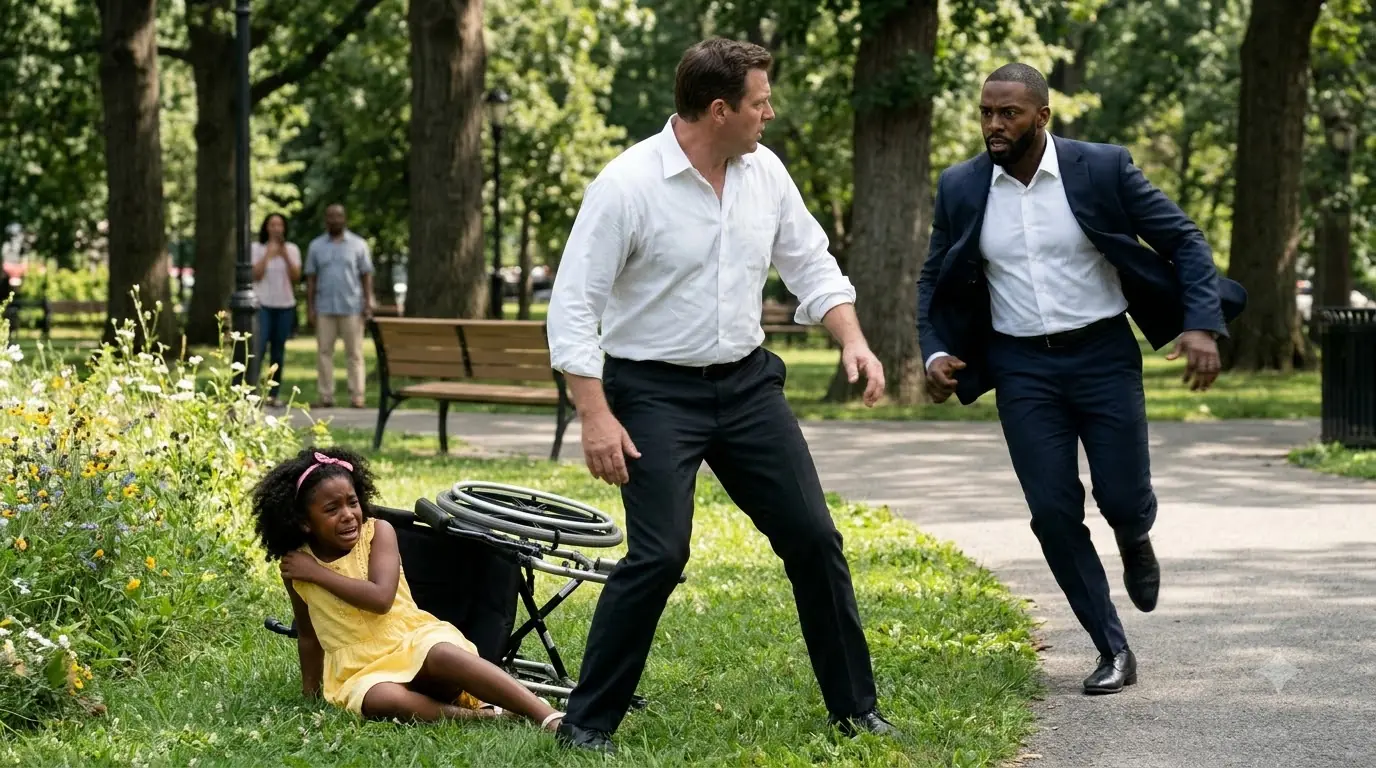
She was nine years old, with dark brown eyes, a round face, and a mass of black curls gathered into two loose puffs beneath a blue headband. That Sunday she wore a coral-colored dress over leggings and a light denim jacket with embroidered stars along one sleeve. Her wheelchair was a compact blue manual chair, fitted to her growing body, with yellow reflectors her father had attached after she said the plain silver ones looked like something from a hospital. A paperback about the planets rested across her knees. There were only twenty pages left, but the park was too lovely for reading just then.
Columbus had been enduring one of those springs that could not decide whether it was still winter. For three days the air had been cold and damp, but now the sunlight came through the old sycamores in clear bands, warming the grass beside the walking path. Children chased one another near the playground. A man pushed a stroller while balancing a paper cup of coffee. Two elderly women discussed a church supper with the seriousness of diplomats negotiating peace. Avery could smell fresh mulch, nearby lilacs, and, every few minutes, the sugary promise drifting from the ice cream kiosk beside the pavilion.
Her father had gone to that kiosk to get her usual strawberry cone. Marcus Ellis could make difficult things look easy. He was forty-one, tall, broad through the shoulders, with close-cut black hair and a short beard that had begun showing silver at the chin. He worked as a detective in the Columbus Police Division, though on weekends he preferred faded jeans, simple shirts, and the chance to be known as Avery's father instead of Detective Ellis. He had spent the morning fixing a loose hinge on her bedroom door and had declared that both of them deserved an afternoon that involved no tools, appointments, or errands.
"Stay where you can see the pavilion," he had told her when they reached the park. "I will be back before your book can send a spaceship to Mars."
"That is not a useful unit of time," she replied.
"It's the best I have."
She had smiled and watched him head toward the kiosk, his wallet in one hand. He had offered to push her chair across the lawn first, but she declined. Avery liked doing things herself. She could handle firm grass and paved paths, and she understood which surfaces became difficult after rain. She had been using a wheelchair since a spinal injury sustained in a highway collision at age five. The chair was part of how she moved through the world, not an invitation for strangers to decide where she should be.