The auctioneer’s gavel fell on a cold Tuesday morning in March 1987, and for several seconds nobody standing inside the government impound yard outside Abilene, Texas, moved at all. Not one equipment dealer raised a hand for the first tractor, nobody challenged the auctioneer’s opening price on the second, and when he finally pointed toward the rusted 1963 John Deere 4020 sitting crooked against the back fence, several men openly laughed. Its faded green hood had peeled almost completely to bare steel, both rear tires had collapsed against the rims, rainwater had found its way into two cylinders, and a handwritten inspection sheet tied to the steering wheel carried three words that normally ended any dealer’s interest immediately: ENGINE LOCKED SOLID. Just as the auctioneer began lowering his clipboard and preparing to move past the entire row, fifty-one-year-old Dale Whitmore raised one grease-darkened hand.
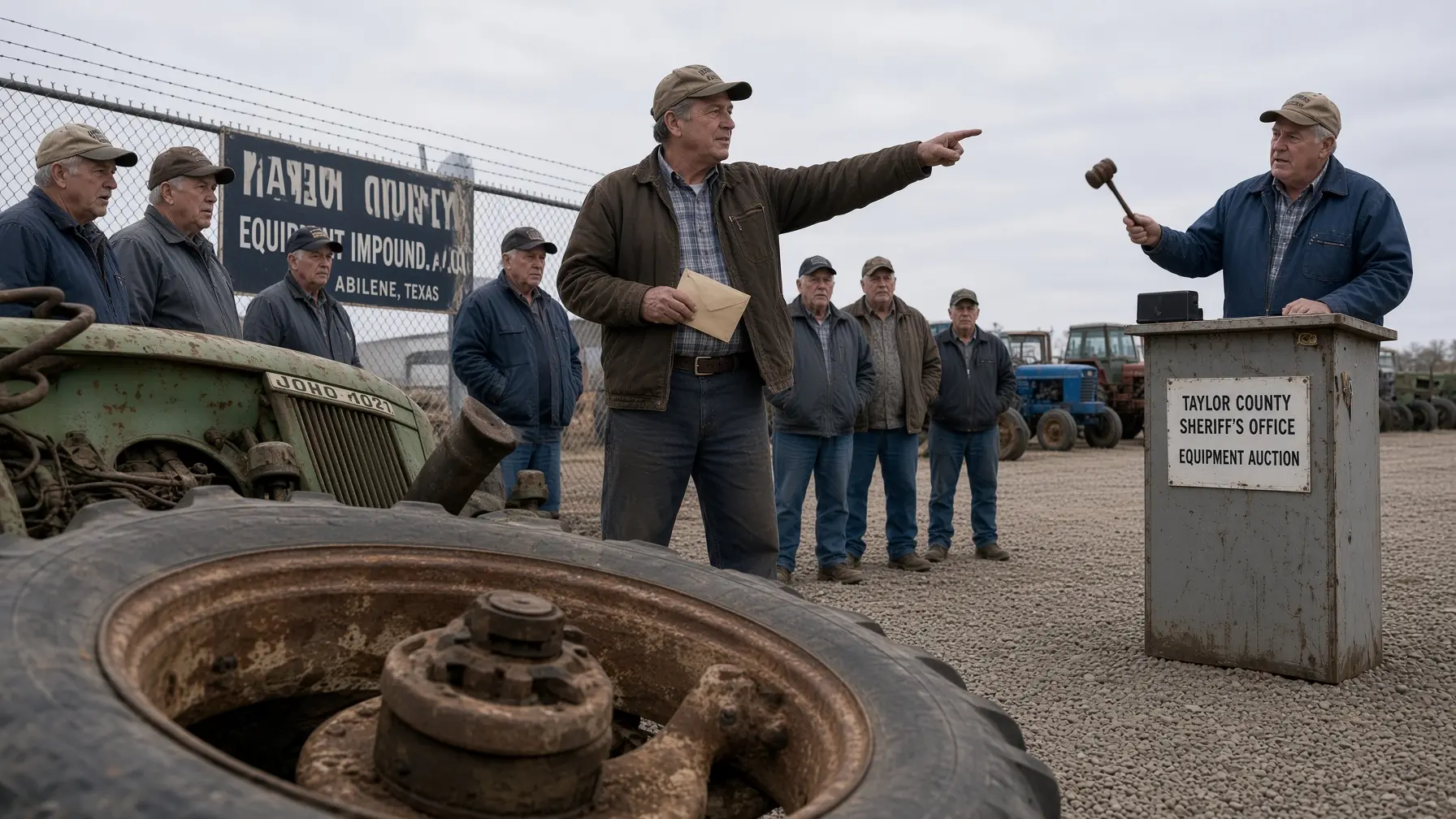
Dale had not arrived intending to gamble away nearly everything he owned, although later even he had difficulty explaining where careful planning ended and instinct took over. He had driven to the auction in a fourteen-year-old Chevrolet pickup with sixty-two hundred dollars in savings, four hundred dollars in his checking account, no job waiting Monday morning, and a wife who believed he was going to look for cheap shop tools rather than purchase equipment nobody else wanted. By noon he had bought fourteen seized tractors for a combined fifty-eight hundred dollars, leaving only four hundred in the savings account he and Martha Whitmore had spent more than two decades building through overtime, canceled vacations, repaired appliances, and the kind of small decisions that never feel important until almost all the money is gone. The auction clerk handed him a packet thick with lien releases, receivership notices, serial-number lists, and removal deadlines, then looked at Dale as though he were witnessing a man sign his own financial obituary.
The fourteen machines had come from farms scattered across West Texas during a period when foreclosure auctions had become ordinary enough to stop drawing crowds of curious neighbors. Some had been repossessed after Farmers Home Administration loans failed, several belonged to bankruptcy estates, two had passed through local banks before federal receivership complicated their paperwork, and one had sat so long nobody was certain which creditor had last claimed it. The lot included three John Deeres, four Internationals, a Case, a Ford, two Masseys, an Oliver, a White, and one tractor whose hood suggested one manufacturer while the engine beneath it clearly belonged to another. None looked ready for fieldwork, but Dale did not see fourteen ruined tractors so much as fourteen collections of engines, transmissions, hydraulic pumps, power-takeoff assemblies, wheels, starters, alternators, steering components, housings, gears, shafts, valves, and castings whose usefulness had been judged only as complete machines.
Most of the men at the auction knew Dale because agricultural counties remember mechanics almost as carefully as they remember doctors. He had spent twenty-two years at Harlan Farm Equipment in Abilene, eventually becoming the mechanic farmers requested by name whenever a tractor developed the kind of noise that disappeared the moment someone wearing a clean shirt arrived to inspect it. Three months earlier, owner Wendell Harlan had called Dale into the office, closed the door, and explained that tractor sales had fallen, repair accounts were aging unpaid, two banks had stopped extending operating lines to several major customers, and the dealership could no longer carry the same payroll. Dale had been the highest-paid mechanic in the shop, which meant experience that once made him valuable had become the easiest large expense to remove.
Wendell had cried during the conversation, something Dale never told anyone because he understood how much humiliation can accompany a business owner admitting that loyalty no longer fits inside the numbers. The dealership gave him two weeks of severance, allowed him to buy several personal tools at book value, and promised a reference strong enough to embarrass him, but there were few shops in West Texas adding fifty-one-year-old mechanics while farmers were delaying repairs they could not afford. Dale spent January and February fixing pickups, irrigation pumps, small tractors, and anything else neighbors carried into the rented metal building behind the old cotton gin, yet casual repairs barely replaced grocery money. Martha began quietly calculating how many months remained before they would need to draw from retirement funds, and Dale began attending liquidation auctions because broken machinery was the only inventory he understood better than the people pricing it.
His neighbor Roy Pitman arrived at the impound yard shortly after noon because Dale had asked to borrow a gooseneck trailer without explaining why. Roy was fifty-four, farmed six hundred acres of wheat and sorghum west of town, and possessed a talent for saying whatever entered his mind before politeness had enough time to interfere. He stopped beside the rusted 4020, looked from the collapsed tires to Dale’s receipt, and laughed so loudly that the auction clerk glanced up from his paperwork. Roy told him, “You paid money for that pile of parts, and five years from now it still won’t be strong enough to pull a hay rake,” while Dale only ran one hand along the cracked hood and answered that five years was plenty of time to find out.
Roy’s laughter followed them all afternoon as they dragged the first tractors onto trailers with a winch and enough chains to make the process look like machinery recovery after a tornado. Several machines had no functioning brakes, one rear wheel refused to rotate, and the old John Deere required wooden skids because its flattened tires folded beneath the rims whenever the trailer moved. Dale had ten days to clear the lot, but commercial hauling would have cost more than he had left, so he traded future repair work to Roy, a wrecker operator named Cecil Barnes, and two farmers who still owed him favors from his dealership years. By the end of the first day only three tractors had reached the rented shop, yet Dale already understood that his largest problem was no longer acquiring machinery but surviving long enough to discover whether any of it could become useful.
Martha Whitmore learned what he had done at six-thirty that evening when Dale came through the kitchen door smelling of diesel fuel, wet soil, and the particular nervousness of a husband carrying information he should probably have discussed before spending money. She was forty-nine, worked twenty-eight hours a week handling attendance records at a middle school, and had remained married to Dale for thirty-one years partly because she knew the difference between his reckless ideas and the rare occasions when technical instinct pushed him somewhere ordinary caution would never go. Dale placed the auction paperwork on the kitchen table and told her the amount before attempting an explanation, because one thing marriage had taught him was that leading with philosophy after spending fifty-eight hundred dollars usually made the philosophy sound worse. Martha read the receipt twice, removed her glasses, and asked whether the number showing fourteen tractors was a typographical error.
When Dale admitted it was not, she walked to the sink and remained there long enough that he would later claim the silence frightened him more than any machinery failure he had ever diagnosed. She finally turned and asked how much money remained, and Dale answered four hundred dollars in savings plus whatever he could earn from repair work before the rent came due. Martha closed her eyes, breathed through her nose, and said that if he told her he had followed his heart she might personally drag every tractor back to the government yard with the pickup. Dale promised he had followed numbers instead, which did not calm her but at least kept the conversation inside a language both of them respected.
After supper he spread inspection sheets, auction photographs, and serial-number notes across the table. Dale explained that dealers evaluated each machine individually, adding estimated engine work, transmission repair, hydraulic rebuilding, tires, electrical components, transport, shop labor, warranty reserves, and paperwork risk until every tractor cost more to restore professionally than a buyer would pay. He believed the mistake was treating fourteen tractors as fourteen separate problems rather than one inventory pool, because several had complementary failures and many major components retained far more service life than the complete machines’ auction prices suggested. Martha listened until nearly midnight before saying she still thought spending almost all their savings without asking was irresponsible, but if his calculation had any chance of working, they were going to document every dollar before one more part came off one more tractor.
That agreement became the first operating rule of Whitmore Rebuild Works before either of them knew there would ever be a business by that name. Martha bought three ledger books the following morning, assigned each tractor an inventory number, and created columns for purchase allocation, transport, parts removed, parts installed, outside labor, consumables, sale proceeds, and unresolved liens. Dale complained that a mechanic could remember where parts came from, and Martha reminded him that he had forgotten their anniversary twice in six years. He stopped arguing and wrote TRACTOR 1 — JOHN DEERE 4020 — SERIAL 89,441 at the top of the first page.
The 4020 reached the shop Wednesday afternoon. Dale washed thirty years of dirt, spilled hydraulic oil, bird droppings, and impound-yard dust from the machine, then removed the hood panels and stared at the engine until Roy, who had stayed to watch, asked whether concentration might eventually frighten the pistons into moving. Dale ignored him and disconnected the injectors before attempting anything with the starter because the auction sheet already warned that someone had tried forcing the engine several times. He removed the cylinder head that evening and found exactly what he expected from the rust patterns around the exhaust stack: rainwater had entered two cylinders during storage, corroded the liners, and locked the pistons without producing the heat damage normally associated with a catastrophic internal failure.
That discovery did not make the engine inexpensive. Two liners were badly pitted, several piston rings had rusted into place, the valves needed work, the head required pressure testing, and decades of neglect meant every gasket and hose deserved suspicion before the tractor returned to load. What interested Dale more was what had not happened, because the crankshaft showed no major scoring, connecting rods appeared straight, main bearings carried ordinary wear rather than destructive damage, and the block casting was intact. Somebody had written SEIZED ENGINE — PARTS ONLY because the symptom was expensive, not because anyone had spent the time required to understand the cause.
The injection pump created the second clue. A mechanic had installed a later replacement pump whose governor and timing configuration did not correspond correctly with the early engine arrangement, then modified linkage pieces in an attempt to make it fit. Dale found witness marks showing the pump had probably been changed shortly before the tractor was parked, which meant the previous owner may have been chasing poor performance before water intrusion finally ended the machine’s life. On a shelf twenty feet away sat another seized John Deere from the auction whose engine block had cracked from freezing but whose correctly matched pump, fuel lines, and several internal components remained usable.
Dale walked between the two tractors carrying a yellow legal pad. He listed the 4020’s good transmission, rear axle, rockshaft assembly, hydraulic housing, power takeoff, front axle, crankshaft, starter, and sheet-metal pieces, then listed the donor machine’s pump, injectors, wheels, radiator, seat frame, and several engine components. A third tractor possessed a serviceable pair of rear tires mounted on compatible centers even though its transmission case was broken beyond practical repair. By midnight Dale had stopped thinking about restoring the 4020 and started thinking about building one dependable working tractor from three condemned machines while preserving every useful leftover component for whatever came next.
He found Martha in the kitchen drinking tea before bed. Dale placed the legal pad in front of her and said the thing dealers had missed was not hidden gold, rare parts, or some collectible serial number that would make the tractor valuable to an antique buyer. They had missed the difference between market value and use value, because a farmer did not need a restored showpiece during a credit crisis; he needed reliable horsepower that could pull a planter, run an auger, handle a mower, and start tomorrow morning without requiring another thirty-thousand-dollar bank note. Martha read his projected cost twice and asked the question that became more important than whether Dale could repair the tractor: who still had money to buy even a cheap machine.
That was the problem waiting outside the shop. The agricultural crisis gripping much of rural America during the 1980s had reached West Texas through falling land values, high debt accumulated during better years, volatile commodity prices, expensive credit, weak exports, and banks increasingly unwilling to finance equipment for farms already struggling with operating loans. Dale had watched customers delay engine overhauls until bearings failed, replace hydraulic hoses with used lines from salvage yards, park tractors after transmission problems, and borrow machinery from relatives because another loan could push a farm beyond what lenders considered survivable. New horsepower still existed, and good used tractors still existed, but access to either depended increasingly on money or credit many capable farmers no longer possessed.
Dale circled one phrase on the legal pad. HORSEPOWER WITHOUT NEW DEBT. Martha looked at it and said that selling tractors to people who could not obtain loans sounded dangerously close to becoming the bank himself. Dale answered that he was thinking about cheaper machines first and financing later, but Martha knew him well enough to hear an idea he had not yet admitted aloud. She told him they would finish one tractor, determine its actual cost, test it honestly, and then decide whether the rest of the plan belonged to business or desperation.
The first rebuild consumed thirteen days. Dale freed the crankshaft carefully, removed damaged liners and pistons, measured every journal twice, sent the cylinder head to an Abilene machine shop, cleaned oil passages, rebuilt the water pump, transferred the correct injection equipment, replaced hoses and wiring, serviced the clutch, flushed the hydraulic system, and changed fluids that looked older than some of the farmers stopping by to watch. He did not paint the tractor because cosmetic work consumed money without improving reliability, although Martha persuaded him to repaint the numbers on the hood after customers kept asking whether the machine was a 4010 or 4020. The mismatched rear wheels gave the tractor a slightly crooked appearance that Roy called “a mule assembled by committee,” and Dale answered that mules had pulled more useful loads than most committee members.
Cash became frightening before the tractor started. The machine-shop bill consumed one hundred eighty dollars, gaskets and bearings took another hundred forty-three, hoses, wiring, filters, oil, coolant, welding supplies, and fuel reduced the remaining household reserve to less than seventy dollars, and rent on the shop was due before Dale had completed a single paying sale. He continued repairing neighbors’ pickups at night while Martha quietly moved two hundred dollars from grocery reserves into the business ledger, marking it HOUSEHOLD LOAN — REPAY FIRST in red ink. Dale saw the entry the next morning and understood both the support and warning contained inside it.
The first start happened on a Saturday evening with Martha, Roy, and nineteen-year-old Miguel Alvarez standing outside the open shop door. Miguel’s father had recently lost rented cotton acreage after two poor seasons, and the teenager had begun sweeping Dale’s shop in exchange for learning mechanical work because community college tuition was beyond the family’s reach that spring. Dale bled the fuel system, checked the oil pressure line, placed the transmission in neutral, and turned the key while everyone pretended the moment did not carry the last of the Whitmores’ savings inside it. The starter groaned through several rotations before the engine fired hard enough to shake rust from the exhaust pipe and fill the building with gray smoke.
Roy laughed first, not because the tractor failed but because it continued running. Dale kept one hand near the throttle while watching the oil-pressure gauge climb, then listened carefully as the engine settled from an uneven bark into the steady mechanical rhythm he remembered from hundreds of machines during his dealership years. Miguel grinned openly, Martha covered her mouth, and Roy walked around the tractor twice as though searching for hidden wires connecting it to some machine actually responsible for the sound. Dale did not celebrate until the engine had warmed, the hydraulics lifted a heavy implement, the power takeoff engaged correctly, and the transmission moved through every gear under light load.
Starting was not proof. Dale spent the next three days testing the tractor against a borrowed dynamometer at the community college agriculture shop, loading the engine gradually while an instructor named Earl Sutton watched temperatures, pressure, smoke, fuel behavior, and horsepower output. The tractor did not produce factory-new power, but it held ninety-one percent of rated output without overheating or losing oil pressure, and hydraulic response remained stable after two hours of operation. Earl signed Dale’s test sheet and wrote FIELD SERVICEABLE — RECOMMEND NORMAL USED-EQUIPMENT MONITORING, a description Dale liked because it promised exactly what the machine was and nothing more.
The first serious customer arrived before Dale placed a single advertisement. Calvin Mercer farmed three hundred twenty rented acres with his wife, Ruth, and had driven an aging International tractor through planting for years until the transmission finally lost two gears and filled the case with metal. His bank refused financing on a replacement because the Mercers’ land lease offered little collateral beyond machinery already securing an operating loan, while a dealer quoted more for another used tractor than Calvin believed he could safely borrow. Roy told him the fool down the road had somehow resurrected a 4020, which was meant partly as a joke and partly as a recommendation.
Calvin inspected the tractor for nearly two hours. He crawled underneath, checked for leaks, drove every gear, questioned Dale about each component, and finally asked the question Dale respected most: which parts had not been rebuilt. Dale opened Martha’s ledger and showed him everything, including the original transmission gears, used replacement tires, untouched rear differential, rebuilt engine components, donor injection system, and the exact dynamometer results. Calvin looked surprised because used-equipment sales rarely came with a list explaining what the seller had deliberately chosen not to replace.
The price Dale had calculated was seventy-two hundred dollars. A comparable clean used 4020 at a dealership might sell for considerably more depending on condition, while newer equipment capable of doing the same basic work could cost several times that amount. Calvin had nineteen hundred dollars available after seed purchases and could not produce the rest until after harvest. Dale looked toward Martha.
Martha already had an answer. She had spent the previous week speaking with a local attorney named Nora Gaines about seller financing, secured interests, repossession rights, usury limits, recordkeeping, and the many ways a kind handshake could become a legal disaster when weather changed. She proposed nineteen hundred down, written monthly interest at a modest lawful rate, two larger payments after harvest periods, mandatory insurance, and a recorded security interest in the tractor until the balance was paid. Calvin said the bank had refused him, and Martha answered, “We are not the bank, which is why neither of us gets to pretend this carries no risk.”
Ruth Mercer joined the conversation the next morning. She wanted every number written clearly, insisted that their household not commit to a payment larger than conservative yield projections supported, and asked what happened if drought ruined the crop. Martha said the agreement allowed restructuring by mutual consent but did not erase the debt automatically, while Dale promised only that he would talk before towing a tractor from somebody’s field. Ruth read the contract twice and signed.
Calvin drove the rebuilt 4020 out of Dale’s yard on March twenty-ninth. Roy stood beside the road and shouted that he wanted his original prediction recorded because the machine still had five years to prove him wrong. Dale watched the tractor disappear beneath a cloud of dust, then turned toward Martha with nineteen hundred dollars in the business account and fifty-three hundred still owed by a farmer whose livelihood depended partly on machinery Dale had assembled from equipment everyone else rejected. Instead of feeling triumphant, he felt terrified.
Martha repaid the household ledger first. She replaced the two hundred dollars taken from grocery money, paid the shop rent, set aside taxes, and refused Dale’s suggestion that they immediately spend every remaining dollar on another rebuild. “A business that owns fourteen tractors and cannot buy groceries is a junkyard with paperwork,” she told him, then created separate operating and household accounts. Dale complained that she was removing all the excitement from entrepreneurship, and Martha said that was precisely the service she provided.
The 4020 returned four days later. Calvin drove into the yard with an expression serious enough that Dale felt his stomach tighten before the engine had stopped. A hydraulic fitting beneath the remote outlet was leaking badly, and Calvin had noticed oil accumulating after several hours pulling a disk. Dale replaced the worn fitting and seal at no charge, then inspected the surrounding lines before sending him home.
That small failure shaped the business more than a flawless month would have. Dale realized affordable machinery sold to financially vulnerable farmers could not survive on the traditional phrase as is, because a seven-dollar seal failure could become a customer’s proof that every rebuilt machine was junk. He created a ninety-day drivetrain and hydraulic labor warranty covering defects in work he had performed, while used components not rebuilt were documented with limitations rather than disguised as new. Martha added a repair reserve to every sale price, even when Dale argued that setting money aside for future problems made the tractor less affordable.
The second rebuild was an International 806. Its engine ran, but the clutch was ruined, steering leaked, rear tires were poor, and one hydraulic remote had been removed before auction. Dale pulled usable components from two other Internationals, rebuilt the clutch, repaired steering, replaced hoses, transferred a good hydraulic valve, and sold scrap from a cracked housing to pay for bearings he could not source from his parts pool. Miguel performed much of the cleaning and disassembly under supervision, and Dale began paying him four dollars an hour as soon as the Mercer down payment made regular wages possible.
Miguel learned quickly. He had spent childhood repairing irrigation lines, pickups, and battered cotton equipment beside his father, but Dale taught measurement, documentation, and the discipline of refusing to assume a part remained good simply because it looked clean. Every removed component received a tag identifying source tractor, serial information, visible condition, measured tolerances where applicable, and whether Dale considered it usable, rebuildable, or scrap. The system seemed excessive until the shop held hundreds of parts and nobody could remember which hydraulic pump had produced low pressure before removal.
Martha called the shelves the Core Bank. Dale laughed at the name, then painted it across the wall because the phrase described the real business better than salvage ever could. The tractors were valuable not because fourteen ruined machines could somehow become fourteen perfect machines, but because broken equipment contained islands of remaining usefulness that ordinary resale pricing ignored. Dale’s skill was matching those islands into complete working systems at a labor cost his own small shop could control.
By May, three tractors were running. The 4020 remained with Calvin, an International 806 had gone to a small cattle and wheat operation owned by brothers Leon and Gary Webb, and a Ford 7000 rebuilt with components from two machines was being tested before sale. Dale had spent or committed nearly every dollar received, meaning the business looked far healthier from the road than it did inside Martha’s ledger. She repeatedly reminded him that inventory was not cash, receivables were not cash, and tractors driving through fields did not become money until payments reached the bank.
The Mercer payment worried her most. Calvin paid the first scheduled amount on time, then called in June to say a hailstorm had destroyed a portion of his sorghum and he needed to delay the next installment. Dale immediately said yes. Martha made him call back and replace the verbal agreement with a written modification because generosity becomes difficult to defend when memory differs six months later.
Calvin sounded embarrassed when they met. Martha told him the purpose was not to humiliate him but to make sure everyone knew what had been promised after a year in which almost every farmer they knew carried more stress than sleep. The revised schedule extended the payment period and increased total interest slightly without adding penalties. Calvin signed, worked, and kept the tractor.
Not every farmer could be helped that way. Dale attended a July foreclosure sale where a family he had known twenty years lost land despite having machinery that ran perfectly. Their problem was not equipment but debt larger than current crop income could support, and watching bidders walk across the yard taught him something he later repeated whenever newspapers tried portraying rebuilt tractors as a cure for the farm crisis. Cheap horsepower could remove one financial pressure, but it could not raise commodity prices, erase bad loans, make rain fall, or restore land values after years of decline.
The Ford 7000 taught another lesson. Dale sold it to a hay producer named Brenda Cole after testing everything he knew to test, yet the rear axle seal began leaking within six weeks and contaminated a brake assembly. The repair required more parts and labor than the warranty reserve held. Dale completed it anyway.
Martha asked whether he regretted the sale. Dale said no, but he regretted pricing a machine as though uncertainty disappeared after a dynamometer test. They increased the repair reserve on future tractors and began including a contingency line inside every rebuild calculation. Prices rose several hundred dollars, which cost them at least two customers but prevented one serious failure from threatening the entire shop.
By late summer, people stopped laughing when trailers turned into Dale’s driveway. Farmers arrived carrying serial numbers from machines parked behind barns, asking whether he had pumps, housings, wheels, starters, steering valves, transmissions, or complete engines that might return one existing tractor to work. Dale realized selling finished tractors alone wasted the most powerful part of the inventory system. A farmer who already owned a mostly serviceable machine did not need another tractor if one correct component could save the one he had.
The Whitmore Core Exchange began almost accidentally. A cotton farmer named Ernest Bell needed a hydraulic pump for an International 856 but could not afford a dealer-rebuilt unit, so Dale offered a tested used pump from one of the auction tractors plus installation in exchange for Ernest’s failed pump, a smaller cash payment, and the right to rebuild the core for future inventory. The repaired tractor returned to work for less than half the cost Ernest expected. Within weeks, farmers were bringing failed starters, pumps, cylinder heads, injection components, and clutches to the shop because every returned core increased Dale’s ability to help the next customer.
Roy Pitman remained the business’s loudest critic and most reliable unpaid advertiser. He told everyone Dale was building Frankenstein tractors from government corpses, then spent enough time drinking coffee in the shop that visitors naturally assumed he was an employee. When someone accused Dale of selling unsafe junk, Roy immediately defended the rebuild records, test procedures, and warranty policy with greater anger than Dale would have used himself. Dale once asked why a man so committed to mockery kept protecting the business, and Roy answered that neighbors were entitled to make fun of each other while outsiders required permission.
The five-year prediction became a standing joke. Every time Calvin’s 4020 appeared at the feed store, somebody told Roy another month had been deducted from his remaining hope of being right. Calvin worked the tractor hard enough that nobody could accuse Dale of building a museum piece, using it for tillage, planting, hay work, grain augers, and occasional road hauling. The paint continued peeling, but the engine started.
The paperwork nearly destroyed everything before machinery did. One of the seized tractors, a Case 970 Dale planned to rebuild, carried a lien-release document whose serial number differed by one digit from the machine’s actual plate. The auction receipt proved Dale purchased it legally, yet attorney Nora Gaines warned that selling the tractor without clearing the discrepancy could expose both him and a buyer if a previous secured creditor later challenged ownership. Dale spent nearly six weeks calling the receiver, bank attorneys, county offices, and federal administrators until a corrected release finally arrived.
He lost a buyer during the delay. The farmer needed equipment immediately and purchased elsewhere. Dale complained for two days about bureaucrats who could immobilize a tractor with one incorrect digit more effectively than a broken transmission.
Martha refused to let him sell around the problem. “You keep telling people your machines are honest about what they are,” she said, “so that has to include who owns them.” Dale grumbled, then added a paperwork-verification section to every inventory page. Years later, several dealers told him that decision gave buyers more confidence than any paint job could have purchased.