The first thing Margaret Ellis did when the farmer offered her thirty-eight hundred dollars to take away his mountain of corn cobs was push a steel probe into the pile. The second thing she did was mark the place with an orange ribbon. The third was write a number in a green notebook so battered that its corners had curled inward. Harold Kessler watched from beside his pickup, his arms folded across the front of a jacket that had cost more than Margaret's boots. He had expected a handshake, a signed receipt, and a crew of trucks. Instead he was watching a fifty-seven-year-old woman examine what he considered garbage as carefully as a doctor examining a patient.
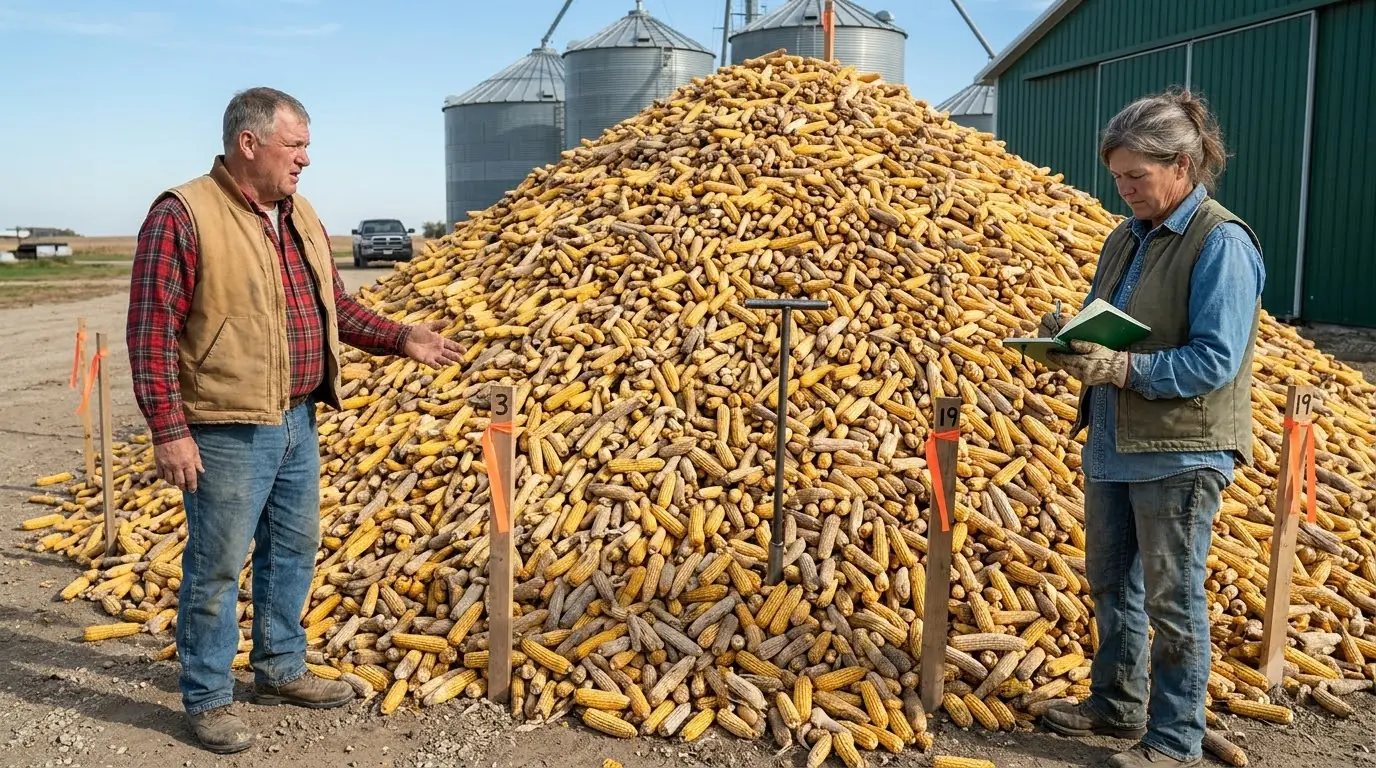
"They're corn cobs," Harold called. "A hundred and ninety tons of them. Nothing mysterious about that." Margaret rubbed the sample between two fingers, separated the dry pieces from the damp material underneath, and sniffed the handful. "There's a difference between knowing what something is and knowing what condition it's in," she replied. Harold laughed, and his son-in-law, standing by the dryer, laughed with him. Margaret planted another stake and walked ten paces farther along the mound. She had learned years earlier that laughter was not useful information.
The morning was gray and cold in Webster County, Iowa, and a weak March wind swept across the concrete apron behind Kessler Seed and Shell. The mound had grown there over three seasons after a seed company closed the boiler that once burned the farm's waste. In summer its outer layer dried to a dusty gold; after rain the lower layers held moisture like old towels. Harold had two enormous poultry barns under contract, and the foundation of the first would occupy exactly the ground the pile covered. A disposal contractor had quoted eleven thousand dollars, and the landfill wanted more. Margaret's offer sounded so favorable that Harold had signed the one-page agreement almost without reading it.
She had written the agreement herself, then paid a local attorney to examine the language. Each load would become her property when it left Harold's yard, with no continuing claim by him and no guarantee from him about quality. Margaret would assume responsibility for transportation and lawful disposal of anything unusable. Harold liked the absence of liability, liked the money, and liked the prospect of seeing clean concrete where the pile stood. He did not ask why she wanted it, although his son-in-law joked that she must plan to feed the county's squirrels for the next decade. Margaret laughed politely at that one because she knew the young man wanted her to be embarrassed.
She had nine months before the bank could demand repayment on the loan secured by the little white house where she had lived for twenty-eight years. The loan had begun at fifty-two thousand dollars and grown heavy with interest and business expenses. One lean year of failed brokerage deals and