Lily Harper walked the fence line of her family’s Kentucky farm before the sun had fully risen. She carried one of her worn spiral notebooks under one arm and a small pencil in her pocket. The morning dew soaked through her boots as she moved slowly along the edge of the field. She stopped often to write down what she saw and to sketch the way certain patches of ground looked after rain.
Her father had taught her to notice the small changes in the land. He said the farm had its own language if you paid attention long enough. Lily had been keeping these notebooks since she was nine years old. Seven years of careful entries filled the pages with dates, drawings, and short descriptions of disappearing water and sudden dips in the ground.
The Harper farm had been in the family for generations but times had grown harder. Medical bills for her father’s failing health piled up on the kitchen table. Lily helped with chores before and after school and often stayed up late recording what she had observed that day. She believed that understanding the land better might one day help the farm survive.
She gathered her most recent notebook and walked across the field one afternoon to speak with the engineers. She showed them pages with dates and simple maps she had drawn of areas where water vanished quickly and where small equipment had sunk in the past. The lead engineer listened for a moment then smiled and told her that their million-dollar surveys and computer models had already mapped everything they needed to know. He said there was no need for handwritten notes from a local teenager.
Lily tried to explain that the ground in that exact spot had been swallowing water and small tools for as long as she could remember. She pointed to an entry from three years earlier that described a sudden depression that had appeared after heavy rain. The engineer shook his head and said their equipment was far more accurate than any farm girl’s observations. When Lily kept showing more pages the security guard was called over.
The guard asked Lily to leave the site and walked beside her until she crossed back onto her family’s land. Some of the workers laughed as she walked away. One of them said something about muddy boots and school science projects. Lily kept walking without turning around but her face burned with embarrassment and anger. She held her notebook tightly against her chest as she crossed the fence.
That night Lily showed her father the pages she had tried to share. He read them quietly and told her that some people only trusted what came from machines and big companies. He said her observations were valuable even if no one wanted to listen right now. Lily put the notebook away but she kept watching the construction site from a distance every day after school.
Days later the sound of heavy machinery echoed across the fields as workers prepared to install a large drilling rig for foundation work. Lily stood on the ridge and watched the rig being positioned exactly over the area she had marked most clearly in her notebook. She felt a knot form in her stomach but there was nothing more she could do. She turned and walked back toward the house to help with evening chores.
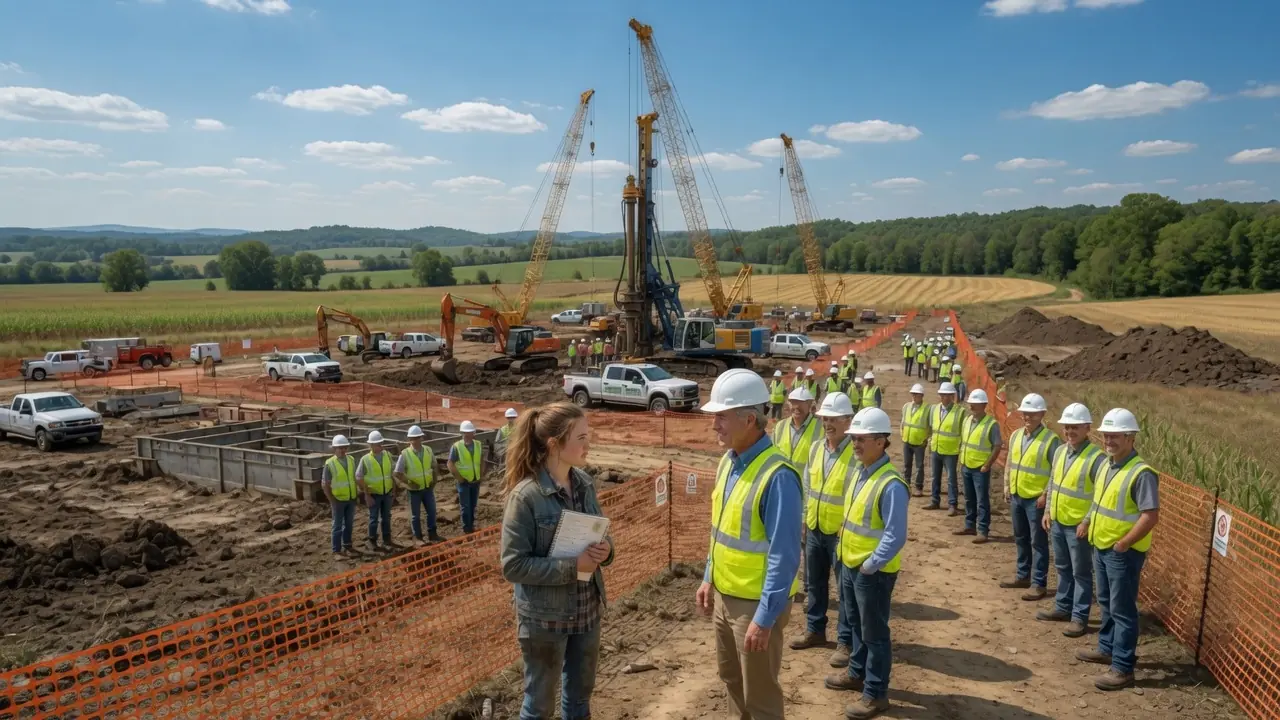
The ground gave way without warning in the middle of the afternoon. The massive drilling rig tilted sharply and then disappeared into a sudden sinkhole that opened beneath it. Workers scrambled to safety as the rig and several support vehicles sank into the hidden limestone void. The collapse sent a cloud of dust into the air and brought all work on the site to an immediate halt. Emergency crews arrived within minutes but the rig was already lost deep underground.
News of the accident spread quickly through the county and then across the state. Engineers and geologists rushed to the site to investigate what had gone wrong. When they reviewed Lily’s notebooks at the request of local reporters they found dated entries, photographs, and simple maps that showed the exact location and behavior of the hidden voids years before any drilling had begun. The company’s expensive surveys had missed the deeper interconnected cave system because their test holes had not gone deep enough and they had dismissed local knowledge.
In the weeks that followed Lily became a quiet local hero. Reporters came to the farm to see the notebooks and to hear how a teenager had noticed what professionals had missed. She showed them page after page with dates and drawings and explained how her father and grandfather had taught her to read the signs in the ground. The story inspired other young people in rural areas to trust what they saw on their own land and to write it down.
The big twist arrived when an investigative team looked deeper into the company’s records and the Harper family history. It turned out that the Harper family had once owned a much larger portion of the land the project was built on but it had been lost through questionable legal maneuvers generations earlier. Lily’s notebooks contained not only geological notes but also faded family stories and old hand-drawn maps that proved the original boundaries. The collapse and the resulting investigation gave the family the evidence they needed to reclaim significant acreage and to win a substantial settlement from the company.
Lily used part of the settlement to pay her father’s medical bills and to make long-needed repairs to the farm. She started a small foundation that helped other rural young people document and protect their land through simple observation and notebooks. The renewable energy project was redesigned to avoid the unstable areas and Lily was asked to serve on a community advisory board where her voice now carried real weight. The story of the muddy notebook that had saved millions and restored family land spread far beyond Kentucky and became an example of how patient local knowledge could challenge even the largest corporations when the ground finally spoke loud enough for everyone to hear.
Lily continued to walk the fence line each morning with a new notebook in her hand. She still recorded the small changes in the land but now she also wrote down the stories her father told her about the old boundaries and the way the water had always moved across the fields. Her father’s health improved with the medical care the settlement provided and he often joined her on the walks, pointing out signs she had not yet noticed. The farm felt steadier than it had in many years and Lily felt a quiet pride in knowing that her years of quiet writing had helped protect it.
The energy company faced additional scrutiny after the investigation revealed that some of their environmental reports had been incomplete. Regulators required new studies that took local knowledge into account and the project moved forward only after the unstable areas were fully avoided. Lily’s foundation grew as more young people from farming communities sent their own notebooks and asked for help understanding what they were seeing on their land. She answered every letter and encouraged them to keep writing even when no one seemed to listen at first.
Years later Lily stood on the same ridge where she had once watched the drilling rig disappear. The redesigned energy project turned slowly in the distance and the Harper farm stretched green and steady below her. She still carried one of her old notebooks in her backpack and sometimes opened it to show visitors the simple maps and dates that had once been dismissed. The big twist of hidden family history and the power of patient observation had not only saved the farm but had given Lily a lifelong purpose and a voice that reached far beyond the quiet Kentucky hills where she had first learned to listen to the land.
The story of the sixteen-year-old farm girl and her muddy notebooks became a reminder that sometimes the most important knowledge comes from the people who have lived on the land the longest and paid the closest attention. Lily continued to write and to teach others to do the same, knowing that the ground would keep speaking if someone was willing to listen and to write it down. The collapse of the drilling rig had been a painful lesson for the company but it had also opened a door for rural voices that had been ignored for too long. Lily Harper walked the fence line each morning with her notebook and her pencil and felt grateful that her quiet observations had mattered after all.