The park bench was not comfortable enough to sleep on, and Isaiah Cole had no intention of sleeping anyway.
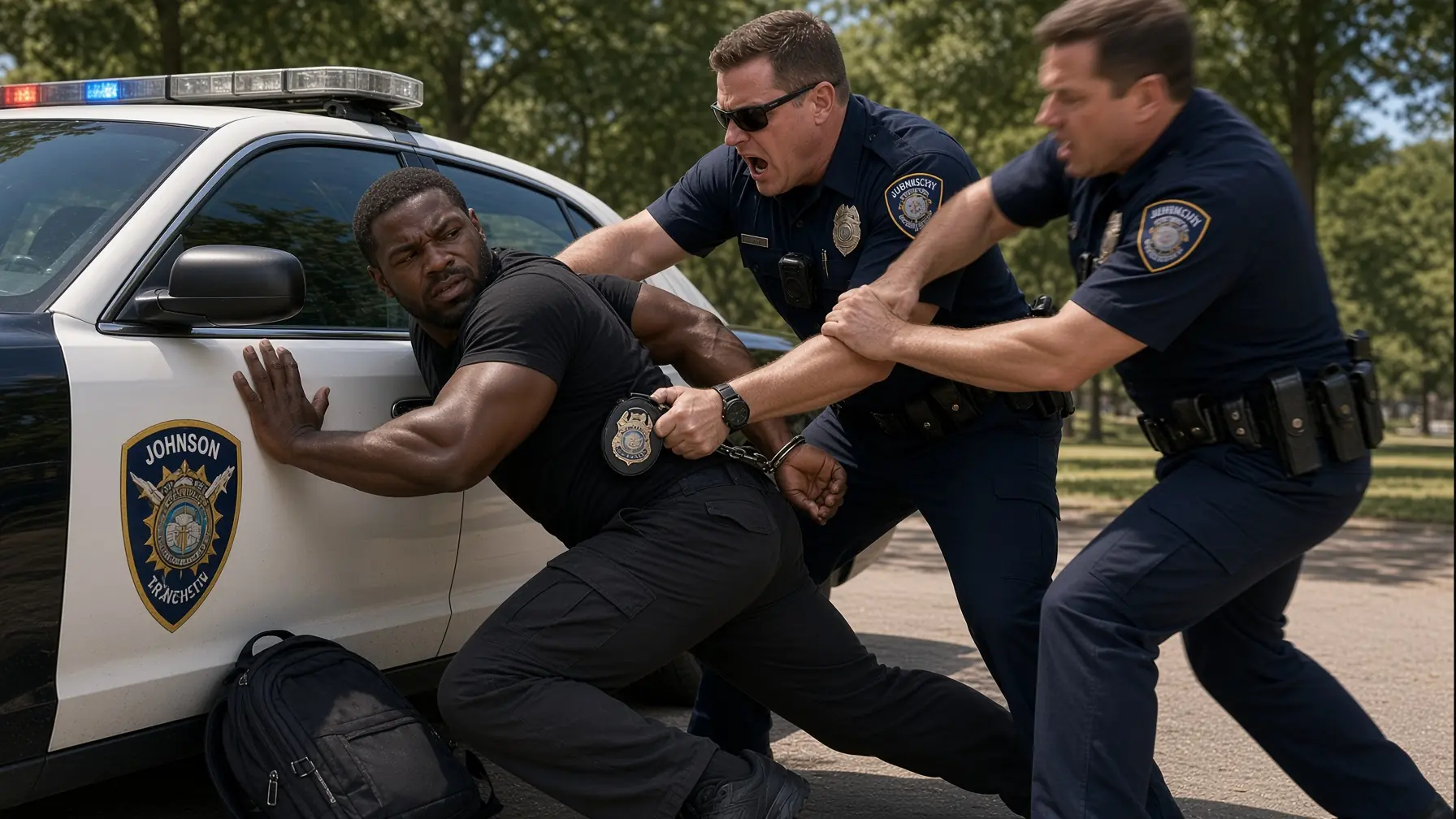
He sat beneath a row of old live oaks at the western edge of Harbor Point Park, one ankle crossed loosely over the other, a paper bag of pretzels open beside him and a bottle of water sweating against the concrete. From a distance, he looked like any man trying to escape the brutal afternoon heat. Black T-shirt. Gray athletic pants. Running shoes. Baseball cap pulled low. A canvas backpack beside one leg. Nothing expensive, nothing official, nothing that suggested why he had been sitting in almost the same place for forty-three minutes while appearing to do absolutely nothing.
That was the point.
Across the park, beyond a playground and an empty picnic pavilion, a man in a red polo shirt sat inside a silver sedan pretending to read his phone. Two blocks farther east, an FBI surveillance van occupied a loading zone beside a closed furniture store. Another agent sat in a coffee shop across the street. Isaiah’s job was simple: remain visible without looking interested, keep the silver sedan in peripheral view, and wait to see whether its driver met the city contractor federal investigators had spent six months tracking.
Nobody expected a uniformed patrol officer to become the most dangerous variable in the operation.
Isaiah first noticed the cruiser when it made its second slow pass around the park.
The driver looked toward him both times.
On the third pass, the cruiser entered the small parking lot and stopped near the curb. Isaiah kept his eyes on the bottle in his hand, though his peripheral vision tracked every movement. The officer stepped out. White male, early forties, average build, dark sunglasses, short hair graying near the temples. Nameplate: JOHNSON.
Isaiah touched nothing.
Did not reach toward his waistband.
Did not look toward the hidden surveillance point.
Did not acknowledge the silver sedan.
The officer approached anyway.
“What’s up, my man?”
Isaiah looked up.
“Afternoon.”
Officer Brett Johnson stopped three feet from the bench.
“What are you doing laid up out here?”
Isaiah glanced around at the public park.
“Sitting.”
Johnson gave a short laugh.
“You taking a nap? Chilling? What?”
“Chilling.”
“That right?”
“Yes.”
Isaiah took a drink of water.
The temperature was ninety-three degrees. Humidity made it feel worse. The patch beneath the oaks was perhaps the only place in the park where shade remained almost continuous through the afternoon.
Johnson looked toward the backpack.
“You got any ID?”
Isaiah’s eyes returned to him.
“I do.”
“Let me see it.”
Isaiah did not move.
“What’s the reason?”
Johnson tilted his head.
“What do you mean, what’s the reason?”
“For the ID.”
“I’m asking you.”
“I understand.”
Johnson stared.
Isaiah kept his voice calm.
“Am I suspected of something?”
The officer looked around the park, as though the answer might be visible between the empty swings and picnic tables.
“I’m patrolling. I come through here, and I see a guy laid out beneath the trees.”
Isaiah waited.
Johnson continued. “You heading somewhere? You live around here?”
“I’m enjoying the park.”
“That’s not what I asked.”
“No.”
A car moved along the street behind them.
Isaiah recognized it as one of the Bureau’s unmarked support vehicles.
It did not slow.
Good.
Johnson folded his arms.
“It’s hot out here.”
“It is.”
“There are better places to spend the day.”
“Maybe.”
“You homeless?”
Isaiah looked at him.
“No.”
“Then you have somewhere to go.”
“I do.”
“So why aren’t you there?”
Isaiah almost smiled.
“Because I’m here.”
Johnson’s expression changed slightly.
That answer irritated him.
Isaiah recognized the transition. He had seen it in interviews, depositions, interrogations, and street encounters throughout fifteen years in federal law enforcement: the moment a person stopped gathering information and began defending the assumption they had already formed.
Johnson glanced toward the empty playground.
“You notice nobody else is using this part of the park?”
Isaiah looked.
A mother and small child were walking near the fountain eighty yards away. Two teenagers were shooting basketball at the far court. An elderly man walked a terrier near the entrance.
“There are people here.”
“Not here.”
The officer gestured around them.
“Why do you think that is?”
Isaiah returned his eyes to him.
“I don’t know.”
Johnson nodded toward the bench.
“Maybe because a guy like you is stretched out here.”
Isaiah’s expression changed.
Very slightly.
“A guy like me?”
Johnson seemed to hear the phrase for the first time only after Isaiah repeated it.
“You know what I mean.”
“No.”
The officer shifted his weight.
“A person who looks like he’s camping out.”
“I’m sitting on a bench with water and pretzels.”
“Exactly.”
“That’s camping?”
“You’re trying to turn this into something.”
Isaiah stayed quiet.
He had been wearing a concealed audio transmitter for the surveillance operation, but it was feeding only the federal team. Johnson’s body camera was visible above his shirt pocket, its small light indicating active recording.
That mattered.
Isaiah said, “I’m not trying to turn it into anything.”
“Good.”
Johnson pointed toward the walkway.
“Then maybe finish your snack and find somewhere else to hang out.”
“Am I required to leave?”
Another change.
Johnson lowered his chin.
“What?”
“Is the park closed?”
“No.”
“Is sitting here prohibited?”
“No.”
“Then why are you telling me to leave?”
Johnson removed his sunglasses.
His eyes were pale and tired.
“I’m trying to keep the park approachable.”
“For whom?”
“For everybody.”
Isaiah looked around.
“I’m part of everybody.”
Johnson stared at him.
The answer landed badly.
The silver sedan across the park remained in place.
Isaiah could not tell whether its occupant was watching.
That was the problem.
The longer this continued, the greater the chance the surveillance target would notice an unusual law-enforcement interaction and leave.
Isaiah wanted Johnson gone.
But the fastest way to accomplish that—showing his FBI credentials—could also destroy six months of work if the target saw the exchange.
So Isaiah stayed ordinary.
At least outwardly.
Johnson said, “Look, man, I’m trying to give you some respect here.”
Isaiah nodded.
“Okay.”
“But you’re making it difficult.”
“I haven’t raised my voice.”
“That’s not the issue.”
“I haven’t threatened anyone.”
“I didn’t say you did.”
“I haven’t violated a park rule.”
Johnson’s jaw tightened.
“You really want to do this?”
Isaiah looked at him.
“Do what?”
“This little lawyer thing.”
There it was.
Isaiah had not cited a statute.
Had not mentioned the Constitution.
Had not threatened a complaint.
He had merely asked what justified the demand.
Johnson interpreted the question itself as resistance.
He extended one hand.
“ID.”
Isaiah shook his head once.
“I’m not giving you identification unless I’m legally required to.”
The officer gave a small disbelieving laugh.