The cane hit the floor before Elias Mercer did. It skittered beneath the brass rail of the bar, its worn wooden shaft spinning once before the brass handle struck the heel of a stool. Elias caught the edge of the counter with both hands and stopped himself from going down, though his left knee buckled hard enough to make his face tighten. Nobody in the Last Switchback laughed. Even the jukebox seemed to sound farther away for a second, buried under the scrape of boots and the slow creak of the ceiling fan.
Deputy Wade Pike looked at the cane where it lay and smiled without humor. “Thought you said you were standing.”
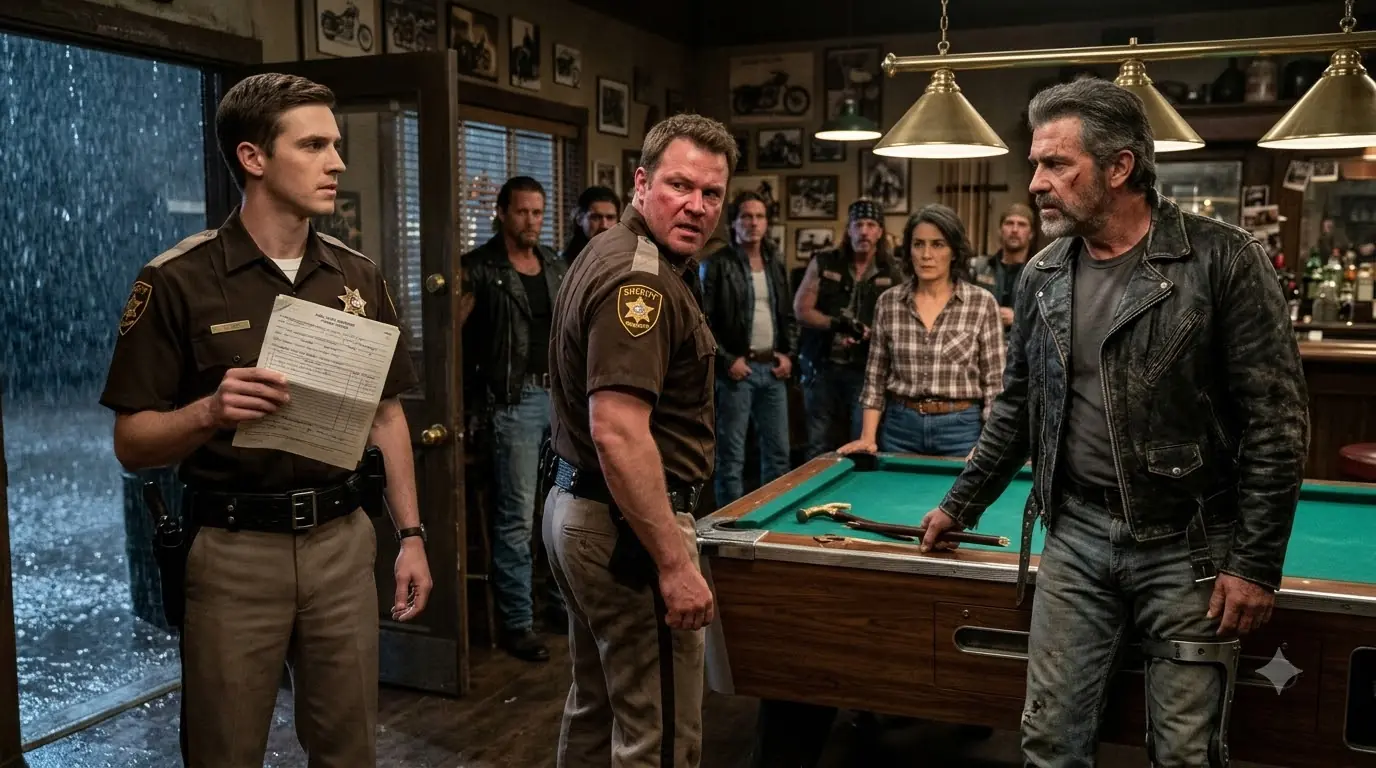
Elias drew a breath through his nose. He was fifty-eight, lean through the waist and still broad enough in the shoulders to fill out the cracked leather jacket he had owned longer than Wade had been shaving. Gray-black hair touched the back of his collar, silver showed through his short beard, and a pale scar ran from his cheek toward the jaw. His left leg, locked inside an old steel-and-leather brace beneath his jeans, trembled from the sudden loss of support. “I am,” he said. “You just made it more expensive.”
A few men at the pool table snorted. Wade’s expression changed. That was the first real mistake of the evening, though nobody knew yet how many old mistakes were already waiting under the same roof.
The Last Switchback had always been good at keeping things. Smoke in the rafters. Grease in the floorboards. Names on the backs of photographs. A brass bell by the bar for stranded riders. Old Harley parts nailed to the walls like saints’ bones in a poor man’s church. For more than twenty years miners, mechanics, truckers, and riders had used the place as a way station beneath Black Creek Mountain, and the bar had learned to hold secrets as easily as it held noise.
Fourteen years earlier, Elias had belonged there so completely that June Callahan still remembered which stool he had preferred. Now the stool stood three feet behind him, and June stood behind the bar with both hands flat on the wood, watching Wade with a look that said she had already decided this was going too far. “Give him the cane,” she said.
Wade glanced toward her. At thirty-five he was tall, thick through the chest, and careful about his uniform. His mirrored sunglasses were hooked into the front of his shirt even though the sun had been gone for hours. “I’ll tell you when it’s enough, June.”
Elias looked at the second deputy, Curtis Bell, who was younger, thinner, and visibly less comfortable. Curtis avoided his eyes. The hesitation lasted only a second, but Elias noticed it because he had spent most of his life reading roads, weather, engines, and men who wanted to pretend they were steadier than they felt.
“ID,” Wade said. Elias eased one hand toward the inside of his jacket. Wade stepped closer as if he had been waiting for exactly that movement. “Slow.”
“I’m reaching for the thing you asked for.” “Slow.”