A gilded cage is still a prison, especially when the warden is the highest peer in England. Whispers claim the Duke of Somerset married solely for political duty, leaving his fragile bride to the wolves of his own household. But aristocratic secrets cannot stay buried when bruises begin to speak. The biting winds of November 1814 tore through the streets of London, entirely fitting for the chilling atmosphere inside St. George's Hanover Square.
At the altar stood Arthur Pendleton, the Duke of Somerset. He was a man carved from marble, impeccably tailored, devastatingly handsome, and utterly devoid of warmth. At 32, Arthur was a titan in the House of Lords. A man whose sheer political will could topple ministries.
But to maintain his iron grip on English politics, he required a scandal-free, perfectly bred duchess to stand at his side. Enter Lady Clara Ashcroft. Clara was 20 years old, the eldest daughter of the recently deceased Earl of Marivale. Behind her porcelain skin, wide hazel eyes, and quiet grace, lay a terrifying reality.
Her father had died a bankrupt, gambling away their family's fortune and leaving Clara and her three younger sisters at the mercy of debtors. The Duke of Somerset's proposal had not been a romantic declaration. It was a transaction presented by his solicitors. The Duke would pay off the marrival debts, provide dowries for Clara's sisters, and in exchange, Clara would provide him with an irreproachable wife and eventually an heir. She had accepted immediately.
It was her duty. As the archbishop pronounced them man and wife, Arthur did not kiss his new bride. He merely bowed, his ice blue eyes sweeping over her pale face with analytical detachment. "You have done your family a great service today, Your Grace," he murmured, his voice a low, resonant baritone that sent a shiver down her spine. It was a statement of fact, not affection, their carriage ride to the Duke's sprawling country estate, Somerset Hall, took three grueling days.
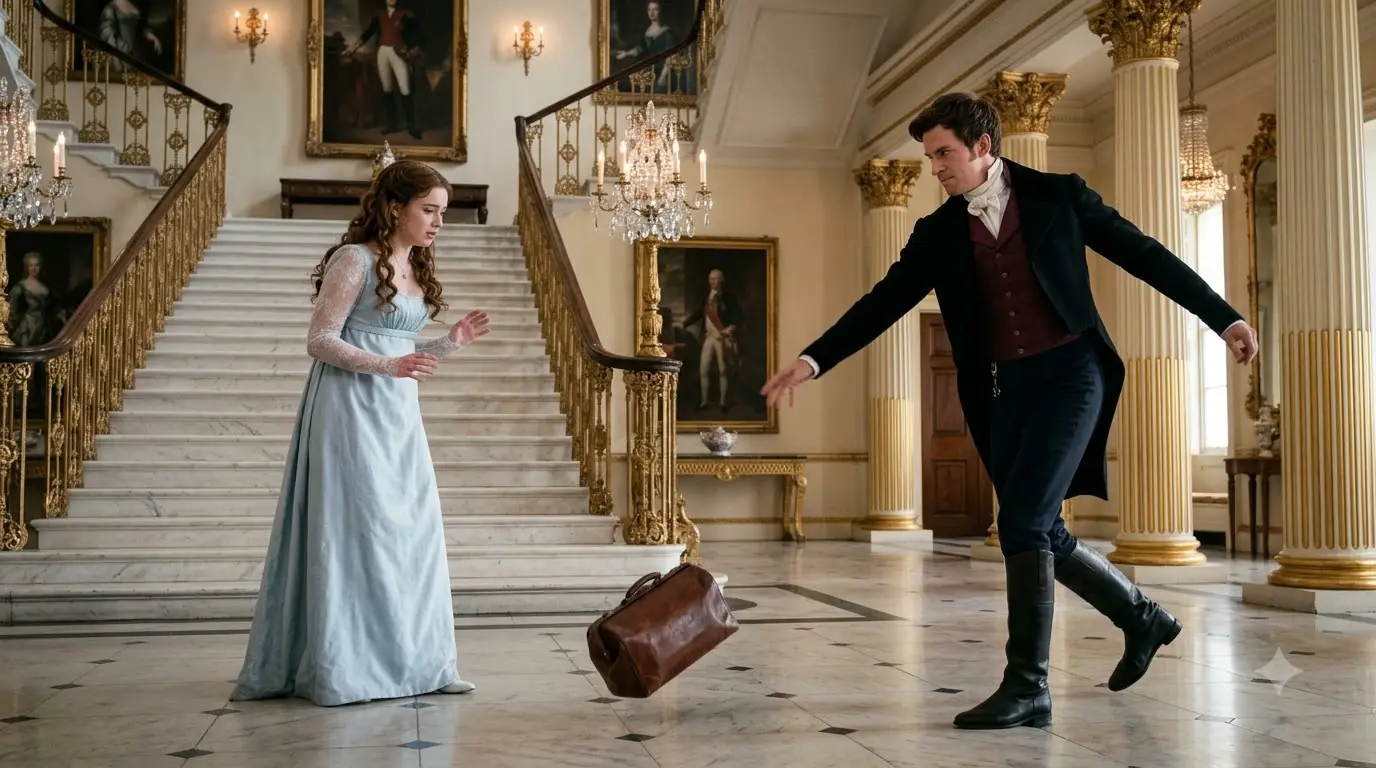
They spoke of the weather, of estate management, of the political unrest in France. Arthur was unfailingly polite, yet the distance between them felt wider than the Atlantic. Clara soon realized that her husband did not view her as a partner, but as a meticulously acquired asset. Upon arriving at the colossal limestone facade of Somerset Hall, Clara was introduced to the true masters of the estate. Waiting in the grand foyer was the Dowager Duchess Augusta Pendleton, a woman whose severe aristocratic features were permanently set in a sneer of disapproval.
Beside her stood Lord Henry Pendleton, Arthur's younger brother. Henry possessed Arthur's dark hair, but none of his discipline. His eyes were slick with a restless, cruel amusement. "So this is the Marivale charity case," Augusta remarked, not bothering to lower her voice as Clara stepped into the grand hall. Arthur's jaw tightened imperceptibly.
"Mother, this is my wife and your duchess. You will address her with the respect the title demands." Augusta offered a stiff, mocking curtsy. Henry merely smirked, his eyes raking over Clara in a way that made her stomach turn. "Welcome to the family, sister," Henry drawled, the word dripping with venom.
For the first two weeks, Arthur's presence acted as a shield. Though he was distant, visiting Clara's chambers only briefly in the dead of night to silently and efficiently fulfill his marital duties before retreating to his own wing. His authority kept his mother and brother at bay. The staff, however, took their cues from the dowager. Clara's requests for tea were ignored.