Before the motorcycles came to Santa Fe Avenue, there had been a smaller noise in a narrow rented house on Elm Court. It was the clicking of a socket wrench in the hands of a seven-year-old boy who had learned to put things back exactly where he found them. The wrench belonged to his mother, though it had once belonged to his grandfather, and it was the only tool in the kitchen drawer that had its own little cardboard sleeve. When Noah Bennett set it beside his cereal bowl, his mother looked at it and then at the alarm clock. They were already late enough that he would have to eat his toast in the car. She resisted the urge to snatch the wrench away, because the reason he was holding it mattered.
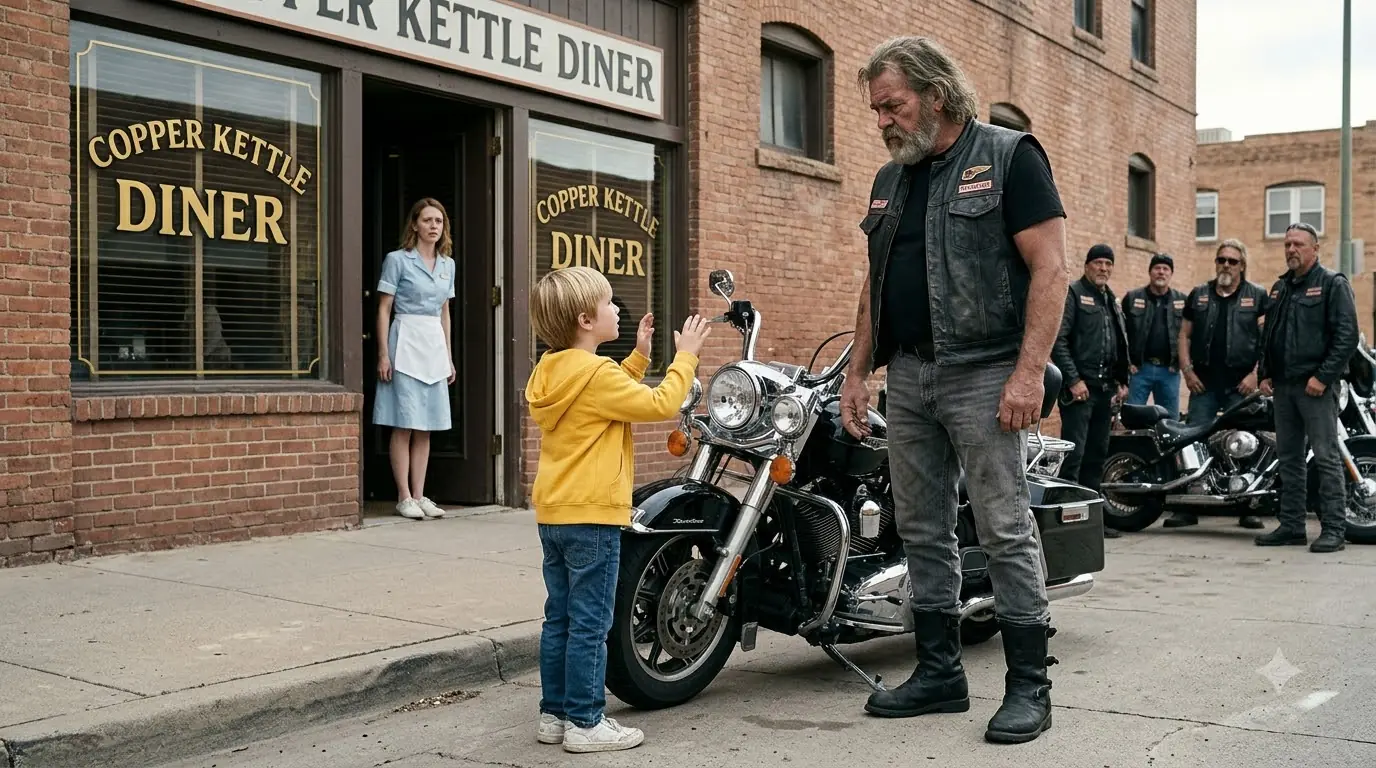
"Tell me what happened to the cupboard door," she said. Noah's expression became solemn. "The hinge isn't broken. The screw turned around too much, and now it won't catch." He pointed to the small holes in the wood, trying hard to describe the difference between a screw that had loosened and a screw that had stripped out. His mother, Caroline Bennett, listened while she poured milk into a chipped blue cup. She had learned that giving Noah thirty seconds to explain himself often saved half an hour of arguing later.
Caroline was thirty-two, and her working days seemed designed by someone who believed sleep was an indulgence. On weekdays she cleaned rooms at a medical office before dawn and served the lunch rush at the Harbor Cup Diner in downtown Pueblo. On Saturdays she worked the breakfast shift, then collected Noah after his library program, and took whatever other hours the owner could spare. The rent had gone up twice in three years; Noah's shoes did not stay his size long enough to justify buying anything but sturdy ones. She knew the price of coffee, printer paper, eggs, bus fare, and the cheaper brands of detergent with the precision of a person whose mistakes were measured in actual meals.
Noah knew some of those prices too, although she had never intended to teach them to him. He knew that a car repair could put an entire week into trouble, that a late fee sounded smaller than it felt, and that his mother sometimes smiled when she said she had eaten at work even though he had seen her lunch untouched in the refrigerator. What he did not know was that she carried an envelope in her purse containing a request for additional child-care assistance. The envelope had been opened and resealed so many times that its edges were soft. She was ashamed of how much courage it took to ask for help from a clerk who might never remember her name.
Noah's father had left when the boy was barely two. Caroline no longer told him that his father might return, because children grow old enough to identify a promise that has stopped being true. She told him instead that a family was the people who came when you called, and then she