1. Daily one walnut → Better memory
Assessment: Partially supported, but not guaranteed.
Walnuts are rich in omega-3 fatty acids (particularly alpha-linolenic acid), antioxidants, vitamin E, and polyphenols, all of which may help reduce oxidative stress and inflammation—two processes associated with brain aging.
Some observational studies have found that people who regularly eat nuts tend to perform better on certain cognitive tests. However, eating one walnut a day alone is unlikely to noticeably improve memory. Most research examines regular nut consumption as part of an overall healthy dietary pattern, such as the Mediterranean diet.
More accurate interpretation:
Regularly eating walnuts as part of a balanced diet may help support long-term brain health, but no single food can guarantee better memory.
2. Daily one spoon of olive oil → No brain fog
Assessment: Misleading.
Extra-virgin olive oil is a cornerstone of the Mediterranean diet and contains healthy monounsaturated fats and antioxidant compounds that may support cardiovascular and brain health.
Because the brain depends on healthy blood vessels, a heart-healthy diet may indirectly support cognitive function. However, "brain fog" has many possible causes, including poor sleep, stress, dehydration, certain medications, hormonal changes, depression, and medical conditions. Olive oil alone cannot eliminate brain fog.
More accurate interpretation:
Replacing saturated fats with extra-virgin olive oil may support long-term brain health, but persistent brain fog should be evaluated for its underlying cause.
3. Daily one cup of blueberries → No dementia
Assessment: False as stated.
Blueberries contain anthocyanins and other antioxidants that may help protect brain cells from oxidative stress.
Several studies suggest that diets rich in berries may be associated with slower cognitive decline. However, there is no evidence that eating blueberries prevents dementia or Alzheimer's disease by itself.
Dementia develops through a complex interaction of genetics, aging, cardiovascular health, lifestyle, and environmental factors.
More accurate interpretation:
Blueberries can be part of a brain-healthy diet, but they cannot prevent dementia on their own.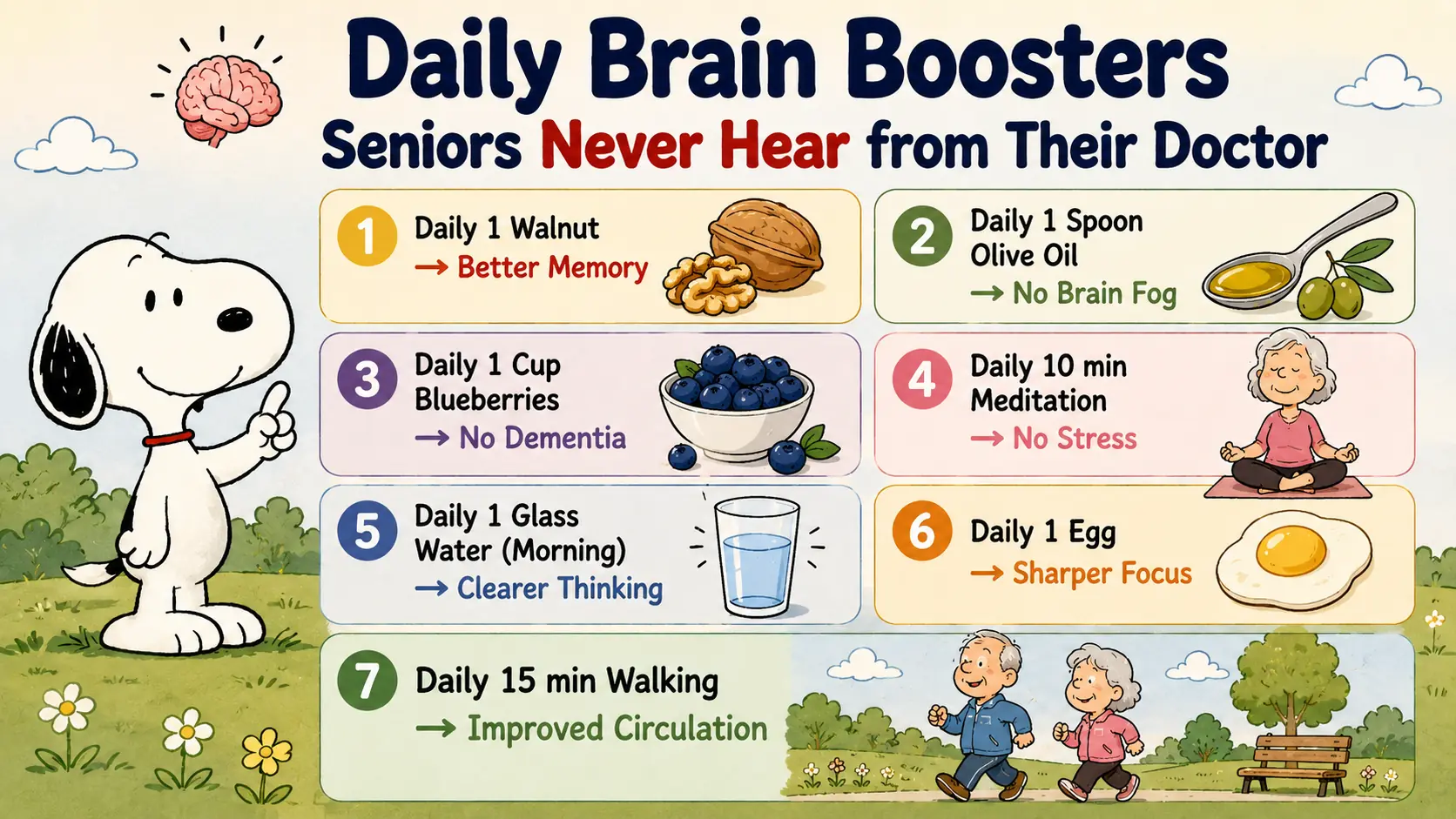
4. Daily 10 minutes of meditation → No stress
Assessment: Oversimplified but generally beneficial.
Meditation does not eliminate stress from life, but numerous studies show that regular mindfulness practice can reduce perceived stress, improve emotional regulation, decrease anxiety, and improve overall well-being.
Even brief daily sessions may help some people feel calmer and more focused.
However, meditation is one tool among many and should not be viewed as a cure for chronic stress or mental health disorders.
More accurate interpretation:
Ten minutes of daily meditation may help reduce stress and improve emotional well-being, but it does not eliminate life's challenges.
5. Daily one glass of water in the morning → Clearer thinking
Assessment: Reasonable, but not unique to mornings.
The brain depends on adequate hydration to function properly. Even mild dehydration can contribute to fatigue, reduced concentration, headaches, and slower thinking in some people.
However, there is no evidence that drinking one glass of water specifically in the morning has unique brain benefits compared with staying hydrated throughout the day.
More accurate interpretation:
Maintaining good hydration throughout the day supports normal brain function and concentration.
6. Daily one egg → Sharper focus
Assessment: Plausible but not guaranteed.
Eggs provide high-quality protein, vitamin B12, selenium, lutein, and choline. Choline plays an important role in producing acetylcholine, a neurotransmitter involved in learning and memory.
For most healthy adults, moderate egg consumption can fit into a balanced diet. However, eating one egg each day will not automatically improve attention or focus.
Overall dietary quality matters much more than any individual food.
More accurate interpretation:
Eggs provide nutrients that support brain function, but sharper focus depends on your overall nutrition, sleep, exercise, and health.
7. Daily 15-minute walk → Improved circulation
Assessment: Strongly supported.
Regular walking is one of the best-supported lifestyle habits for healthy aging.
Walking improves circulation, supports cardiovascular health, helps regulate blood sugar, lowers blood pressure, and increases blood flow throughout the body—including the brain.
Research also suggests that regular physical activity is associated with slower cognitive decline and better overall brain health.
Although fifteen minutes is beneficial, many health organizations recommend aiming for at least 150 minutes of moderate-intensity physical activity per week whenever possible.
More accurate interpretation:
Even a short daily walk supports healthy circulation, and regular physical activity is one of the strongest lifestyle habits for maintaining brain health.
The bigger picture
There is no single "superfood" or daily habit that can prevent memory loss, dementia, or cognitive decline.
The strongest evidence supports combining several healthy lifestyle habits, including:
- Regular physical activity
- A Mediterranean-style eating pattern
- Adequate sleep
- Good blood pressure and blood sugar control
- Staying socially engaged
- Challenging your brain through lifelong learning
- Managing stress
- Avoiding smoking and excessive alcohol
Brain health is built through consistent habits over many years—not through one miracle food.