1. Waking Up Suddenly at 3 A.M.
Claim: Your mind is warning you about hidden stress or someone is thinking intensely about you.
Waking during the night can be related to stress, but there is no evidence that it means someone else is thinking about you.
Sleep occurs in repeating cycles rather than as one uninterrupted state. People briefly move toward wakefulness several times each night, especially as they transition between deeper sleep, lighter sleep, and rapid eye movement sleep. Many of these awakenings are so short that they are not remembered.
Stress can make the brain more alert and increase the likelihood that a person becomes fully awake during one of these transitions. Worries involving work, relationships, finances, illness, or loss are recognized contributors to insomnia. Caffeine, alcohol, nicotine, irregular sleep schedules, environmental noise, pain, medication effects, and needing to urinate can also cause nighttime awakenings.
The specific time—whether 2:47 a.m., 3 a.m., or 4:15 a.m.—does not carry a medically established meaning. People may notice the same time repeatedly because their sleep schedule and internal body clock are relatively consistent.
Night waking also becomes more common with age because sleep may become lighter and the body’s circadian rhythm changes.
An occasional awakening is generally normal. Speak with a healthcare professional when it occurs frequently, lasts for months, causes significant daytime fatigue, or comes with loud snoring, gasping, chest discomfort, severe night sweats, or persistent low mood.
2. Dreaming of Falling from a High Place
Claim: Your subconscious is warning that someone you trust may betray you.
Dreams are not reliable predictions of future betrayal. Their content can be influenced by recent experiences, emotions, memories, stress, fears, and the brain’s activity during sleep.
A falling sensation may also happen while a person is drifting into sleep rather than during a fully developed dream. This can be accompanied by a sudden body jerk known as a sleep start or hypnic jerk. These brief involuntary movements are common examples of myoclonus and are usually harmless.
Falling dreams may feel more frequent during periods of anxiety, sleep deprivation, emotional uncertainty, or major life changes. That does not mean they reveal a hidden truth about a specific person. Dream interpretation is subjective, and no scientifically validated system can use one dream image to forecast betrayal.
The experience may deserve further attention when violent movements happen repeatedly during sleep, cause injuries, involve acting out dreams, or occur alongside severe daytime sleepiness, paralysis, or other unusual sleep symptoms.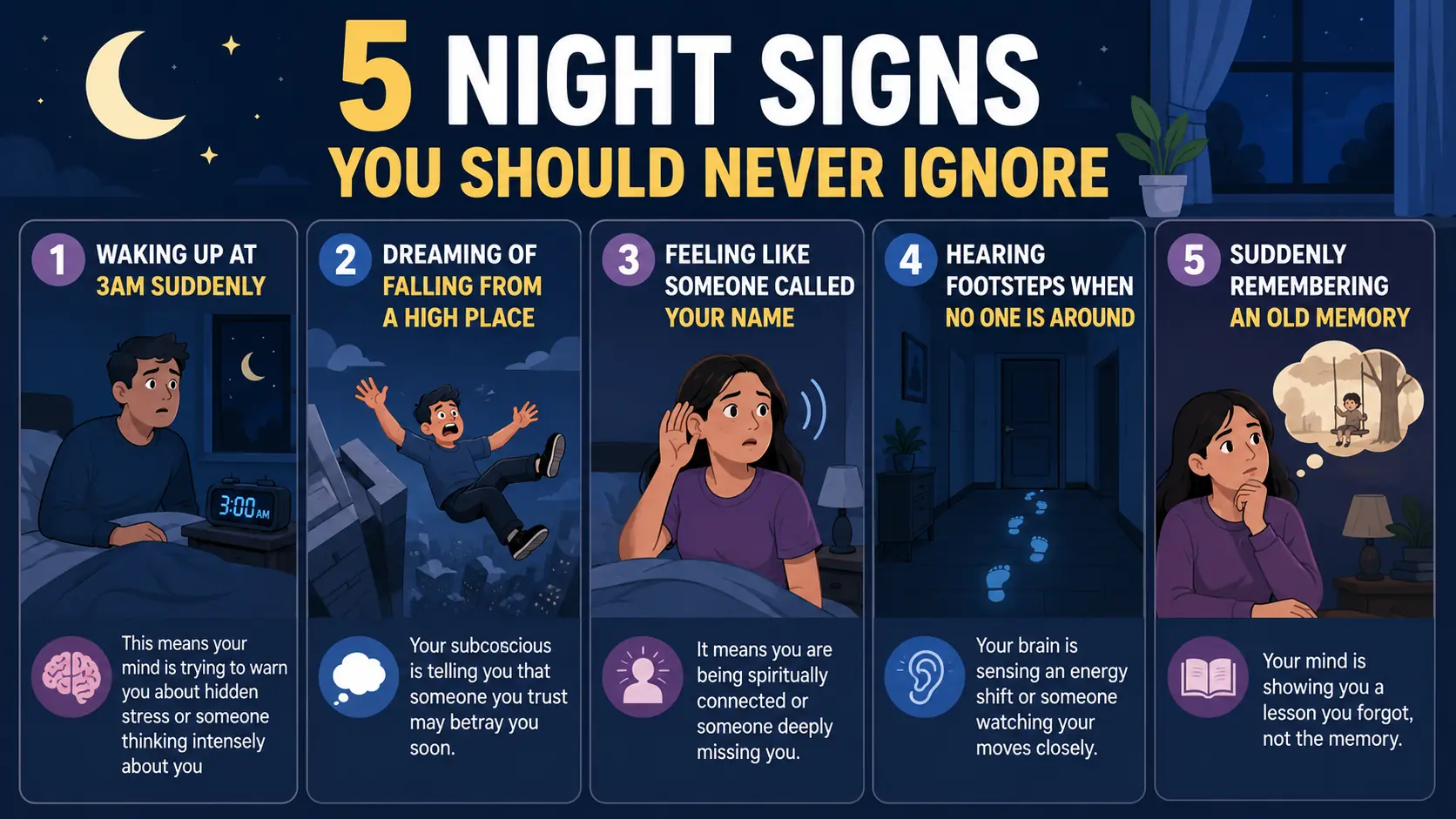
3. Feeling as Though Someone Called Your Name
Claim: You are spiritually connected to someone, or someone deeply misses you.
Briefly hearing your name when falling asleep or waking can be a sleep-related auditory hallucination. During the transition between wakefulness and sleep, parts of the brain may begin producing dreamlike sensory experiences before full awareness has ended.
A person might hear a name, a knock, a short sentence, music, or another familiar sound. An isolated episode near sleep does not automatically indicate mental illness.
The brain is especially sensitive to personally meaningful sounds. Your own name captures attention quickly, so vague background noise—such as a fan, television, traffic, plumbing, or another person speaking at a distance—may sometimes be misinterpreted as someone calling you.
There is no scientific method for determining that another person misses you based on hearing your name at night.
Hearing voices while completely awake is different and has a wider range of possible causes. Hallucinations can occur with sleep deprivation, medication effects, substance use, severe mood disorders, neurological conditions, infections, hearing problems, and psychotic disorders. They may involve voices, music, footsteps, or other sounds that appear real despite having no external source.
Medical advice is appropriate when the experience is frequent, distressing, worsening, or occurring during daytime wakefulness—particularly if the voice gives commands or is accompanied by paranoia, confusion, drastic behavioral changes, or thoughts of harm.
4. Hearing Footsteps When No One Is Around
Claim: Your brain is detecting an energy shift or someone is watching you.
Before assuming anything unusual, check for an actual environmental source. Buildings contract as temperatures change, pipes move, appliances cycle, animals enter walls or roofs, neighbors walk nearby, and sound can travel unexpectedly through floors and ventilation systems.
When no external sound is present, the experience may involve a sleep-related hallucination, tinnitus, hearing loss, extreme fatigue, stress, medication effects, or another medical issue. MedlinePlus specifically lists footsteps, banging doors, music, and voices among sounds people may perceive during auditory hallucinations.
Hearing problems can also alter the brain’s interpretation of limited sound information. Tinnitus is not always a simple ringing noise; it can involve buzzing, roaring, clicking, or other perceived sounds. Its possible causes include age-related hearing loss, loud-noise exposure, ear infections, medication effects, thyroid problems, and disorders of the inner ear.
There is no evidence that unexplained footsteps demonstrate an “energy shift” or prove that someone is monitoring your movements.
An occasional sound while half asleep is generally less concerning than repeated sounds while fully awake. Seek evaluation if the experience persists, begins suddenly, or occurs with hearing loss, dizziness, severe headaches, fever, confusion, memory decline, or other neurological symptoms.
5. Suddenly Remembering an Old Memory
Claim: Your mind is revealing a forgotten lesson rather than simply recalling the event.
Memories can return unexpectedly because the brain continuously forms associations. A smell, sound, place, facial expression, season, physical sensation, or emotional state may activate a connected memory without the trigger being consciously recognized.
The memory does not necessarily contain a hidden message. Sometimes it is simply the result of normal memory retrieval. At other times, a person may naturally reflect on the event and identify a useful lesson from it. The meaning comes from thoughtful interpretation—not from proof that the brain deliberately selected the memory as a warning.
Unwanted memories can become more frequent during stress, grief, anxiety, or after a traumatic experience. Trauma-related intrusive memories may feel vivid, uncontrollable, and physically distressing, sometimes producing a racing heart, sweating, shaking, or shortness of breath.
A brief nostalgic memory is normal. Professional support may be helpful when memories repeatedly interrupt sleep, feel as though the event is happening again, cause panic, lead to avoidance, or interfere with relationships and daily life.
The Bottom Line
These five nighttime experiences can feel meaningful, but they are not dependable signs of spiritual connection, betrayal, surveillance, or another person’s thoughts.
Waking at night may reflect ordinary sleep cycles or stress. Falling sensations may be dreams or harmless sleep starts. Hearing a name or footsteps near sleep may result from transitional brain activity or environmental sounds. Old memories may appear because of subtle emotional or sensory triggers.
What matters most is the pattern. An occasional experience that occurs while falling asleep or waking is often harmless. Persistent symptoms that occur while fully awake, become frightening, affect daily functioning, or appear with confusion, breathing problems, hearing loss, severe mood changes, or neurological symptoms should not be ignored.
The safest interpretation is not to assume a supernatural warning—but to notice what your sleep, stress level, environment, and overall health may be telling you.