1. Excessive yawning
Potential deficiency: Iron
Iron is needed to produce hemoglobin, the protein in red blood cells that carries oxygen throughout the body. When iron deficiency progresses to anemia, people may experience tiredness, weakness, dizziness, headaches, poor concentration, and shortness of breath.
Excessive yawning by itself is not considered a specific sign of iron deficiency. It is more commonly connected with tiredness, poor sleep, boredom, certain medications, or sleep disorders. Still, frequent yawning accompanied by unusual fatigue, pale skin, dizziness, or breathlessness may justify a blood test for anemia.
Do not begin iron supplements without testing. Excess iron can be harmful, and fatigue may have causes unrelated to iron.
2. Air hunger
Potential deficiency: Vitamin B1
“Air hunger” describes the uncomfortable feeling that you cannot take a satisfying breath. Severe thiamin, or vitamin B1, deficiency can affect the nervous and cardiovascular systems. Early deficiency may cause weakness, fatigue, confusion, memory problems, and cardiovascular abnormalities.
However, air hunger is not specific to B1 deficiency. It may also occur with anemia, asthma, heart or lung disease, anxiety, infection, or blood clots. Iron-deficiency anemia itself can cause shortness of breath because the blood is unable to transport oxygen efficiently.
New, severe, or worsening shortness of breath—especially with chest pain, fainting, blue lips, confusion, or a rapid heartbeat—requires urgent medical attention.
3. Tetany
Potential deficiency: Calcium
Tetany refers to involuntary muscle tightening, cramping, twitching, or spasms. Low blood calcium can cause these symptoms because calcium plays an essential role in normal nerve signaling and muscle contraction.
Vitamin D is also involved because it helps the body absorb calcium and maintain adequate calcium and phosphate levels. Severe vitamin D deficiency may contribute to hypocalcemia and tetany.
The phrase “locked-up calcium” is not a standard medical diagnosis. Tetany may result from low calcium, low magnesium, alkalosis, kidney disease, parathyroid disorders, or other medical problems. Sudden spasms, tingling around the mouth, breathing difficulty, or seizures should be treated as urgent symptoms.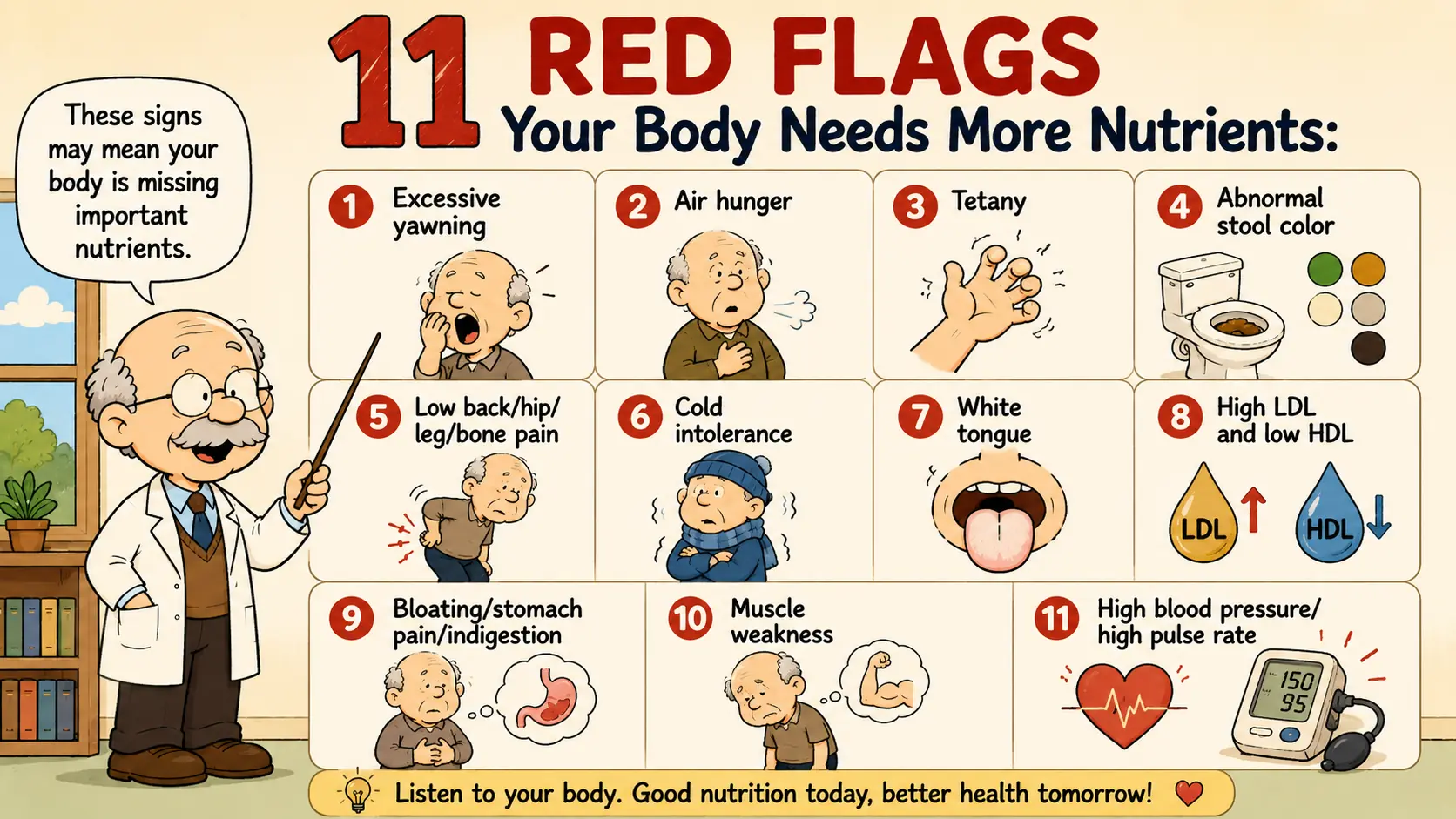
4. Abnormal stool color
Green stool: Friendly bacteria or chlorophyll malabsorption
Yellow or pale stool: Bile deficiency
Green stool does not usually mean the body lacks “friendly bacteria.” It commonly occurs when food moves rapidly through the intestines, when a person eats green vegetables or food coloring, or during diarrhea. Digestive infections, food intolerance, medication side effects, and intestinal disorders can also change stool appearance.
Yellow, greasy, foul-smelling stool may suggest poor fat absorption. Very pale, gray, or clay-colored stool can occur when insufficient bile reaches the intestine, potentially because of a problem involving the liver, gallbladder, bile ducts, or pancreas.
A persistent pale stool—particularly with dark urine, itching, abdominal pain, fever, or yellowing of the eyes or skin—should be evaluated promptly. It should not be treated simply by taking bile supplements or probiotics.
5. Low-back, hip, leg, or bone pain
Potential deficiency: Vitamin D
Vitamin D supports calcium absorption, bone mineralization, muscle function, and normal nerve and immune activity. Severe or prolonged deficiency can contribute to osteomalacia in adults, in which bones become weak and painful. Muscle weakness may also occur.
Nevertheless, pain in the back, hips, or legs is not proof of vitamin D deficiency. Arthritis, osteoporosis, muscle strain, nerve compression, spinal disease, fractures, and many other conditions can cause similar pain.
A blood test can help determine vitamin D status. Taking very high doses without medical supervision is unsafe because vitamin D toxicity can cause nausea, confusion, kidney stones, abnormal heart rhythms, and kidney damage.
6. Cold intolerance
Potential deficiencies: Iodine or vitamin B1
Iodine is needed to produce thyroid hormones, which regulate metabolism. Inadequate iodine can contribute to hypothyroidism, and hypothyroidism may cause cold intolerance, tiredness, dry skin, constipation, weight changes, and slower thinking.
Vitamin B1 deficiency can cause fatigue, weakness, nerve symptoms, confusion, and cardiovascular problems, but cold intolerance is not one of its most specific or reliable signs.
Feeling unusually cold may also result from anemia, low body weight, poor circulation, medication effects, or other thyroid disorders. Iodine supplements should not be taken casually because excessive iodine can also disrupt thyroid function.
7. White tongue
Potential deficiency: Probiotics
A white tongue does not usually mean someone is “deficient in probiotics.”
Common causes include bacterial and debris buildup, dry mouth, dehydration, smoking, irritation, poor oral hygiene, and oral thrush. Thrush is an overgrowth of Candida yeast and is more common after antibiotics, with inhaled corticosteroid use, poorly controlled diabetes, dentures, or weakened immunity.
Probiotic foods may support aspects of gut and oral microbial health, but probiotics are not a proven universal treatment for a white tongue. A thick white coating that is painful, repeatedly returns, bleeds when scraped, or lasts longer than about two weeks should be assessed by a dentist or clinician.
8. High LDL and low HDL
Potential deficiency: Vitamin B3
Niacin, or vitamin B3, can influence cholesterol levels when used in prescription-strength doses. However, high LDL and low HDL do not usually mean that someone has a vitamin B3 deficiency.
Cholesterol patterns are influenced by genetics, age, diet, body weight, diabetes, thyroid function, physical activity, smoking, and certain medications. High LDL is associated with a greater risk of cardiovascular disease, while lifestyle changes such as regular activity can help lower LDL and may raise HDL.
Current cholesterol care is based on a person’s overall cardiovascular risk, not simply on taking niacin. High-dose niacin can cause flushing, liver injury, elevated blood sugar, and other adverse effects, so it should only be used under medical supervision.
9. Bloating, stomach pain, or indigestion
Potential deficiency: Stomach acid
Low stomach acid can occur, particularly with aging, autoimmune gastritis, stomach surgery, or prolonged use of acid-suppressing medications. It may interfere with the absorption of nutrients such as vitamin B12, iron, calcium, or magnesium.
However, bloating and indigestion are much more commonly caused by functional dyspepsia, reflux, constipation, food intolerance, gastritis, ulcers, medications, or infections such as H. pylori.
Symptoms alone cannot determine whether stomach acid is too low or too high. Taking hydrochloric acid or digestive supplements without evaluation may worsen gastritis, reflux, or ulcers.
Persistent pain, vomiting, black stool, unexplained weight loss, difficulty swallowing, anemia, or early fullness should be medically investigated.
10. Muscle weakness
Potential deficiency: Sodium
Sodium is essential for fluid balance, nerve signals, and muscle function. Very low blood sodium, known as hyponatremia, can cause weakness, headache, nausea, confusion, cramps, seizures, and, in severe cases, coma.
However, dietary sodium deficiency is uncommon. Low blood sodium is more often related to excess fluid retention, diuretics, kidney or heart disease, vomiting, diarrhea, hormonal disorders, or drinking excessive amounts of water.
Potassium and magnesium deficiencies can also produce weakness or muscle symptoms. Low potassium may cause tiredness, muscle weakness, constipation, and abnormal heart rhythms.
Because sodium disturbances can be dangerous, suspected hyponatremia should be confirmed through blood testing rather than treated by eating more salt.
11. High blood pressure or a high pulse rate
Potential deficiencies: Potassium or vitamin D
Potassium supports normal fluid balance, nerve function, muscle contraction, and blood-vessel health. Diets rich in potassium-containing foods can help support healthy blood pressure, especially when sodium intake is controlled. Severe potassium deficiency can cause weakness and abnormal heart rhythms.
However, high blood pressure does not automatically indicate potassium deficiency. It is influenced by age, genetics, kidney health, body weight, physical activity, sodium intake, alcohol, sleep apnea, stress, diabetes, and medication use. Modern guidelines recommend proper measurement and individualized treatment based on overall cardiovascular risk.
Low vitamin D levels are often observed in people with hypertension, but current evidence does not establish vitamin D deficiency as a simple direct cause that can reliably be corrected to treat high blood pressure.
A persistently fast pulse may result from dehydration, fever, anemia, thyroid disease, medication effects, anxiety, heart rhythm disorders, or other conditions. A racing pulse with chest pain, fainting, severe breathlessness, or weakness requires urgent evaluation.
The Bigger Picture
These symptoms may be clues, but they are not diagnoses. Nutrient deficiencies should generally be confirmed through medical history, examination, and appropriate blood testing.
The safest approach is to avoid treating a symptom with a random supplement. Taking excessive iron, calcium, iodine, sodium, potassium, niacin, or vitamin D can cause serious harm, particularly in seniors and people taking prescription medications.
A balanced diet remains the best foundation: vegetables, fruit, legumes, whole grains, nuts, seeds, eggs, dairy or fortified alternatives, fish, and other suitable protein sources. When a genuine deficiency is found, treatment should address both the missing nutrient and the reason it became low.
Reels Version
1. Excessive yawning → Potential iron deficiency
Iron deficiency can reduce the blood’s ability to carry oxygen, leading to fatigue and breathlessness. Yawning alone is not proof, but yawning combined with weakness or dizziness may be worth checking.
2. Bone, hip, or leg pain → Potential vitamin D deficiency
Vitamin D helps your body absorb calcium and maintain strong bones and muscles. Ongoing pain may have many causes, but a blood test can reveal whether vitamin D is part of the problem.
3. Muscle weakness → Potential sodium or potassium imbalance
Both sodium and potassium help nerves and muscles function normally. Weakness, cramping, confusion, or an irregular heartbeat may signal an electrolyte imbalance that requires testing—not guesswork.
The nutrient warning sign most people overlook may not be the one you expect. Keep reading below.